Analysis of the Scoliosis Research Society SRS 22



- Slides: 12
Analysis of the Scoliosis Research Society (SRS) 22 Questionnaire in the Assessment of Growing Rods in Scoliosis Lui DF, Walsh A, O’Neill F, Kelly M, Noel J, Kiely PJ Our Lady’s Children’s Hospital Crumlin
Introduction • Early onset scoliosis may require challenging surgery associated with significant morbidity • Prior to growing rods, there were few options available for treatment of scoliosis in the growing child • Evaluation of outcome following surgery can be achieved using quality of life questionnaires.
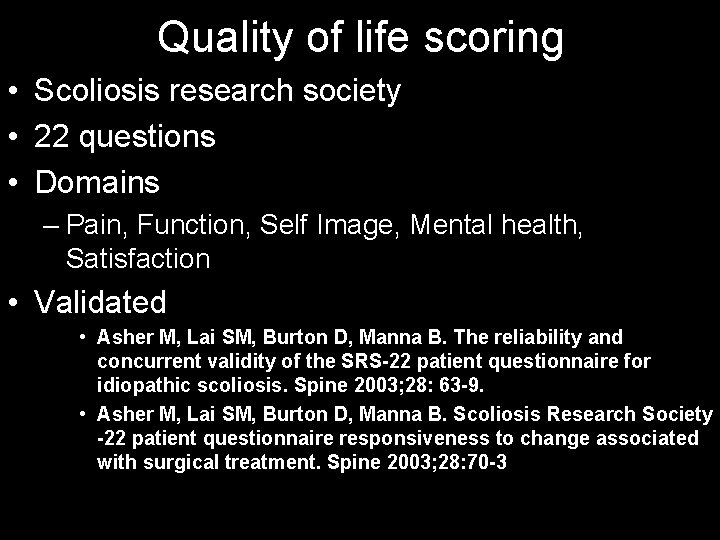
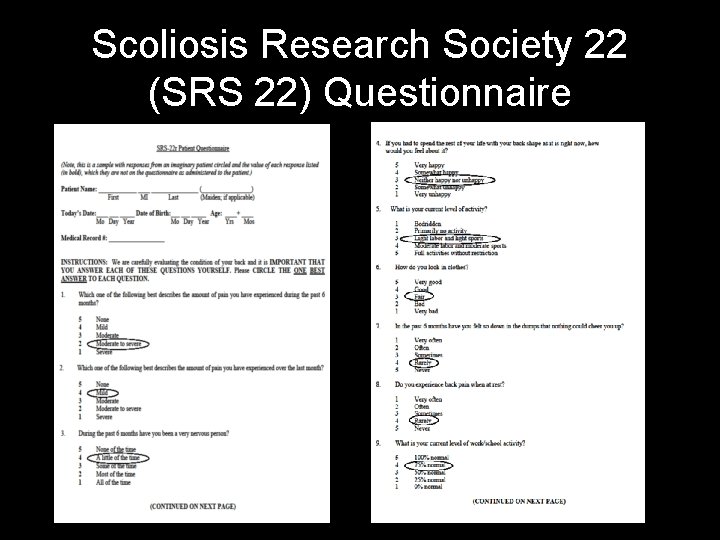
Quality of life scoring • Scoliosis research society • 22 questions • Domains – Pain, Function, Self Image, Mental health, Satisfaction • Validated • Asher M, Lai SM, Burton D, Manna B. The reliability and concurrent validity of the SRS-22 patient questionnaire for idiopathic scoliosis. Spine 2003; 28: 63 -9. • Asher M, Lai SM, Burton D, Manna B. Scoliosis Research Society -22 patient questionnaire responsiveness to change associated with surgical treatment. Spine 2003; 28: 70 -3
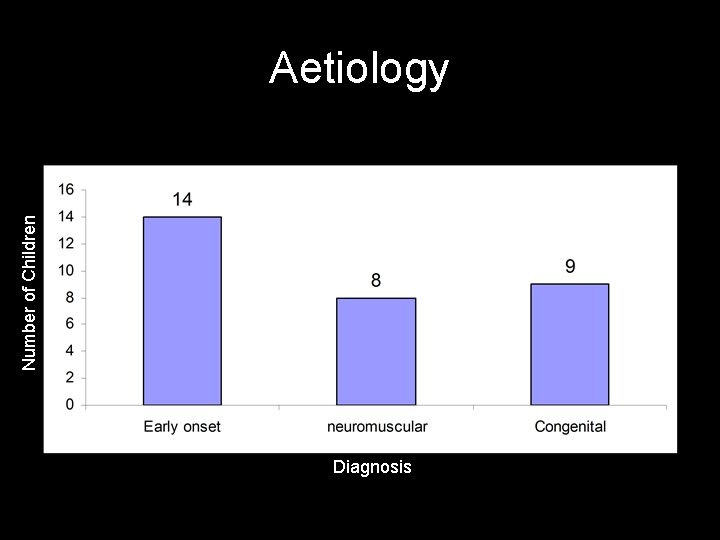
Methods • Single surgeon series 2007 -2012 • Prospective study of 31 patients undergoing treatment with growing rod Insertion for scoliosis – All early onset – Age 3 -15 years at 1 st surgery – Early onset idiopathic, neuromuscular, congenital • Scoliosis Research Society 22 (SRS 22) Questionnaire • Statistical Analysis by SPS 16. 0 (IBM)
Scoliosis Research Society 22 (SRS 22) Questionnaire
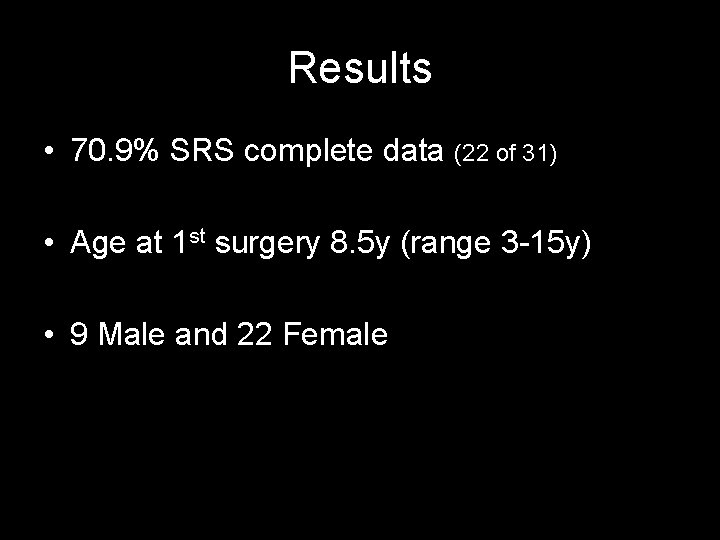
Results • 70. 9% SRS complete data (22 of 31) • Age at 1 st surgery 8. 5 y (range 3 -15 y) • 9 Male and 22 Female
Number of Children Aetiology Diagnosis
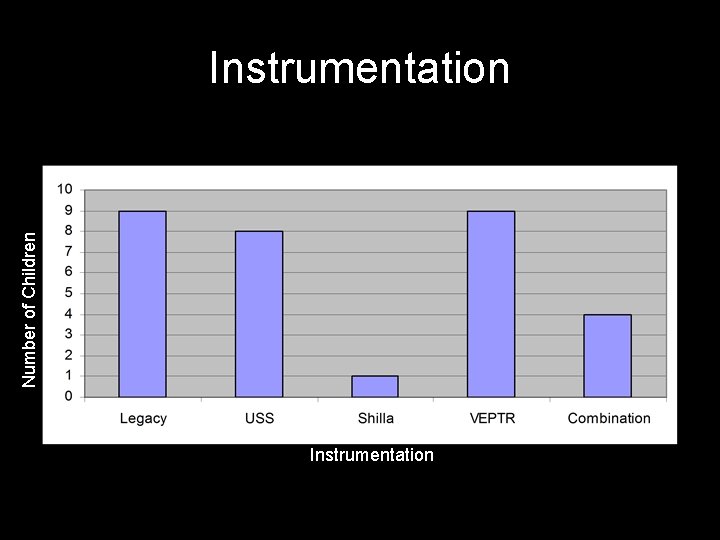
Number of Children Instrumentation
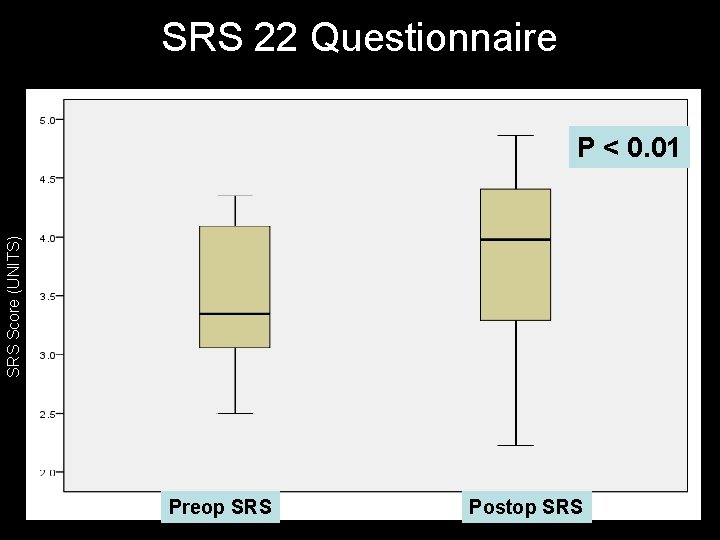
SRS 22 Questionnaire SRS Score (UNITS) P < 0. 01 Preop SRS Postop SRS
Statistical Analysis of Cobb Angles P < 0. 001 Preop Cobb Postop Cobb
Complications of Growing Rod Insertion
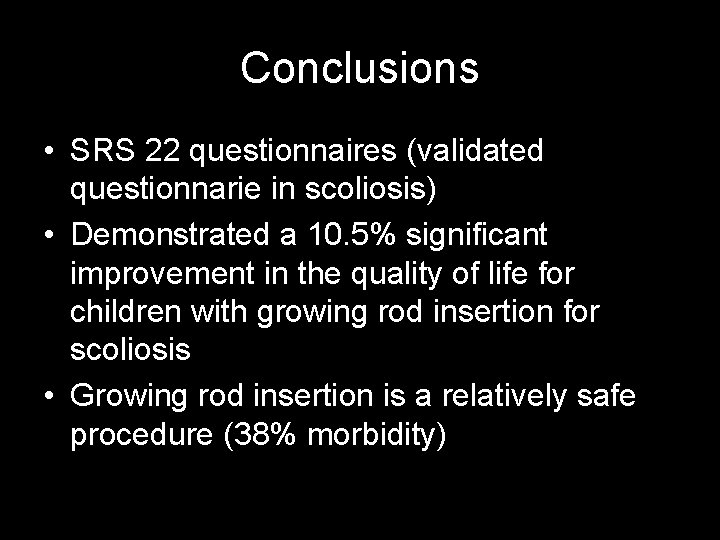
Conclusions • SRS 22 questionnaires (validated questionnarie in scoliosis) • Demonstrated a 10. 5% significant improvement in the quality of life for children with growing rod insertion for scoliosis • Growing rod insertion is a relatively safe procedure (38% morbidity)