Aim How do drugs alter our consciousness Agenda
- Slides: 37
Aim: How do drugs alter our consciousness? Agenda: 1. Grab a handout from the front of the room. 2. Complete “Science of Addiction Webquest” Homework: • Complete Drug Chart & Webquest for HW
Science of Addiction Webquest Task: 1. Hand in your Drug of Abuse Chart. 2. Go the website and complete Part II through Part VI
Your Brain On Drugs Task: Watch video and answer questions.
Aim: How do drugs alter our consciousness? Agenda: 1. Grab a handout from the front of the room. 2. Have your web quest and drug chart out for a HW check. 3. Choose a drug and work on PSA Homework: • Read Article Prep for Seminar on Sleep ( 20 Pts) • Drug PSA Due Friday -email and send link by class time
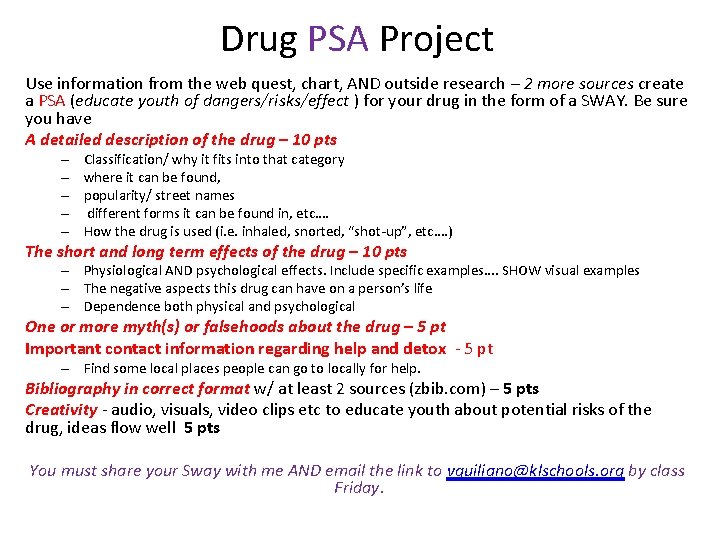
Drug PSA Project Use information from the web quest, chart, AND outside research – 2 more sources create a PSA (educate youth of dangers/risks/effect ) for your drug in the form of a SWAY. Be sure you have A detailed description of the drug – 10 pts – – – Classification/ why it fits into that category where it can be found, popularity/ street names different forms it can be found in, etc…. How the drug is used (i. e. inhaled, snorted, “shot-up”, etc…. ) The short and long term effects of the drug – 10 pts – Physiological AND psychological effects. Include specific examples…. SHOW visual examples – The negative aspects this drug can have on a person’s life – Dependence both physical and psychological One or more myth(s) or falsehoods about the drug – 5 pt Important contact information regarding help and detox - 5 pt – Find some local places people can go to locally for help. Bibliography in correct format w/ at least 2 sources (zbib. com) – 5 pts Creativity - audio, visuals, video clips etc to educate youth about potential risks of the drug, ideas flow well 5 pts You must share your Sway with me AND email the link to vguiliano@klschools. org by class Friday.
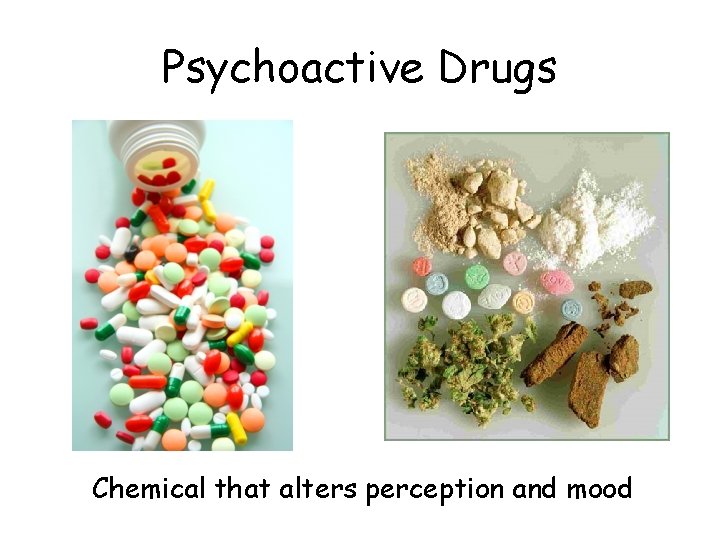
Psychoactive Drugs Chemical that alters perception and mood
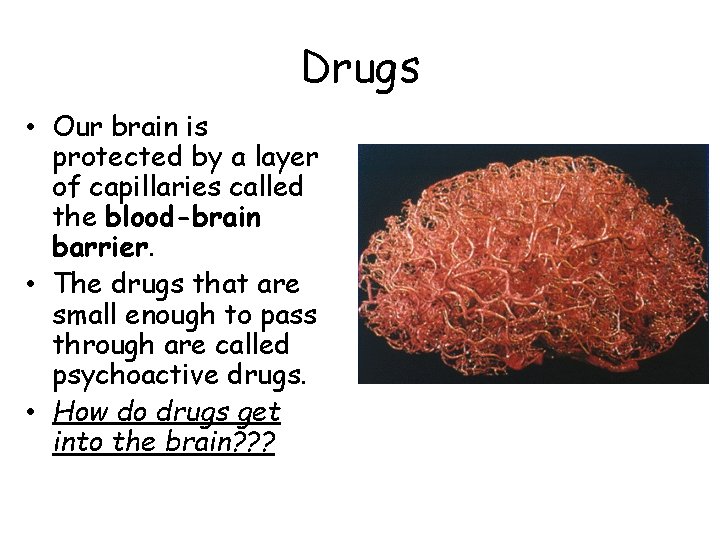
Drugs • Our brain is protected by a layer of capillaries called the blood-brain barrier. • The drugs that are small enough to pass through are called psychoactive drugs. • How do drugs get into the brain? ? ?
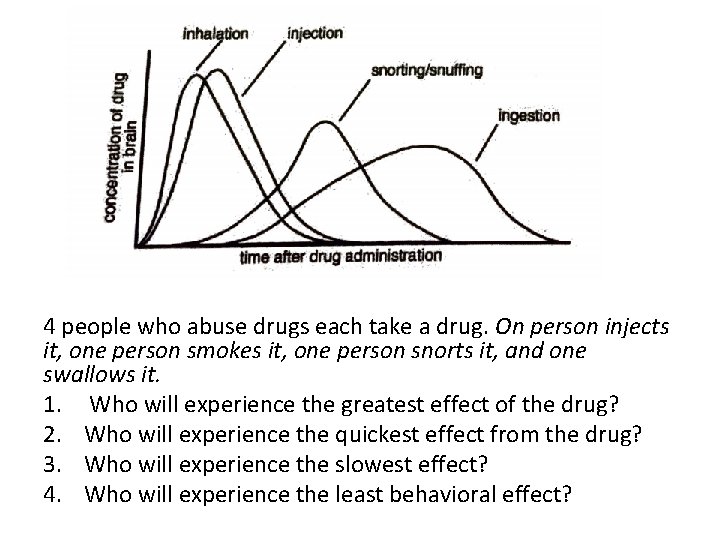
4 people who abuse drugs each take a drug. On person injects it, one person smokes it, one person snorts it, and one swallows it. 1. Who will experience the greatest effect of the drug? 2. Who will experience the quickest effect from the drug? 3. Who will experience the slowest effect? 4. Who will experience the least behavioral effect?
Long Term Effects of Drugs on the Brain 1. What are some Long Term effects of drugs on the brain? 2. How does the brain adapt to the presence of drugs? 3. How may the abuse of drugs relate to the plasticity of the brain?
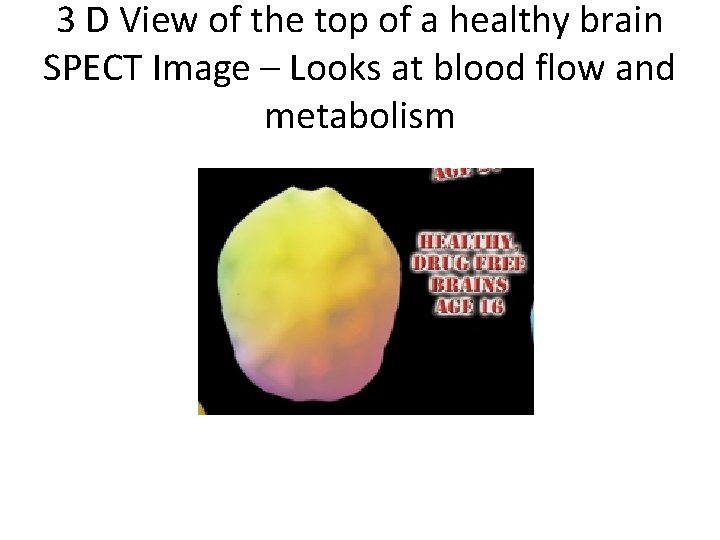
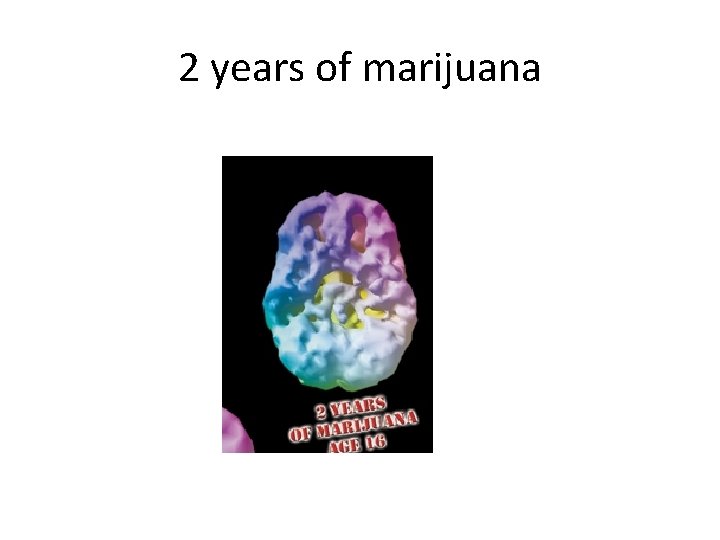
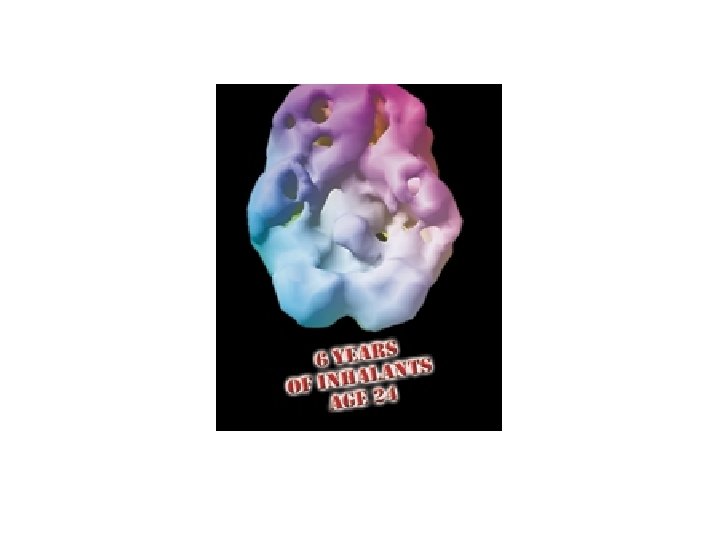
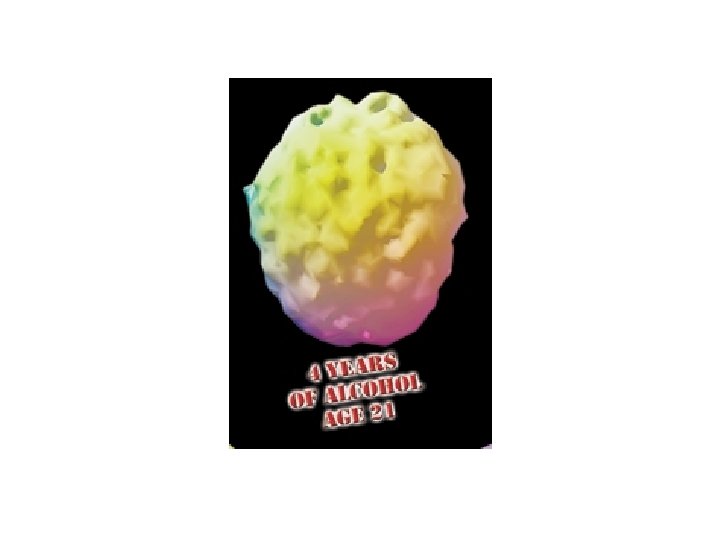
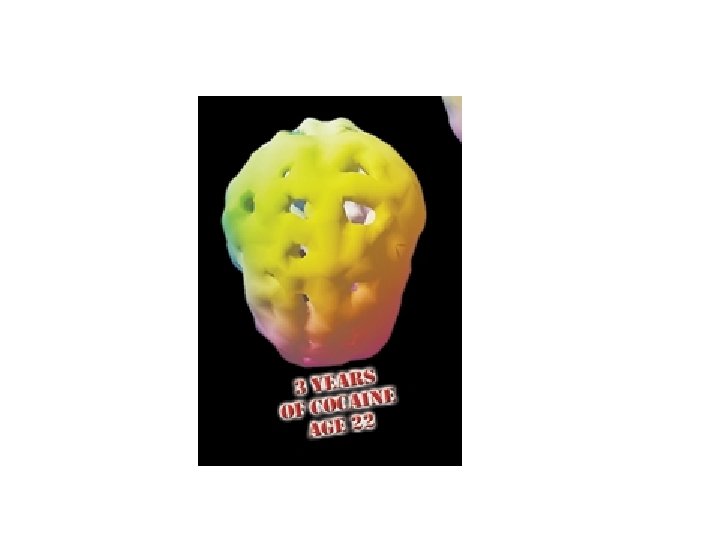
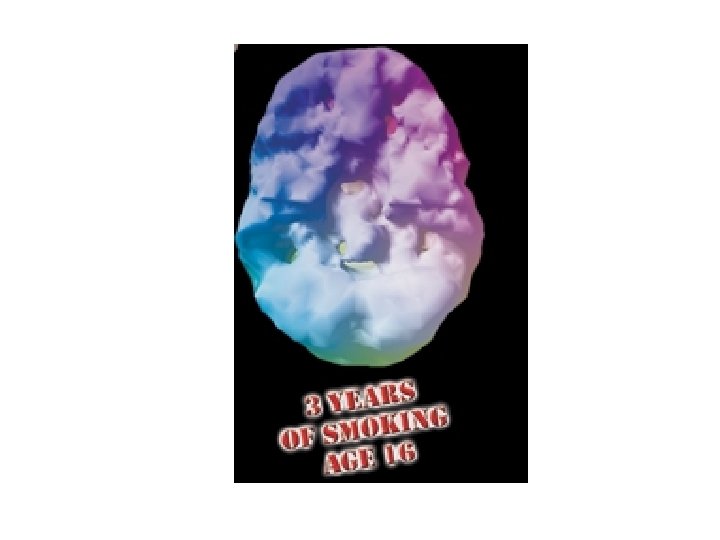
3 D View of the top of a healthy brain SPECT Image – Looks at blood flow and metabolism
2 years of marijuana
Drugs Review Dependence – • Absence of a drug may cause physical pain, intense cravings(physical dependence) & negative emotions (psychological dependence) Addiction – • Craving a chemical substance despite its negative effects (drugs quickly corrupts, can not be overcome voluntarily, not different than other repetitive pleasure seeking behavior) Tolerance • You need more of the drug to feel the same effect. Withdrawal • Upon stopping taking a drug you experience undesirable effects
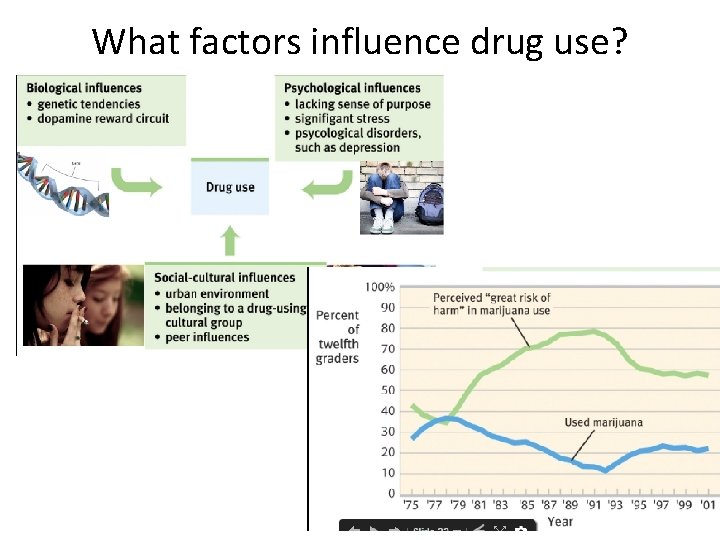
What factors influence drug use?
https: //www. youtube. com/watch? v=3 Ft. Nm 9 Cg. A 6 U
What are the major classifications of drugs and their effects? • Take out your chart.
Depressants • Reduce mental activity and slows down body processes. 1. Alcohol 2. Barbiturates 3. Opiates
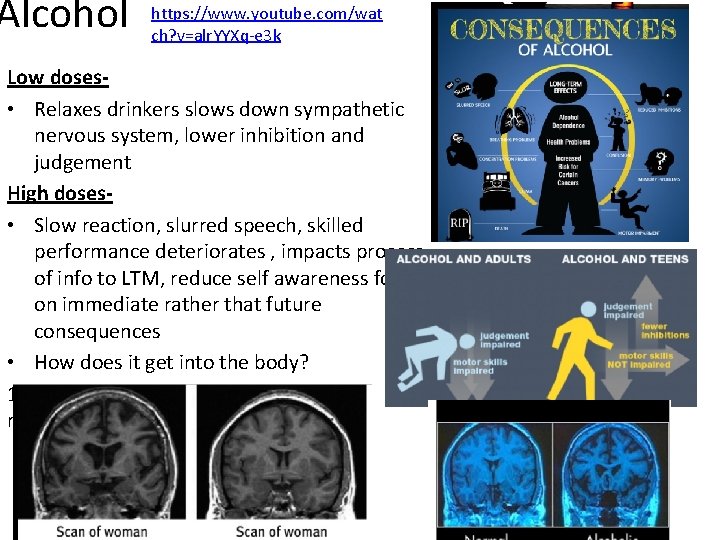
Alcohol https: //www. youtube. com/wat ch? v=alr. YYXq-e 3 k Low doses • Relaxes drinkers slows down sympathetic nervous system, lower inhibition and judgement High doses • Slow reaction, slurred speech, skilled performance deteriorates , impacts process of info to LTM, reduce self awareness focus on immediate rather that future consequences • How does it get into the body? 1 hour to metabolize 1 drink, women metabolize mores slowly than men
Explain how EACH of the following could influence the effects of alcohol on a person? 1. Mental Set 2. Experience 3. Setting 4. Tolerance/ Dependence 5. Weight/ Size Think Drink Effect http: //player. discoveryeducation. com/? bln. Preview. Only=1&guid. Asset. Id=5 f 2 90 e 71 -ab 90 -4842 -a 4 d 7 -fb 0 db 55 a 682 c
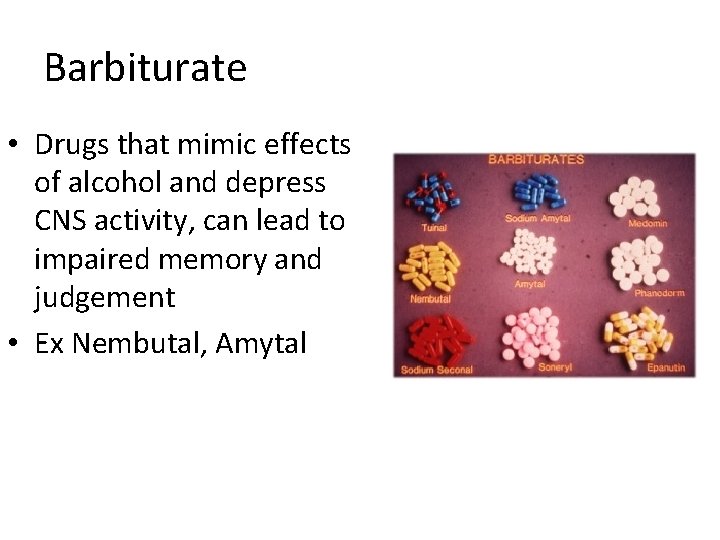
Barbiturate • Drugs that mimic effects of alcohol and depress CNS activity, can lead to impaired memory and judgement • Ex Nembutal, Amytal
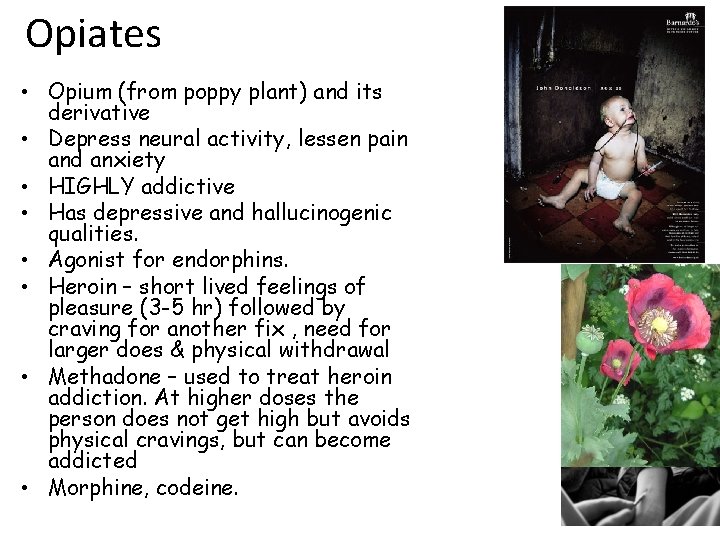
Opiates • Opium (from poppy plant) and its derivative • Depress neural activity, lessen pain and anxiety • HIGHLY addictive • Has depressive and hallucinogenic qualities. • Agonist for endorphins. • Heroin – short lived feelings of pleasure (3 -5 hr) followed by craving for another fix , need for larger does & physical withdrawal • Methadone – used to treat heroin addiction. At higher doses the person does not get high but avoids physical cravings, but can become addicted • Morphine, codeine.
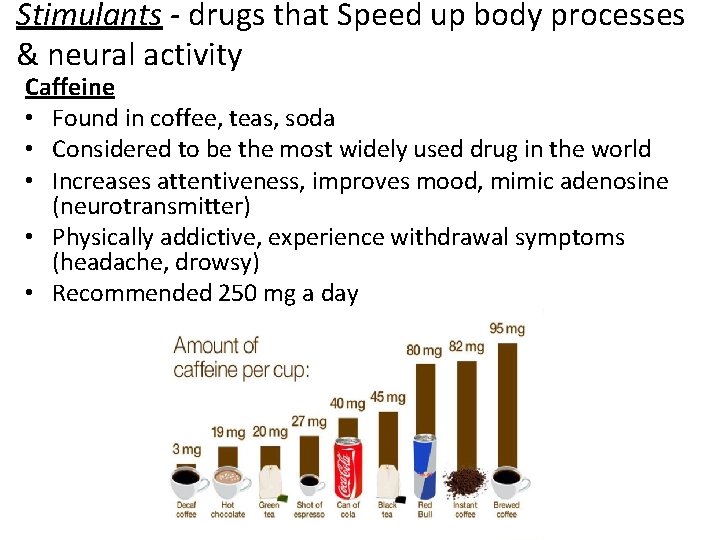
Stimulants - drugs that Speed up body processes & neural activity Caffeine • Found in coffee, teas, soda • Considered to be the most widely used drug in the world • Increases attentiveness, improves mood, mimic adenosine (neurotransmitter) • Physically addictive, experience withdrawal symptoms (headache, drowsy) • Recommended 250 mg a day
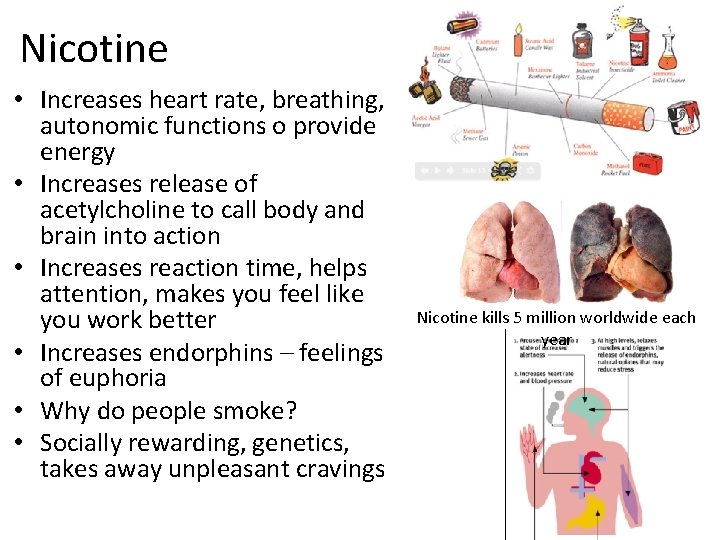
Nicotine • Increases heart rate, breathing, autonomic functions o provide energy • Increases release of acetylcholine to call body and brain into action • Increases reaction time, helps attention, makes you feel like you work better • Increases endorphins – feelings of euphoria • Why do people smoke? • Socially rewarding, genetics, takes away unpleasant cravings Nicotine kills 5 million worldwide each year
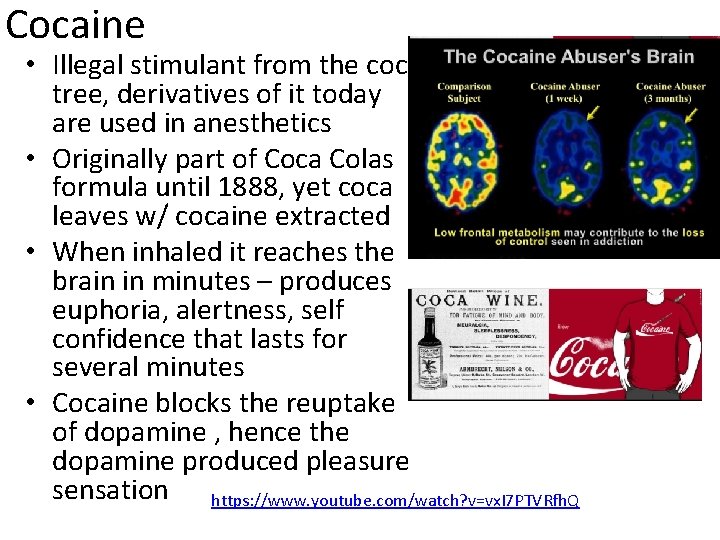
Cocaine • Illegal stimulant from the coca tree, derivatives of it today are used in anesthetics • Originally part of Coca Colas formula until 1888, yet coca leaves w/ cocaine extracted • When inhaled it reaches the brain in minutes – produces euphoria, alertness, self confidence that lasts for several minutes • Cocaine blocks the reuptake of dopamine , hence the dopamine produced pleasure sensation https: //www. youtube. com/watch? v=vx. I 7 PTVRfh. Q
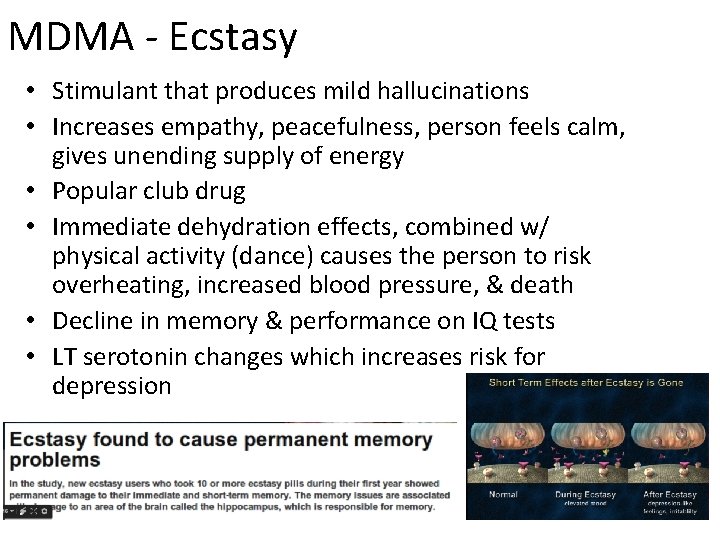
MDMA - Ecstasy • Stimulant that produces mild hallucinations • Increases empathy, peacefulness, person feels calm, gives unending supply of energy • Popular club drug • Immediate dehydration effects, combined w/ physical activity (dance) causes the person to risk overheating, increased blood pressure, & death • Decline in memory & performance on IQ tests • LT serotonin changes which increases risk for depression
Amphetamines • Speed or uppers • Suppress appetitive , once prescribes as diet pills, not done anymore as tolerance to it occurs quickly, meaning you need more and more of the drug • Increased concentration, reduce fatigue, increase anxiety and irritability • Methamphetamine – crystal meth illegal drug manufactured in street labs that is either smoked or ingested • After prolonged use crashed and exhibits fatigue, deep sleep, depression and increased appetite • Incredibly addictive https: //www. youtube. com/watch? v= • Reduces baseline dopamine Q-HIDhsew. Y 0 https: //www. youtube. com/watch? v=lsq 29 IGt. QBk
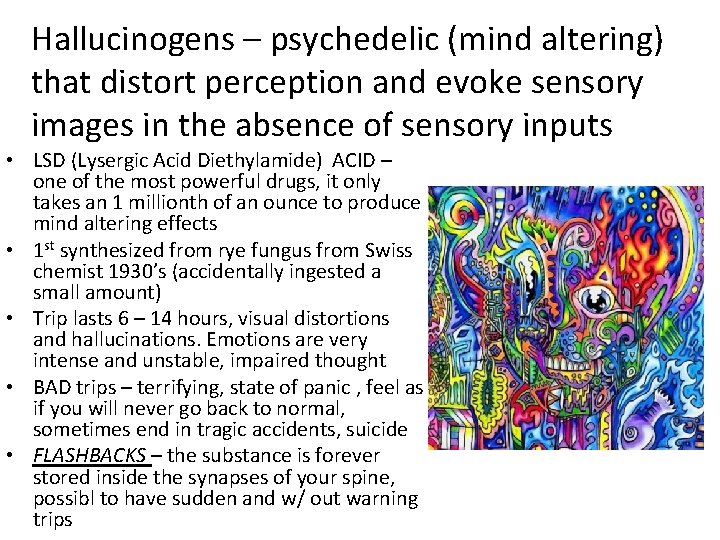
Hallucinogens – psychedelic (mind altering) that distort perception and evoke sensory images in the absence of sensory inputs • LSD (Lysergic Acid Diethylamide) ACID – one of the most powerful drugs, it only takes an 1 millionth of an ounce to produce mind altering effects • 1 st synthesized from rye fungus from Swiss chemist 1930’s (accidentally ingested a small amount) • Trip lasts 6 – 14 hours, visual distortions and hallucinations. Emotions are very intense and unstable, impaired thought • BAD trips – terrifying, state of panic , feel as if you will never go back to normal, sometimes end in tragic accidents, suicide • FLASHBACKS – the substance is forever stored inside the synapses of your spine, possibl to have sudden and w/ out warning trips
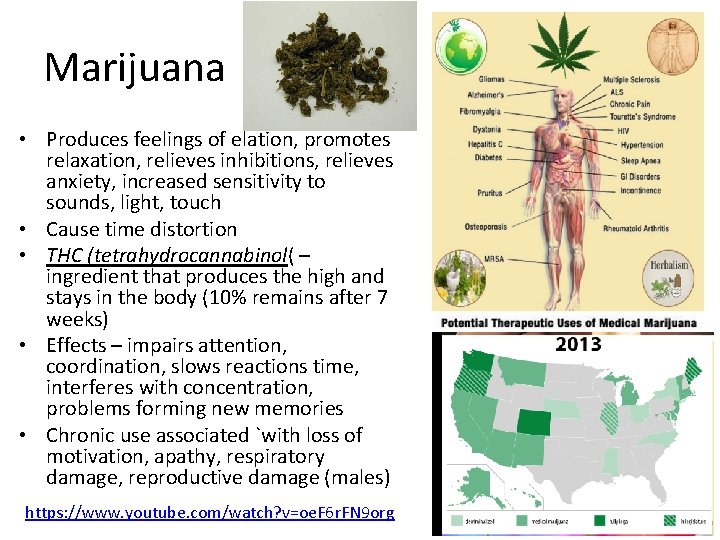
Marijuana • Produces feelings of elation, promotes relaxation, relieves inhibitions, relieves anxiety, increased sensitivity to sounds, light, touch • Cause time distortion • THC (tetrahydrocannabinol( – ingredient that produces the high and stays in the body (10% remains after 7 weeks) • Effects – impairs attention, coordination, slows reactions time, interferes with concentration, problems forming new memories • Chronic use associated `with loss of motivation, apathy, respiratory damage, reproductive damage (males) https: //www. youtube. com/watch? v=oe. F 6 r. FN 9 org
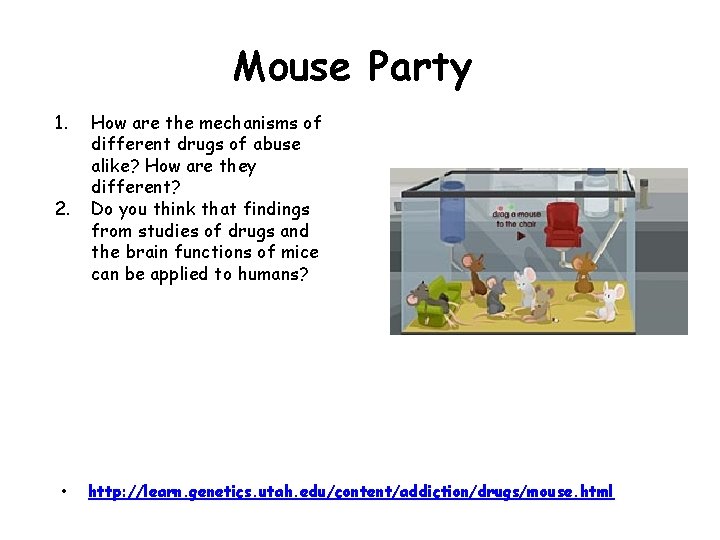
Mouse Party 1. 2. • How are the mechanisms of different drugs of abuse alike? How are they different? Do you think that findings from studies of drugs and the brain functions of mice can be applied to humans? http: //learn. genetics. utah. edu/content/addiction/drugs/mouse. html
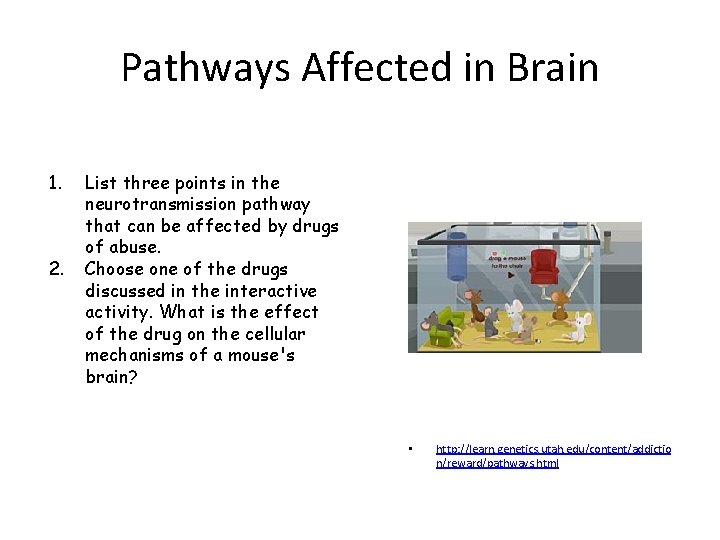
Pathways Affected in Brain 1. 2. List three points in the neurotransmission pathway that can be affected by drugs of abuse. Choose one of the drugs discussed in the interactive activity. What is the effect of the drug on the cellular mechanisms of a mouse's brain? • http: //learn. genetics. utah. edu/content/addictio n/reward/pathways. html
Dopamine • https: //www. youtube. com/watch? v=QHIDhsew. Y 0
Caffeine