Agri SETA AGRICULTURE SECTOR EDUCATION AND TRAINING AUTHORITY
- Slides: 9
Agri. SETA AGRICULTURE SECTOR EDUCATION AND TRAINING AUTHORITY PRESENTATION BY Mr Zenzele Myeza CHIEF EXECUTIVE OFFICER
Contents 1. Strategic Framework 2. Performance 2018/19 (Q 3 YTD ) 3. Strategic priority actions 4. Short term focus 5. Stakeholder management 6. Building research, monitoring and evaluation capacity 7. Questions 2
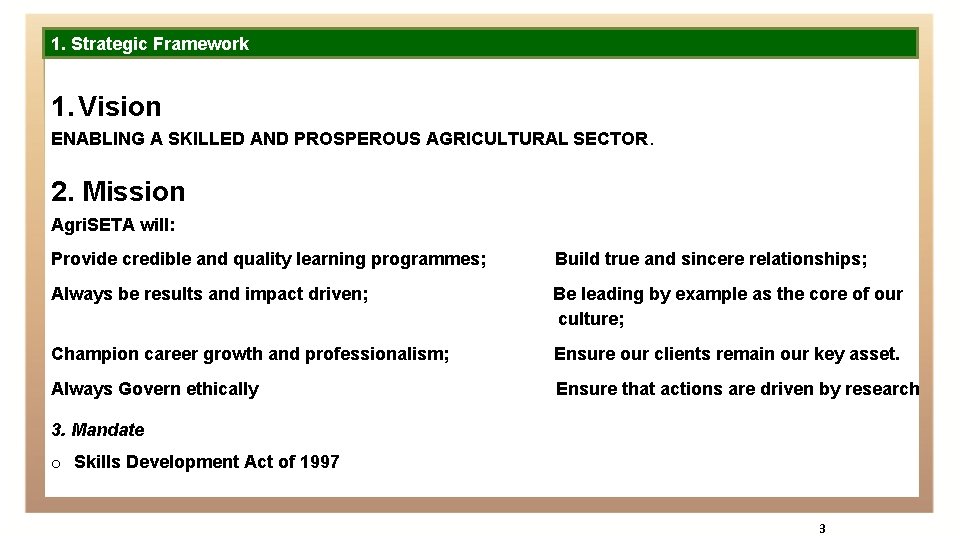
1. Strategic Framework 1. Vision ENABLING A SKILLED AND PROSPEROUS AGRICULTURAL SECTOR. 2. Mission Agri. SETA will: Provide credible and quality learning programmes; Build true and sincere relationships; Always be results and impact driven; Be leading by example as the core of our culture; Champion career growth and professionalism; Ensure our clients remain our key asset. Always Govern ethically Ensure that actions are driven by research 3. Mandate o Skills Development Act of 1997 3
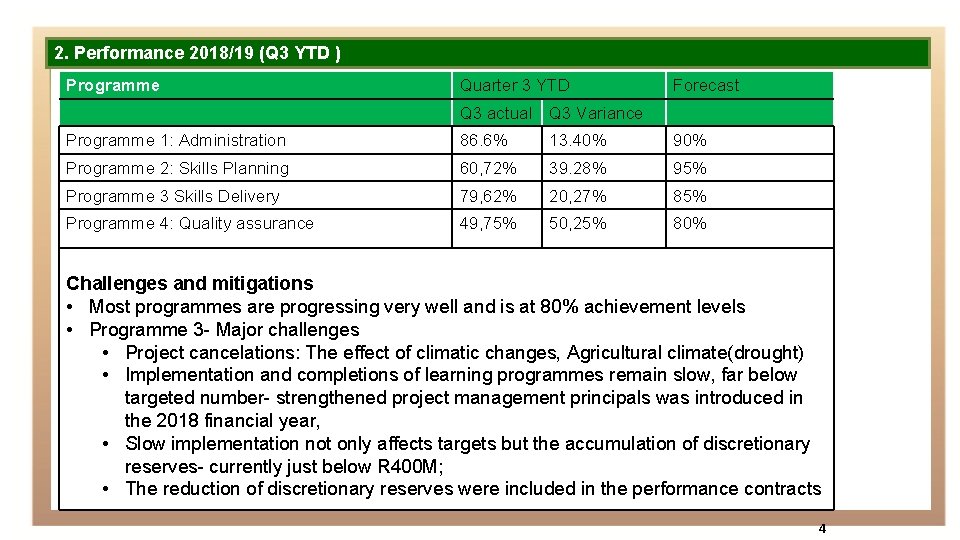
2. Performance 2018/19 (Q 3 YTD ) Programme Quarter 3 YTD Forecast Q 3 actual Q 3 Variance Programme 1: Administration 86. 6% 13. 40% 90% Programme 2: Skills Planning 60, 72% 39. 28% 95% Programme 3 Skills Delivery 79, 62% 20, 27% 85% Programme 4: Quality assurance 49, 75% 50, 25% 80% Challenges and mitigations • Most programmes are progressing very well and is at 80% achievement levels • Programme 3 - Major challenges • Project cancelations: The effect of climatic changes, Agricultural climate(drought) • Implementation and completions of learning programmes remain slow, far below targeted number- strengthened project management principals was introduced in the 2018 financial year, • Slow implementation not only affects targets but the accumulation of discretionary reserves- currently just below R 400 M; • The reduction of discretionary reserves were included in the performance contracts 4
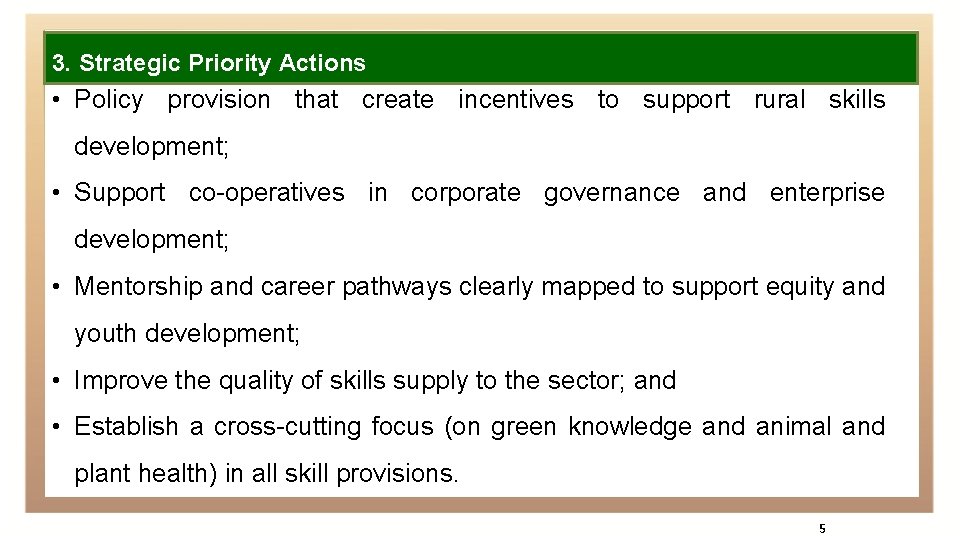
3. Strategic Priority Actions • Policy provision that create incentives to support rural skills development; • Support co-operatives in corporate governance and enterprise development; • Mentorship and career pathways clearly mapped to support equity and youth development; • Improve the quality of skills supply to the sector; and • Establish a cross-cutting focus (on green knowledge and animal and plant health) in all skill provisions. 5
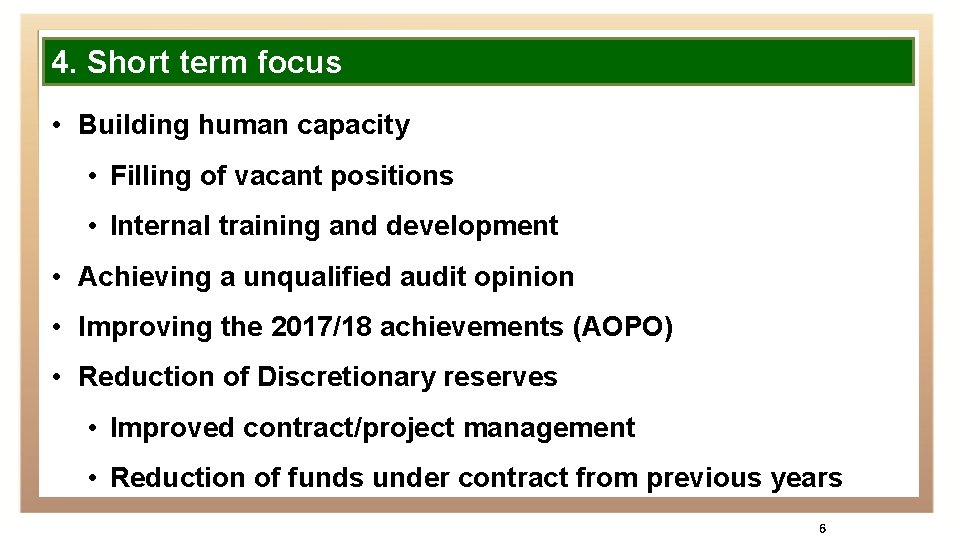
4. Short term focus • Building human capacity • Filling of vacant positions • Internal training and development • Achieving a unqualified audit opinion • Improving the 2017/18 achievements (AOPO) • Reduction of Discretionary reserves • Improved contract/project management • Reduction of funds under contract from previous years 6
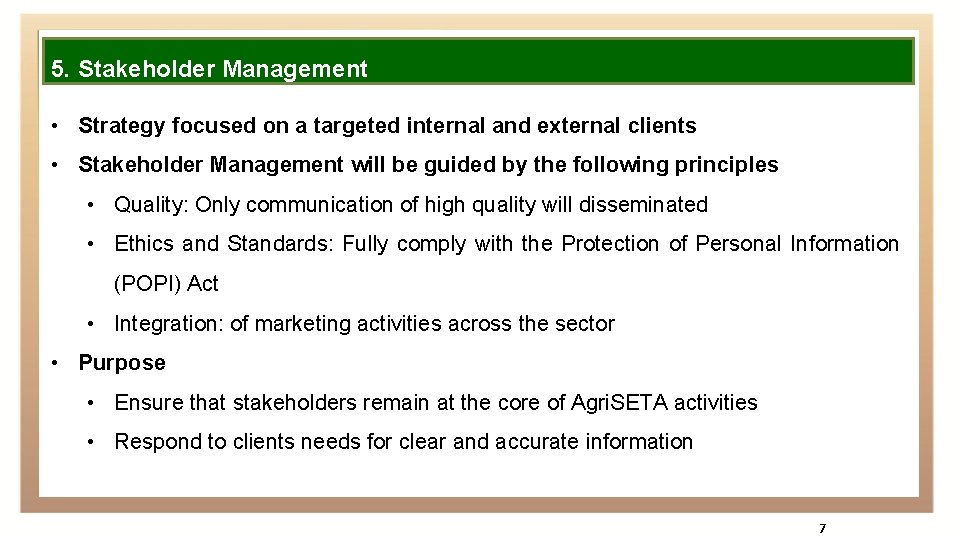
5. Stakeholder Management • Strategy focused on a targeted internal and external clients • Stakeholder Management will be guided by the following principles • Quality: Only communication of high quality will disseminated • Ethics and Standards: Fully comply with the Protection of Personal Information (POPI) Act • Integration: of marketing activities across the sector • Purpose • Ensure that stakeholders remain at the core of Agri. SETA activities • Respond to clients needs for clear and accurate information 7
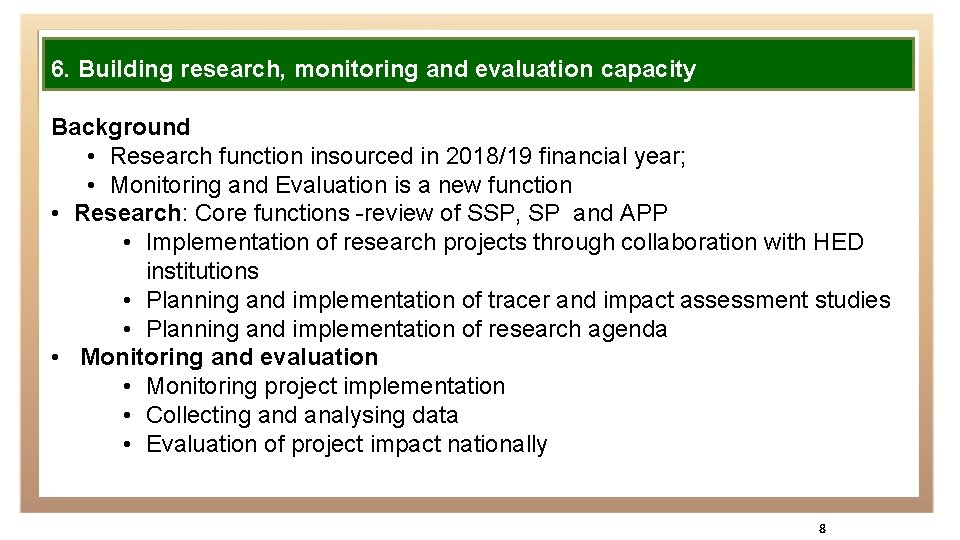
6. Building research, monitoring and evaluation capacity Background • Research function insourced in 2018/19 financial year; • Monitoring and Evaluation is a new function • Research: Core functions -review of SSP, SP and APP • Implementation of research projects through collaboration with HED institutions • Planning and implementation of tracer and impact assessment studies • Planning and implementation of research agenda • Monitoring and evaluation • Monitoring project implementation • Collecting and analysing data • Evaluation of project impact nationally 8
THANK YOU Questions 9