Additional Reading Forsyth pg 112 115 Socialization Research


- Slides: 18
Additional Reading ► Forsyth pg. 112 -115 § Socialization
Research Methods ► Sociometry § Activity ► Surveys and § Activity ► Case Questionnaires Studies ► Research § Activity Ethics
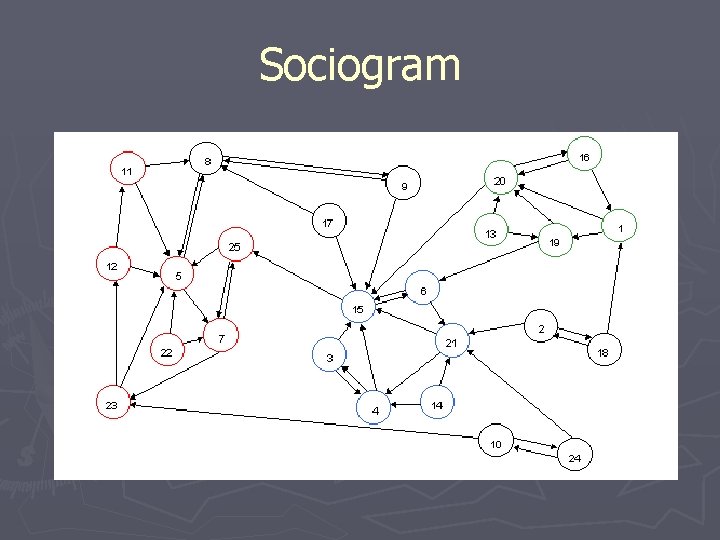
Sociometry ► Sociometry § A technique for analyzing the pattern of relationships among group members- especially hierarchies, friendship networks and cliques ► Sociogram § A graphic display of group members ratings of one another § Stars (center): individuals preferred by many members § Isolates (edges): preferred by few § Chains: members who form cliques ► Sociometric status: § Average rating of how much a member is liked
Sociogram
Activity: Make a Sociogram ► Many TV shows are about a group of friends of co-workers. Choose such a show that all group members are familiar with and make a sociogram where each member is represented by a circle and arrows from one circle to another represent whether the relationship is positive or negative (use a + or – mark). Place individuals that are preferred by many group members (stars) in the center, and put those that are preferred by few (isolates) on the edges.
Surveys and Questionnaires ► Paper and pencil instruments to measure various aspects of group functioning § § § Dependent variables in experiments Variables in correlational studies Simply to provide group feedback ► Advantages of survey research § Efficiency § Generalizability § Considered easy to design
Writing Questions Discuss the following questions with your neighbor. Think about difficulties respondents might have in: ► answering a question ► answering it truthfully
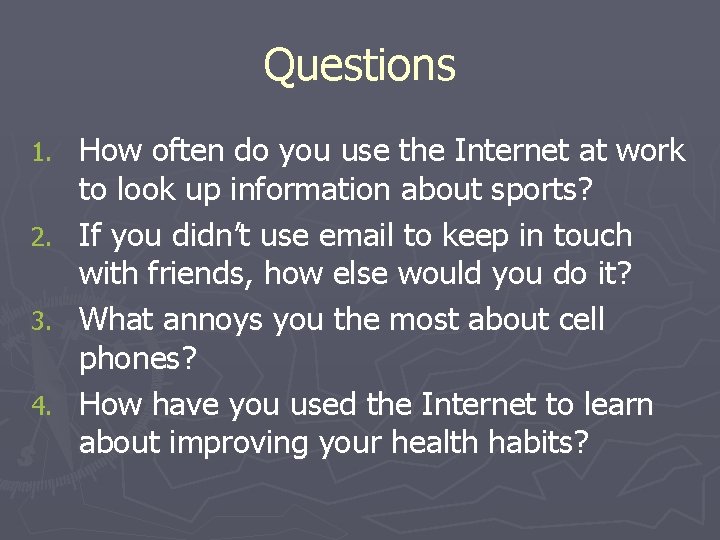
Questions How often do you use the Internet at work to look up information about sports? 2. If you didn’t use email to keep in touch with friends, how else would you do it? 3. What annoys you the most about cell phones? 4. How have you used the Internet to learn about improving your health habits? 1.
Pitfalls in Survey Design ► Problems with measurements: § The questions we ask § The way we present the questions ► Nonresponse
Writing Questions – Pitfalls to Avoid ► Confusing questions are not clear to respondents. Examples: § Double negatives § Double barreled questions ► Biased questions lead respondents to answer in a certain way ► Uncomfortable questions make it difficult for respondents to agree (or disagree) with a statement
Writing Questions – Pitfalls to Avoid ► Forced-choice questions prevent a respondent who has no opinion from answering them truthfully ► Vague response categories make it difficult for respondents to choose a response ► Overlapping response categories confuses the respondent who has to choose between two or more categories for an answer
Case Studies ► An intensive description and analysis of groups. ► May use a variety of research methods § § § Observations Interviews Surveys ► Advantages: § Informing us on rare, unusual or noteworthy conditions not easily studied otherwise ► Disadvantages: § Causes cannot be identified
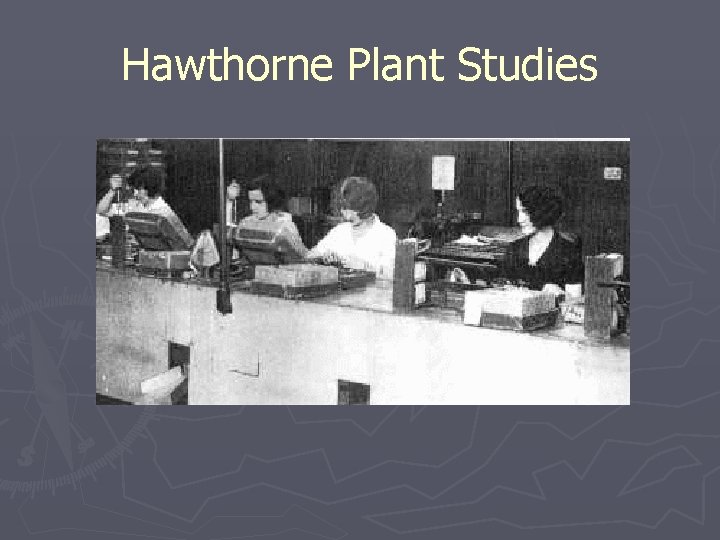
Hawthorne Plant Studies
Ethics in Research ► Group dynamics researchers protect the rights of the groups and people they study by following a number of ethical guidelines.
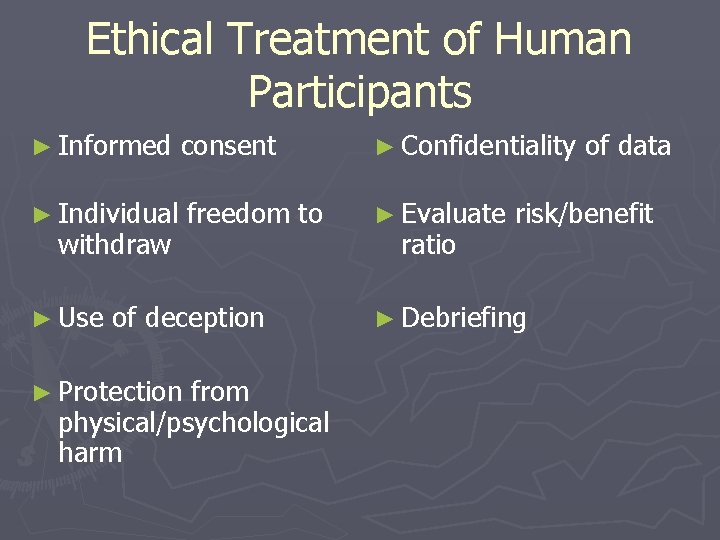
Ethical Treatment of Human Participants ► Informed consent ► Confidentiality ► Individual freedom to ► Evaluate withdraw ► Use of deception ► Protection from physical/psychological harm ratio of data risk/benefit ► Debriefing
Ethical Review Boards ► AKA Institutional review board ► Examine proposed research studies to determine whether they are in accordance with standard ethical guidelines
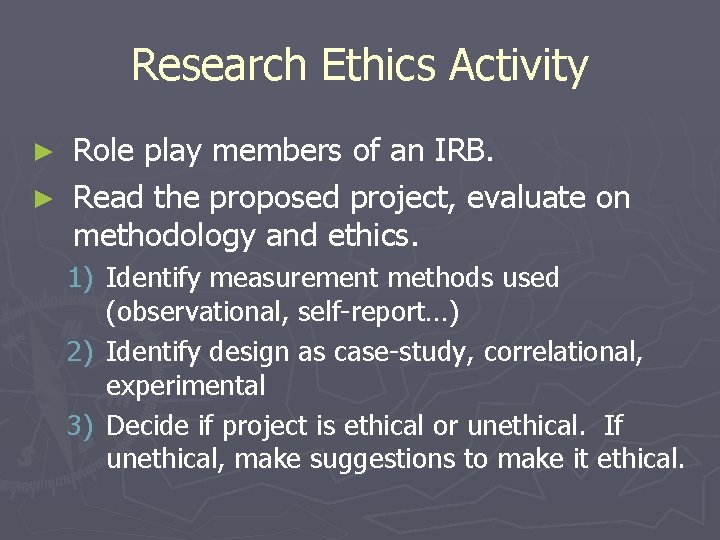
Research Ethics Activity Role play members of an IRB. ► Read the proposed project, evaluate on methodology and ethics. ► 1) Identify measurement methods used (observational, self-report…) 2) Identify design as case-study, correlational, experimental 3) Decide if project is ethical or unethical. If unethical, make suggestions to make it ethical.