Adding Integers with Different Signs Adding on a

- Slides: 12
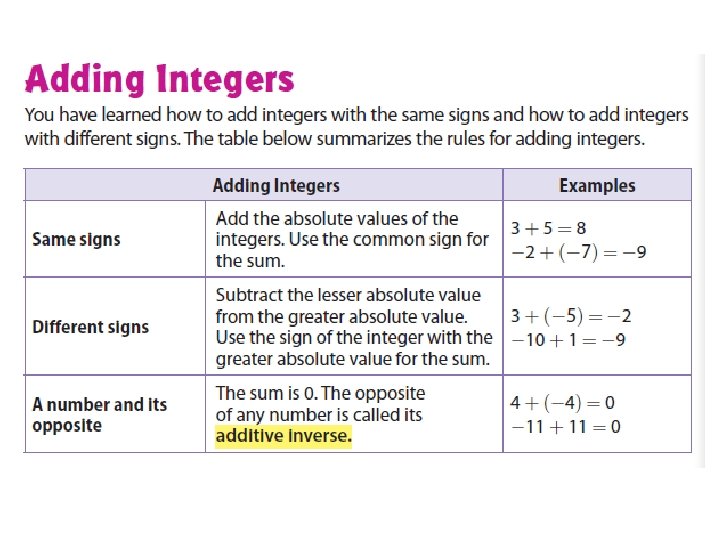
Adding Integers with Different Signs
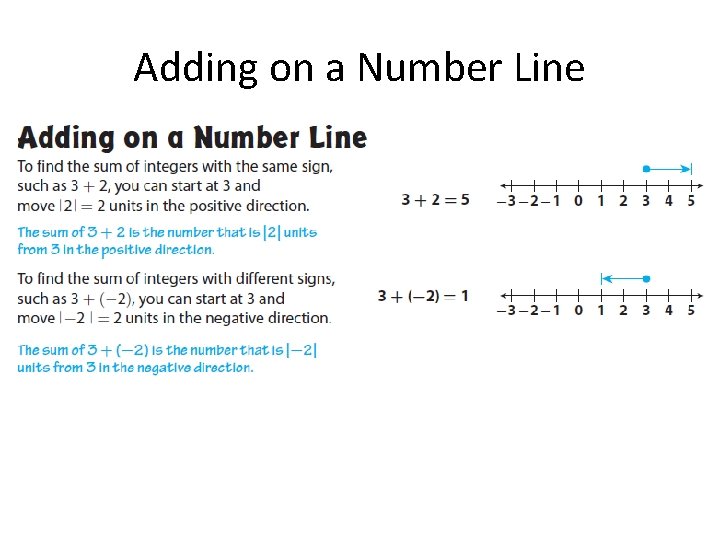
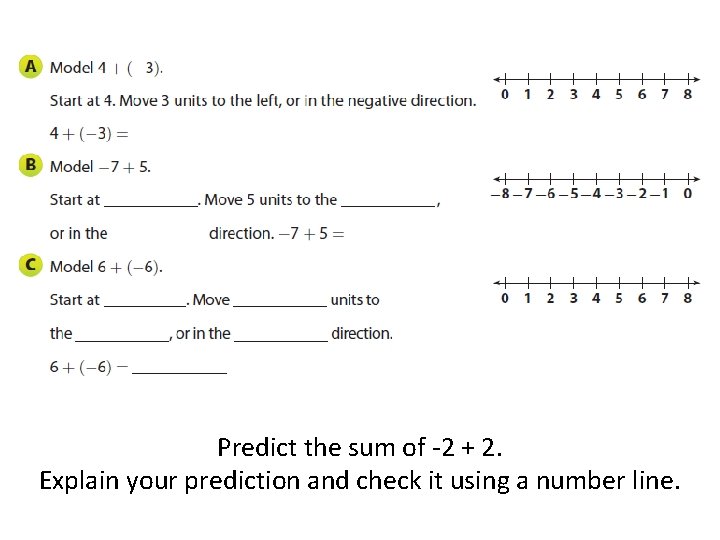
Adding on a Number Line
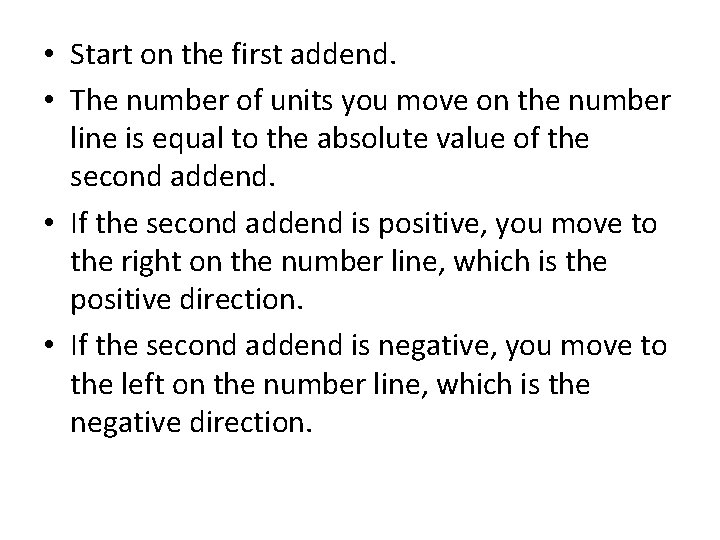
• Start on the first addend. • The number of units you move on the number line is equal to the absolute value of the second addend. • If the second addend is positive, you move to the right on the number line, which is the positive direction. • If the second addend is negative, you move to the left on the number line, which is the negative direction.
Predict the sum of -2 + 2. Explain your prediction and check it using a number line.
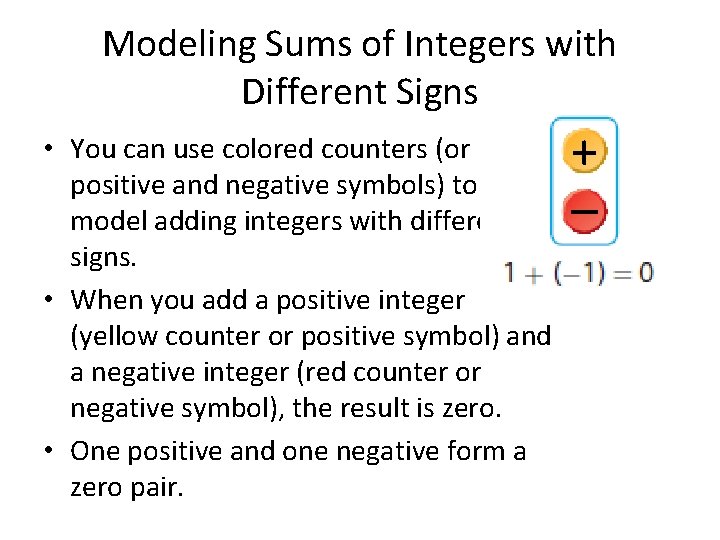
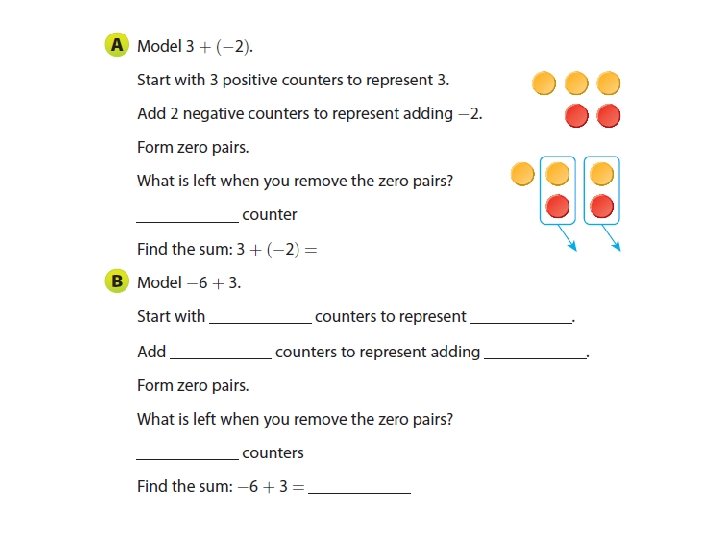
Modeling Sums of Integers with Different Signs • You can use colored counters (or positive and negative symbols) to model adding integers with different signs. • When you add a positive integer (yellow counter or positive symbol) and a negative integer (red counter or negative symbol), the result is zero. • One positive and one negative form a zero pair. + –
Zero Pairs • The opposite of any real number (a) is (-a). • The additive inverse Property tells us that the sum of any number and its opposite is zero. • Zero is neither positive or negative, and zero is its own opposite. • Zero pairs are formed by combining opposite integers. • When zero is added or subtracted from any number, that number is unchanged. • This is known as the identity property of addition or subtraction. a + 0 = a and a – 0 = a
5 + (-1) = 4 + (-6) = -7 + 1 = -4 + 3 = Kyle models a sum of two integers. He uses more negative counters than positive counters. What do you predict about the sign of the sum? Will the sum be positive or negative? Explain.
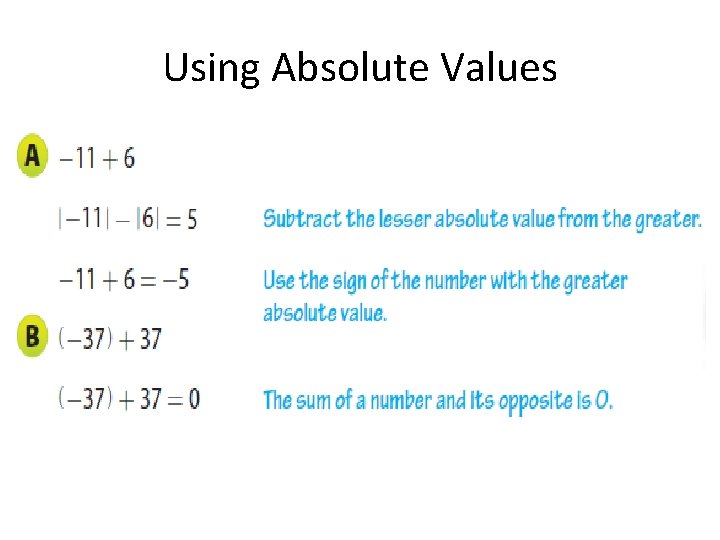
Using Absolute Values
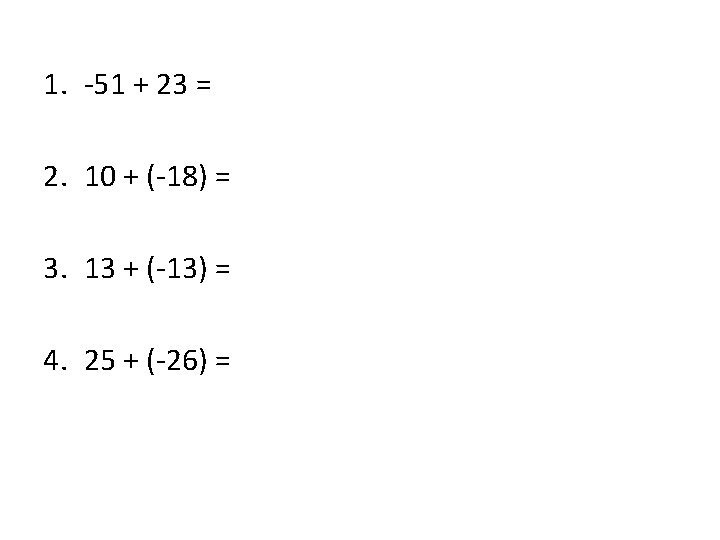
1. -51 + 23 = 2. 10 + (-18) = 3. 13 + (-13) = 4. 25 + (-26) =