A Qo E study of different stream and
- Slides: 17
A Qo. E study of different stream and layout configurations in video conferencing under limited network conditions Simon N. B. Gunkel, Marwin Schmitt, Pablo Cesar CWI: Centrum Wiskunde & Informatica Science Park 123, 1098 XG Amsterdam, Netherlands gunkel@cwi. nl, schmitt@cwi. nl, p. s. cesar@cwi. nl IEEE Quality of Multimedia Experience (Qo. MEX) 2015
Introduction • Wide popularity of video conferencing systems • Limited research work in the aspect of group conversation analysis in video conferencing • one to many • This paper study the relationship between Qo. E and three different factors: layout, video quality, and network limitations
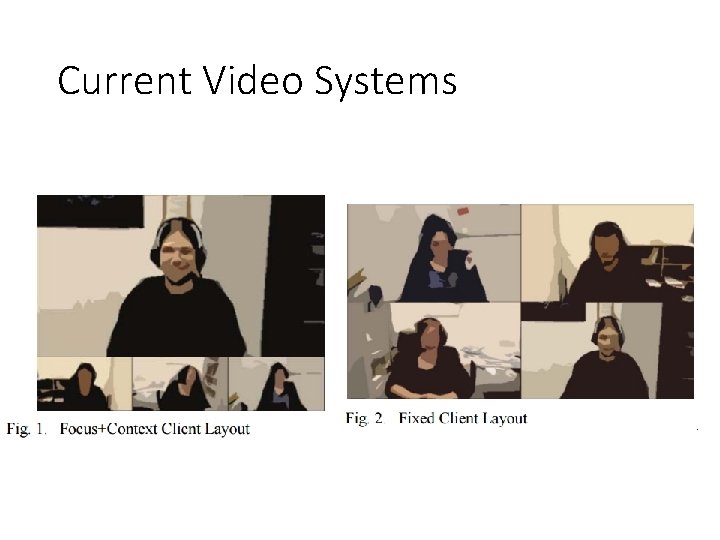
Current Video Systems
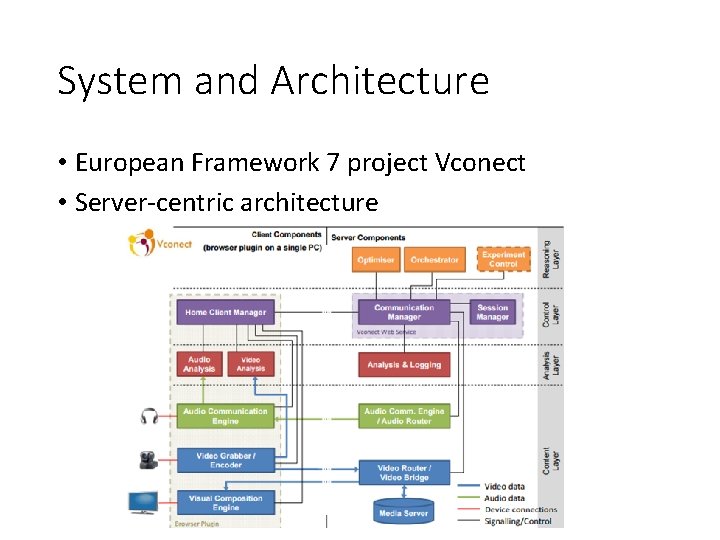
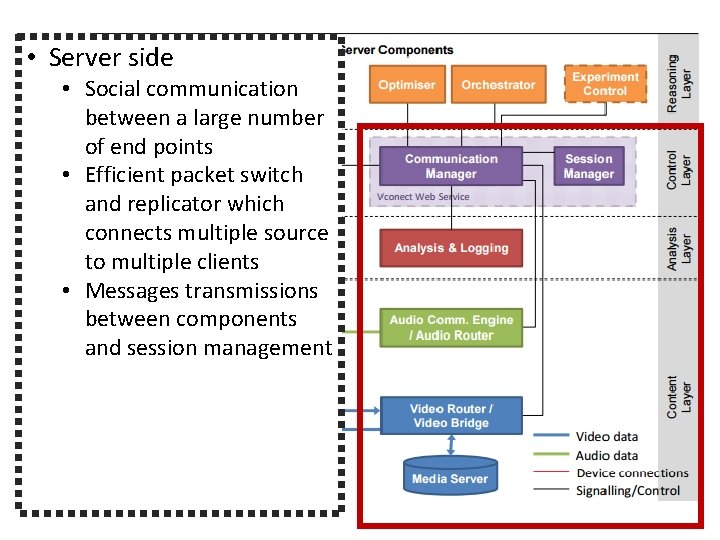
System and Architecture • European Framework 7 project Vconect • Server-centric architecture
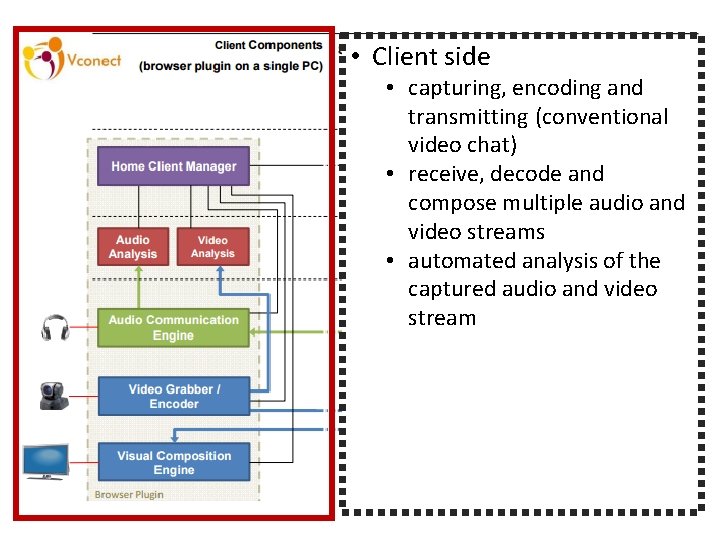
• Client side • capturing, encoding and transmitting (conventional video chat) • receive, decode and compose multiple audio and video streams • automated analysis of the captured audio and video stream
• Server side • Social communication between a large number of end points • Efficient packet switch and replicator which connects multiple source to multiple clients • Messages transmissions between components and session management
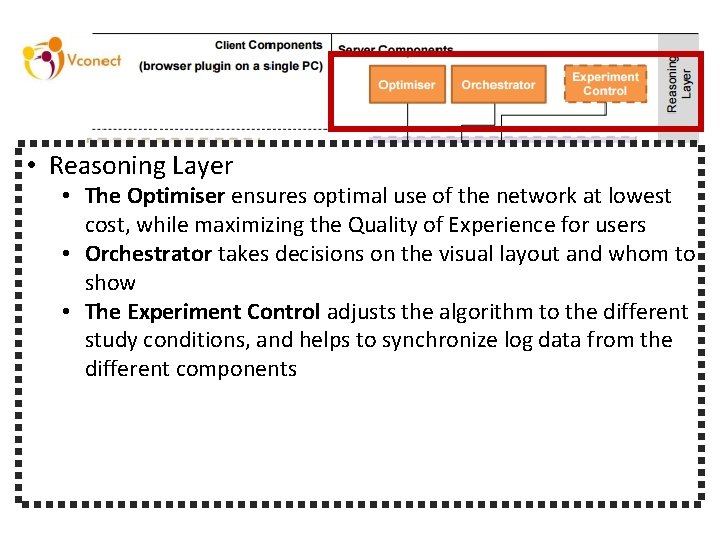
• Reasoning Layer • The Optimiser ensures optimal use of the network at lowest cost, while maximizing the Quality of Experience for users • Orchestrator takes decisions on the visual layout and whom to show • The Experiment Control adjusts the algorithm to the different study conditions, and helps to synchronize log data from the different components
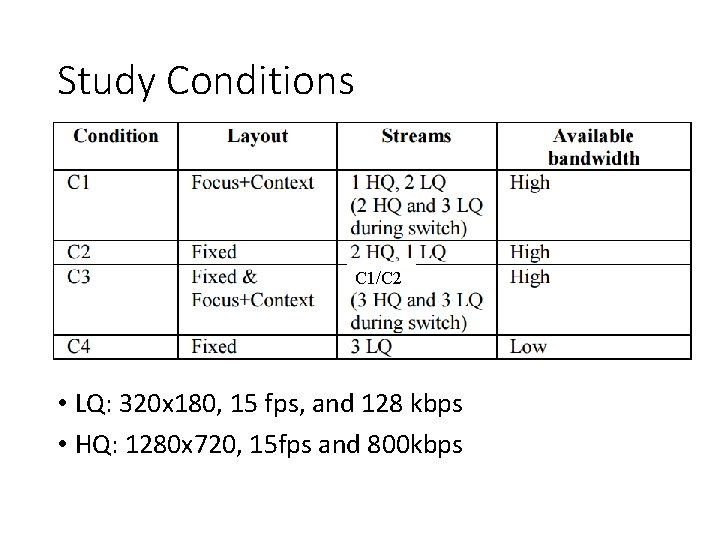
Study Setup and Methodology • focus on the relationship between Qo. E and three different factors: layout, video quality (resolution) and network limitations (packet loss) • 20 participants in 5 groups • from 16 different nationalities, with an average of 27 (SD 5), and 6 different professions • discussion about “wilderness survival” • already employed in other multi-party video conferencing studies and a similar task is suggested in ITU P. 1301 • 4 different layout/stream configurations
Research Questions • RQ 1. How is the relationship between individual influencing factors and the Qo. E? • RQ 2. What is the impact of network restrictions to the choice of layouts? • RQ 3. Can we improve the Qo. E by choosing a particular layout and stream configuration based on the network limitations?
Study Conditions C 1/C 2 • LQ: 320 x 180, 15 fps, and 128 kbps • HQ: 1280 x 720, 15 fps and 800 kbps
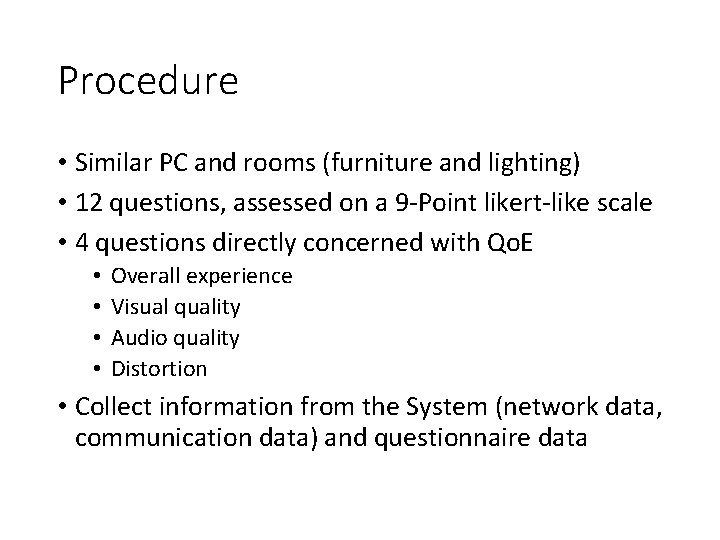
Procedure • Similar PC and rooms (furniture and lighting) • 12 questions, assessed on a 9 -Point likert-like scale • 4 questions directly concerned with Qo. E • • Overall experience Visual quality Audio quality Distortion • Collect information from the System (network data, communication data) and questionnaire data
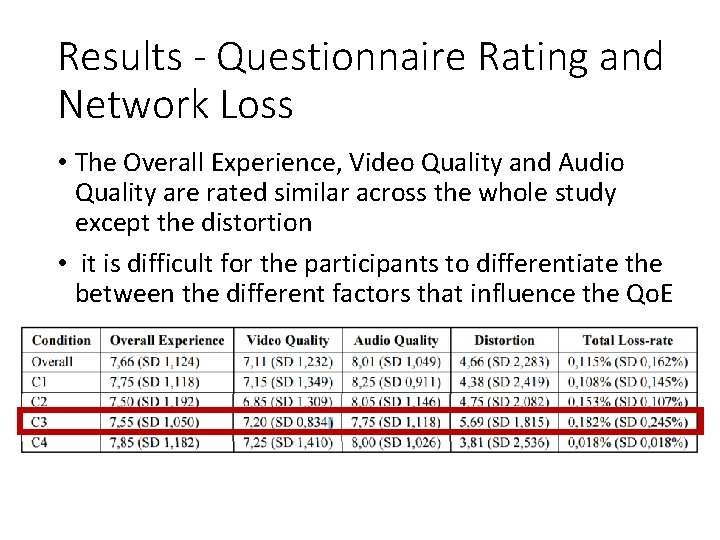
Results - Questionnaire Rating and Network Loss • The Overall Experience, Video Quality and Audio Quality are rated similar across the whole study except the distortion • it is difficult for the participants to differentiate the between the different factors that influence the Qo. E
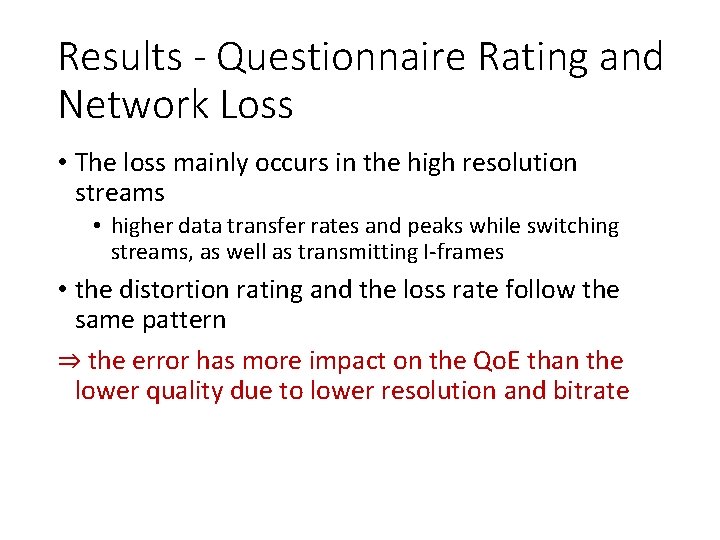
Results - Questionnaire Rating and Network Loss • The loss mainly occurs in the high resolution streams • higher data transfer rates and peaks while switching streams, as well as transmitting I-frames • the distortion rating and the loss rate follow the same pattern ⇒ the error has more impact on the Qo. E than the lower quality due to lower resolution and bitrate
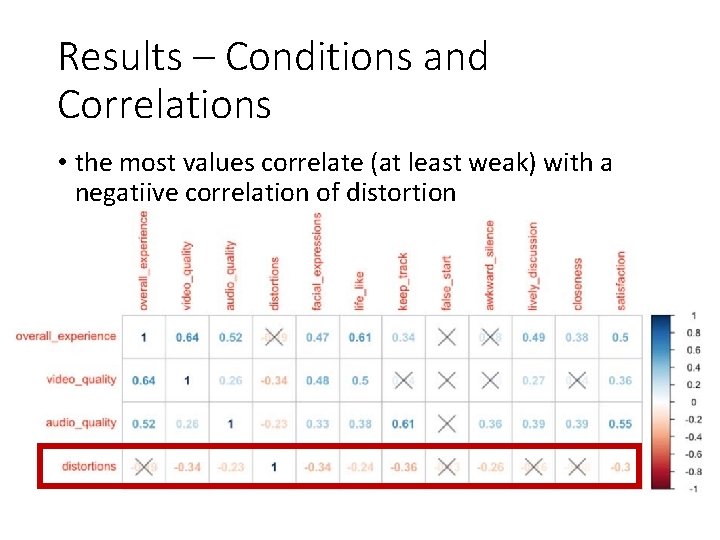
Results – Conditions and Correlations • the most values correlate (at least weak) with a negatiive correlation of distortion
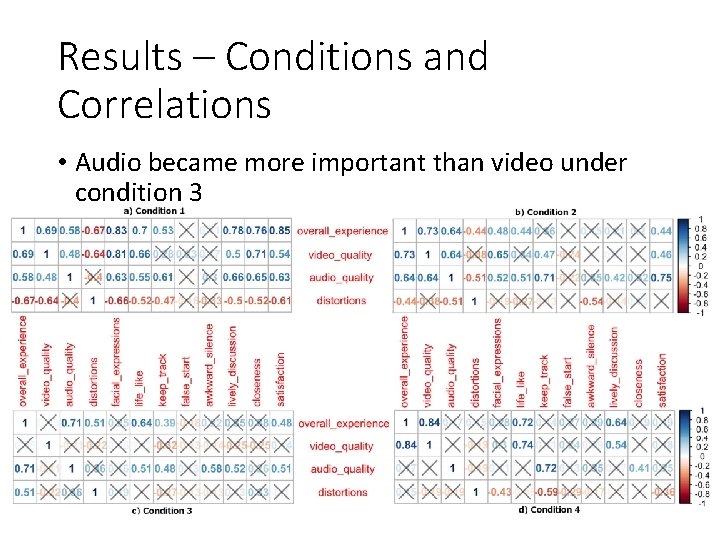
Results – Conditions and Correlations • Audio became more important than video under condition 3
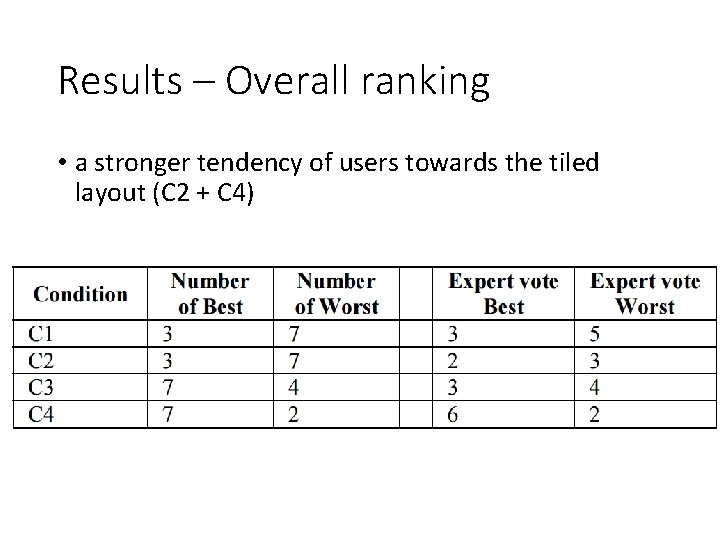
Results – Overall ranking • a stronger tendency of users towards the tiled layout (C 2 + C 4)
Conclusion • it is difficult for participants to distinguish between the overall conversation dynamics and the different other factors (like video and audio quality) that influence the perception and Qo. E • the correlations between different influencing factors are different in the different conditions • our conversation task does not strongly depend on visual ques • the stability of the system and a balanced stream quality, as well as, a balanced visual layout seems most satisfying to the users