A conditional sentence is a complex sentence with

- Slides: 21
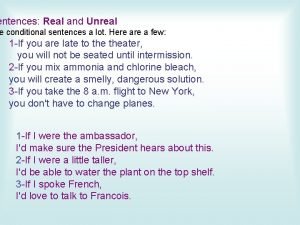
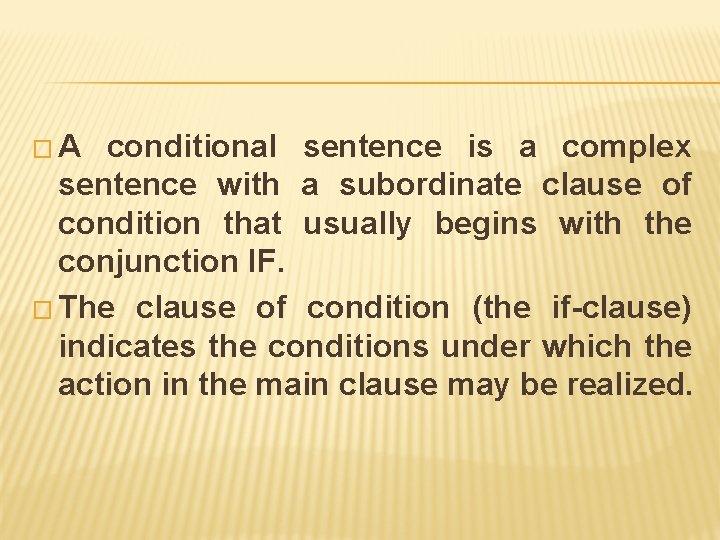
�A conditional sentence is a complex sentence with a subordinate clause of condition that usually begins with the conjunction IF. � The clause of condition (the if-clause) indicates the conditions under which the action in the main clause may be realized.
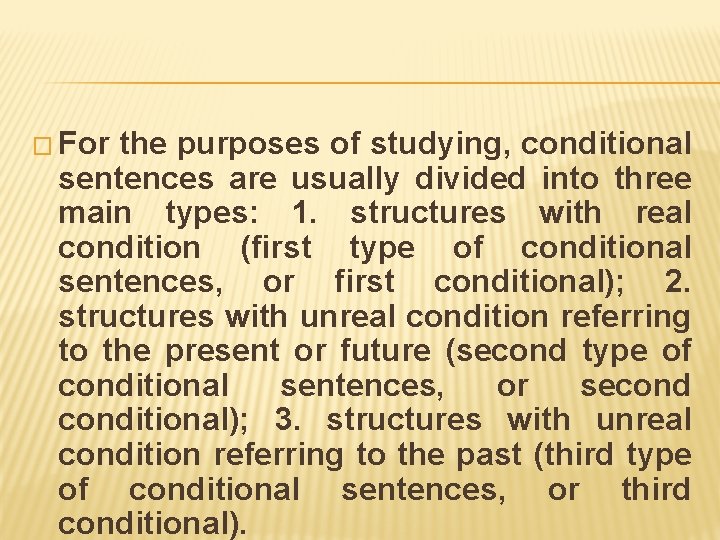
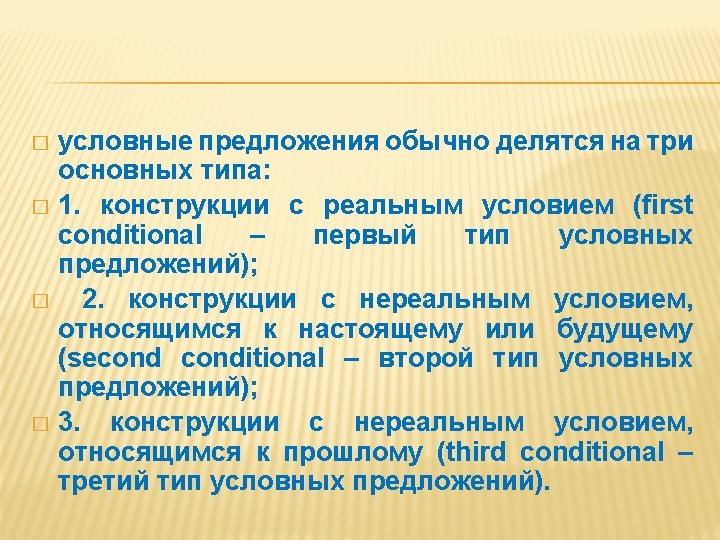
� For the purposes of studying, conditional sentences are usually divided into three main types: 1. structures with real condition (first type of conditional sentences, or first conditional); 2. structures with unreal condition referring to the present or future (second type of conditional sentences, or seconditional); 3. structures with unreal condition referring to the past (third type of conditional sentences, or third conditional).
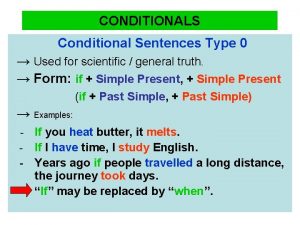
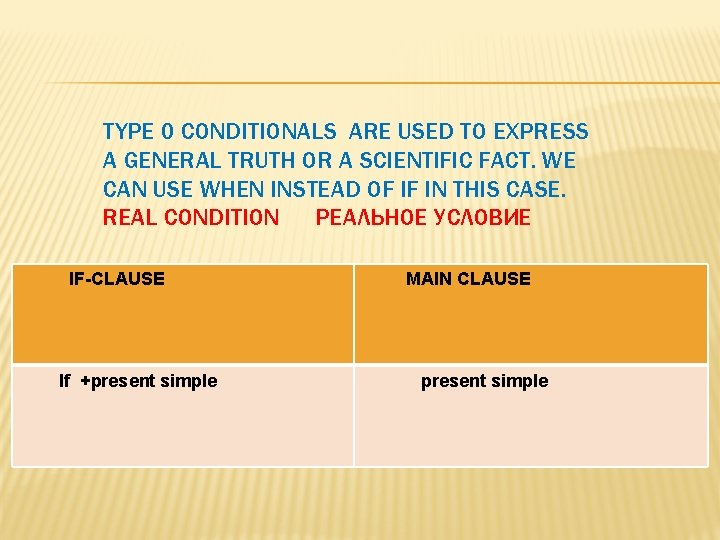
TYPE 0 CONDITIONALS ARE USED TO EXPRESS A GENERAL TRUTH OR A SCIENTIFIC FACT. WE CAN USE WHEN INSTEAD OF IF IN THIS CASE. REAL CONDITION РЕАЛЬНОЕ УСЛОВИЕ IF-CLAUSE If +present simple MAIN CLAUSE present simple
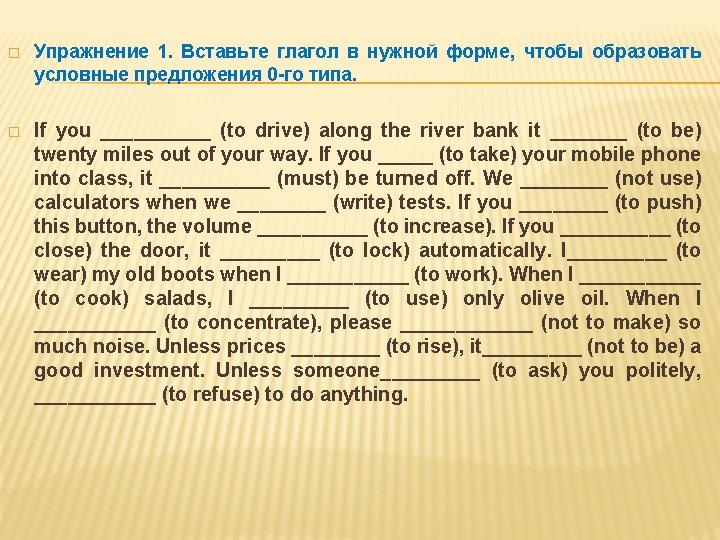
� Упражнение 1. Вставьте глагол в нужной форме, чтобы образовать условные предложения 0 -го типа. � If you _____ (to drive) along the river bank it _______ (to be) twenty miles out of your way. If you _____ (to take) your mobile phone into class, it _____ (must) be turned off. We ____ (not use) calculators when we ____ (write) tests. If you ____ (to push) this button, the volume _____ (to increase). If you _____ (to close) the door, it _____ (to lock) automatically. I_____ (to wear) my old boots when I ______ (to work). When I ______ (to cook) salads, I _____ (to use) only olive oil. When I ______ (to concentrate), please ______ (not to make) so much noise. Unless prices ____ (to rise), it_____ (not to be) a good investment. Unless someone_____ (to ask) you politely, ______ (to refuse) to do anything.
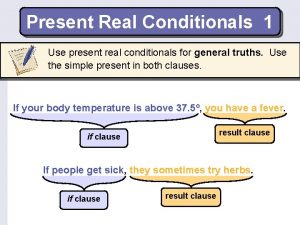
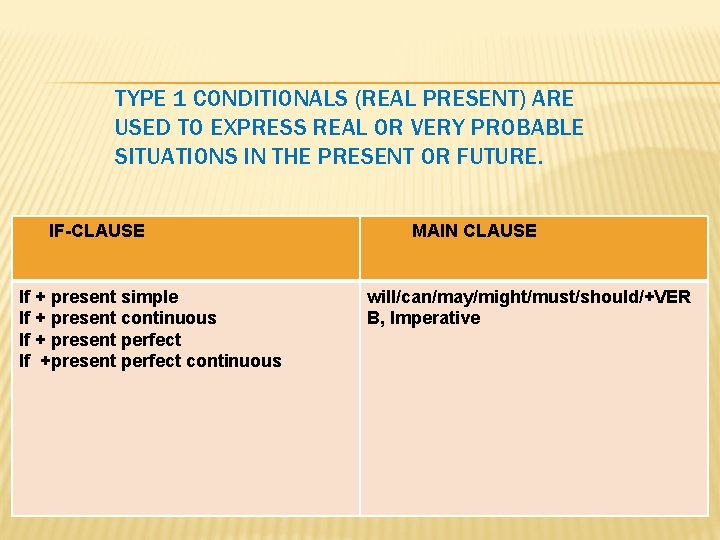
TYPE 1 CONDITIONALS (REAL PRESENT) ARE USED TO EXPRESS REAL OR VERY PROBABLE SITUATIONS IN THE PRESENT OR FUTURE. IF-CLAUSE If + present simple If + present continuous If + present perfect If +present perfect continuous MAIN CLAUSE will/can/may/might/must/should/+VER B, Imperative
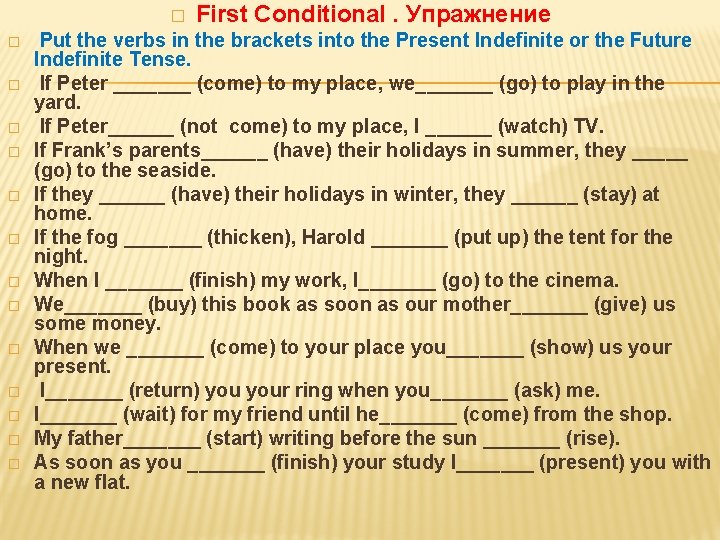
� � � � First Conditional. Упражнение Put the verbs in the brackets into the Present Indefinite or the Future Indefinite Tense. If Peter _______ (come) to my place, we_______ (go) to play in the yard. If Peter______ (not come) to my place, I ______ (watch) TV. If Frank’s parents______ (have) their holidays in summer, they _____ (go) to the seaside. If they ______ (have) their holidays in winter, they ______ (stay) at home. If the fog _______ (thicken), Harold _______ (put up) the tent for the night. When I _______ (finish) my work, I_______ (go) to the cinema. We_______ (buy) this book as soon as our mother_______ (give) us some money. When we _______ (come) to your place you_______ (show) us your present. I_______ (return) your ring when you_______ (ask) me. I_______ (wait) for my friend until he_______ (come) from the shop. My father_______ (start) writing before the sun _______ (rise). As soon as you _______ (finish) your study I_______ (present) you with a new flat.
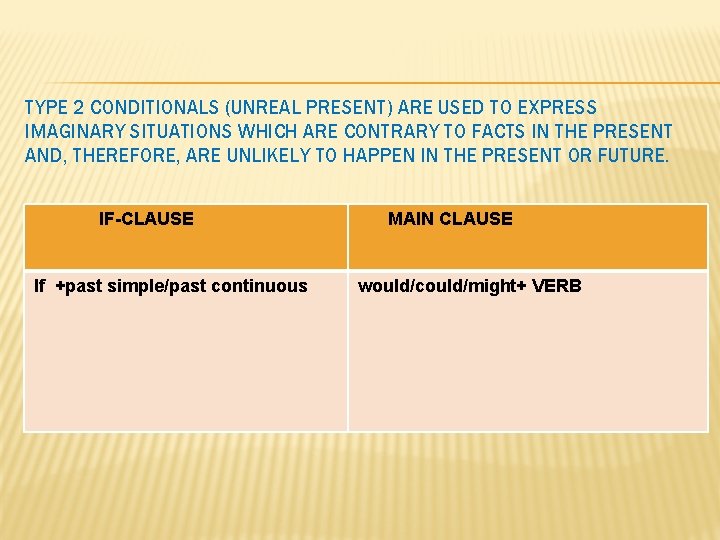
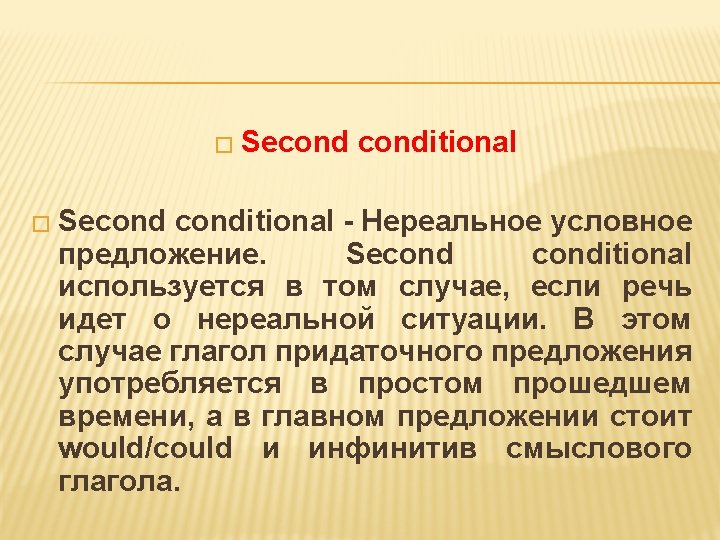
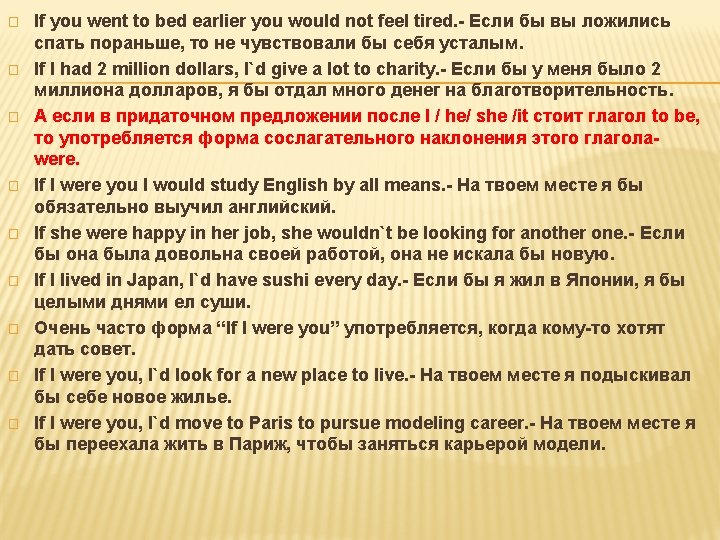
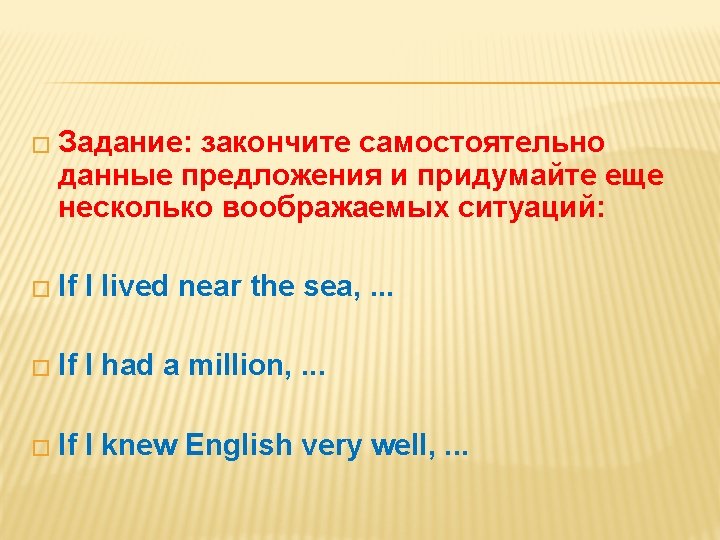
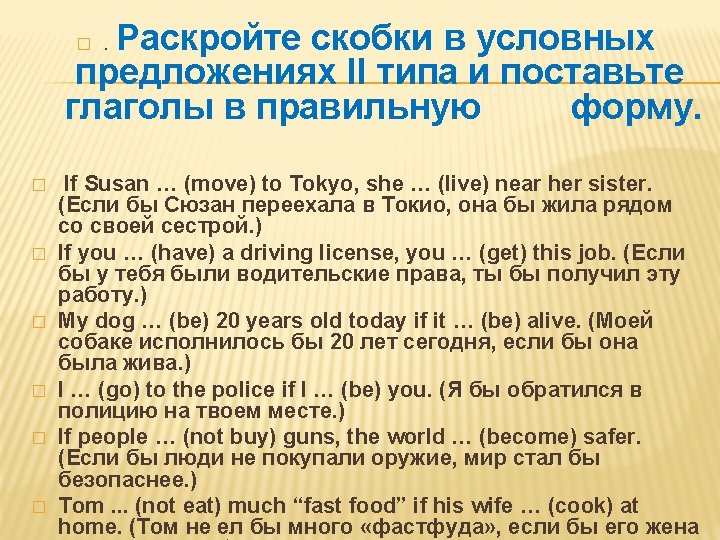
TYPE 2 CONDITIONALS (UNREAL PRESENT) ARE USED TO EXPRESS IMAGINARY SITUATIONS WHICH ARE CONTRARY TO FACTS IN THE PRESENT AND, THEREFORE, ARE UNLIKELY TO HAPPEN IN THE PRESENT OR FUTURE. IF-CLAUSE If +past simple/past continuous MAIN CLAUSE would/could/might+ VERB
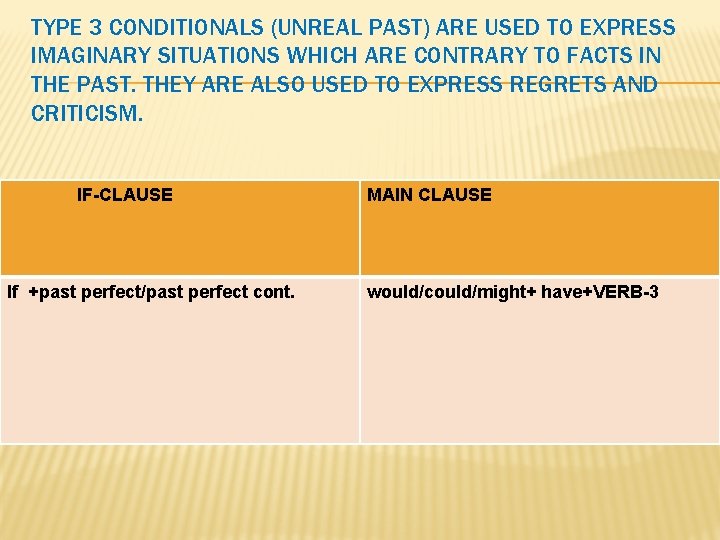
TYPE 3 CONDITIONALS (UNREAL PAST) ARE USED TO EXPRESS IMAGINARY SITUATIONS WHICH ARE CONTRARY TO FACTS IN THE PAST. THEY ARE ALSO USED TO EXPRESS REGRETS AND CRITICISM. IF-CLAUSE If +past perfect/past perfect cont. MAIN CLAUSE would/could/might+ have+VERB-3
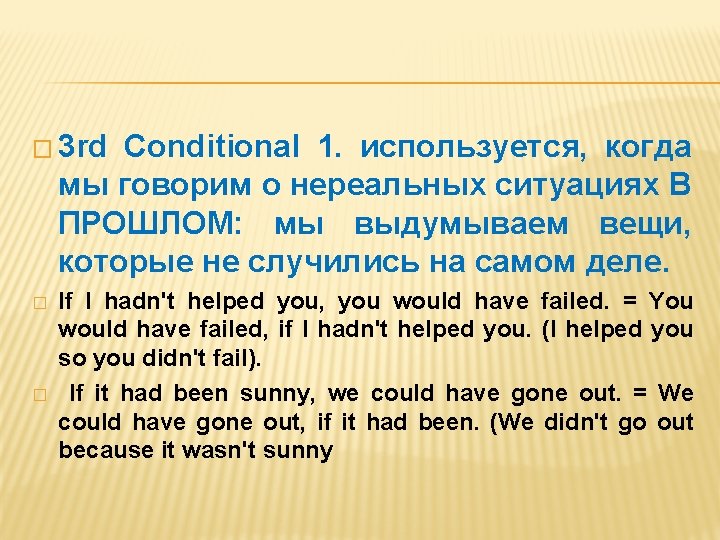
� 3 rd Conditional 1. используется, когда мы говорим о нереальных ситуациях В ПРОШЛОМ: мы выдумываем вещи, которые не случились на самом деле. � � If I hadn't helped you, you would have failed. = You would have failed, if I hadn't helped you. (I helped you so you didn't fail). If it had been sunny, we could have gone out. = We could have gone out, if it had been. (We didn't go out because it wasn't sunny
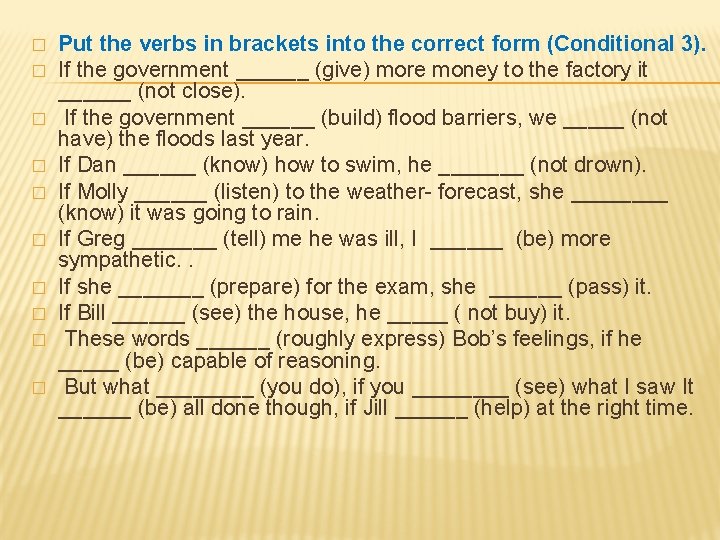
� � � � � Put the verbs in brackets into the correct form (Conditional 3). If the government ______ (give) more money to the factory it ______ (not close). If the government ______ (build) flood barriers, we _____ (not have) the floods last year. If Dan ______ (know) how to swim, he _______ (not drown). If Molly ______ (listen) to the weather- forecast, she ____ (know) it was going to rain. If Greg _______ (tell) me he was ill, I ______ (be) more sympathetic. . If she _______ (prepare) for the exam, she ______ (pass) it. If Bill ______ (see) the house, he _____ ( not buy) it. These words ______ (roughly express) Bob’s feelings, if he _____ (be) capable of reasoning. But what ____ (you do), if you ____ (see) what I saw It ______ (be) all done though, if Jill ______ (help) at the right time.
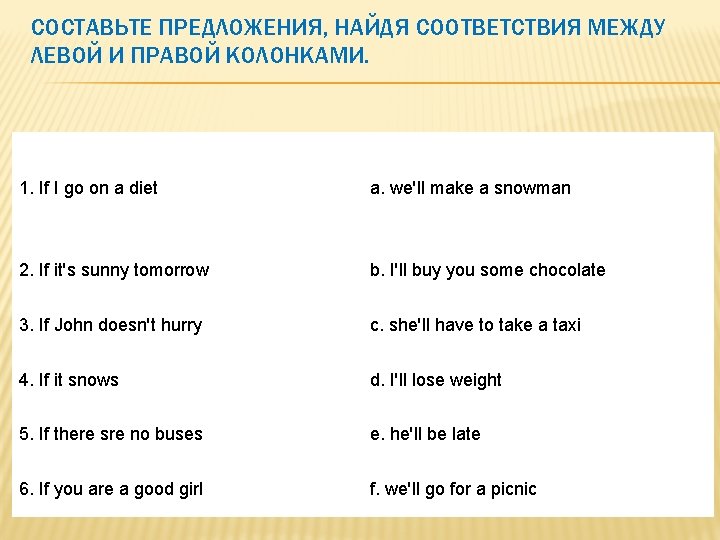
СОСТАВЬТЕ ПРЕДЛОЖЕНИЯ, НАЙДЯ СООТВЕТСТВИЯ МЕЖДУ ЛЕВОЙ И ПРАВОЙ КОЛОНКАМИ. 1. If I go on a diet a. we'll make a snowman 2. If it's sunny tomorrow b. I'll buy you some chocolate 3. If John doesn't hurry c. she'll have to take a taxi 4. If it snows d. I'll lose weight 5. If there sre no buses e. he'll be late 6. If you are a good girl f. we'll go for a picnic
THANK YOU FOR YOUR ATTENTION