18 2 Cloud Formation I Air Compression and
- Slides: 13
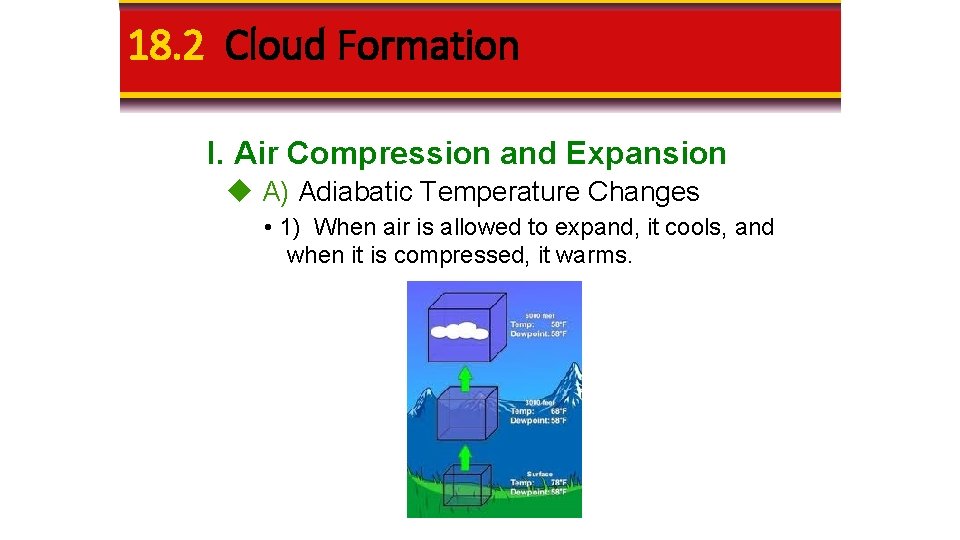
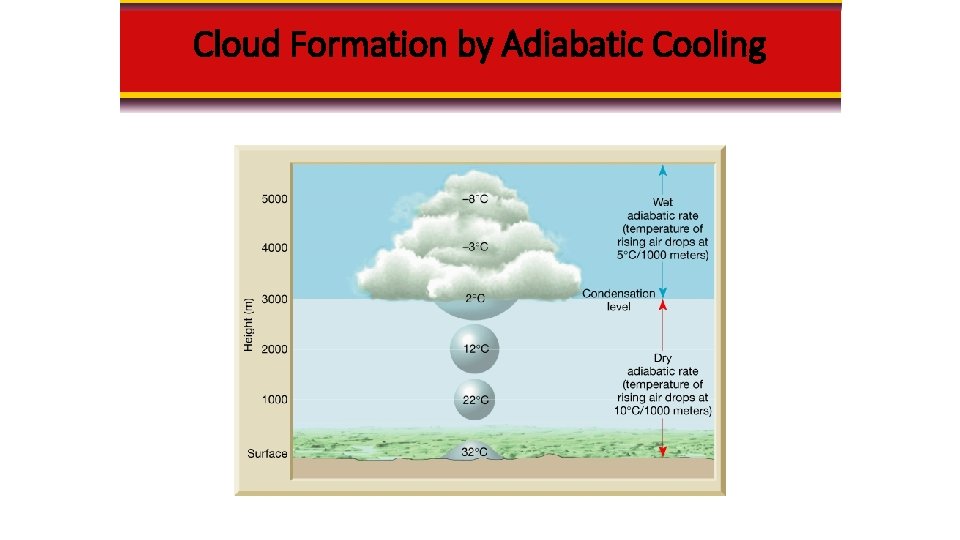
18. 2 Cloud Formation I. Air Compression and Expansion A) Adiabatic Temperature Changes • 1) When air is allowed to expand, it cools, and when it is compressed, it warms.
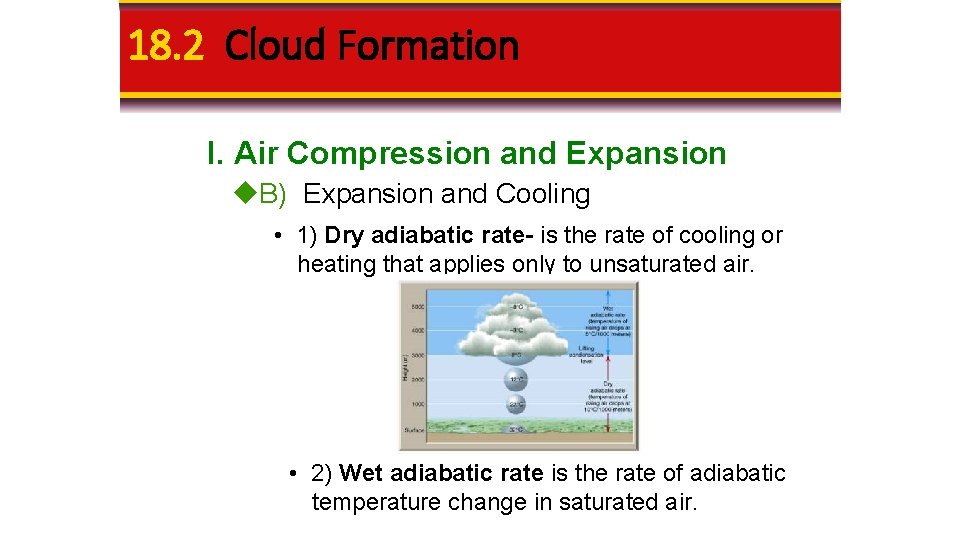
18. 2 Cloud Formation I. Air Compression and Expansion B) Expansion and Cooling • 1) Dry adiabatic rate- is the rate of cooling or heating that applies only to unsaturated air. • 2) Wet adiabatic rate is the rate of adiabatic temperature change in saturated air.
Cloud Formation by Adiabatic Cooling
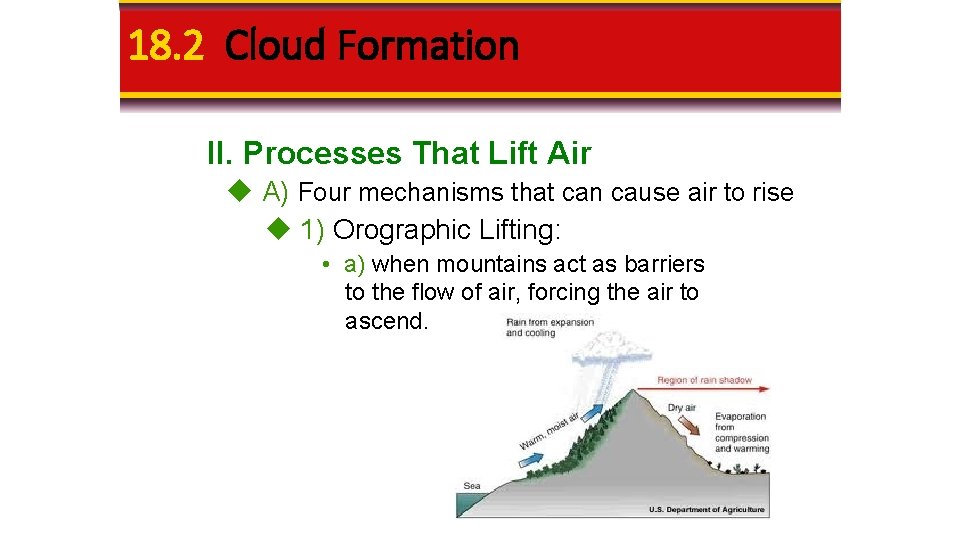
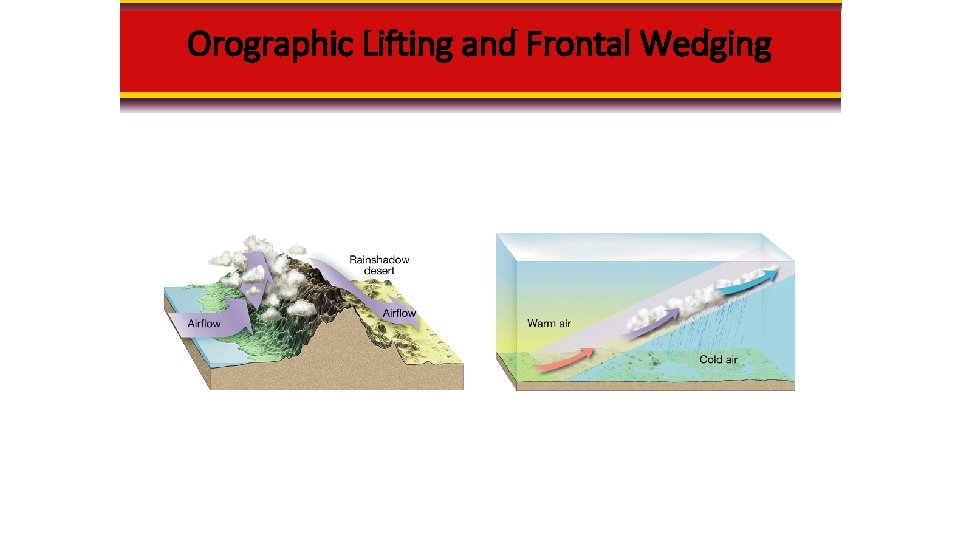
18. 2 Cloud Formation II. Processes That Lift Air A) Four mechanisms that can cause air to rise 1) Orographic Lifting: • a) when mountains act as barriers to the flow of air, forcing the air to ascend.
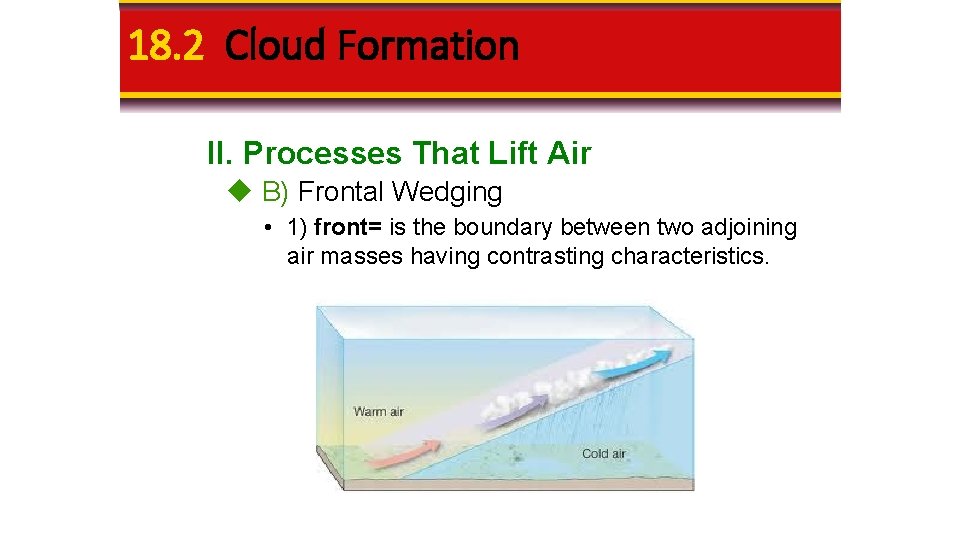
18. 2 Cloud Formation II. Processes That Lift Air B) Frontal Wedging • 1) front= is the boundary between two adjoining air masses having contrasting characteristics.
Orographic Lifting and Frontal Wedging
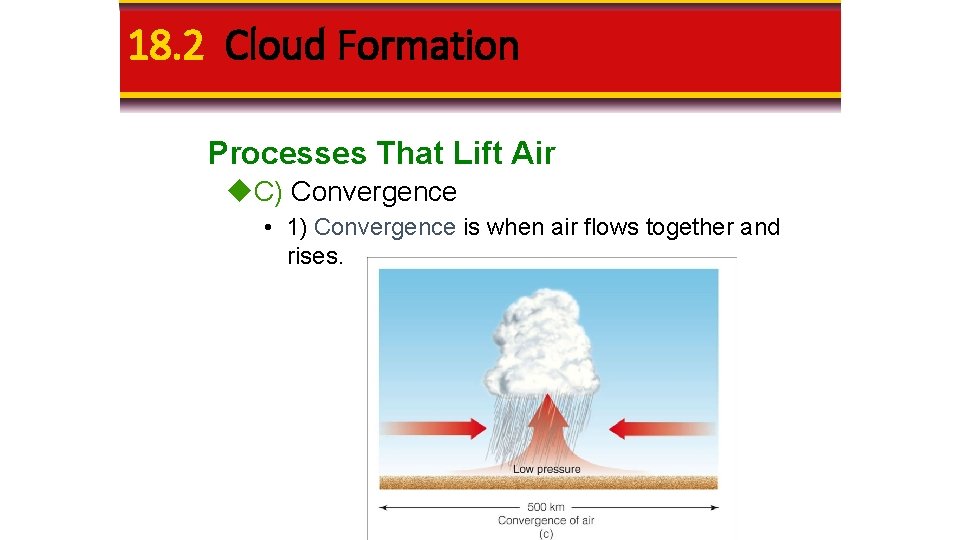
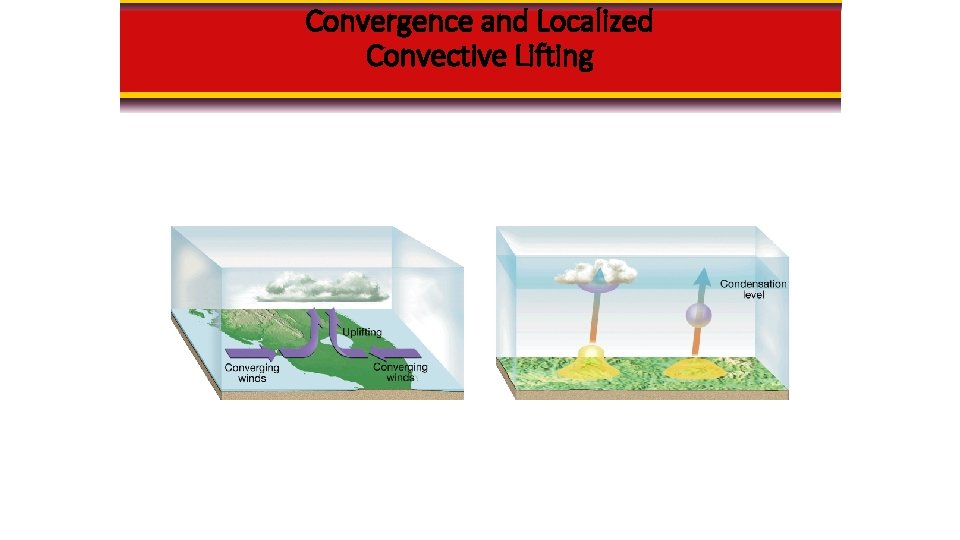
18. 2 Cloud Formation Processes That Lift Air C) Convergence • 1) Convergence is when air flows together and rises.
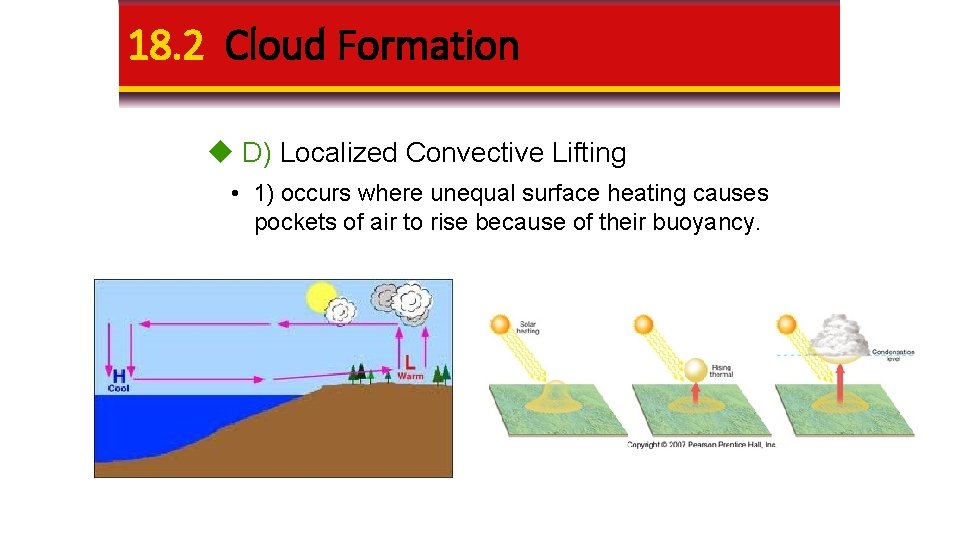
18. 2 Cloud Formation D) Localized Convective Lifting • 1) occurs where unequal surface heating causes pockets of air to rise because of their buoyancy.
Convergence and Localized Convective Lifting
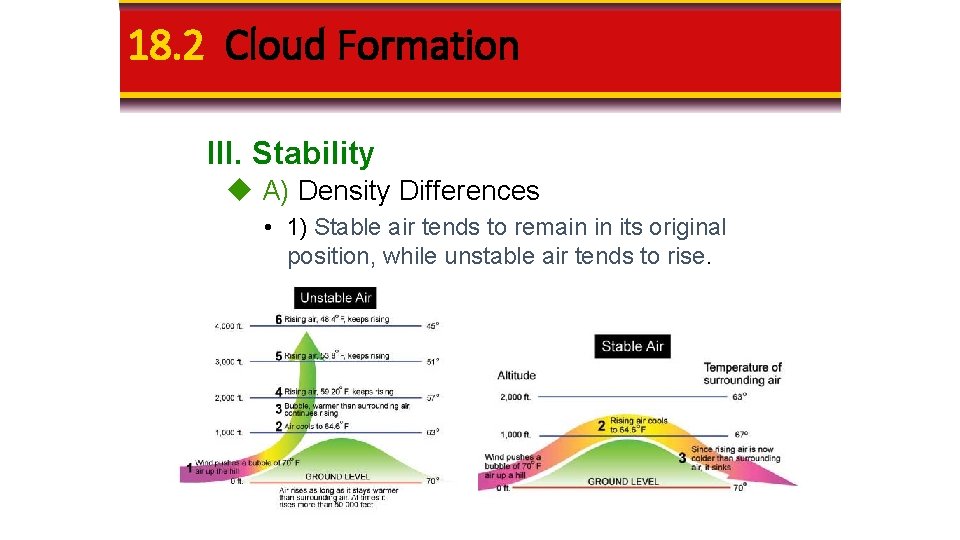
18. 2 Cloud Formation III. Stability A) Density Differences • 1) Stable air tends to remain in its original position, while unstable air tends to rise.
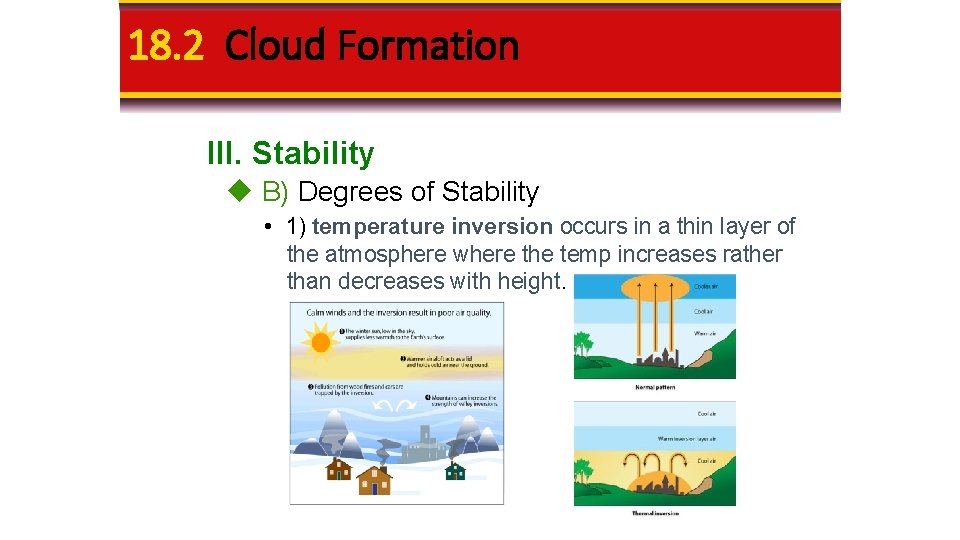
18. 2 Cloud Formation III. Stability B) Degrees of Stability • 1) temperature inversion occurs in a thin layer of the atmosphere where the temp increases rather than decreases with height.
18. 2 Cloud Formation Stability c) Stability and Daily Weather • 1) When stable air is forced above the Earth’s surface, the clouds that form are widespread and have little vertical thickness compared to their horizontal dimension.
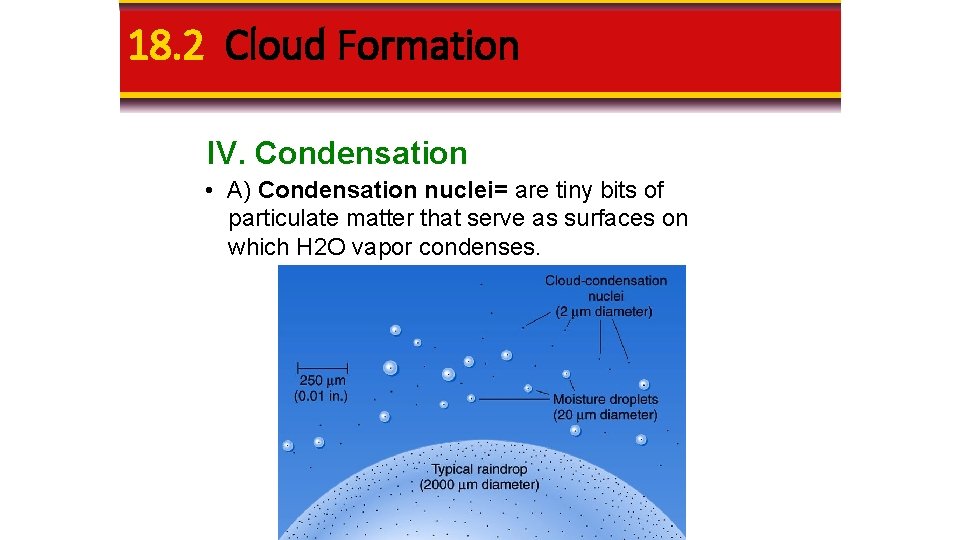
18. 2 Cloud Formation IV. Condensation • A) Condensation nuclei= are tiny bits of particulate matter that serve as surfaces on which H 2 O vapor condenses.