17 2 Properties of Mechanical Waves Properties of

- Slides: 10
17. 2 – Properties of Mechanical Waves
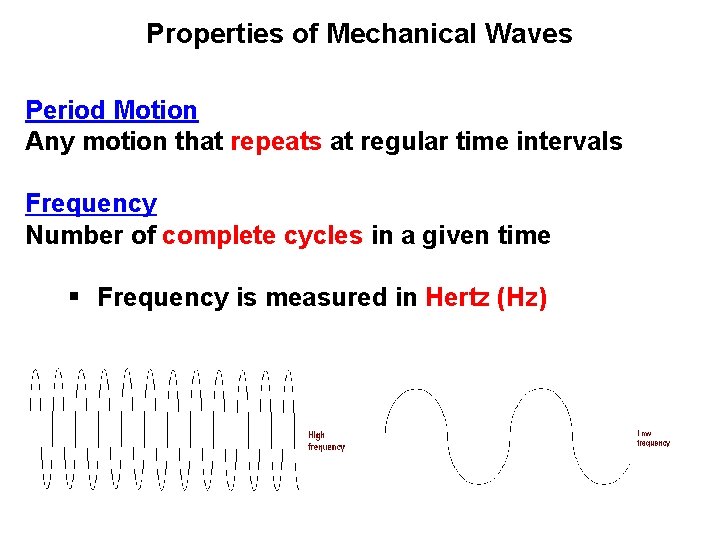
Properties of Mechanical Waves Period Motion Any motion that repeats at regular time intervals Frequency Number of complete cycles in a given time § Frequency is measured in Hertz (Hz)
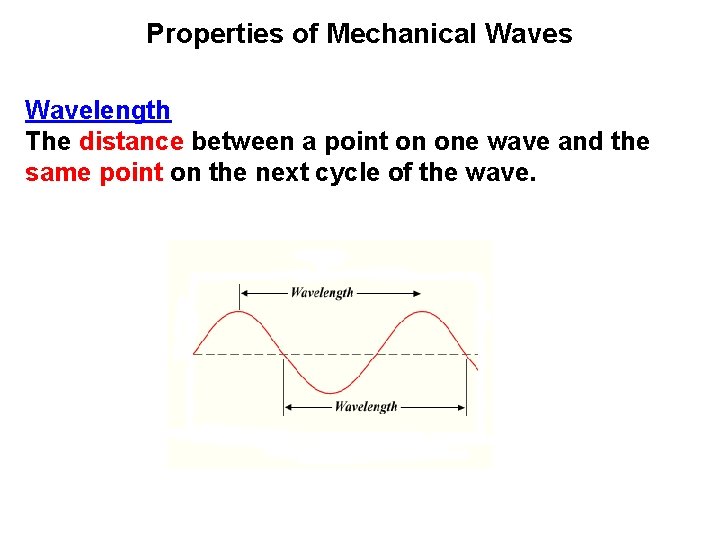
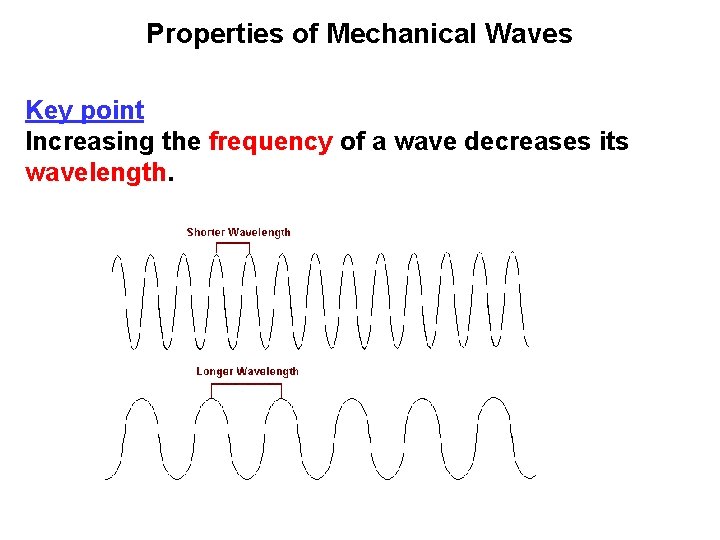
Properties of Mechanical Waves Wavelength The distance between a point on one wave and the same point on the next cycle of the wave.
Properties of Mechanical Waves Key point Increasing the frequency of a wave decreases its wavelength.
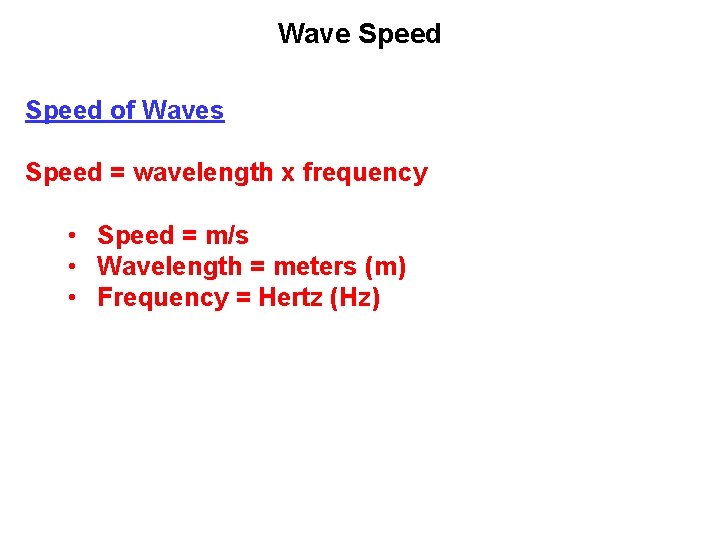
Wave Speed of Waves Speed = wavelength x frequency • Speed = m/s • Wavelength = meters (m) • Frequency = Hertz (Hz)
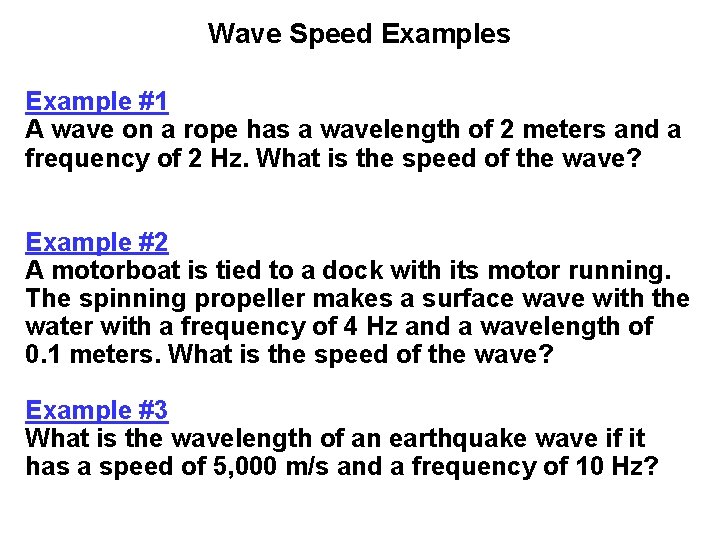
Wave Speed Examples Example #1 A wave on a rope has a wavelength of 2 meters and a frequency of 2 Hz. What is the speed of the wave? Example #2 A motorboat is tied to a dock with its motor running. The spinning propeller makes a surface wave with the water with a frequency of 4 Hz and a wavelength of 0. 1 meters. What is the speed of the wave? Example #3 What is the wavelength of an earthquake wave if it has a speed of 5, 000 m/s and a frequency of 10 Hz?
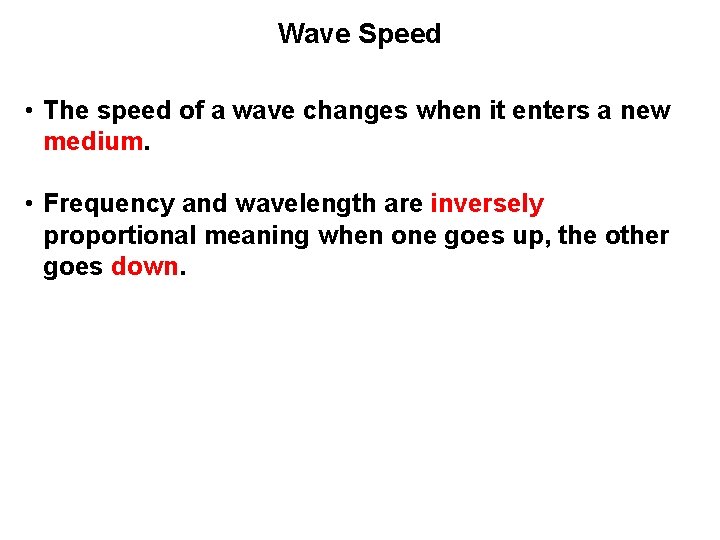
Wave Speed • The speed of a wave changes when it enters a new medium. • Frequency and wavelength are inversely proportional meaning when one goes up, the other goes down.
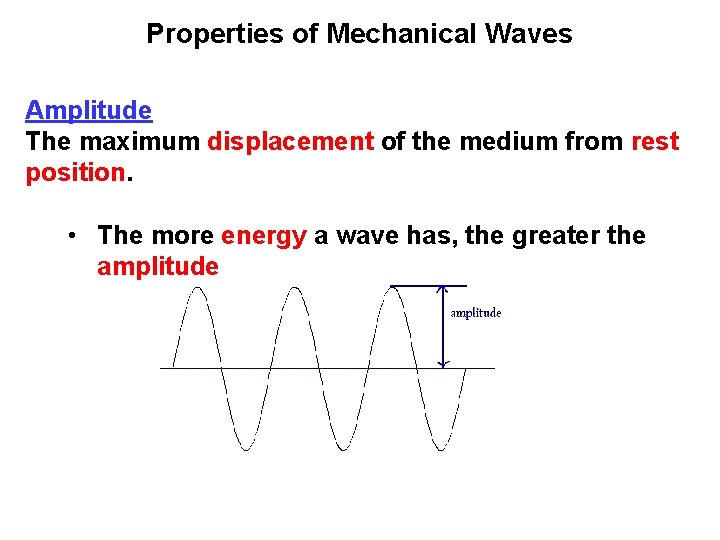
Properties of Mechanical Waves Amplitude The maximum displacement of the medium from rest position. • The more energy a wave has, the greater the amplitude
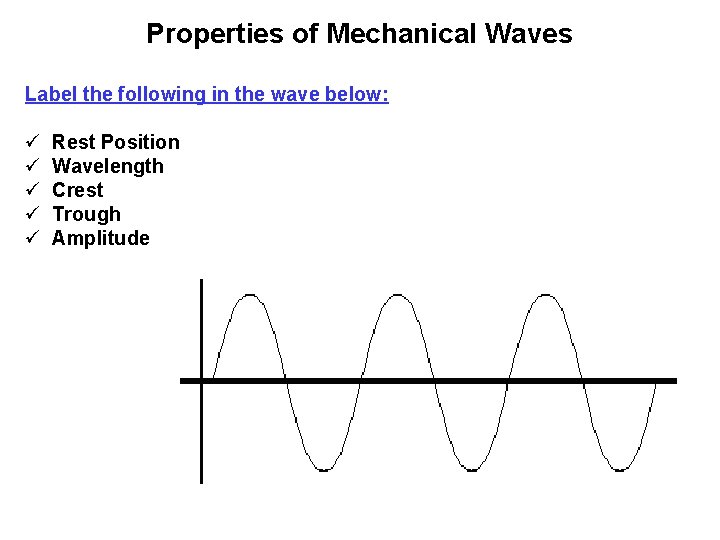
Properties of Mechanical Waves Label the following in the wave below: ü Rest Position ü Wavelength ü Crest ü Trough ü Amplitude
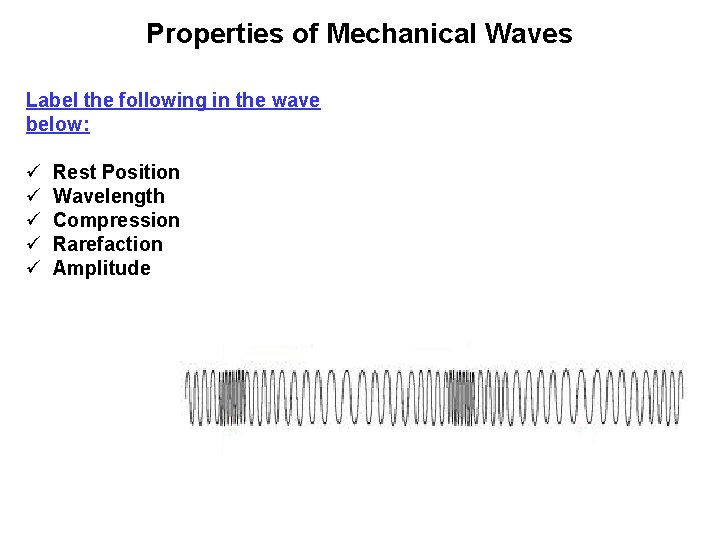
Properties of Mechanical Waves Label the following in the wave below: ü Rest Position ü Wavelength ü Compression ü Rarefaction ü Amplitude