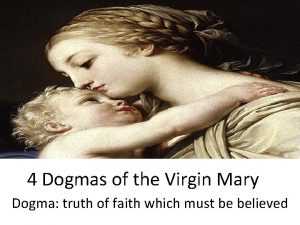
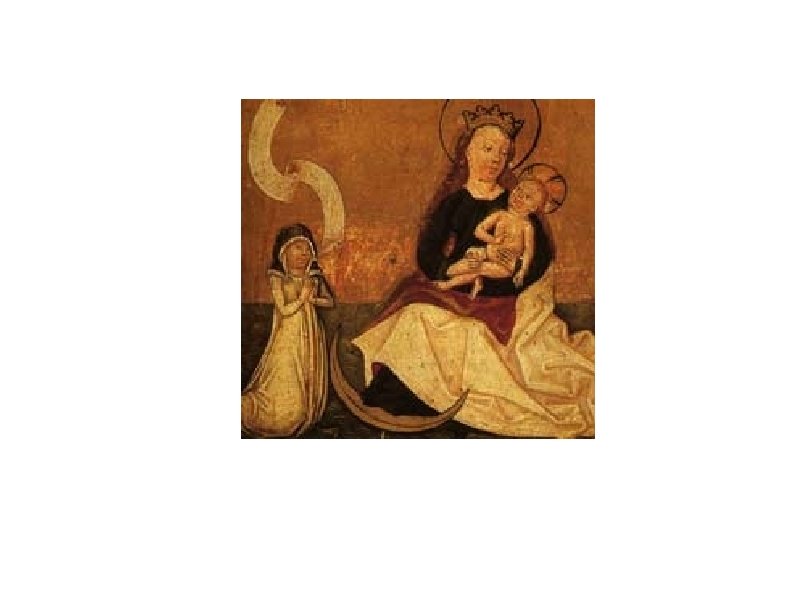
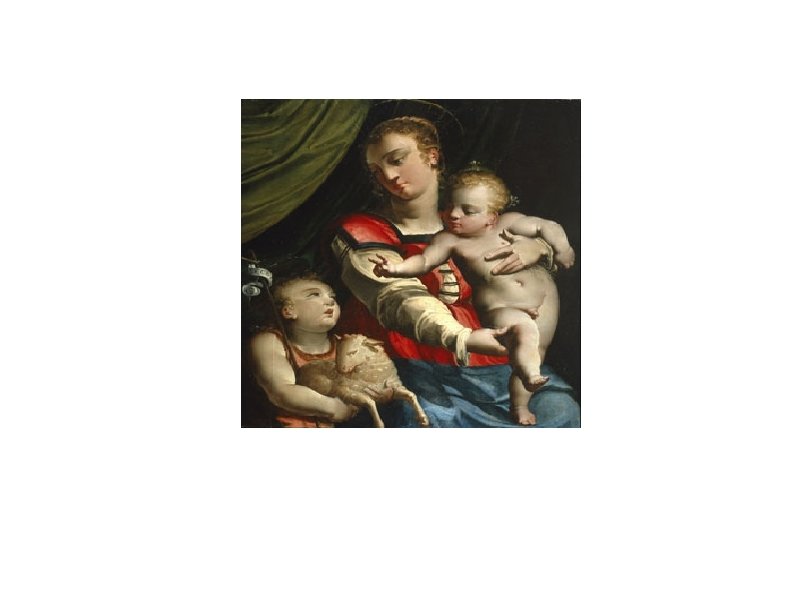
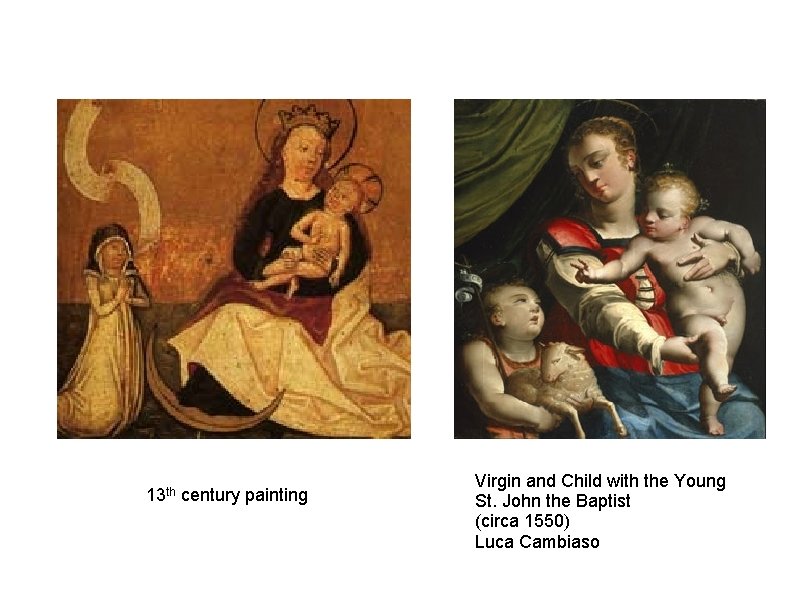
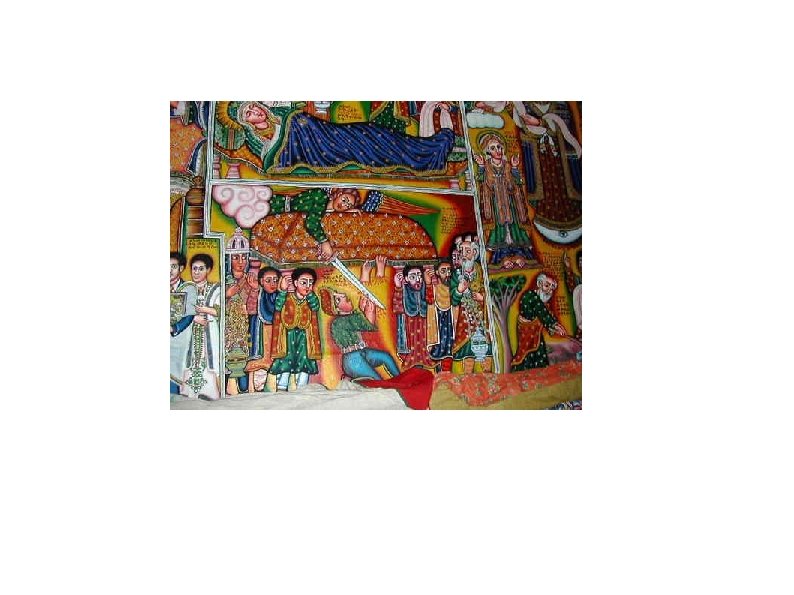
13 th century painting Virgin and Child with
- Slides: 15
13 th century painting Virgin and Child with the Young St. John the Baptist (circa 1550) Luca Cambiaso
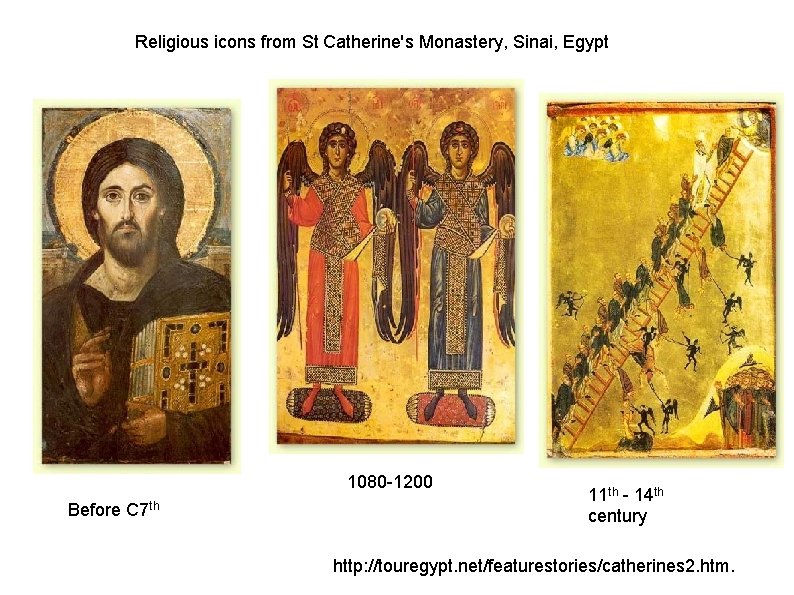
Religious icons from St Catherine's Monastery, Sinai, Egypt 1080 -1200 Before C 7 th 11 th - 14 th century http: //touregypt. net/featurestories/catherines 2. htm.
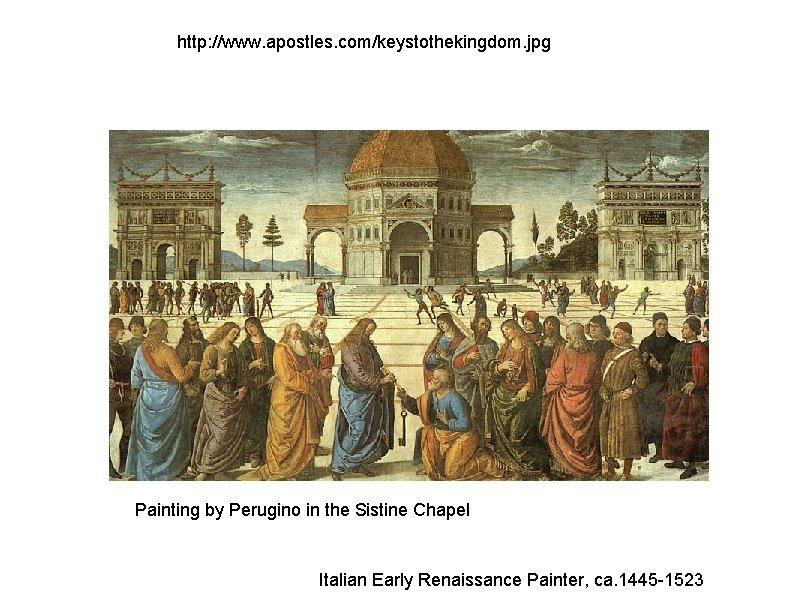
http: //www. apostles. com/keystothekingdom. jpg Painting by Perugino in the Sistine Chapel Italian Early Renaissance Painter, ca. 1445 -1523
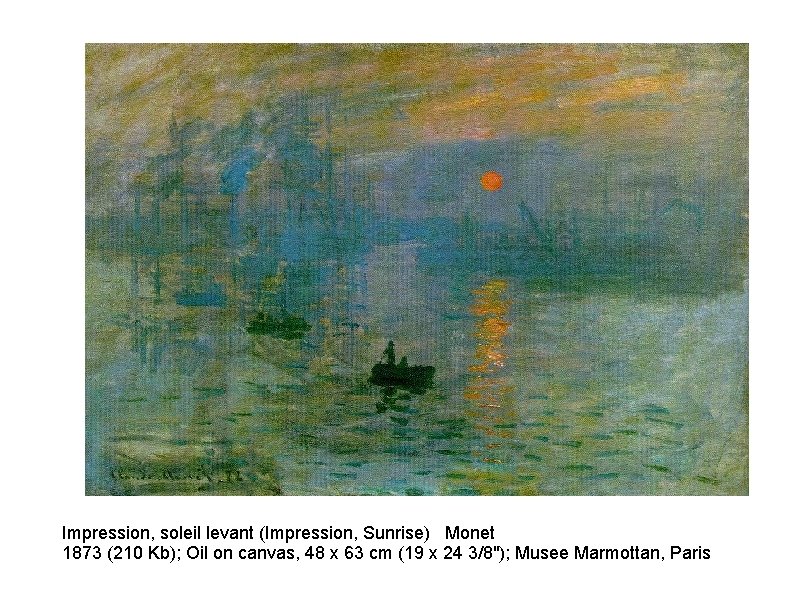
Impression, soleil levant (Impression, Sunrise) Monet 1873 (210 Kb); Oil on canvas, 48 x 63 cm (19 x 24 3/8"); Musee Marmottan, Paris
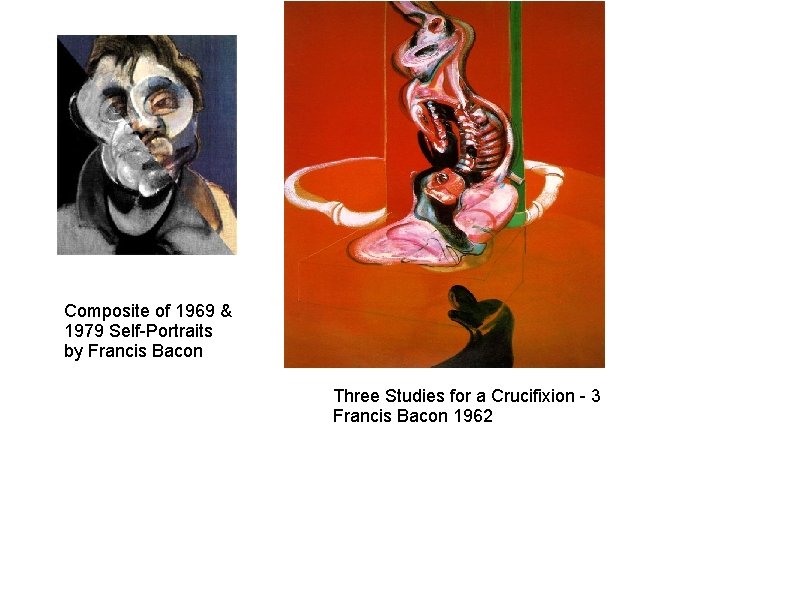
Composite of 1969 & 1979 Self-Portraits by Francis Bacon Three Studies for a Crucifixion - 3 Francis Bacon 1962
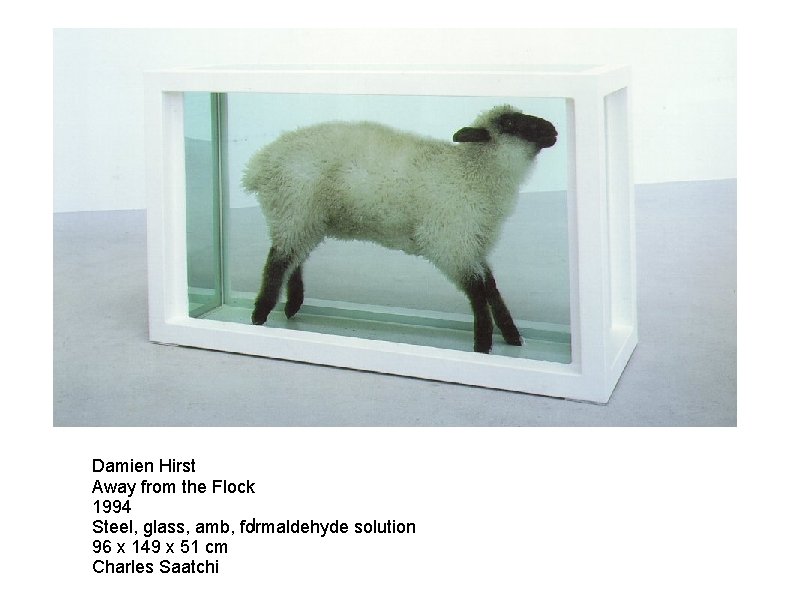
Damien Hirst Away from the Flock 1994 l Steel, glass, amb, formaldehyde solution 96 x 149 x 51 cm Charles Saatchi
What was the Renaissance? The Renaissance was a cultural movement that profoundly affected European intellectual life in the early modern period. Beginning in Italy, and spreading to the rest of Europe by the 16 th century, its influence affected literature, philosophy, art, politics, science, religion, and other aspects of intellectual inquiry. Renaissance scholars employed the humanist method in study, and searched for realism and human emotion in art.
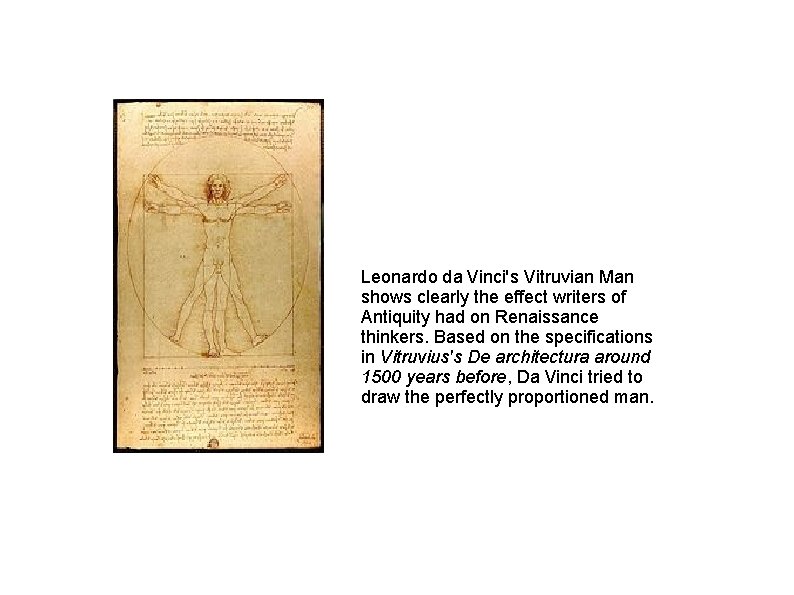
Leonardo da Vinci's Vitruvian Man shows clearly the effect writers of Antiquity had on Renaissance thinkers. Based on the specifications in Vitruvius's De architectura around 1500 years before, Da Vinci tried to draw the perfectly proportioned man.
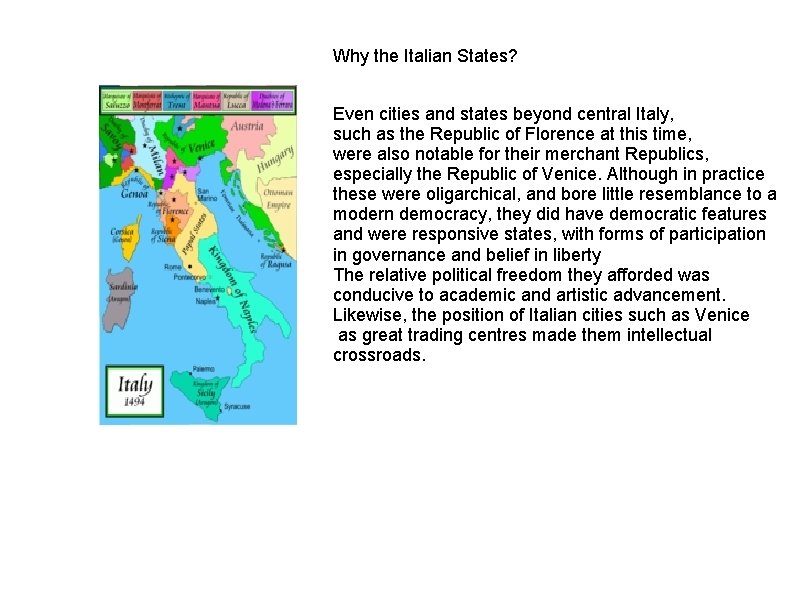
Why the Italian States? Even cities and states beyond central Italy, such as the Republic of Florence at this time, were also notable for their merchant Republics, especially the Republic of Venice. Although in practice these were oligarchical, and bore little resemblance to a modern democracy, they did have democratic features and were responsive states, with forms of participation in governance and belief in liberty The relative political freedom they afforded was conducive to academic and artistic advancement. Likewise, the position of Italian cities such as Venice as great trading centres made them intellectual crossroads.
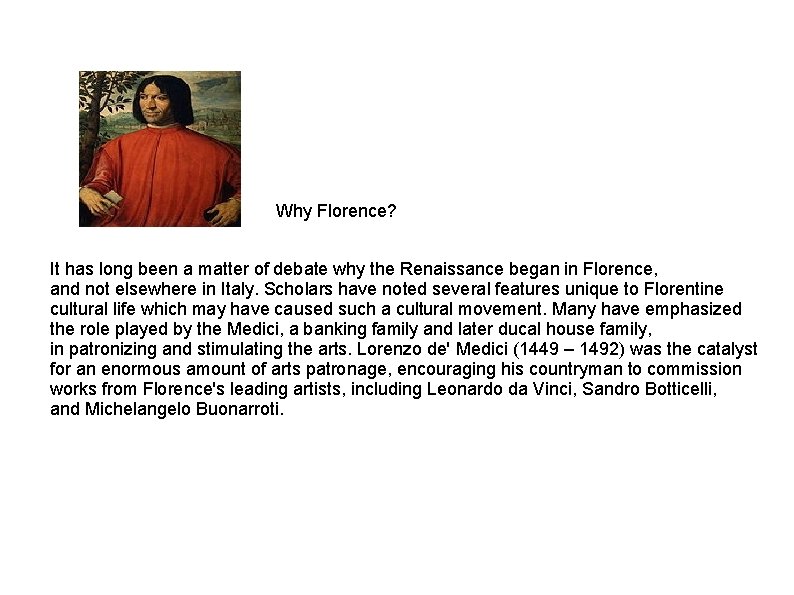
Why Florence? It has long been a matter of debate why the Renaissance began in Florence, and not elsewhere in Italy. Scholars have noted several features unique to Florentine cultural life which may have caused such a cultural movement. Many have emphasized the role played by the Medici, a banking family and later ducal house family, in patronizing and stimulating the arts. Lorenzo de' Medici (1449 – 1492) was the catalyst for an enormous amount of arts patronage, encouraging his countryman to commission works from Florence's leading artists, including Leonardo da Vinci, Sandro Botticelli, and Michelangelo Buonarroti.
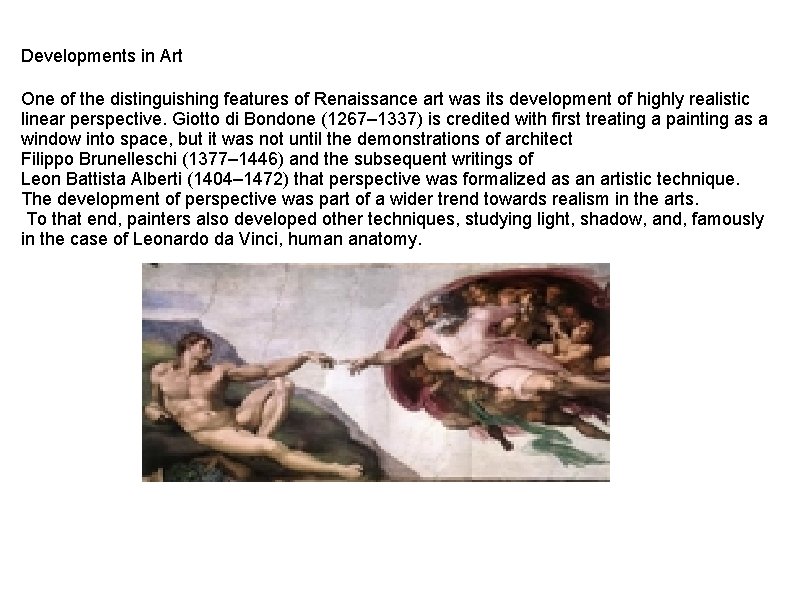
Developments in Art One of the distinguishing features of Renaissance art was its development of highly realistic linear perspective. Giotto di Bondone (1267– 1337) is credited with first treating a painting as a window into space, but it was not until the demonstrations of architect Filippo Brunelleschi (1377– 1446) and the subsequent writings of Leon Battista Alberti (1404– 1472) that perspective was formalized as an artistic technique. The development of perspective was part of a wider trend towards realism in the arts. To that end, painters also developed other techniques, studying light, shadow, and, famously in the case of Leonardo da Vinci, human anatomy.
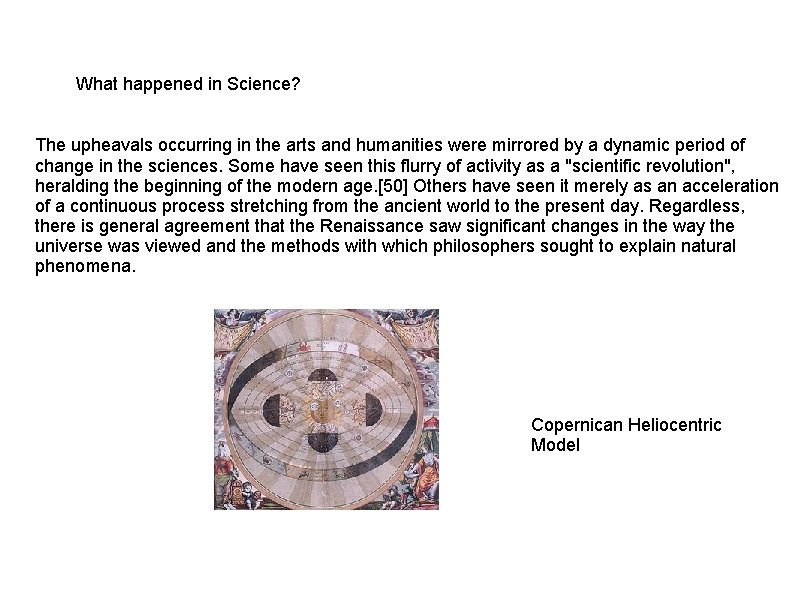
What happened in Science? The upheavals occurring in the arts and humanities were mirrored by a dynamic period of change in the sciences. Some have seen this flurry of activity as a "scientific revolution", heralding the beginning of the modern age. [50] Others have seen it merely as an acceleration of a continuous process stretching from the ancient world to the present day. Regardless, there is general agreement that the Renaissance saw significant changes in the way the universe was viewed and the methods with which philosophers sought to explain natural phenomena. Copernican Heliocentric Model