1 Independence and equal treatment policy in Statistics
- Slides: 11
1 Independence and equal treatment policy in Statistics Norway Principles, realities and challenges Fride Eeg-Henriksen, senior adviser, Department of communications 1
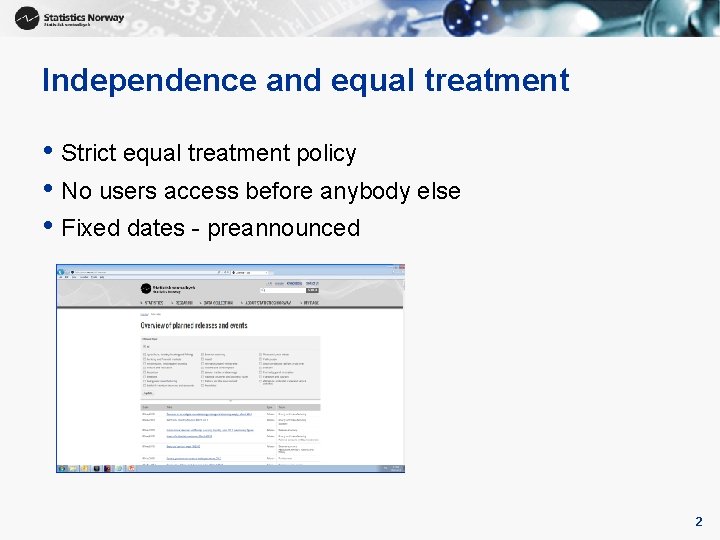
Independence and equal treatment • Strict equal treatment policy • No users access before anybody else • Fixed dates - preannounced 2
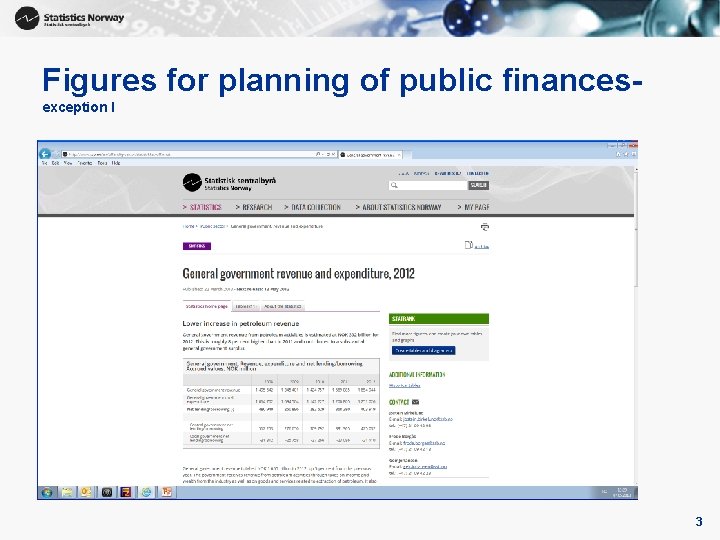
Figures for planning of public financesexception I 3
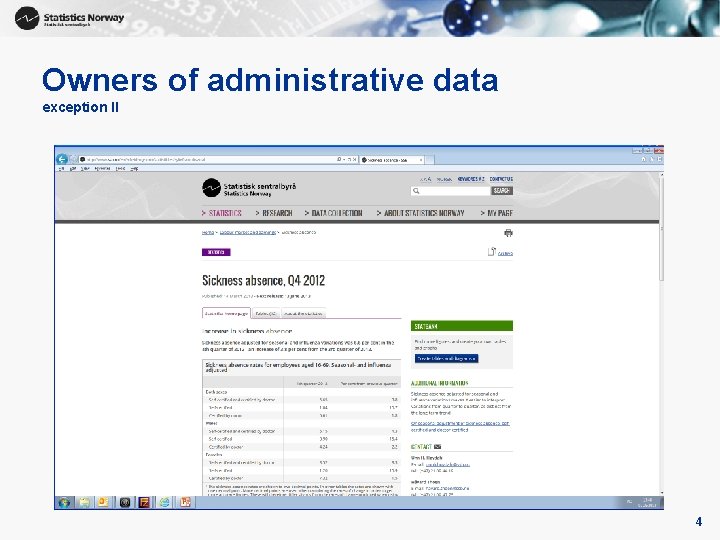
Owners of administrative data exception II 4
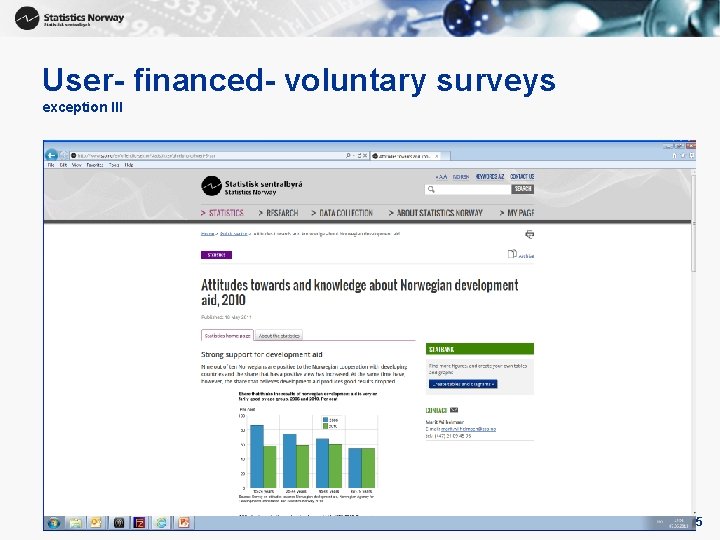
User- financed- voluntary surveys exception III 5
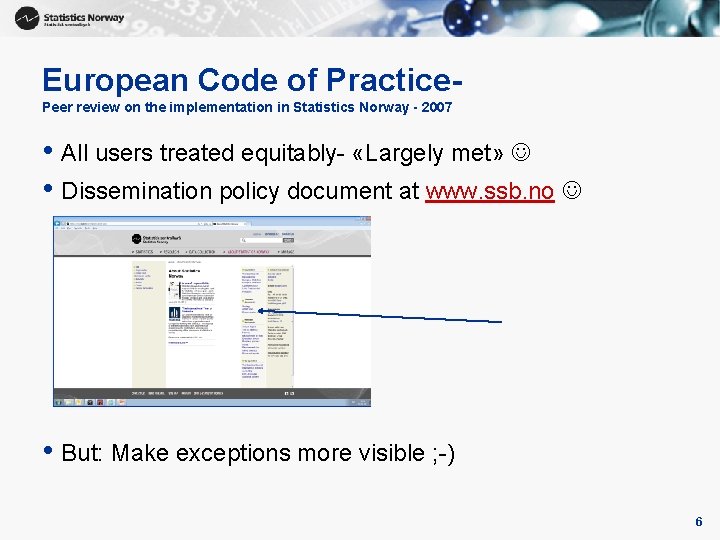
European Code of Practice. Peer review on the implementation in Statistics Norway - 2007 • All users treated equitably- «Largely met» • Dissemination policy document at www. ssb. no • But: Make exceptions more visible ; -) 6
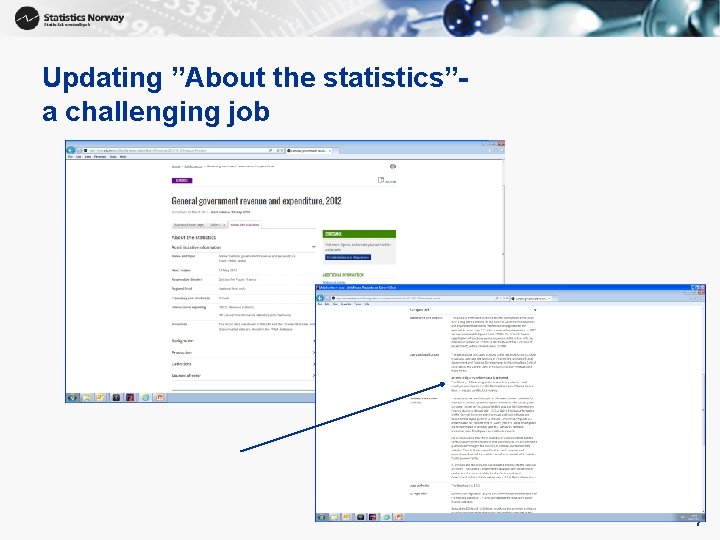
Updating ”About the statistics”a challenging job 7
Preparing for a review in 2014 • Revised Code of Practice 2011 – Strengthening requirements about independence • Self- initiated internal review 2011 -2012 – 18 different statistics – 16 «About the statistics» not updated – «Unknown» exceptions to the surface • More thorough review in 2014 8
Why so demanding? • 400 different statistics • No overview of exceptions • Production and dissemination first • Documentation low priority – Especially when workload is high. . – Dissemination policy not high concern outside the Communications department – Authority of the Communications department 9
What is to be done now? • Update in due time before next peer review • The exceptions – Overview, procedure to cover all of them – Restructure «About the statistics» – Standardized texts in «About the statistics» • Staff, co-operation and division of labour – – – Communications Metadata Quality Agency lawyer Subject matter units 10
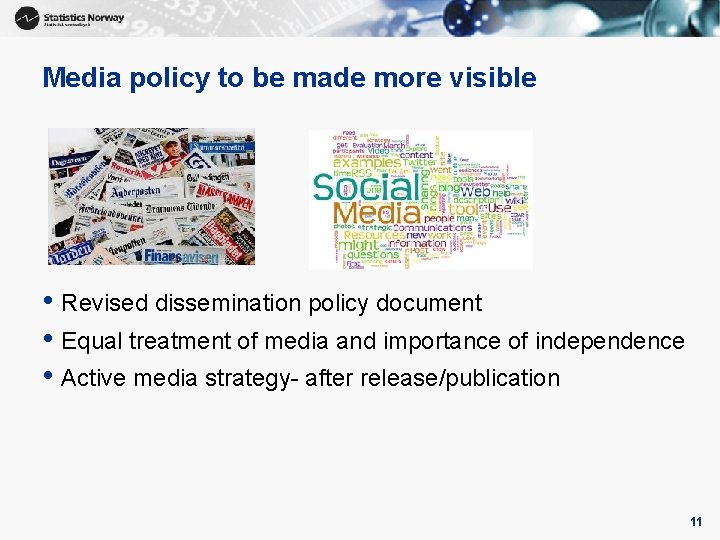
Media policy to be made more visible • Revised dissemination policy document • Equal treatment of media and importance of independence • Active media strategy- after release/publication 11