Year 7 PE Theory Term 2 Components of



- Slides: 16
Year 7 PE Theory – Term 2
Components of Fitness • There are 5 Health Related Components of Fitness. • Muscular Strength, Flexibility, Body Composition, Muscular Endurance and Cardiovascular Endurance. • There are 6 Skill Related Components of Fitness. • Speed, Reaction Time, Power, Agility, Balance and Coordination.
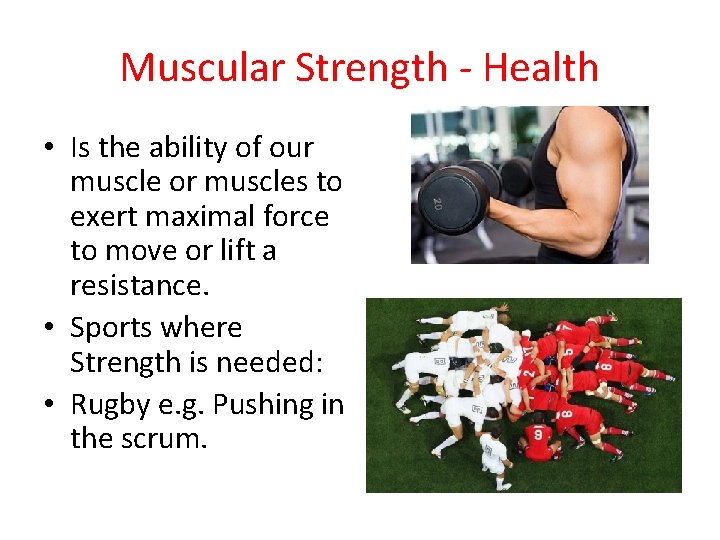
Muscular Strength - Health • Is the ability of our muscle or muscles to exert maximal force to move or lift a resistance. • Sports where Strength is needed: • Rugby e. g. Pushing in the scrum.
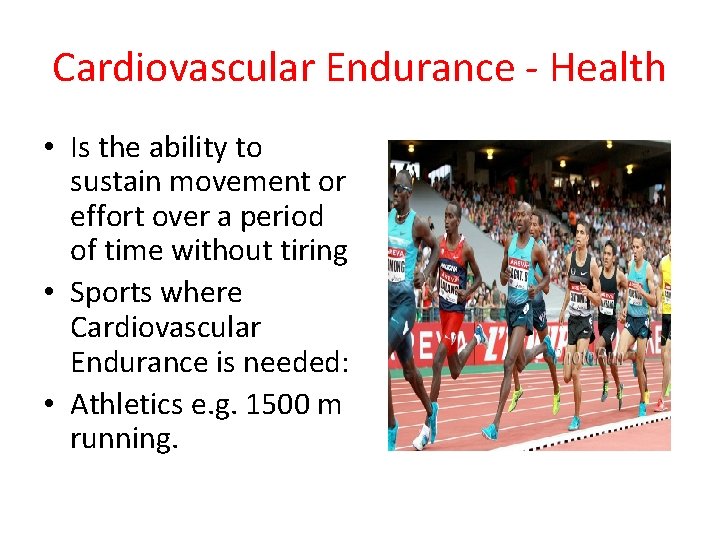
Cardiovascular Endurance - Health • Is the ability to sustain movement or effort over a period of time without tiring • Sports where Cardiovascular Endurance is needed: • Athletics e. g. 1500 m running.
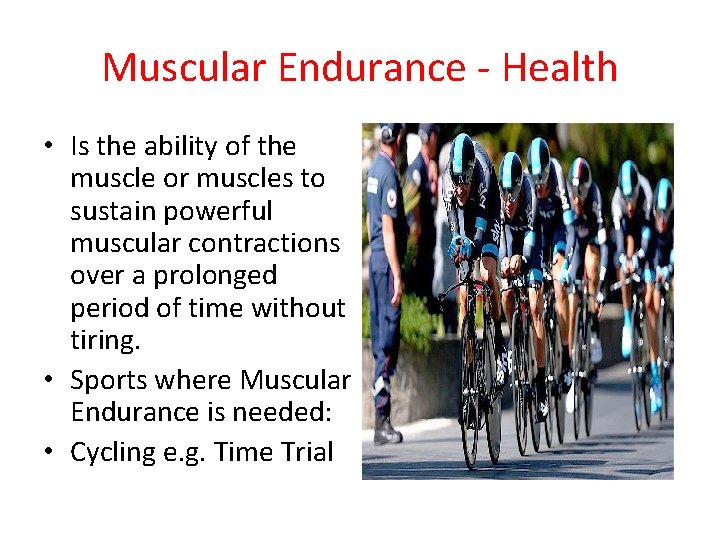
Muscular Endurance - Health • Is the ability of the muscle or muscles to sustain powerful muscular contractions over a prolonged period of time without tiring. • Sports where Muscular Endurance is needed: • Cycling e. g. Time Trial
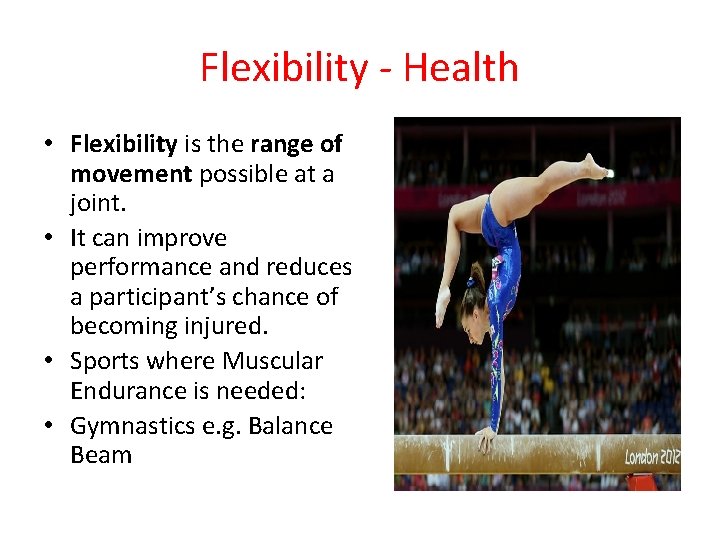
Flexibility - Health • Flexibility is the range of movement possible at a joint. • It can improve performance and reduces a participant’s chance of becoming injured. • Sports where Muscular Endurance is needed: • Gymnastics e. g. Balance Beam
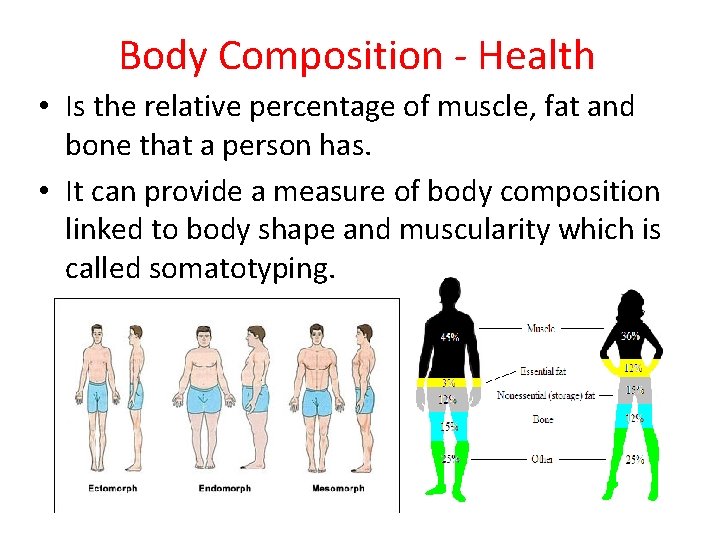
Body Composition - Health • Is the relative percentage of muscle, fat and bone that a person has. • It can provide a measure of body composition linked to body shape and muscularity which is called somatotyping.
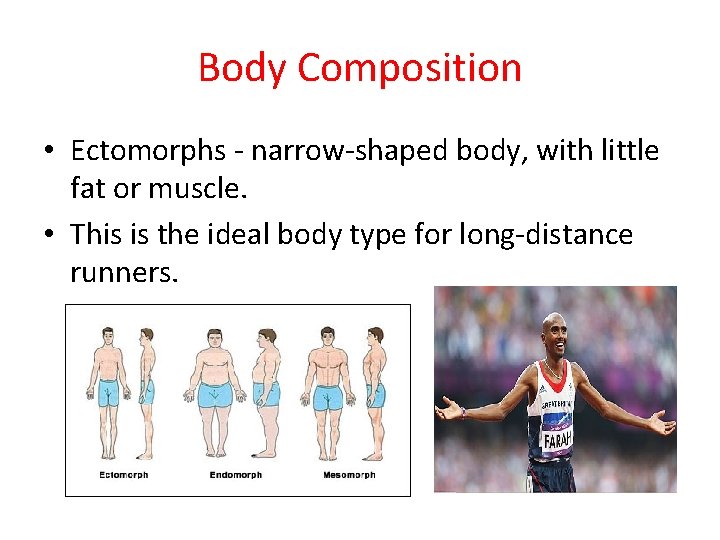
Body Composition • Ectomorphs - narrow-shaped body, with little fat or muscle. • This is the ideal body type for long-distance runners.
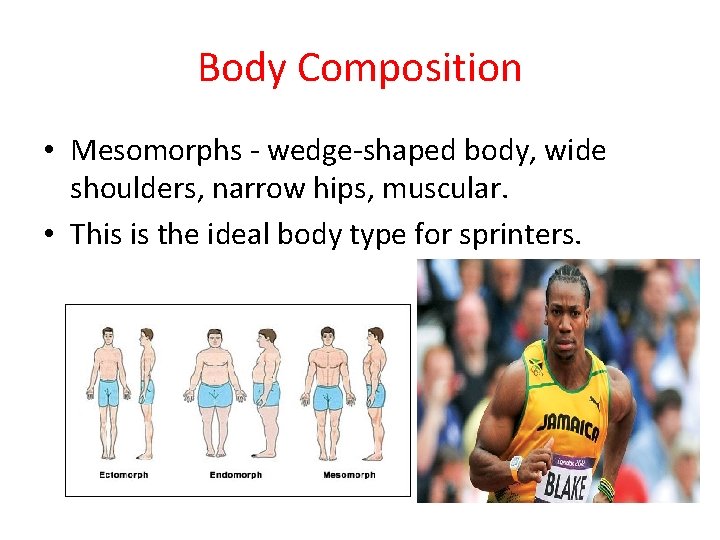
Body Composition • Mesomorphs - wedge-shaped body, wide shoulders, narrow hips, muscular. • This is the ideal body type for sprinters.
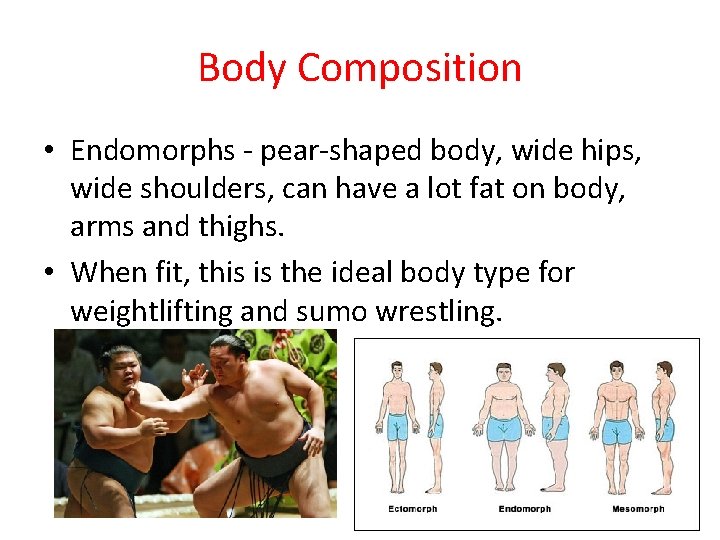
Body Composition • Endomorphs - pear-shaped body, wide hips, wide shoulders, can have a lot fat on body, arms and thighs. • When fit, this is the ideal body type for weightlifting and sumo wrestling.
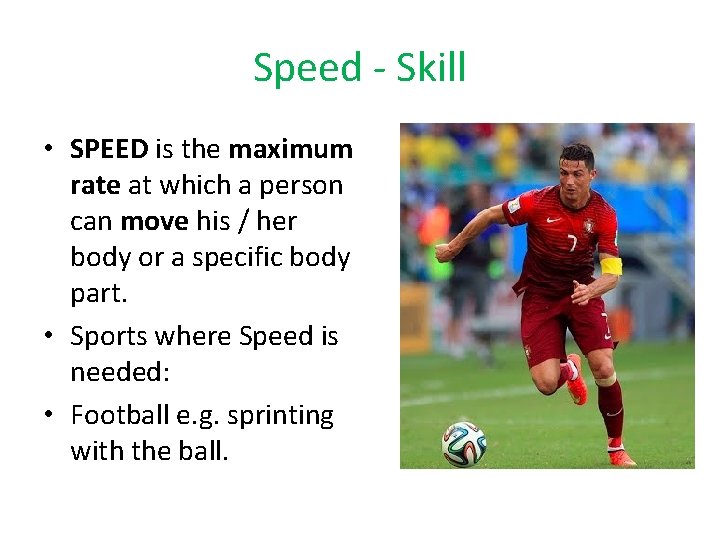
Speed - Skill • SPEED is the maximum rate at which a person can move his / her body or a specific body part. • Sports where Speed is needed: • Football e. g. sprinting with the ball.
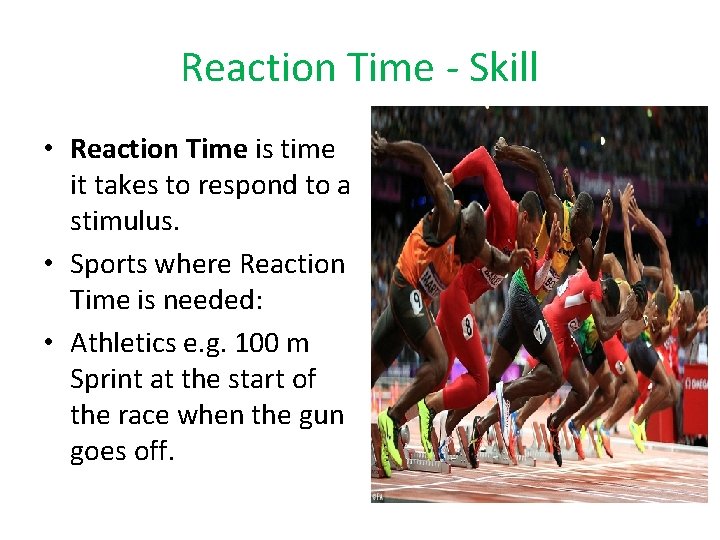
Reaction Time - Skill • Reaction Time is time it takes to respond to a stimulus. • Sports where Reaction Time is needed: • Athletics e. g. 100 m Sprint at the start of the race when the gun goes off.
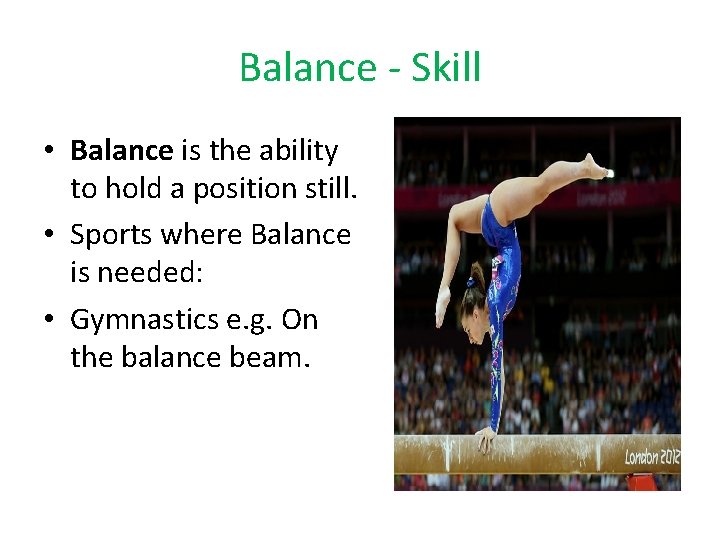
Balance - Skill • Balance is the ability to hold a position still. • Sports where Balance is needed: • Gymnastics e. g. On the balance beam.
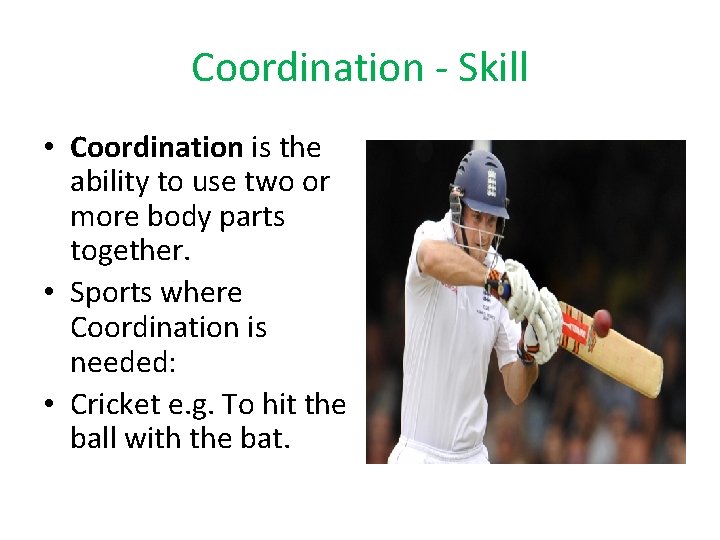
Coordination - Skill • Coordination is the ability to use two or more body parts together. • Sports where Coordination is needed: • Cricket e. g. To hit the ball with the bat.
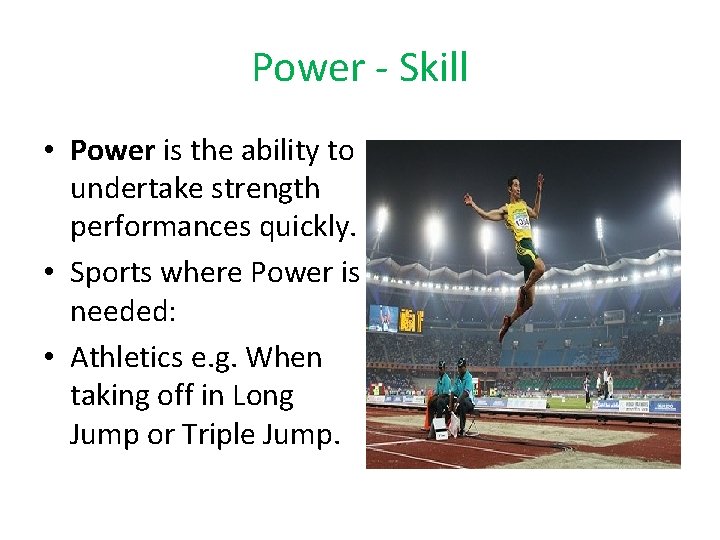
Power - Skill • Power is the ability to undertake strength performances quickly. • Sports where Power is needed: • Athletics e. g. When taking off in Long Jump or Triple Jump.
Agility - Skill • Agility is the ability to change direction quickly. • Sports where Agility is needed: • Football e. g. Changing direction when dribbling with the ball.