Writing with Connection Using Conjunctions Using conjunctions Coordinating

- Slides: 18
Writing with Connection: Using Conjunctions Using conjunctions Coordinating conjunctions Subordinating conjunctions Review A Review B
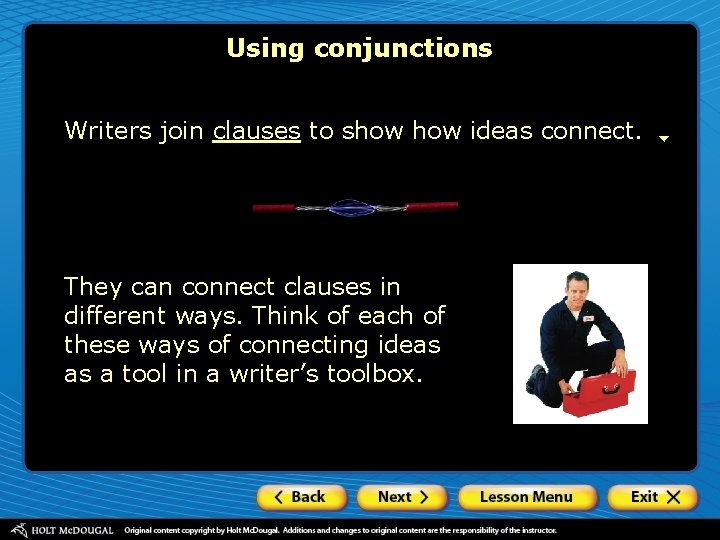
Using conjunctions Writers join clauses to show ideas connect. They can connect clauses in different ways. Think of each of these ways of connecting ideas as a tool in a writer’s toolbox.
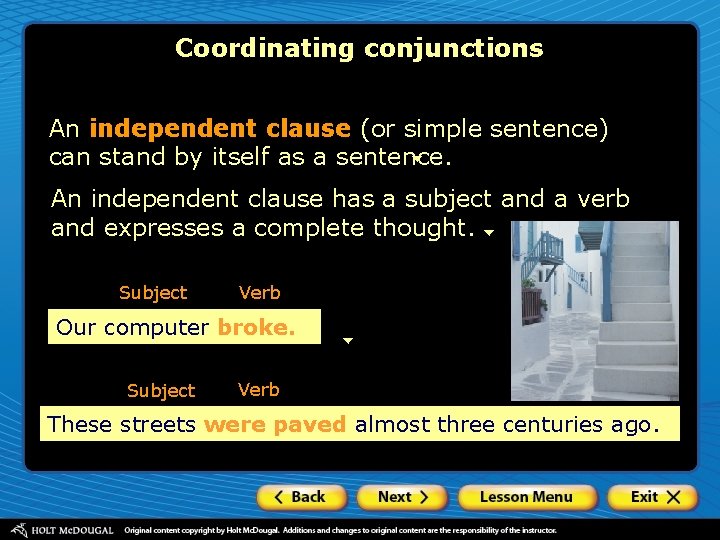
Coordinating conjunctions An independent clause (or simple sentence) can stand by itself as a sentence. An independent clause has a subject and a verb and expresses a complete thought. Subject Verb Our computerbroke. Subject Verb Thesestreetswerepavedalmostthreecenturiesago.
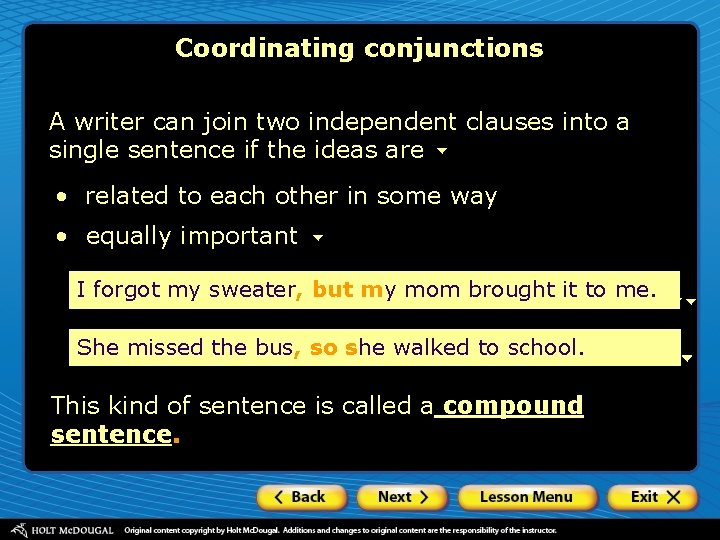
Coordinating conjunctions A writer can join two independent clauses into a single sentence if the ideas are • related to each other in some way • equally important sweater, but My mymom mombroughtititto tome. I forgot my sweater. She missed the bus, Shewalkedtotoschool. bus. so she This kind of sentence is called a compound sentence.
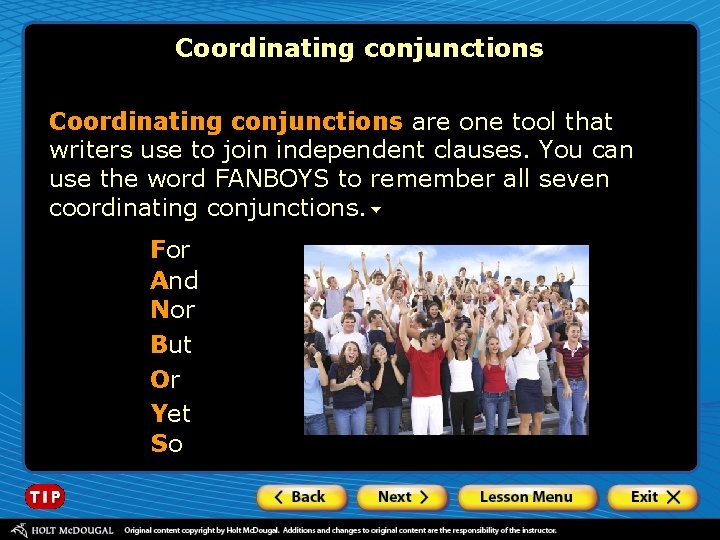
Coordinating conjunctions are one tool that writers use to join independent clauses. You can use the word FANBOYS to remember all seven coordinating conjunctions. For And Nor But Or Yet So
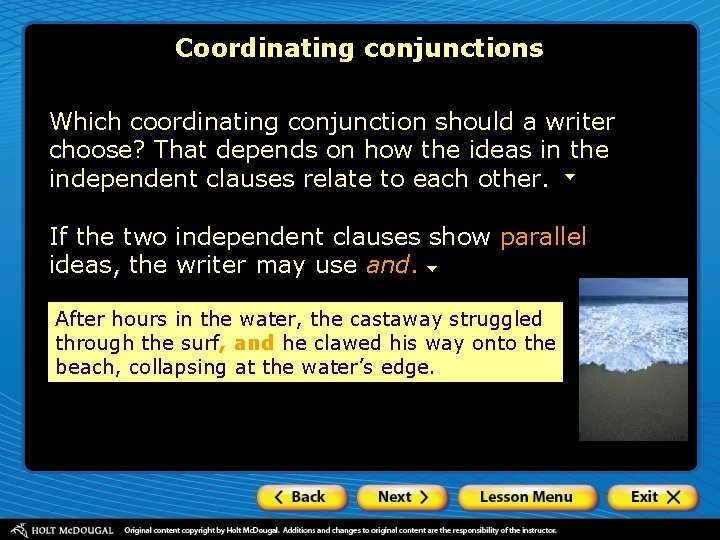
Coordinating conjunctions Which coordinating conjunction should a writer choose? That depends on how the ideas in the independent clauses relate to each other. If the two independent clauses show parallel ideas, the writer may use and. After hours in the water, the castaway struggled through the surf, and he clawed his way onto the beach, collapsing at the water’s edge.
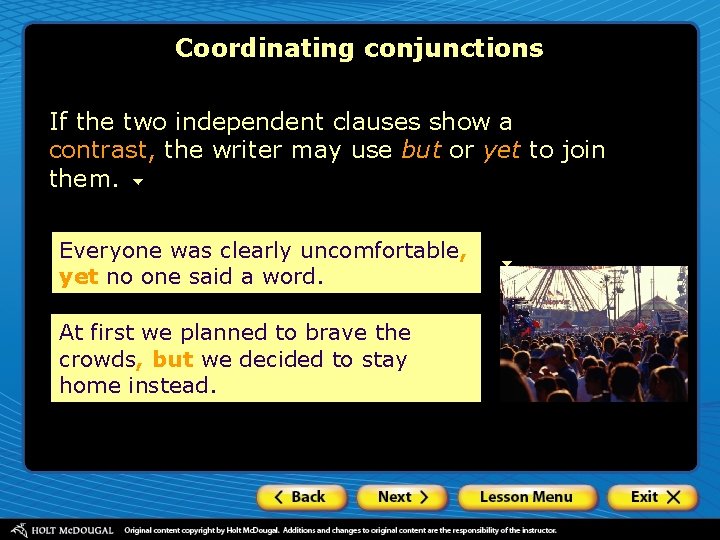
Coordinating conjunctions If the two independent clauses show a contrast, the writer may use but or yet to join them. Everyone was clearly uncomfortable, yet no one said a word. At first we planned to brave the crowds, but we decided to stay home instead.
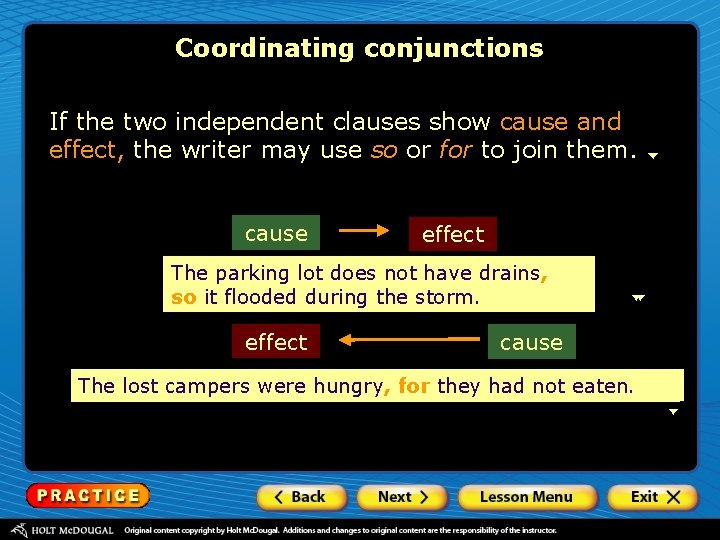
Coordinating conjunctions If the two independent clauses show cause and effect, the writer may use so or for to join them. cause effect The does notnot have drains, The parkinglot does have so so it it flooded during the storm. drains, so it during flooded during the storm. effect cause The were hungry, for they had not eaten. The lostcampers were hungry, for they had not eaten.
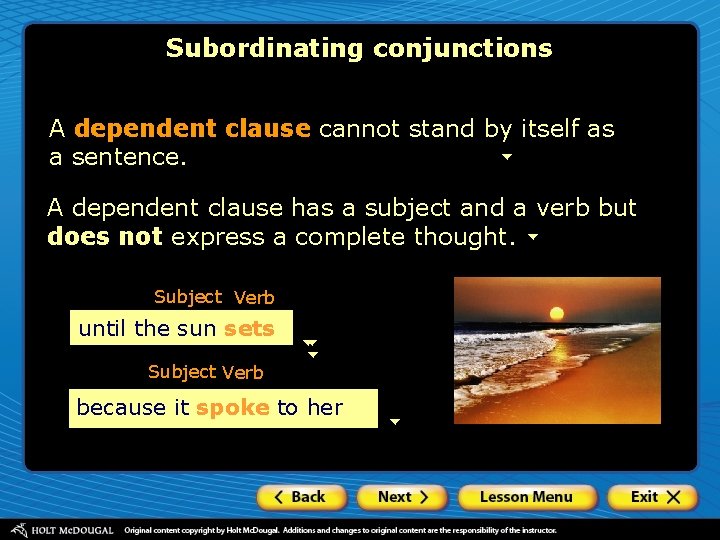
Subordinating conjunctions A dependent clause cannot stand by itself as a sentence. A dependent clause has a subject and a verb but does not express a complete thought. Subject Verb until the sun sets Subject Verb because it toher spoke it spoke to to her
Subordinating conjunctions An independent clause joined with a dependent clause makes a complex sentence. Independent Clause The temperature dropped when the wind blew. Independent Clause Sara pulled the weeds while she sang softly.
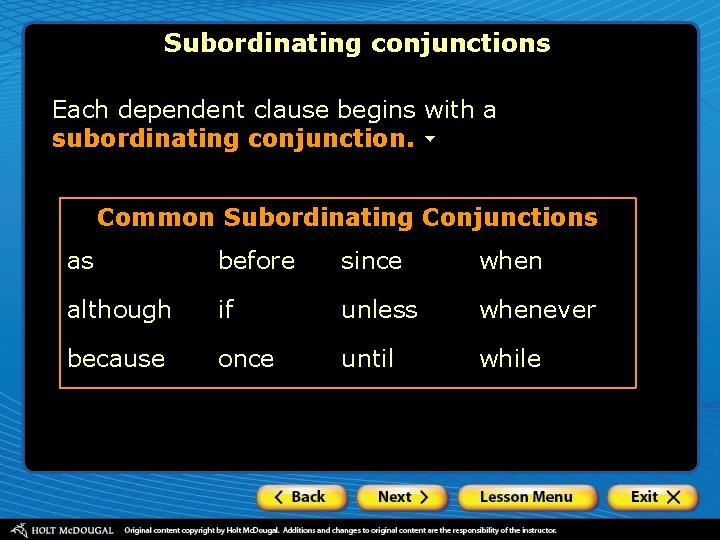
Subordinating conjunctions Each dependent clause begins with a subordinating conjunction. Common Subordinating Conjunctions as before since when although if unless whenever because once until while
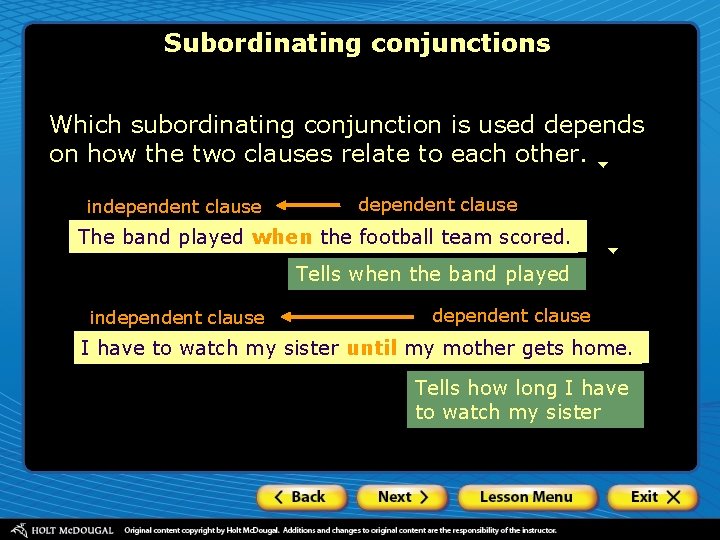
Subordinating conjunctions Which subordinating conjunction is used depends on how clauses relate to each other. Can the you two find the subordinating conjunctions in these sentences? dependent clause independent clause The band played whenthe thefootballteamscored. Tells when the band played independent clause I have to watch my sister until mymothergetshome. until my Tells how long I have to watch my sister
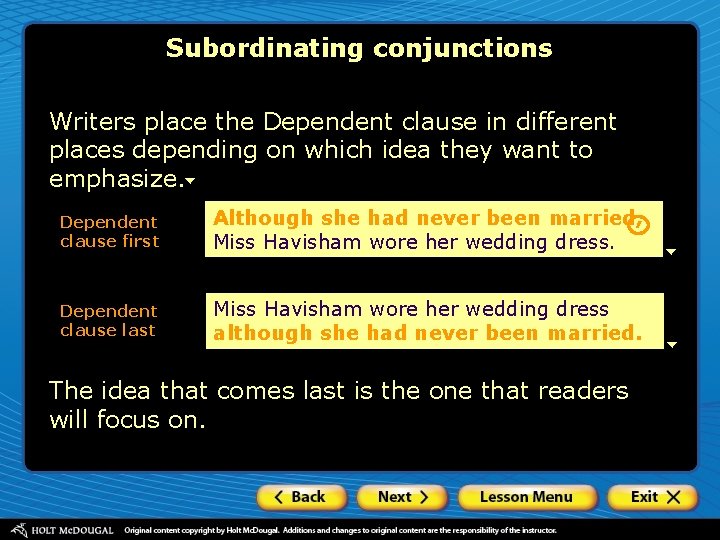
Subordinating conjunctions Writers place the Dependent clause in different places depending on which idea they want to emphasize. Dependent clause first Although she had never been married, Miss Havisham wore her wedding dress. Dependent clause last Miss Havisham wore her wedding dress although she had never been married. The idea that comes last is the one that readers will focus on.
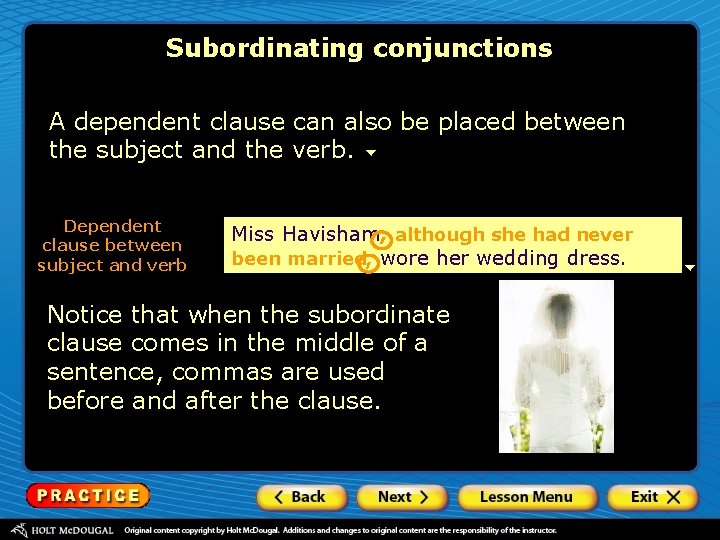
Subordinating conjunctions A dependent clause can also be placed between the subject and the verb. Dependent clause between subject and verb Miss Havisham, although she had never been married, wore her wedding dress. Notice that when the subordinate clause comes in the middle of a sentence, commas are used before and after the clause.
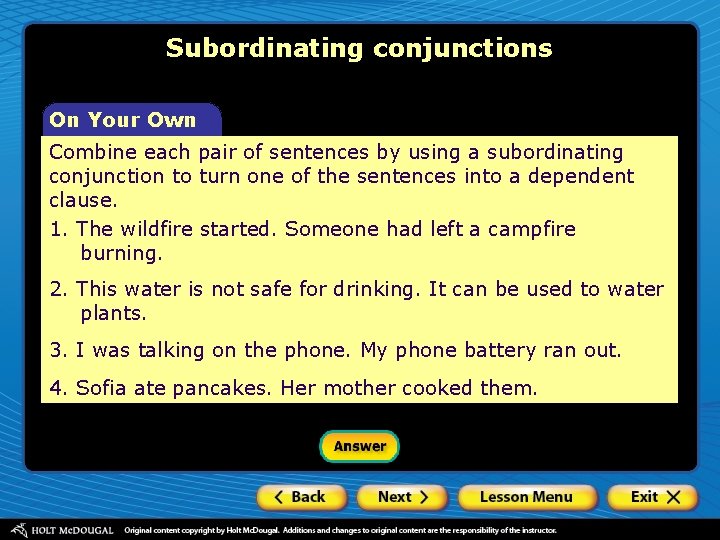
Subordinating conjunctions On Your Own Combine each pair of sentences by using a subordinating conjunction to turn one of the sentences into a dependent clause. 1. The wildfire started. Someone had left a campfire burning. 2. This water is not safe for drinking. It can be used to water plants. 3. I was talking on the phone. My phone battery ran out. 4. Sofia ate pancakes. Her mother cooked them.
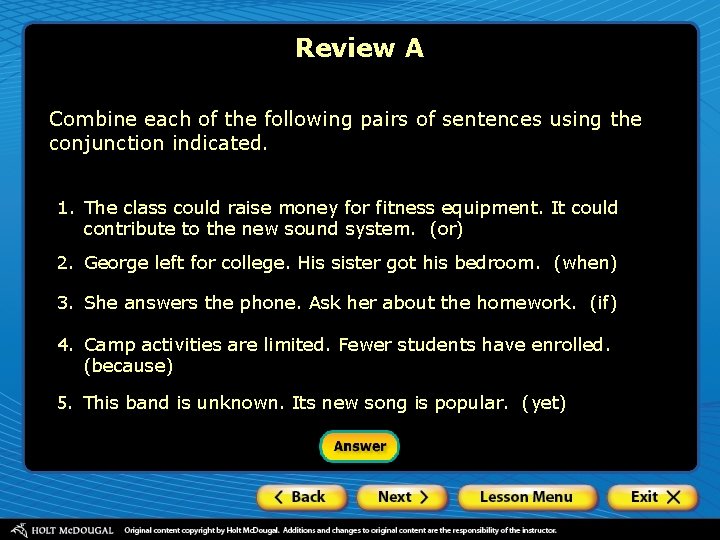
Review A Combine each of the following pairs of sentences using the conjunction indicated. 1. The class could raise money for fitness equipment. It could contribute to the new sound system. (or) 2. George left for college. His sister got his bedroom. (when) 3. She answers the phone. Ask her about the homework. (if) 4. Camp activities are limited. Fewer students have enrolled. (because) 5. This band is unknown. Its new song is popular. (yet)
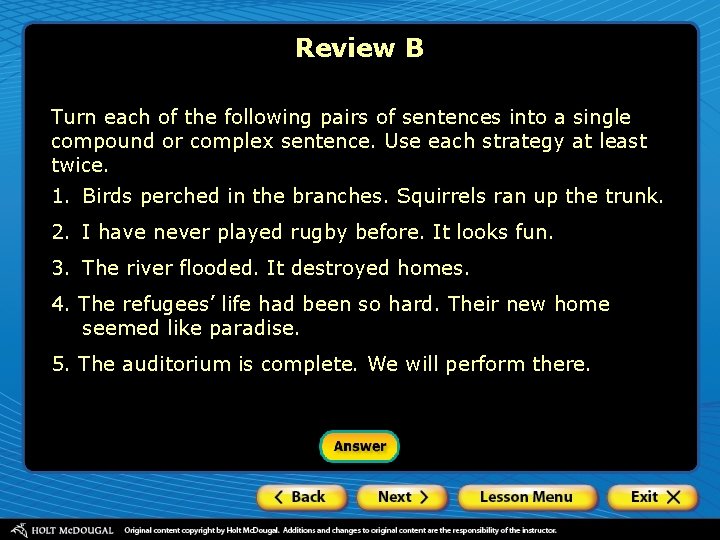
Review B Turn each of the following pairs of sentences into a single compound or complex sentence. Use each strategy at least twice. 1. Birds perched in the branches. Squirrels ran up the trunk. 2. I have never played rugby before. It looks fun. 3. The river flooded. It destroyed homes. 4. The refugees’ life had been so hard. Their new home seemed like paradise. 5. The auditorium is complete. We will perform there.
The End