WIPO and the United Nations SouthSouth Cooperation Framework

- Slides: 15
WIPO and the United Nations South-South Cooperation Framework Nathalie Montillot Assistant Project Officer Geneva 22 November 2013
South-South Cooperation in the UN: Institutional Framework High-level Committee on South-South Cooperation v. Main policy-making body on SSC in UN system v. Subsidiary body of the UN General Assembly ØProvides policy guidance on SSC ØEnsures that efforts to strengthen SSC are sustained within the UN system, including through the allocation of adequate resources for SSC ØReviews the progress made in implementing the recommendations of BAPA on SSC v. Meets biannually
South-South Cooperation in the UN: Institutional Framework UN Office for South-South Cooperation (UNOSSC) v. Formerly “Special Unit for South-South Cooperation” v. Serves as the Secretariat to the HLC on SSC ØOrganizes the sessions of the HLC ØCarries out research to inform policy decisions on the deepening of SSC ØAdvocates for SS approaches to development in the UN system and provides advisory services to UN Member States and agencies ØOverall promotes, coordinates and supports SSC globally and within the UN system
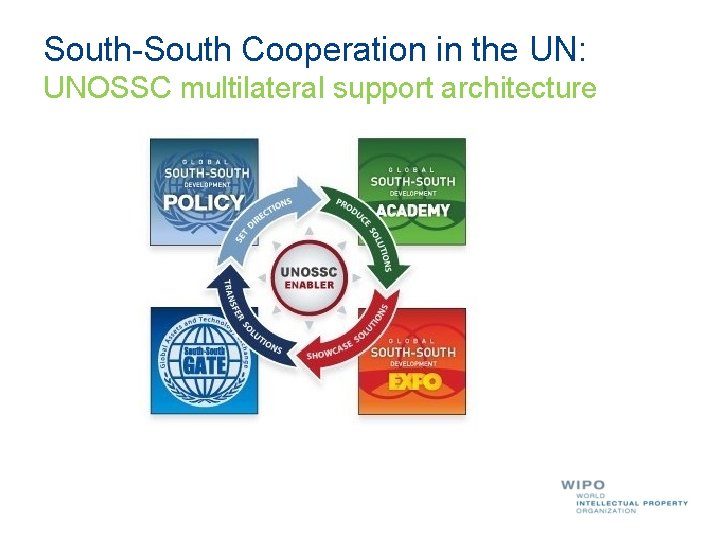
South-South Cooperation in the UN: UNOSSC multilateral support architecture
South-South Cooperation in the UN: Key Policy Documents Buenos Aires Plan of Action (1978) v. Technical cooperation among developing countries described as a: “vital force for initiating, designing, organizing and promoting co-operation among developing countries so that they can create, acquire, adapt, transfer and pool knowledge and experience for their mutual benefit and for achieving national and collective selfreliance, which are essential for their social and economic development” BAPA, paragraph 5
South-South Cooperation in the UN: Key Policy Documents Nairobi Conference Outcome Document (2009) v. To date the most comprehensive internationally agreed documentation of SSC principles ØIncreasing relevance of SSC as a complement to North-South Cooperation ØImportance of triangular cooperation ØUrges UN organizations and specialized agencies to take concrete measures and mobilize resources to further promote SS knowledge-sharing, networking and capacity-building
WIPO and UNOSSC Participation in 17 th session of the HLC (NY, May 2012) Participation in 2012 and 2013 editions of GSSD Expo v. GSSD Expo 2012 (Vienna, November 2012) v. GSSD Expo 2013 (Nairobi, October 2013) ØBuilding Inclusive Green Economies: SSC for Sustainable Development and Poverty Eradication ØNew partnership between WIPO GREEN and SS -GATE (sharing of green technologies and IP advice)
WIPO and UNOSSC High-level Forum for Development Cooperation v. Forum for UN system practitioners to share experiences and best practices in the management and support of SSC ØShowcase developments and SSC initiatives at the national/regional/international level ØBroad participation from Member States and a large number of IOs
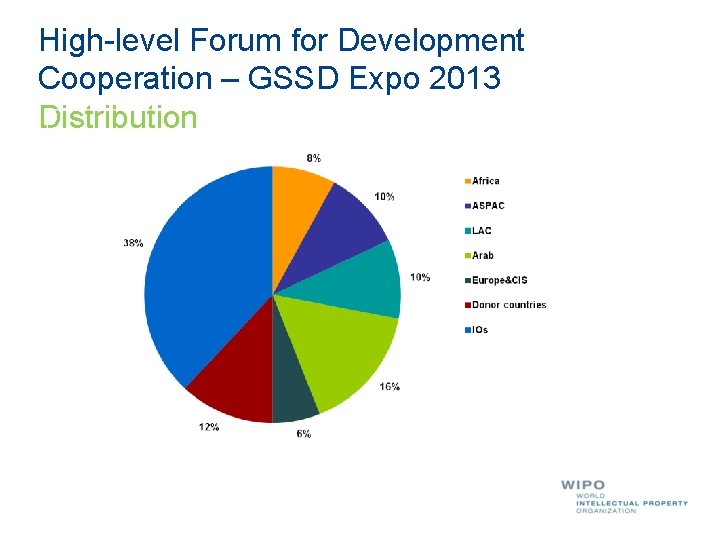
High-level Forum for Development Cooperation – GSSD Expo 2013 Distribution
High-level Forum for Development Cooperation – GSSD Expo 2013 Distribution Africa: Angola, Guinea, Kenya, Liberia Arab States: Algeria, Egypt, Iraq, Yemen, Kuwait, Qatar Sudan, Tunisia Asia: Bangladesh, China, Indonesia, Nepal, Sri Lanka Europe & CIS: Slovakia, Turkey, Uzbekistan LAC: Argentina, Chile, Colombia, Mexico, Venezuela Donor countries: Finland, Germany, Japan, Norway, UK, USA IOs: FAO, IFAD, ILO, UNCTAD, UNDP, UNECE, UNEP, UNIDO, UN-OHRLLS, UNOSSC, WBI, WHO, WIPO, Af. DB, ICCIA Total: 129 participants
High-level Forum for Development Cooperation – GSSD Expo 2013 Overview Review of national and regional SSC initiatives highlights a growing use of SSC at all levels: Ø increase in SSC programs Ø Increase in SSC funds Ø Increase in policies and strategies for SSC Ø New SSC institutional frameworks Ø Large number of triangular cooperation projects with the support from donor countries (Japan and USA in the lead)
High-level Forum for Development Cooperation – GSSD Expo 2013 Overview International level: UN funds, programs and specialized agencies are also increasingly placing emphasis on SSC Ø Development of new web-based platforms to foster the sharing of knowledge and experience Ø Documentation of solutions and best practices Ø Establishment of hubs & centers of excellence to promote SSC Ø Formulation of SSC strategies Ø Emergence of dedicated SSC units
High-level Forum for Development Cooperation GSSD Expo 2013 Lessons Learned Better capture and disseminate experiences and good practices from the South Engage the private sector&civil society/encourage PPPs Strengthen resources, capacities and institutional frameworks for SSC Use SSC as a tool to support, in particular, LDCs, landlocked and small island developing countries Strengthen SSC management practices (monitoring and review mechanisms, coordination mechanisms) Ø UNOSSC study on capacity development for SSC Encourage further use of and partnerships with SS -GATE for exchange of technologies&assets
Conclusion SSC has become an important mechanism for developing countries and LDCs to help them achieve their development agenda The multilateral system and donor countries are increasingly supporting SSC helping to scale up these initiatives and acting as knowledge-brokers and catalysts More efforts need to be made in terms of strengthening capacities and improving SSC management practices WIPO will continue to work closely with UNOSSC to follow up on UN system-wide developments and contribute to the enhancement of SSC in the field of IP Lessons learned will be taken into account in future work of South-South project subject to MS decision
Thank you