Why Cast it Understanding the reasons why casting

- Slides: 6
Why Cast it? Understanding the reasons why casting is used to make parts
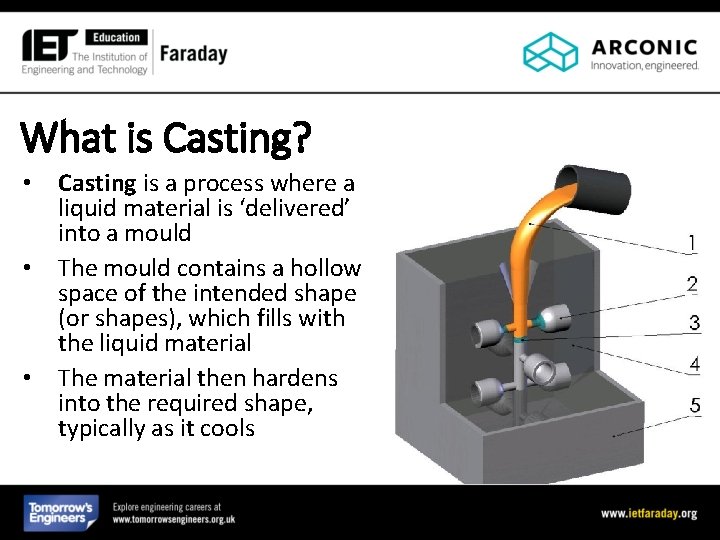
What is Casting? • Casting is a process where a liquid material is ‘delivered’ into a mould • The mould contains a hollow space of the intended shape (or shapes), which fills with the liquid material • The material then hardens into the required shape, typically as it cools
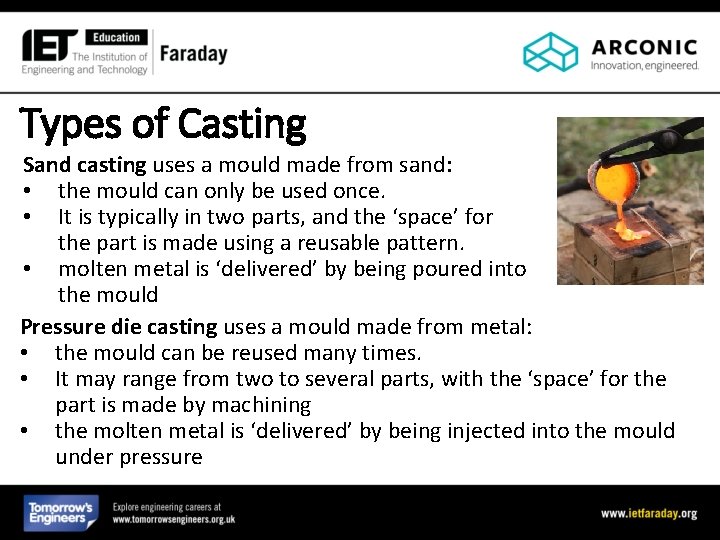
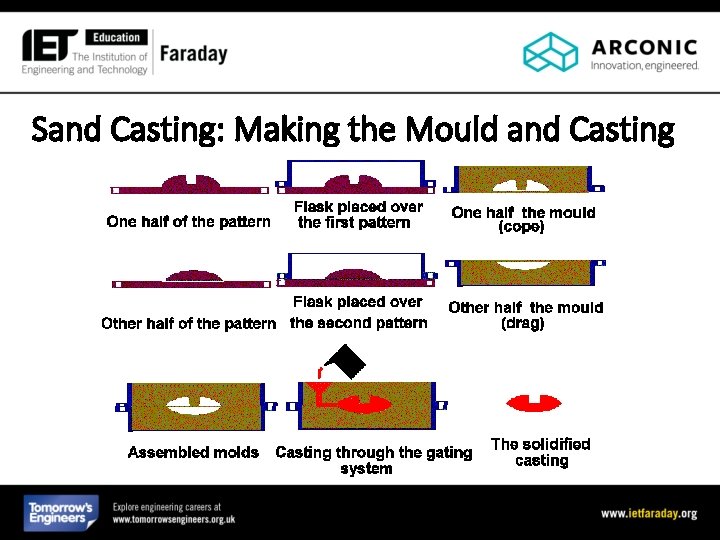
Types of Casting Sand casting uses a mould made from sand: • the mould can only be used once. • It is typically in two parts, and the ‘space’ for the part is made using a reusable pattern. • molten metal is ‘delivered’ by being poured into the mould Pressure die casting uses a mould made from metal: • the mould can be reused many times. • It may range from two to several parts, with the ‘space’ for the part is made by machining • the molten metal is ‘delivered’ by being injected into the mould under pressure
Sand Casting: Making the Mould and Casting
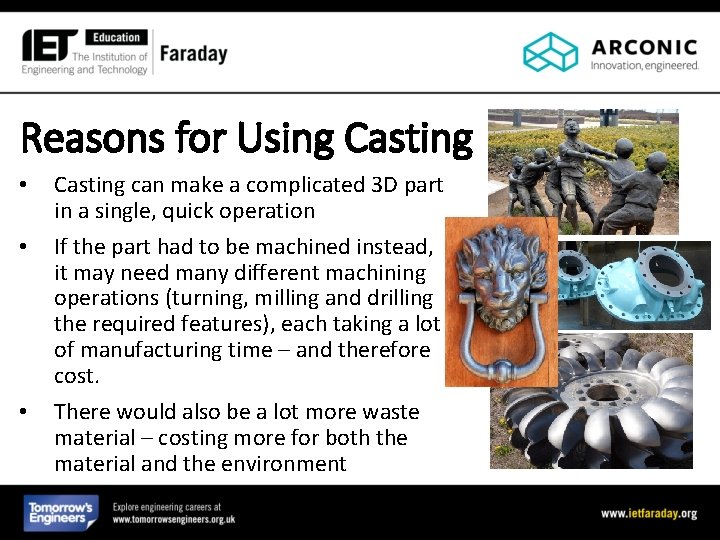
Reasons for Using Casting • • • Casting can make a complicated 3 D part in a single, quick operation If the part had to be machined instead, it may need many different machining operations (turning, milling and drilling the required features), each taking a lot of manufacturing time – and therefore cost. There would also be a lot more waste material – costing more for both the material and the environment
Now do this: • Using the material provided, make the shape using the mould provided. Record how long this takes. • Using modelling tools, manufacture the same shape by hand. Record how long this takes. • How do the times compare? Which of the processes had the opportunity to make the most mistakes? Which process gave the highest quality of manufactured part?