What is Distracted Driving noun distraction distrakshn Distraction
- Slides: 9
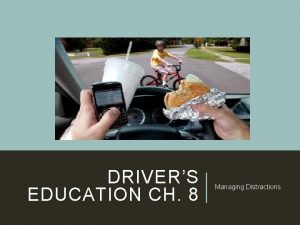
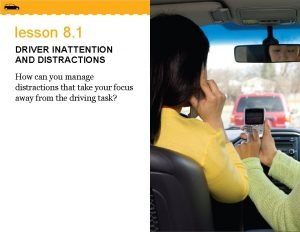
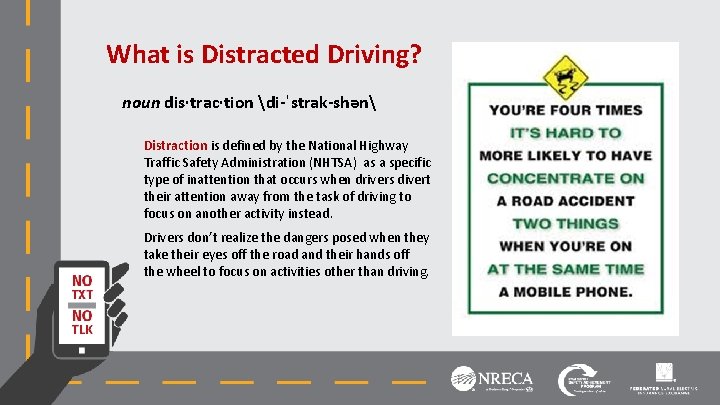
What is Distracted Driving? noun dis·trac·tion di-ˈstrak-shən Distraction is defined by the National Highway Traffic Safety Administration (NHTSA) as a specific type of inattention that occurs when drivers divert their attention away from the task of driving to focus on another activity instead. Drivers don’t realize the dangers posed when they take their eyes off the road and their hands off the wheel to focus on activities other than driving.
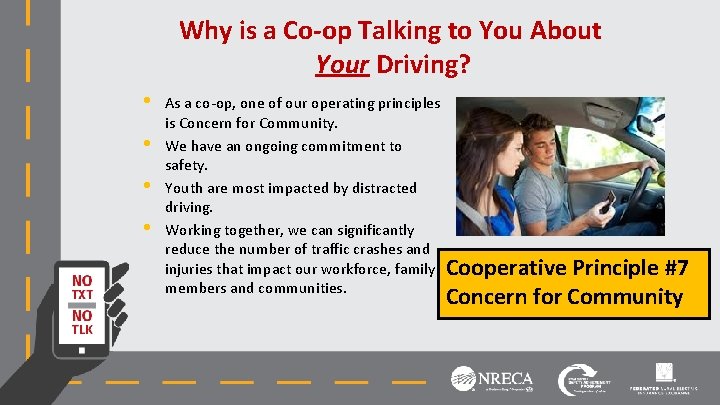
Why is a Co-op Talking to You About Your Driving? • • As a co-op, one of our operating principles is Concern for Community. We have an ongoing commitment to safety. Youth are most impacted by distracted driving. Working together, we can significantly reduce the number of traffic crashes and injuries that impact our workforce, family members and communities. Cooperative Principle #7 Concern for Community
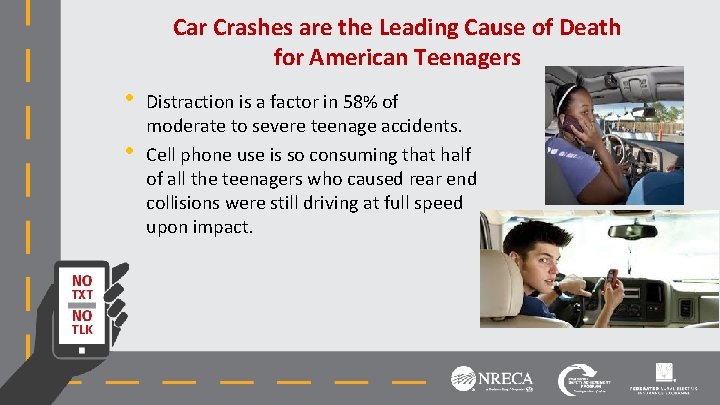
Car Crashes are the Leading Cause of Death for American Teenagers • • Distraction is a factor in 58% of moderate to severe teenage accidents. Cell phone use is so consuming that half of all the teenagers who caused rear end collisions were still driving at full speed upon impact.
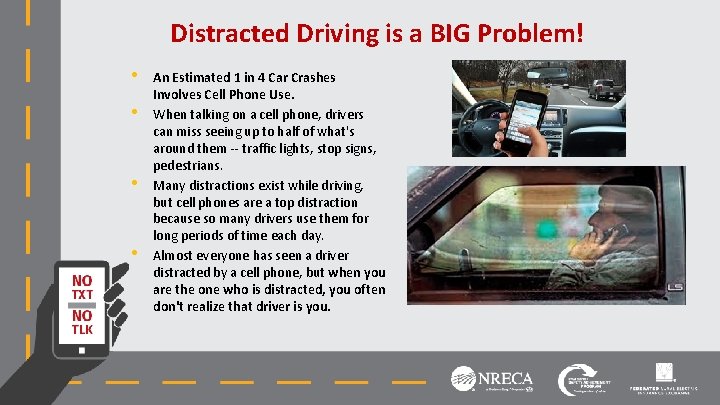
Distracted Driving is a BIG Problem! • • An Estimated 1 in 4 Car Crashes Involves Cell Phone Use. When talking on a cell phone, drivers can miss seeing up to half of what's around them -- traffic lights, stop signs, pedestrians. Many distractions exist while driving, but cell phones are a top distraction because so many drivers use them for long periods of time each day. Almost everyone has seen a driver distracted by a cell phone, but when you are the one who is distracted, you often don't realize that driver is you.
Five Facts on Distracted Driving 1 Five seconds is the average time your eyes are off the road while texting. When traveling at 55 mph, that's enough time to cover the length of a football field. 2 Device-related tasks like reaching for a phone, dialing and texting, increased the risk of getting into a crash by three times. 3 Phone conversations of any type increase risk; including increased reaction times, increased variations in speed, lane deviations, and steering wheel control. 4 Talking on a cell phone quadruples your risk of an accident, about the same as if you were driving drunk. Risk doubles again if you are texting while driving. 5 Youth most at risk. Car crashes are the #1 cause of death for teenagers. Drivers in their 20 s make up 27 % of the distracted drivers in fatal crashes.
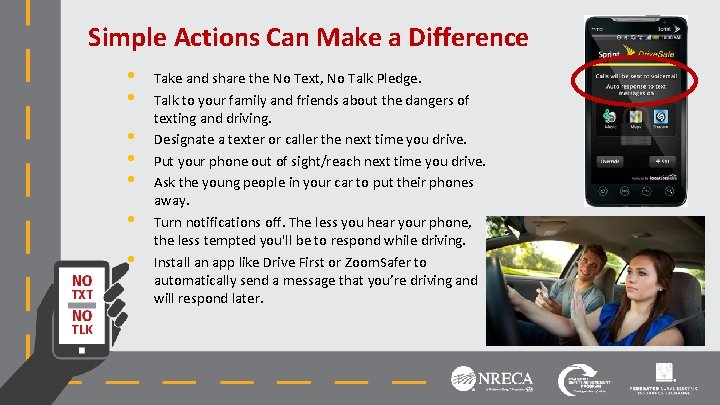
Simple Actions Can Make a Difference • • Take and share the No Text, No Talk Pledge. Talk to your family and friends about the dangers of texting and driving. Designate a texter or caller the next time you drive. Put your phone out of sight/reach next time you drive. Ask the young people in your car to put their phones away. Turn notifications off. The less you hear your phone, the less tempted you'll be to respond while driving. Install an app like Drive First or Zoom. Safer to automatically send a message that you’re driving and will respond later.
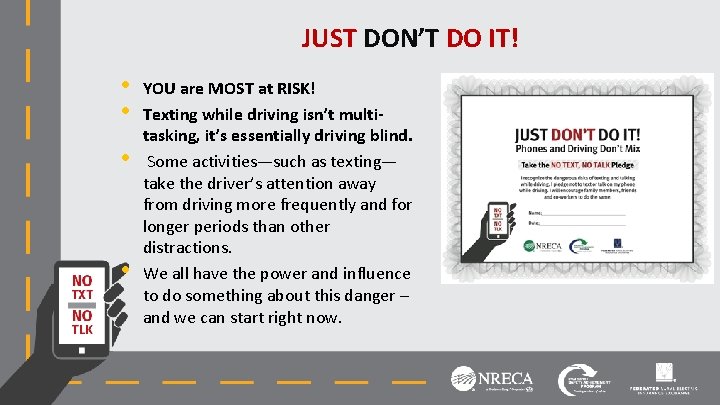
JUST DON’T DO IT! • • YOU are MOST at RISK! Texting while driving isn’t multitasking, it’s essentially driving blind. Some activities—such as texting— take the driver’s attention away from driving more frequently and for longer periods than other distractions. We all have the power and influence to do something about this danger – and we can start right now.
Questions/Discussion