Vignesh S 13 M 149 INTRODUCTION Water purification


- Slides: 8
* Vignesh. S 13 M 149
INTRODUCTION -Water purification is the process of removing undesirable chemicals, biological contaminants, suspended solids and gases from contaminated water. -The goal of this process is to produce water fit for a specific purpose. Most water is disinfected for human consumption (drinking water).
NEED FOR PURIFICATION Ø The purification process of water may reduce the concentration of particulate matter including suspended particles, parasites, bacteria, algae, viruses, fungi; and a range of dissolved and particulate material derived from the surfaces that water may have made contact with after falling as rain. Ø Various diseases spread through unpurified water: • Diarrhoea • Arsenicosis • Cholera • Fluorosis • Guinea Worm Disease • Typhoid
Types Of Purification Drinking water is purified by the following methods: Ø Filtration: The water passes through filters, some made of layers of sand, gravel, and charcoal that help remove even smaller particles. Ø Boiling Ø UV Treatment
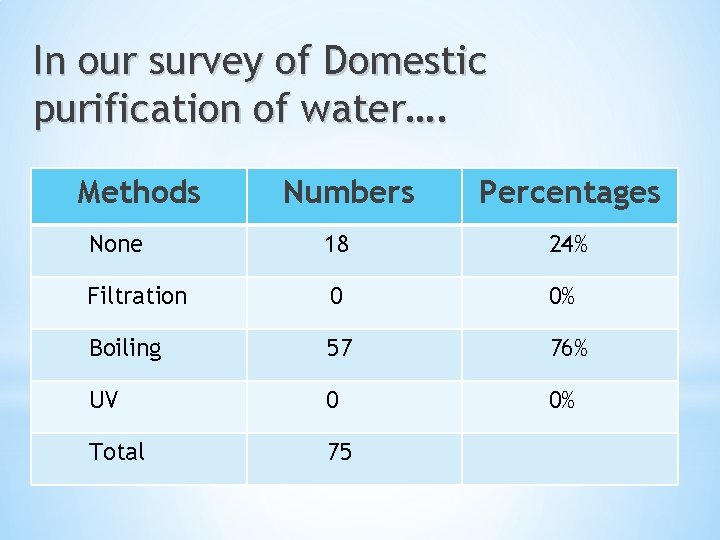
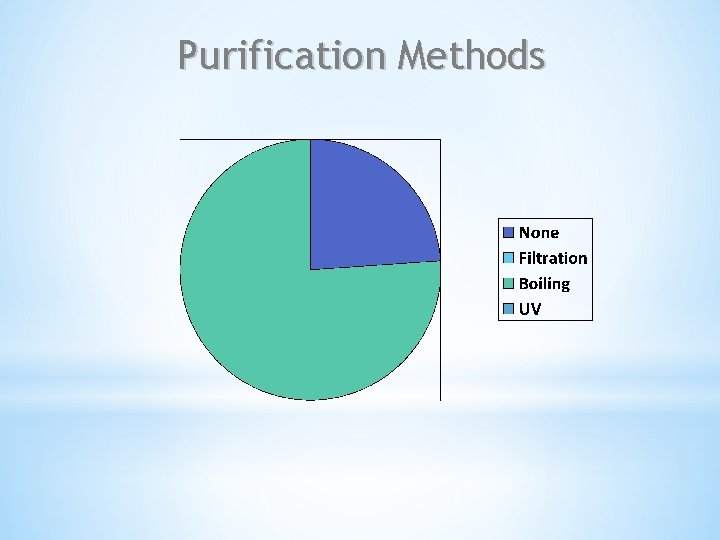
In our survey of Domestic purification of water…. Methods Numbers Percentages None 18 24% Filtration 0 0% Boiling 57 76% UV 0 0% Total 75
Purification Methods
Interpretation After surveying 75 houses I found out that: • • 18 houses do not purify their drinking water None of the houses prefer to purify drinking water by filtration 57 houses prefer to purify by boiling the water None of the houses prefer to purify water by UV methods
Conclusion I have come to the conclusion that boiling water is the best method for purification of water. The reason is because it is cheap and efficient. the houses surveyed do not use filtration as it is a slow process. UV is also not used because it is a costly method and also has its own cons like: • The water being treated must be in no way turbid or cloudy. • Ultraviolet purification offers no residual treatment.