Vicentiu Covrig Asset Pricing Theory chapter 5 1
- Slides: 19
Vicentiu Covrig Asset Pricing Theory (chapter 5) 1
Vicentiu Covrig Capital Asset Pricing Model (CAPM) n Elegant theory of the relationship between risk and return - Used for the calculation of cost of equity and required return - Incorporates the risk-return trade off - Very used in practice - Developed by William Sharpe in 1963, who won the Nobel Prize in Economics in 1990 2
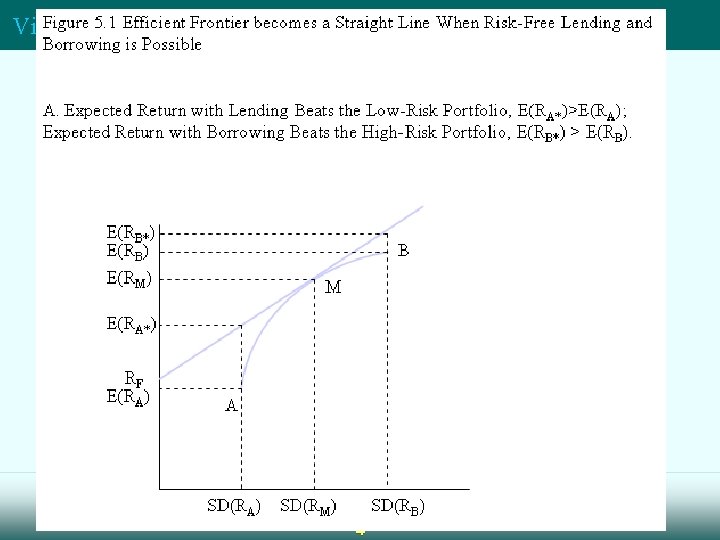
Vicentiu Covrig CAPM Basic Assumptions n n n n Investors hold efficient portfolios—higher expected returns involve higher risk. Unlimited borrowing and lending is possible at the riskfree rate. Investors have homogenous expectations. There is a one-period time horizon. Investments are infinitely divisible. No taxes or transaction costs exist. Inflation is fully anticipated. Capital markets are in equilibrium. Examine CAPM as an extension to portfolio theory: 3
Vicentiu Covrig 4
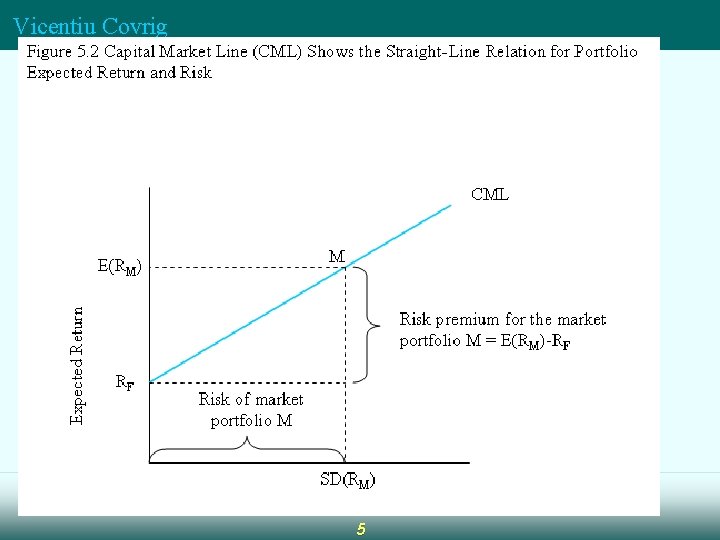
Vicentiu Covrig 5
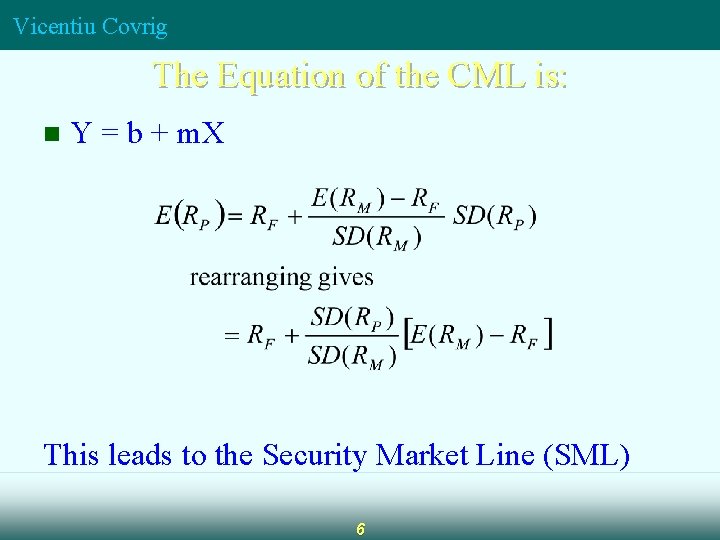
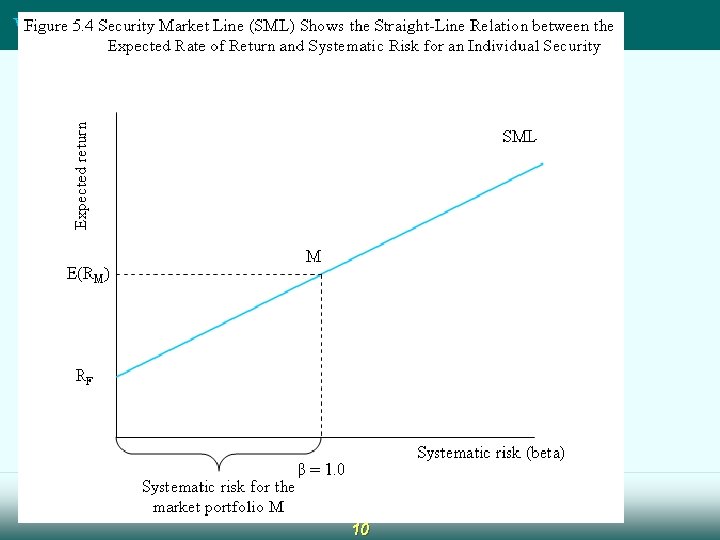
Vicentiu Covrig The Equation of the CML is: n Y = b + m. X This leads to the Security Market Line (SML) 6
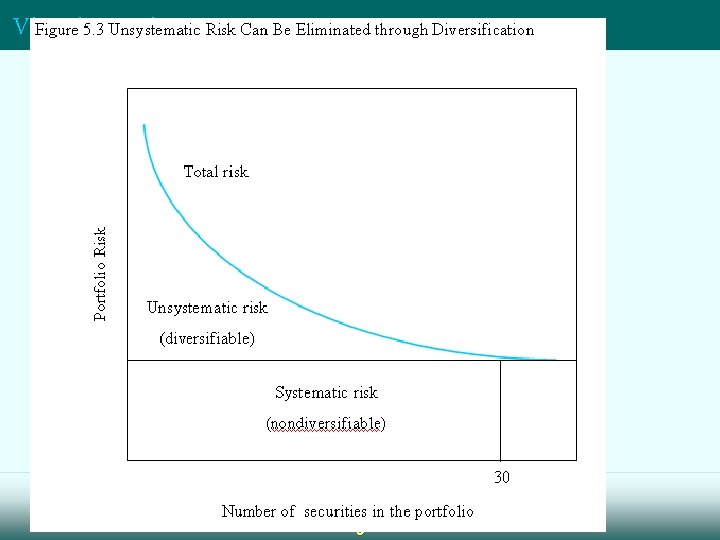
Vicentiu Covrig SML: risk-return trade-off for individual securities n Individual securities have - Unsystematic risk u. Volatility due to firm-specific events u. Can be eliminated through diversification u. Also called firm-specific risk and diversifiable risk - Systematic risk u. Volatility due to the overall stock market u. Since this risk cannot be eliminated through diversification, this is often called nondiversifiable risk. 7
Vicentiu Covrig 8
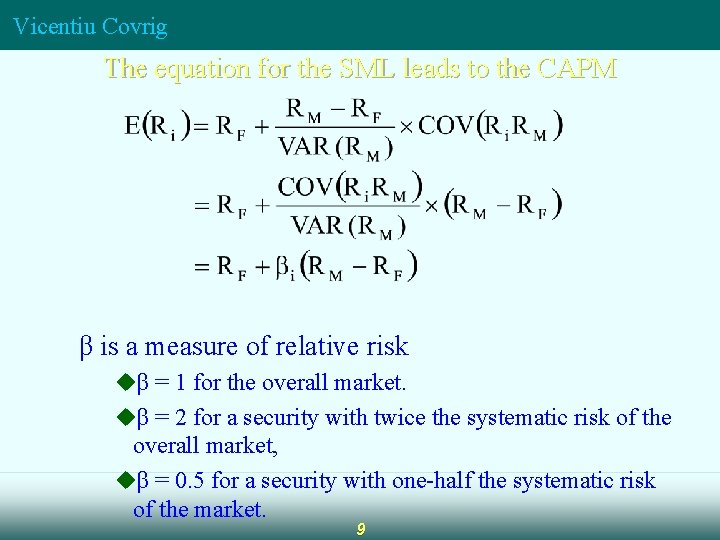
Vicentiu Covrig The equation for the SML leads to the CAPM β is a measure of relative risk uβ = 1 for the overall market. uβ = 2 for a security with twice the systematic risk of the overall market, uβ = 0. 5 for a security with one-half the systematic risk of the market. 9
Vicentiu Covrig 10
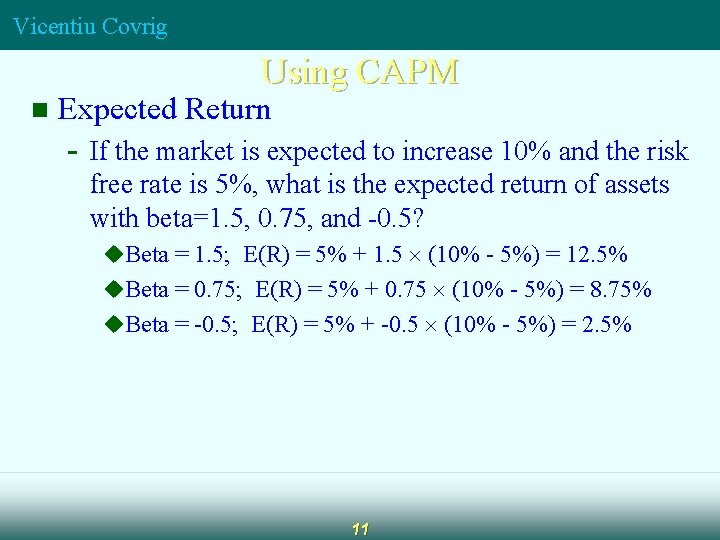
Vicentiu Covrig Using CAPM n Expected Return - If the market is expected to increase 10% and the risk free rate is 5%, what is the expected return of assets with beta=1. 5, 0. 75, and -0. 5? u. Beta = 1. 5; E(R) = 5% + 1. 5 (10% - 5%) = 12. 5% u. Beta = 0. 75; E(R) = 5% + 0. 75 (10% - 5%) = 8. 75% u. Beta = -0. 5; E(R) = 5% + -0. 5 (10% - 5%) = 2. 5% 11
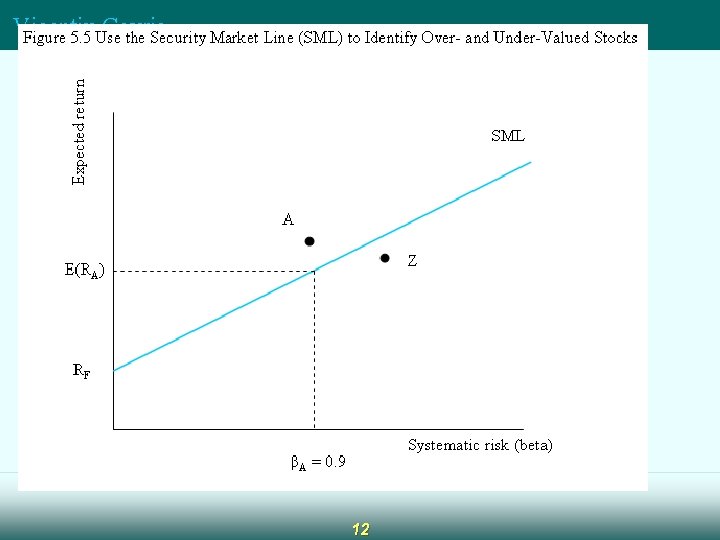
Vicentiu Covrig 12
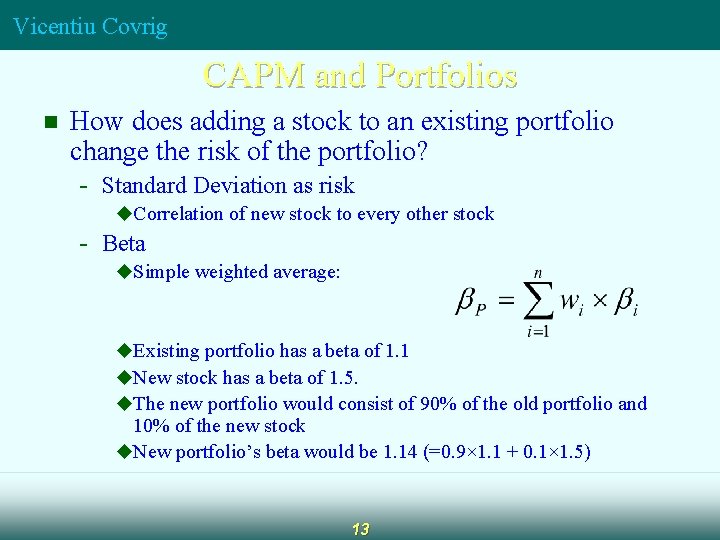
Vicentiu Covrig CAPM and Portfolios n How does adding a stock to an existing portfolio change the risk of the portfolio? - Standard Deviation as risk u. Correlation of new stock to every other stock - Beta u. Simple weighted average: u. Existing portfolio has a beta of 1. 1 u. New stock has a beta of 1. 5. u. The new portfolio would consist of 90% of the old portfolio and 10% of the new stock u. New portfolio’s beta would be 1. 14 (=0. 9× 1. 1 + 0. 1× 1. 5) 13
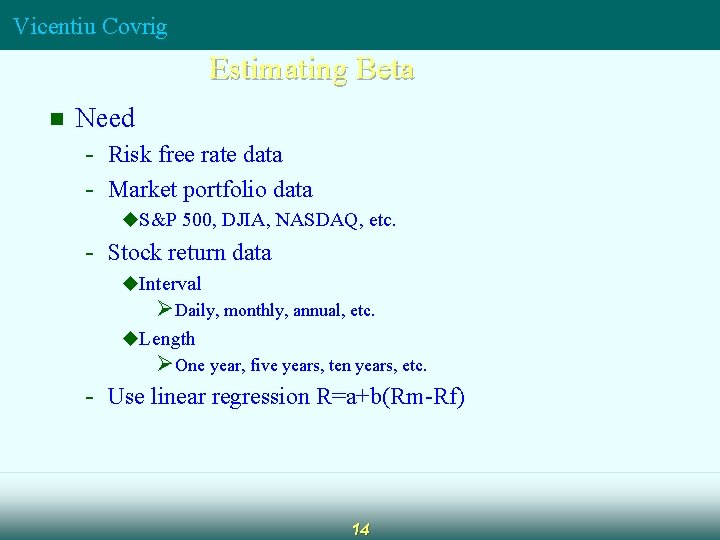
Vicentiu Covrig Estimating Beta n Need - Risk free rate data - Market portfolio data u. S&P 500, DJIA, NASDAQ, etc. - Stock return data u. Interval ØDaily, monthly, annual, etc. u. Length ØOne year, five years, ten years, etc. - Use linear regression R=a+b(Rm-Rf) 14
Vicentiu Covrig Problems using Beta n n Which market index? Which time intervals? Time length of data? Non-stationary - Beta estimates of a company change over time. - How useful is the beta you estimate now for thinking about the future? n Beta is calculated and sold by specialized companies 15
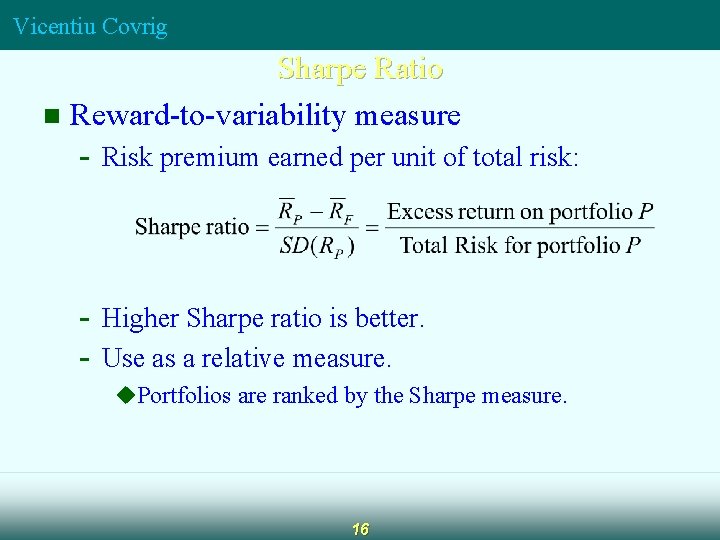
Vicentiu Covrig Sharpe Ratio n Reward-to-variability measure - Risk premium earned per unit of total risk: - Higher Sharpe ratio is better. - Use as a relative measure. u. Portfolios are ranked by the Sharpe measure. 16
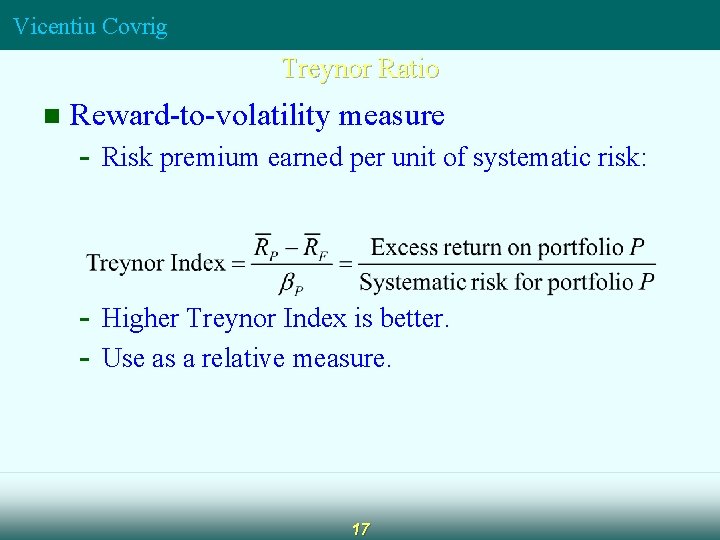
Vicentiu Covrig Treynor Ratio n Reward-to-volatility measure - Risk premium earned per unit of systematic risk: - Higher Treynor Index is better. - Use as a relative measure. 17
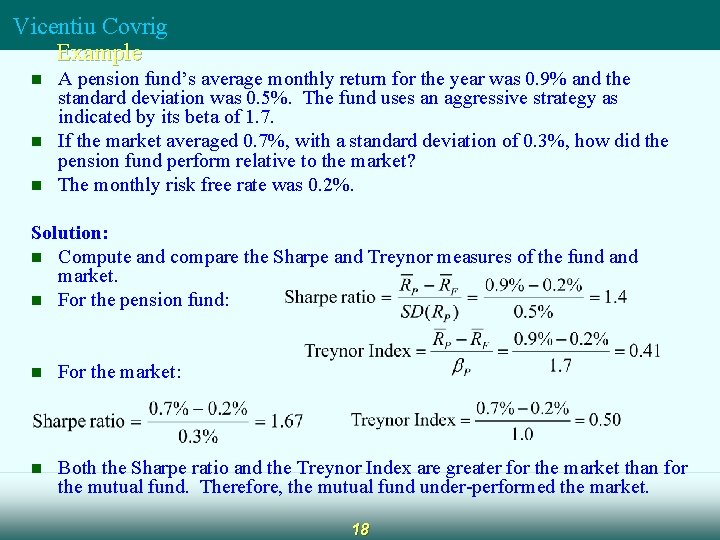
Vicentiu Covrig Example n n n A pension fund’s average monthly return for the year was 0. 9% and the standard deviation was 0. 5%. The fund uses an aggressive strategy as indicated by its beta of 1. 7. If the market averaged 0. 7%, with a standard deviation of 0. 3%, how did the pension fund perform relative to the market? The monthly risk free rate was 0. 2%. Solution: n Compute and compare the Sharpe and Treynor measures of the fund and market. n For the pension fund: n For the market: n Both the Sharpe ratio and the Treynor Index are greater for the market than for the mutual fund. Therefore, the mutual fund under-performed the market. 18
Vicentiu Covrig Learning objectives Discuss the CAPM assumptions and model; Discuss the CML and SML Discuss the firm specific versus market risk Discuss the concepts of correlation and its relation with diversification Know Alpha and Beta Know how to calculate the require return; portfolio beta Discuss how Beta is estimated and the problems with Beta Discuss and know how to calculate Sharpe and Treynor ratios End of chapter problems 5. 1, 5. 9, 5. 15, 5. 16, 5. 19, CFA problems 5. 1, 5. 3 19