Using Grand Strategy Video Games to Teach History






- Slides: 13
Using Grand Strategy Video Games to Teach History in Higher Education RHETT LOBAN
Research Aim The purpose of this project is to identify, describe and evaluate the use of Grand Strategy video games (i. e. Europa Universalis IV) as a tool formal adult learning (Higher Education) in discipline of history.
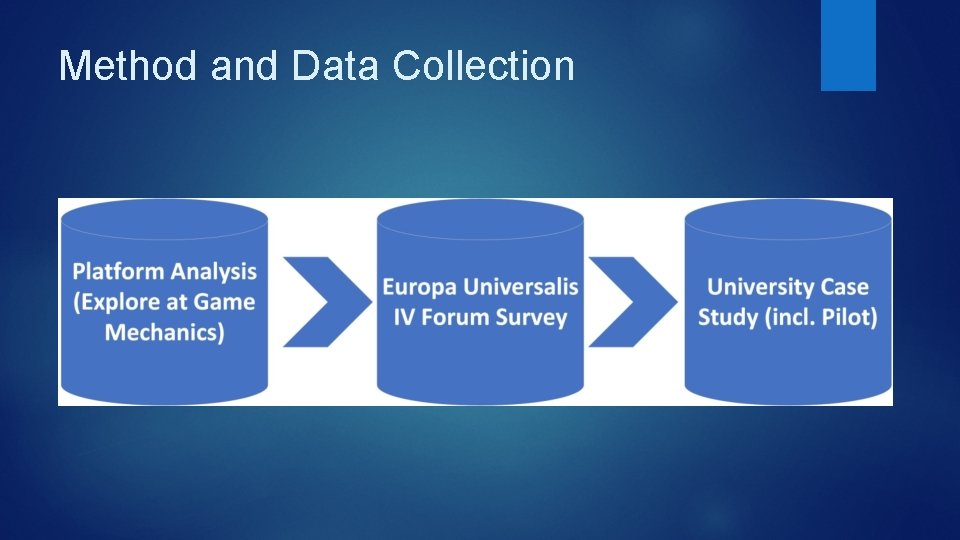
Method and Data Collection
Interest and Informal Learning 95% players sought out more information afterwards
Discover of History by Chance “I have got to know things about Ethiopia in my current campaign. Now I know about Prester John's kingdom, the Coptic faith, the Jewish province in the African kingdom, the traditions of the Ethiopians, and a lot more. I never asked for it, but I got it and now I feel that my knowledge about history is even greater!”
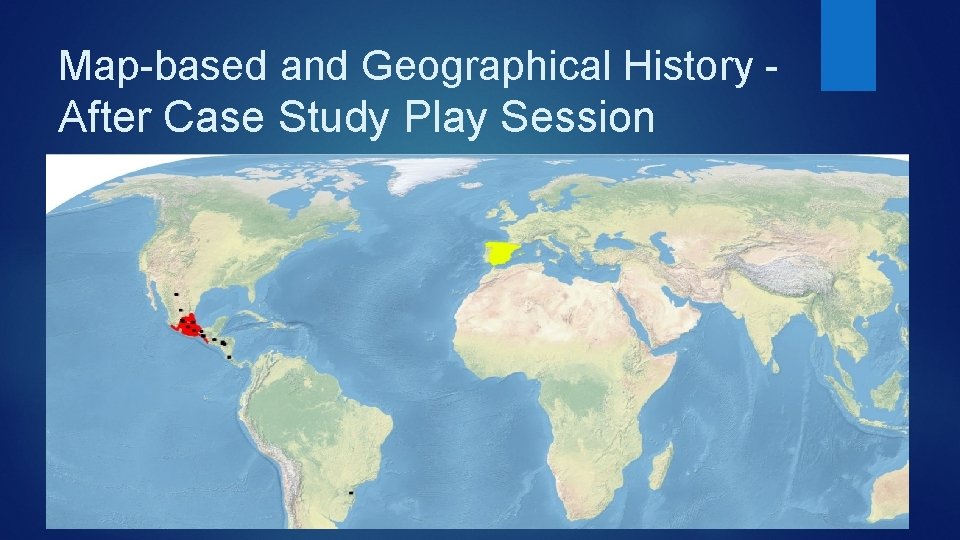
Map-based and Geographical History Before Case Study Play
Map-based and Geographical History After Case Study Play Session
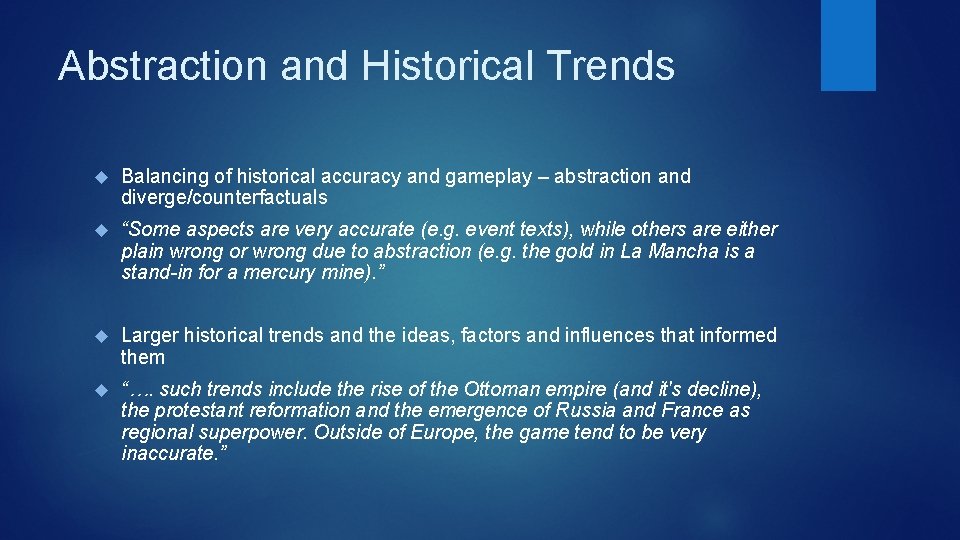
Abstraction and Historical Trends Balancing of historical accuracy and gameplay – abstraction and diverge/counterfactuals “Some aspects are very accurate (e. g. event texts), while others are either plain wrong or wrong due to abstraction (e. g. the gold in La Mancha is a stand-in for a mercury mine). ” Larger historical trends and the ideas, factors and influences that informed them “…. such trends include the rise of the Ottoman empire (and it's decline), the protestant reformation and the emergence of Russia and France as regional superpower. Outside of Europe, the game tend to be very inaccurate. ”
Modding 45% participants had modded the game
Counterfactual History Trigger: Spanish discovering Tenochtitlan and after May 4 1519 Options: - Let the practice continue - Become friendly with Aztecs (vassal), receive gold, penalty with Catholic nations (--piety) - Stop the practice - Declare war on Aztecs (casus belli colonialism), friendly with Catholic nations (++piety)
Counterfactual History
Significance/Implications Taking popular culture and these deep interests and informal learning to capitalise on it in a formal learning context Highlights learning potential of map visualisation and encounters – not history texts or even popular history Underlines need to consider educational limitations around Eurocentric nature, game elements and abstraction (O’Neill and Feenstra 2016, Mukherjee 2017) Can be utilised to not history facts but the history - the underlying ideas, influences and factors (Egenfeldt-Nielsen 2005) Shows a shift in the way that we engage with video games - modding Mods an opportunity for technological innovative and creative engagement that is not often offered in the social sciences and humanities discipline – quantification of history and versatile expression (El-Nasr and Smith 2006, Apperley 2013) Provides a implementation and application of video games to produce a creative and analytical output that can be assessed.
References Apperley, T. (2013). "Modding the Historians’ Code: Historical Verisimilitude and the Counterfactual Imagination. " Playing with the Past: Digital Games and the Simulation of History: 185. Brand, J. E. and S. Todhunter (2015). Digital Australia 2016. Eveleigh, NSW, Interactive Games & Entertainment Association. Chapman, A. (2016). Digital Games as History: How Videogames Represent the Past and Offer Access to Historical Practice, Routledge. Egenfeldt-Nielsen, S. (2005). Beyond edutainment: Exploring the educational potential of computer games, Lulu. com. El-Nasr, M. S. and B. K. Smith (2006). "Learning through game modding. " Computers in Entertainment (CIE) 4(1): 7. Mukherjee, S. (2017). Videogames and Postcolonialism: Empire Plays Back, Springer. O’Neill, K. and B. Feenstra (2016). "“Honestly, I Would Stick with the Books”: Young Adults’ Ideas About a Videogame as a Source of Historical Knowledge. " Game Studies 16(2).