Unit 5 A Keeping Healthy Unit 5 A


- Slides: 21
Unit 5 A: Keeping Healthy
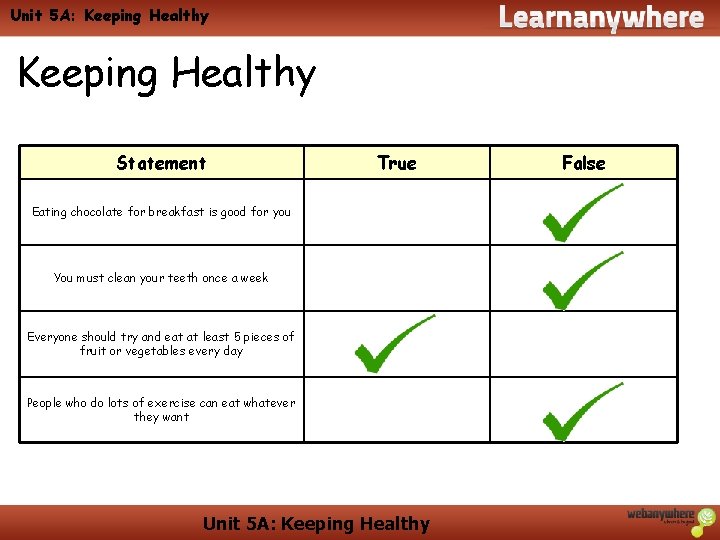
Unit 5 A: Keeping Healthy Statement True Eating chocolate for breakfast is good for you You must clean your teeth once a week Everyone should try and eat at least 5 pieces of fruit or vegetables every day People who do lots of exercise can eat whatever they want Unit 5 A: Keeping Healthy False
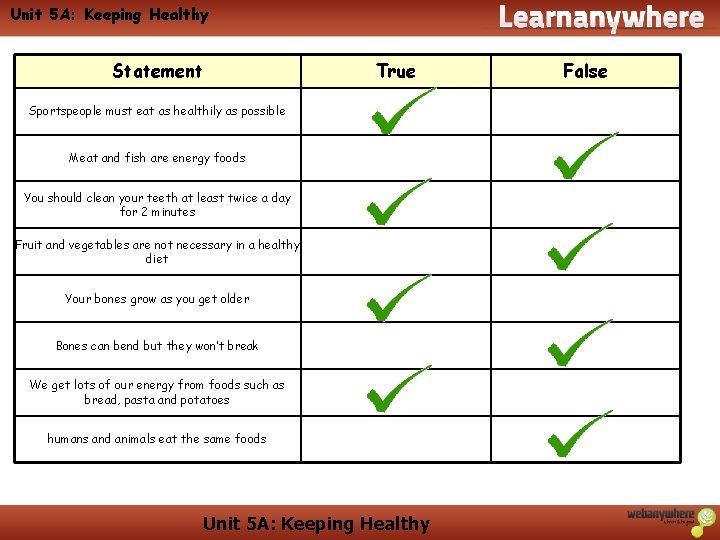
Unit 5 A: Keeping Healthy Statement True Sportspeople must eat as healthily as possible Meat and fish are energy foods You should clean your teeth at least twice a day for 2 minutes Fruit and vegetables are not necessary in a healthy diet Your bones grow as you get older Bones can bend but they won’t break We get lots of our energy from foods such as bread, pasta and potatoes humans and animals eat the same foods Unit 5 A: Keeping Healthy False
Unit 5 A: Vocabulary Some useful words Balanced diet A balanced diet includes all the necessary daily food requirements e. g. carbohydrate foods, fats, proteins, vitamins, water Side effect The effect, often undesirable, that use of a drug may have Fats An essential food, provides energy and keeps us warm Sugars An essential food, provides energy Protein An essential food, helps the body grow and repair itself Carbohydrates Provide us with energy. Vitamins Needed in minute amounts to keep us healthy. Heart beat Felt when the heart pumps once. Pulse A place in the body where the heart beat can be felt. Good points are in the wrist, the neck and the temple Pulse rate The number of times the heart beats Blood vessel The tubes that blood travels down such as arteries, veins and capillaries Lung The 2 bag like structures that take in air and where gasses pass in and out of the blood Unit 5 A: Vocabulary
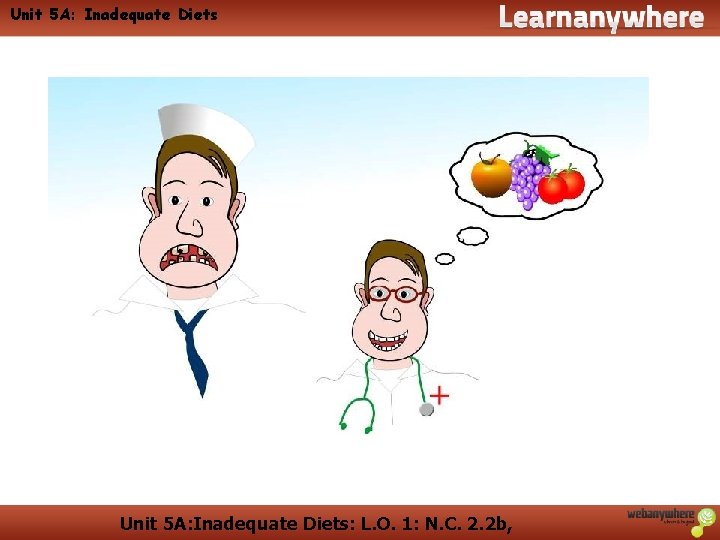
Unit 5 A: Inadequate Diets: L. O. 1: N. C. 2. 2 b,
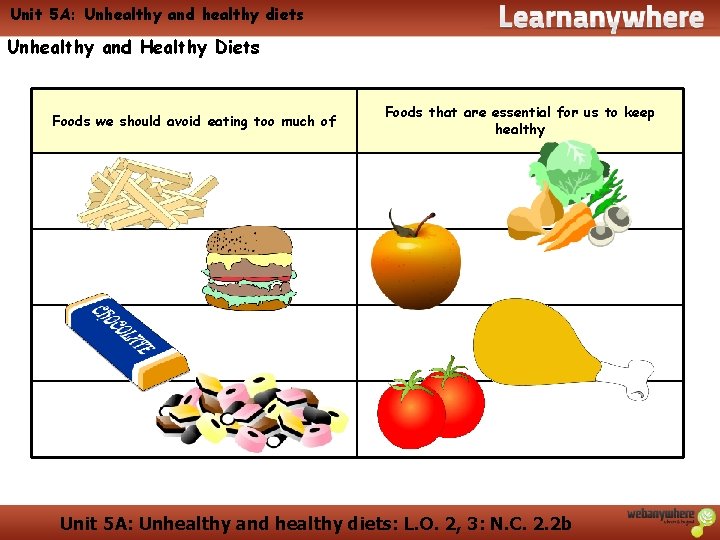
Unit 5 A: Unhealthy and healthy diets Unhealthy and Healthy Diets Foods we should avoid eating too much of Foods that are essential for us to keep healthy Unit 5 A: Unhealthy and healthy diets: L. O. 2, 3: N. C. 2. 2 b
Unit 5 A: Unhealthy and healthy diets Energy food Growth Food Fatty food Food with lots of sugar Put the foods to avoid and essential foods into the right group Fruit & Veg Unit 5 A: Unhealthy and healthy diets: L. O. 2, 3: N. C. 2. 2 b
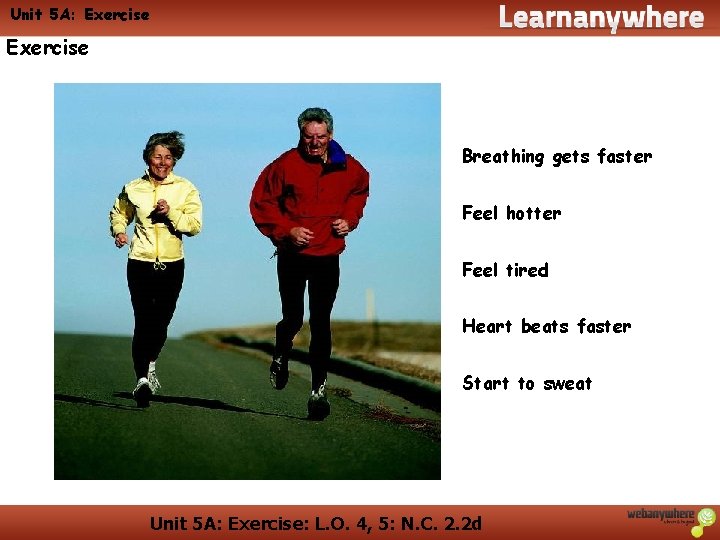
Unit 5 A: Exercise Breathing gets faster Feel hotter Feel tired Heart beats faster Start to sweat Unit 5 A: Exercise: L. O. 4, 5: N. C. 2. 2 d
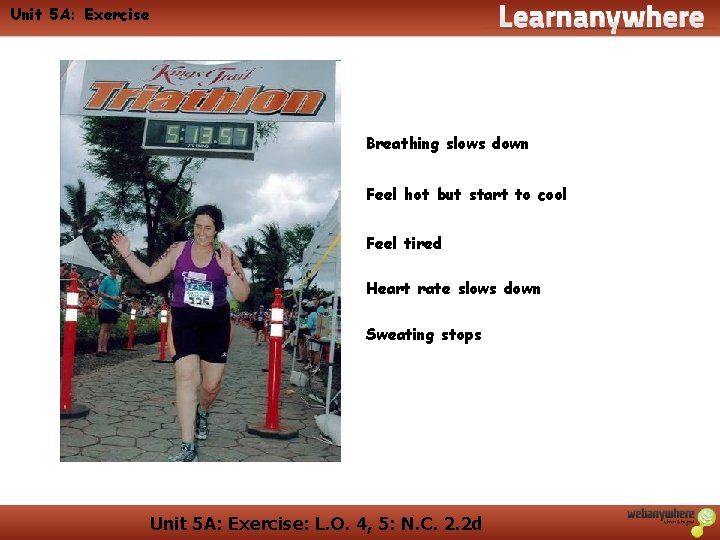
Unit 5 A: Exercise Breathing slows down Feel hot but start to cool Feel tired Heart rate slows down Sweating stops Unit 5 A: Exercise: L. O. 4, 5: N. C. 2. 2 d
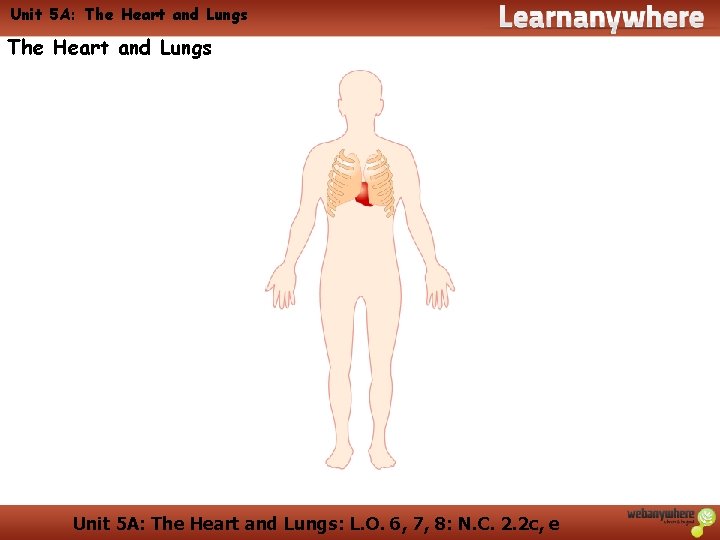
Unit 5 A: The Heart and Lungs: L. O. 6, 7, 8: N. C. 2. 2 c, e
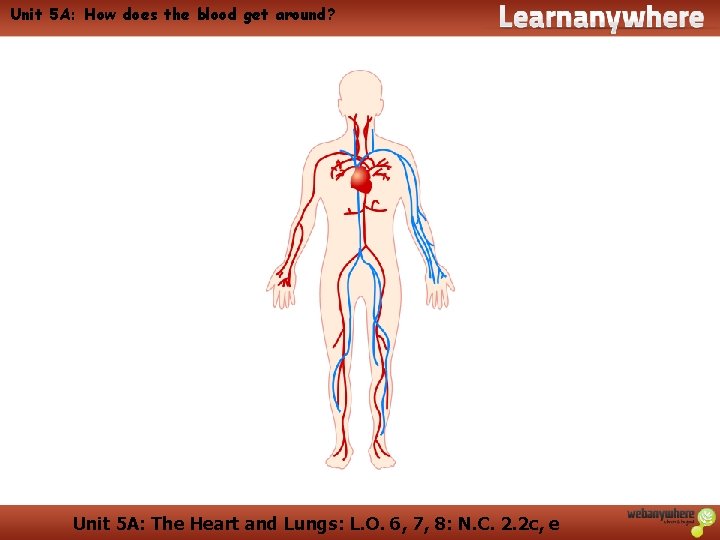
Unit 5 A: How does the blood get around? Unit 5 A: The Heart and Lungs: L. O. 6, 7, 8: N. C. 2. 2 c, e
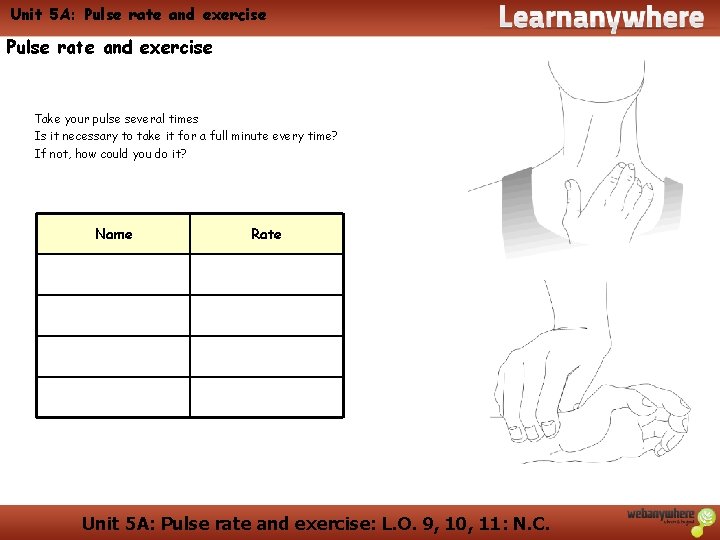
Unit 5 A: Pulse rate and exercise Take your pulse several times Is it necessary to take it for a full minute every time? If not, how could you do it? Name Rate Unit 5 A: Pulse rate and exercise: L. O. 9, 10, 11: N. C.
Unit 5 A: Pulse rate and exercise Show these results in a bar chart What do these results show? - Which was the most common range for pulse rate? - What were the highest and lowest pulse rates? - Were these very common? - Is there a difference between boys and girls? Unit 5 A: Pulse rate and exercise: L. O. 9, 10, 11: N. C.
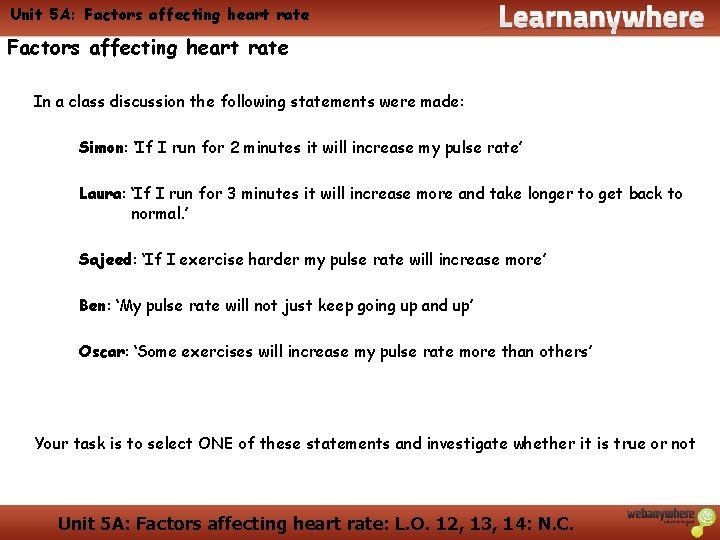
Unit 5 A: Factors affecting heart rate In a class discussion the following statements were made: Simon: ‘If I run for 2 minutes it will increase my pulse rate’ Laura: ‘If I run for 3 minutes it will increase more and take longer to get back to normal. ’ Sajeed: ‘If I exercise harder my pulse rate will increase more’ Ben: ‘My pulse rate will not just keep going up and up’ Oscar: ‘Some exercises will increase my pulse rate more than others’ Your task is to select ONE of these statements and investigate whether it is true or not Unit 5 A: Factors affecting heart rate: L. O. 12, 13, 14: N. C.
Unit 5 A: Factors affecting heart rate Which statement are you investigating? What do you think you will find out and why do you think this? How are you going to test your prediction? What equipment will you need? What will you be measuring? How many measurements will you take? Will you use only one person? How will you record the results? How will you display the results? Unit 5 A: Factors affecting heart rate: L. O. 12, 13, 14: N. C.
Unit 5 A: What do the results show? What can you say from the results you have obtained? Do these results support your prediction? Can you explain why the heart does what you have found it to do? Unit 5 A: Factors affecting heart rate: L. O. 12, 13, 14: N. C.
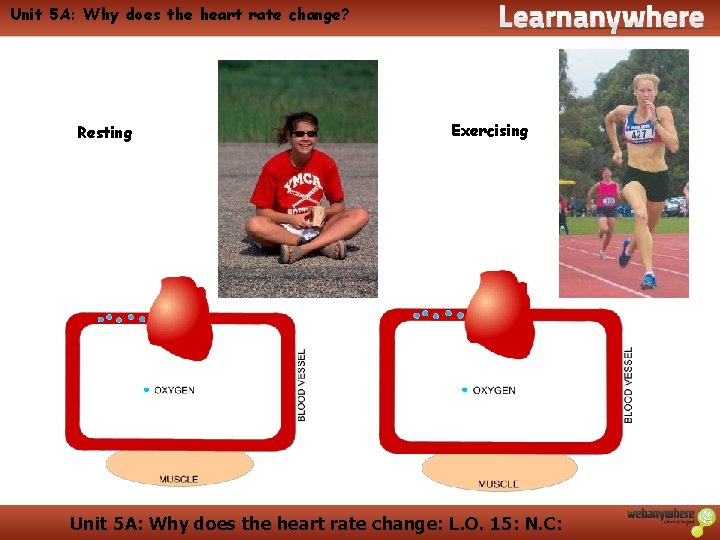
Unit 5 A: Why does the heart rate change? Resting Exercising Unit 5 A: Why does the heart rate change: L. O. 15: N. C:
Unit 5 A: Harmful Substances What is a drug? Any substance which changes our physical or mental state. List as many drugs that you can think of: Drug e. g. Alcohol Unit 5 A: Harmful Substances: L. O. 16, 17, 18: N. C. :
Unit 5 A: Harmful Substances Side effects of drugs Drug/Substance Effects Unit 5 A: Side effects of drugs: L. O. 16, 17, 18: N. C. :
Unit 5 A: Harmful Substances Medicines are also drugs but are designed to have beneficial effects. They can also have some bad side effects and should only be taken as directed by a doctor. Your task is to create a poster or a leaflet which explains the effects of one type of substance abuse, e. g. alcohol, tobacco Unit 5 A: Side effects of drugs: L. O. 16, 17, 18: N. C. :
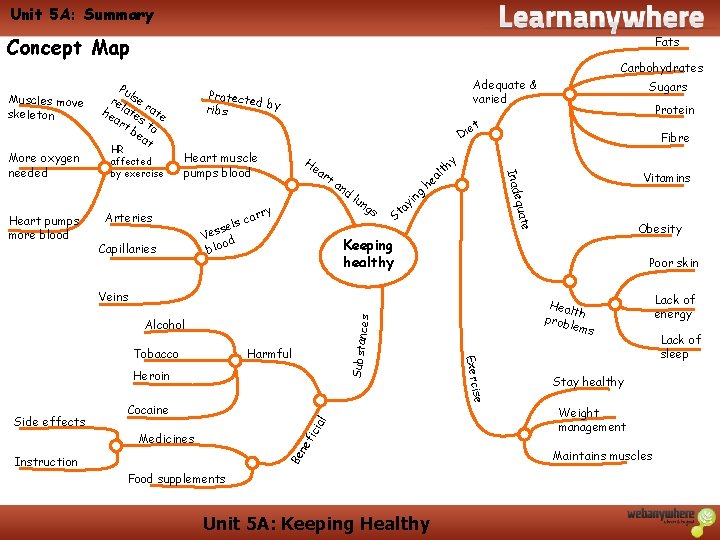
Unit 5 A: Summary Concept Map Muscles move skeleton Pu re lse he late rate ar s t tb o ea t HR affected by exercise Adequate & varied Protect ed by ribs Protein et Di Heart muscle pumps blood Capillaries ar t rry ca els s s Ve d bloo hy an d lun gs g in ay t S lt ea h Heal t prob h lems s Substanc e Heroin e ici al Cocaine ef Be n Instruction Obesity Poor skin s Exerci Harmful Medicines Vitamins Keeping healthy Alcohol Tobacco Fibre te Arteries He Veins Side effects Sugars equa Heart pumps more blood Carbohydrates Inad More oxygen needed Fats Food supplements Unit 5 A: Keeping Healthy Stay healthy Weight management Maintains muscles Lack of energy Lack of sleep