Tuning Protocol Presentation WEEK 6 SEP 16 CLASSWORK
- Slides: 7
Tuning Protocol Presentation WEEK 6 SEP 16 CLASSWORK– ALL WORKSHEETS AND NB TO BE COMPLETED IN CLASS AND SHOWN TO PARENT FOR HOMEWORK DAILY ** ALL OF THIS WORK IS TO BE USED ON QUIZZES AND TESTS TH 7 Grade Science
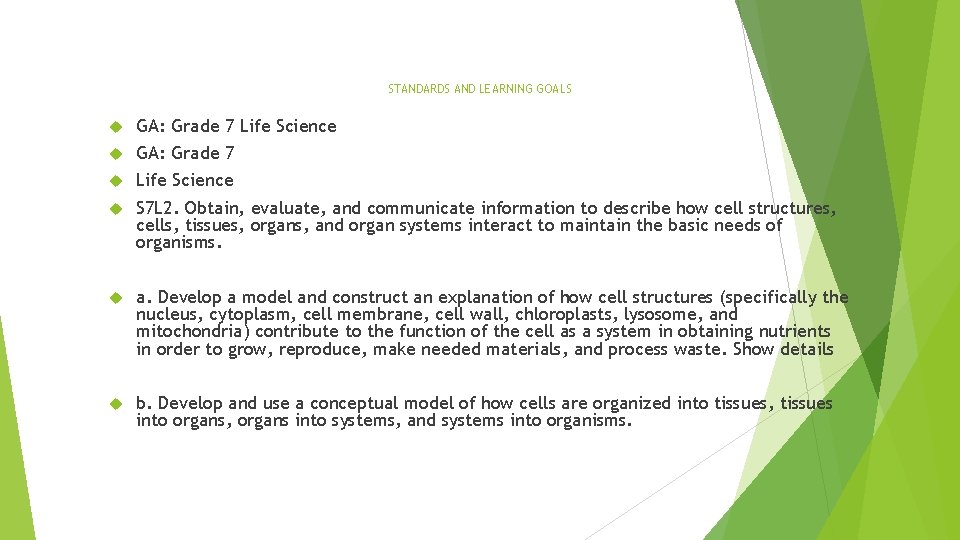
STANDARDS AND LEARNING GOALS GA: Grade 7 Life Science S 7 L 2. Obtain, evaluate, and communicate information to describe how cell structures, cells, tissues, organs, and organ systems interact to maintain the basic needs of organisms. a. Develop a model and construct an explanation of how cell structures (specifically the nucleus, cytoplasm, cell membrane, cell wall, chloroplasts, lysosome, and mitochondria) contribute to the function of the cell as a system in obtaining nutrients in order to grow, reproduce, make needed materials, and process waste. Show details b. Develop and use a conceptual model of how cells are organized into tissues, tissues into organs, organs into systems, and systems into organisms.
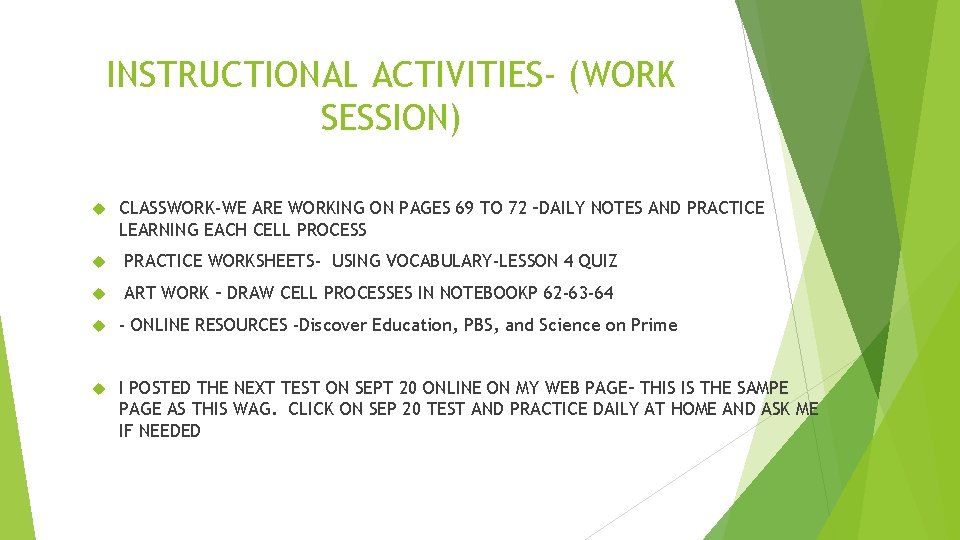
INSTRUCTIONAL ACTIVITIES- (WORK SESSION) CLASSWORK-WE ARE WORKING ON PAGES 69 TO 72 –DAILY NOTES AND PRACTICE LEARNING EACH CELL PROCESS PRACTICE WORKSHEETS- USING VOCABULARY-LESSON 4 QUIZ ART WORK – DRAW CELL PROCESSES IN NOTEBOOKP 62 -63 -64 - ONLINE RESOURCES -Discover Education, PBS, and Science on Prime I POSTED THE NEXT TEST ON SEPT 20 ONLINE ON MY WEB PAGE– THIS IS THE SAMPE PAGE AS THIS WAG. CLICK ON SEP 20 TEST AND PRACTICE DAILY AT HOME AND ASK ME IF NEEDED
STUDENT WORK Unit : Cell structures and functions S 7 L 2 a I can identify and define the internal structures of a cell. I can differentiate between a plant and animal cell. I can identify the function of cellular organelles. I can compare and contrast cell structures. I can predict what would happen if a cell did not contain a given structure. I can develop a model of a cell structure S 7 L 2 b I can explain the levels of organization for living organisms THE USE OF CELL PHONES TO PLAY GAMES, READ TEXT MESSAGES, AND ANY OTHER PERSONAL USE IS A VIOLATION OF RCBOE APPROVED USE POLICY. PARENTS PLEASE CHECK YOUR CHILDS HISTORY OF USE ON THE CELLPHONE TO SEE WHEN IT IS BEING USED. THIS BEHAVIOR IS CAUSING STUDENTS TO MISS LESSONS AND MAY RESULT IN FAILING GRADES.
ASSESSMENTS/RUBRICS 1. QUIZ ON LESSON 4 FROM TEXTBOOK 2. Evaluation of VOCABULARY worksheets in class. 3. Daily progress and mastery checks (some will be graded but students will be allowed to use all notes and handouts) 4. Homework (checked in class for effort- 10% of final grade) SEPT 23 – WE BEGIN CHAPTER 3 PAGE 82—FROM A CELL TO AN ORGANISM
Science Learning Expectations 3 Part Lesson 5 E Component What this Looks Like Grouping Opening Engage Purpose: Establish Relevancy Help learner determine need of new concepts Generate Interest • Assess prior knowledge/Connect to past knowledge • Ask questions/Responses demonstrate entry point of understanding Whole group Work Period Explore Purpose: Present Content Help learner understand concepts, process/procedures, facts or principles Experience key concepts • Discover new skills • Probe, inquire, and question experiences • Examine their thinking/Shares ideas and suspends judgment • Establish relationships and understanding Individual or Small Group Individual, Small Group or Whole Group
Explain Purpose: Improve Understanding Help learner to express new learning and provide guidance Connect prior knowledge and background to new discoveries • Communicate new understandings • Connect informal language to formal language(provides definitions, new words, and explanations) • Clarify understanding Whole Group Extend/Elaborate Purpose: Construct New Learning Help learner apply prior learning and acquire new Apply new learning to a new or similar situation • Use terms and definitions previously acquired • Uses previous information to probe, ask questions, and make reasonable judgments Individual, Small Group or Whole Group Closing Evaluate Purpose: Assess Learning Help learner measure learning against learning goals Demonstrate understanding of new concept by observation or open ended response • Provides reasonable responses and explanations to events or phenomena