TRANSULNAR PTCRA IN A PATIENT WITH DEXTROCARDIA AND

- Slides: 15
TRANSULNAR PTCRA IN A PATIENT WITH DEXTROCARDIA AND SITUS INVERSUS Presentor: Patrick Antoun MD Moderator: George Revtak MD Krannert Institue of Cardiology Indiana University
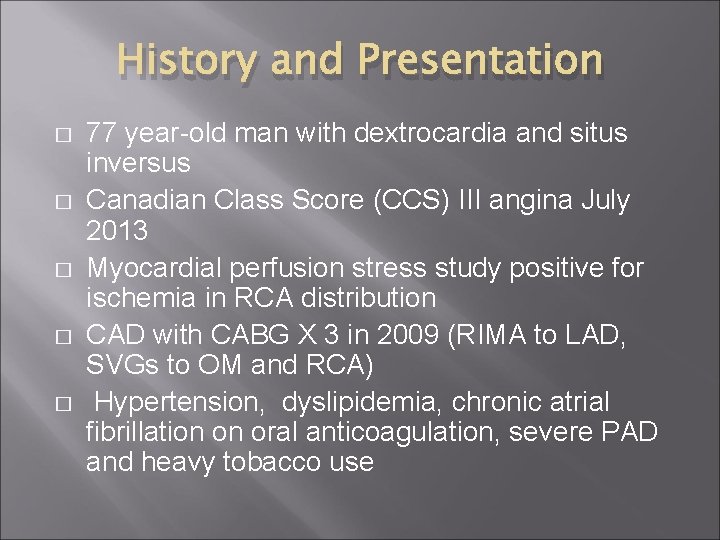
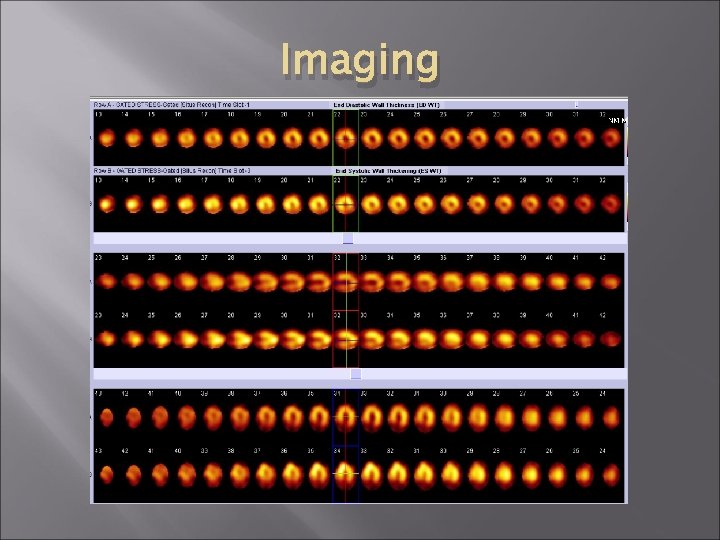
History and Presentation � � � 77 year-old man with dextrocardia and situs inversus Canadian Class Score (CCS) III angina July 2013 Myocardial perfusion stress study positive for ischemia in RCA distribution CAD with CABG X 3 in 2009 (RIMA to LAD, SVGs to OM and RCA) Hypertension, dyslipidemia, chronic atrial fibrillation on oral anticoagulation, severe PAD and heavy tobacco use
Pertinent Physical Examination � Absent pulses in both lower extremities � Normal Barbeau test in both upper extremities � Radial pulses diminished bilaterally
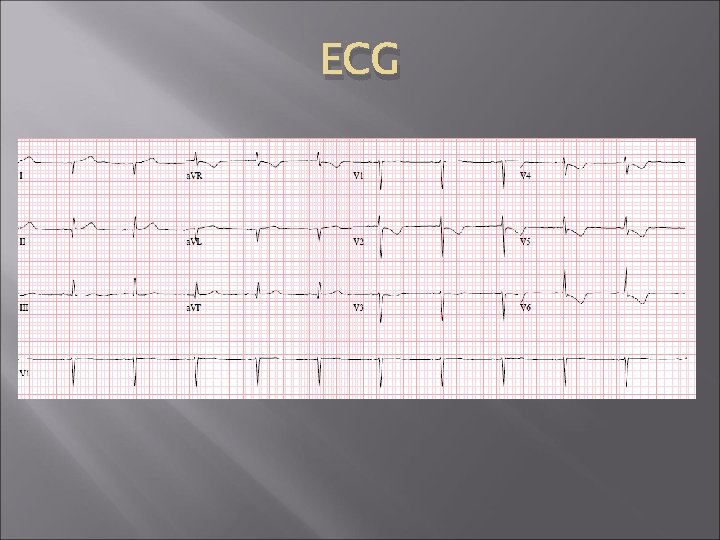
ECG
Imaging
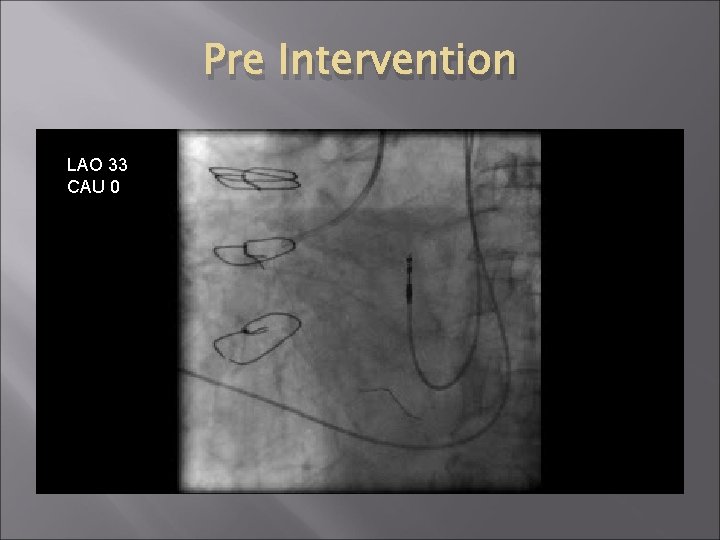
Diagnostic Procedure � Diagnostic catheterization performed using standard Judkins catheter for native left coronary, IMA for RIMA and MP catheter for native RCA and SVGs � Native CAD: 90% ostial LMCA and densely calcified, angulated 90% ostial RCA stenosis � RIMA to LAD patent, SVG to OM patent but RCA SVG occluded
Interventional Procedure � Referred for PCI because of medically refractory angina � Specific challenges � Arterial Access (femoral vs. radial/ulnar) � Diagnostic and guide catheter selection � Rotational Atherectomy for densely calcified, lesion � ostial RCA Right ulnar approach utilized � Ulnar dominant forearm circulation � No innominate artery with complicating � Ideal to assess RIMA patency tortuosity
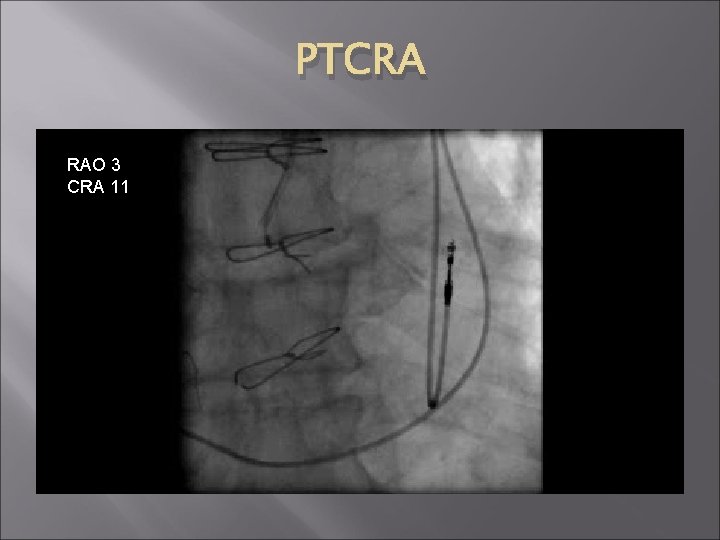
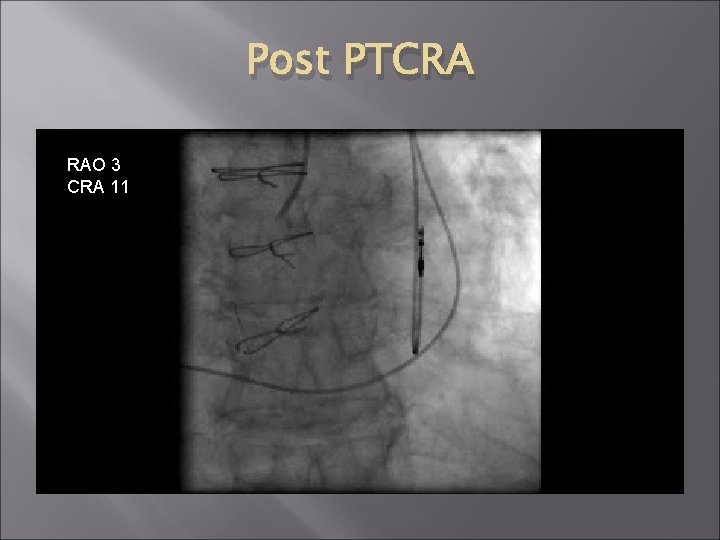
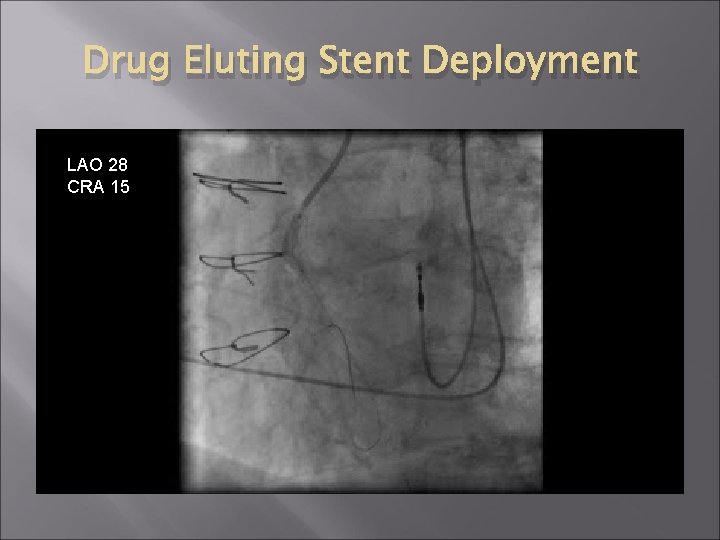
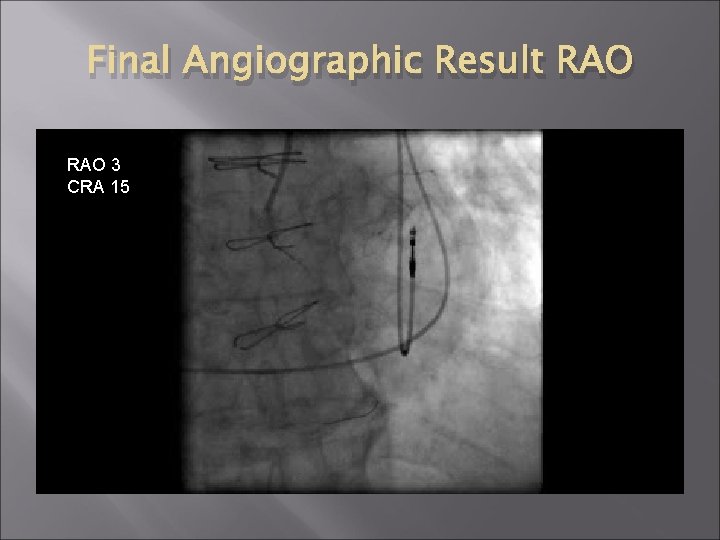
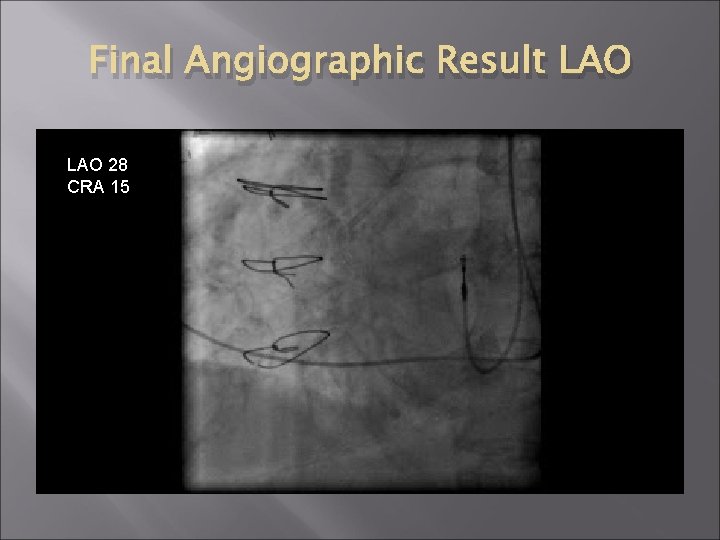
Interventional Procedure (cont. ) � � � 6 Fr “sheathless” MPB 1 guiding catheter PTCRA performed with 1. 25 mm then 1. 5 mm burrs (170 K and 150 K rpm, respectively) 3. 0 X 15 mm drug eluting stent placed and post dilated to 18 atm with 3. 5 X 12 mm balloon Excellent angiographic result with TIMI III flow post stent placement Patent hemostasis used at access site following guide catheter removal
Pre Intervention LAO 33 CAU 0
PTCRA RAO 3 CRA 11
Post PTCRA RAO 3 CRA 11
Drug Eluting Stent Deployment LAO 28 CRA 15
Final Angiographic Result RAO 3 CRA 15
Final Angiographic Result LAO 28 CRA 15
Conclusions � Complex PCI can be safely and effectively performed in patients with dextrocardia with or without situs inversus � Traditional catheter choices and vascular access for PCI may need to be modified to accommodate unusual anatomy in these patients � Right transradial/ulnar approach may be preferred in these patients due to ease of catheter introduction to the central circulation