Training of the Carnegie Mellon Teams Greg Kesden






- Slides: 11
Training of the Carnegie Mellon Teams Greg Kesden Eugene Fink Danny Sleator
Resources and constraints • Excellent talent pool - One of the best undergraduate programs in the United States • Limited training time - 200 hours/year for the international team - 100 hours/year for the other students • Limited funding - Travel to the competition - Weekly pizza The challenge is to improve the performance within these resources.
Coaches Greg Kesden (since 1999): Leader and programmer Eugene Fink (since 2004): Bookkeeper and theoretician Danny Sleator (since 2008): Real theoretician
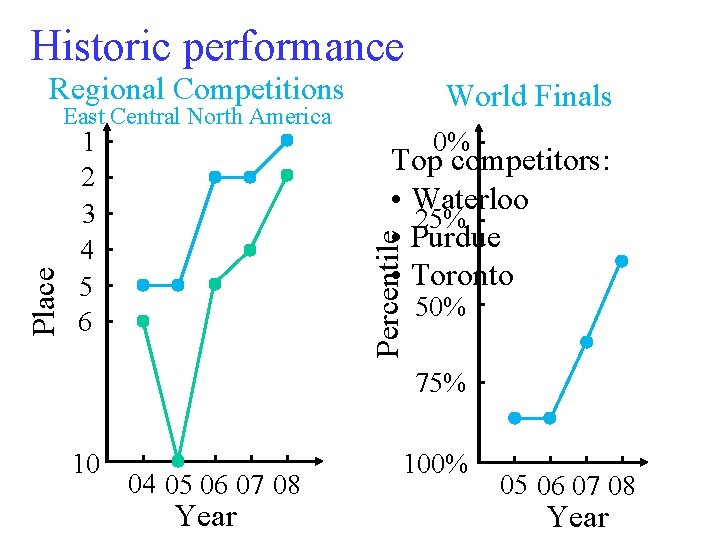
Historic performance Regional Competitions World Finals 1 2 3 4 5 6 0% Top competitors: • Waterloo 25% • Purdue • Toronto Percentile Place East Central North America 50% 75% 10 04 05 06 07 08 Year 100% 05 06 07 08 Year
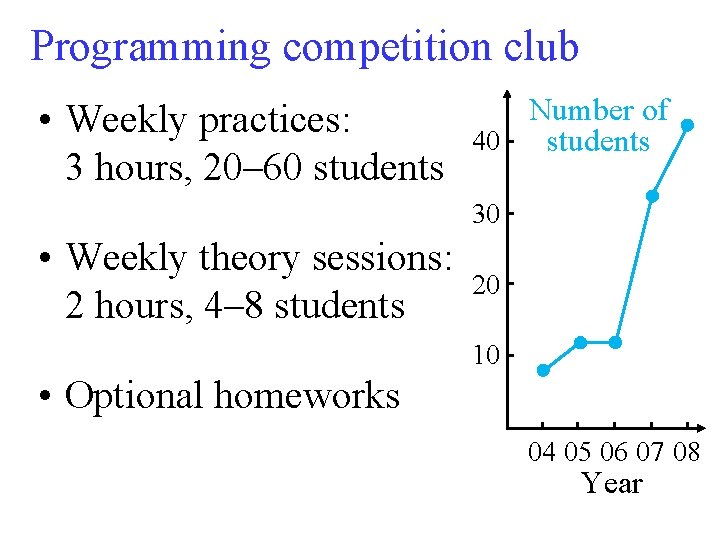
Programming competition club • Weekly practices: 3 hours, 20– 60 students Number of 40 students 30 • Weekly theory sessions: 2 hours, 4– 8 students 20 10 • Optional homeworks 04 05 06 07 08 Year
Practices • ACM-style competitions (individual and in teams) • Emphasis on hands-on problem solving; little theory • Open to everyone; optional course credit with only good grades • Free pizza
Theory sessions • Analysis of hard problems and review of advanced algorithms • Brainstorming discussions with follow-up implementation at home • Open only to the best students • No pizza
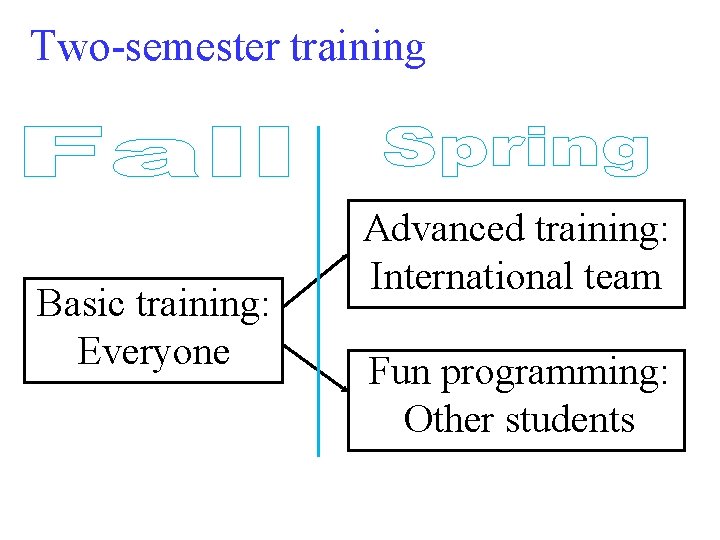
Two-semester training Basic training: Everyone Advanced training: International team Fun programming: Other students
Fall: Basic training • Competition-skill training - Problem selection - Programming on paper - Work in teams - Low resubmission rate • Identification of new talent - Questionnaires - Individual competitions • Selection of two teams - Choice of the best students - Experiments with different team compositions
Spring: Two tracks International team: Other students: Advanced training Fun programming • Five-hour practices with international problems • Intensive theoretical discussions • Homework coding for hard problems • Three-hour practices with regional problems • Less attention to optional homeworks • Focus on pizza
Training materials