The Solar System Not to scale PLUTO Dwarf
- Slides: 9
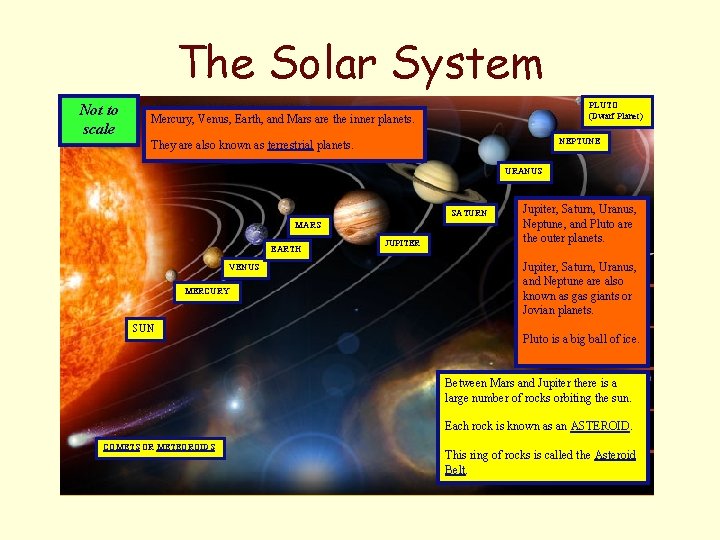
The Solar System Not to scale PLUTO (Dwarf Planet) Mercury, Venus, Earth, and Mars are the inner planets. NEPTUNE They are also known as terrestrial planets. URANUS SATURN MARS EARTH VENUS MERCURY SUN JUPITER Jupiter, Saturn, Uranus, Neptune, and Pluto are the outer planets. Jupiter, Saturn, Uranus, and Neptune are also known as giants or Jovian planets. Pluto is a big ball of ice. Between Mars and Jupiter there is a large number of rocks orbiting the sun. Each rock is known as an ASTEROID. COMETS OR METEOROIDS This ring of rocks is called the Asteroid Belt.
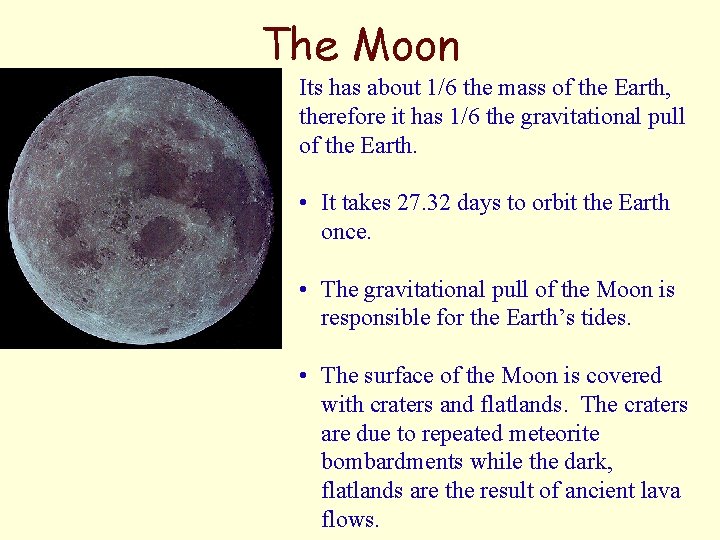
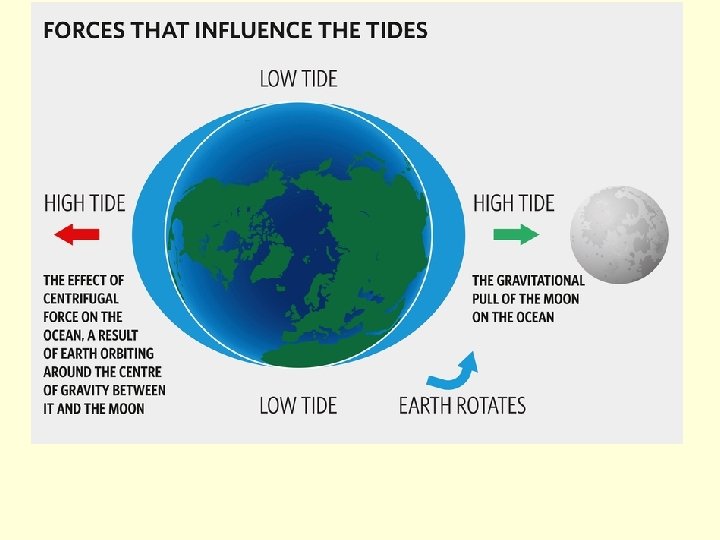
The Moon Its has about 1/6 the mass of the Earth, therefore it has 1/6 the gravitational pull of the Earth. • It takes 27. 32 days to orbit the Earth once. • The gravitational pull of the Moon is responsible for the Earth’s tides. • The surface of the Moon is covered with craters and flatlands. The craters are due to repeated meteorite bombardments while the dark, flatlands are the result of ancient lava flows.
Tides
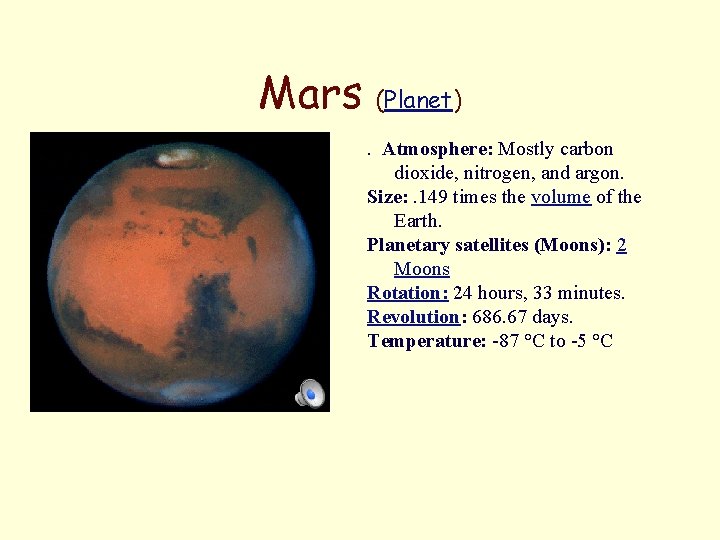
Mars (Planet). Atmosphere: Mostly carbon dioxide, nitrogen, and argon. Size: . 149 times the volume of the Earth. Planetary satellites (Moons): 2 Moons Rotation: 24 hours, 33 minutes. Revolution: 686. 67 days. Temperature: -87 °C to -5 °C
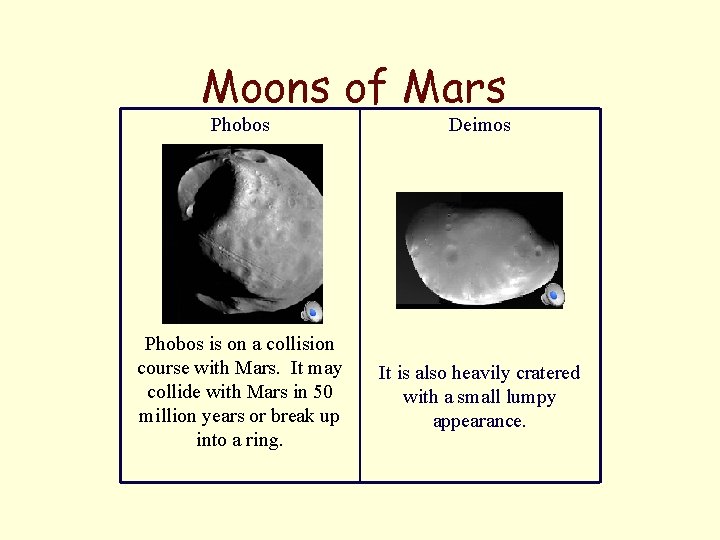
Moons of Mars Phobos Deimos Phobos is on a collision course with Mars. It may collide with Mars in 50 million years or break up into a ring. It is also heavily cratered with a small lumpy appearance.
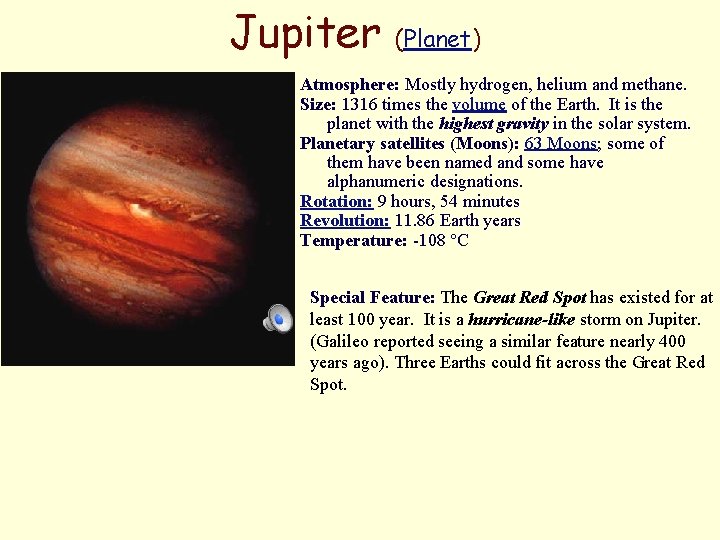
Jupiter (Planet) Atmosphere: Mostly hydrogen, helium and methane. Size: 1316 times the volume of the Earth. It is the planet with the highest gravity in the solar system. Planetary satellites (Moons): 63 Moons; some of them have been named and some have alphanumeric designations. Rotation: 9 hours, 54 minutes Revolution: 11. 86 Earth years Temperature: -108 °C Special Feature: The Great Red Spot has existed for at least 100 year. It is a hurricane-like storm on Jupiter. (Galileo reported seeing a similar feature nearly 400 years ago). Three Earths could fit across the Great Red Spot.
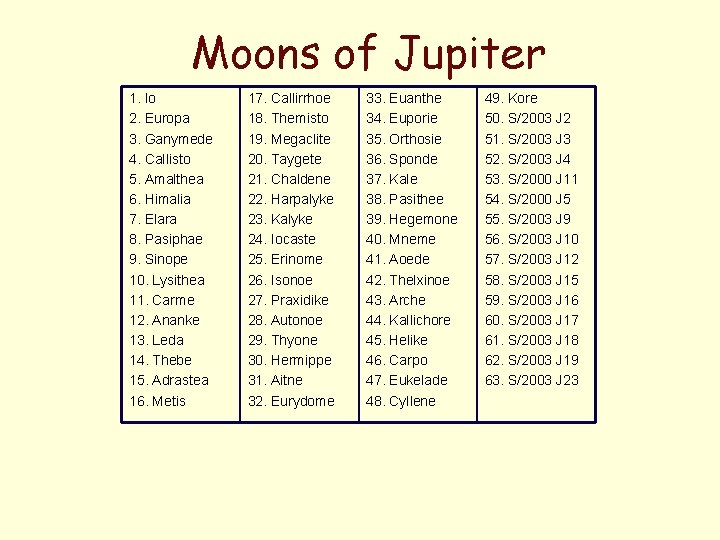
Moons of Jupiter 1. Io 2. Europa 3. Ganymede 4. Callisto 5. Amalthea 6. Himalia 7. Elara 8. Pasiphae 9. Sinope 10. Lysithea 11. Carme 12. Ananke 13. Leda 14. Thebe 15. Adrastea 16. Metis 17. Callirrhoe 18. Themisto 19. Megaclite 20. Taygete 21. Chaldene 22. Harpalyke 23. Kalyke 24. Iocaste 25. Erinome 26. Isonoe 27. Praxidike 28. Autonoe 29. Thyone 30. Hermippe 31. Aitne 32. Eurydome 33. Euanthe 34. Euporie 35. Orthosie 36. Sponde 37. Kale 38. Pasithee 39. Hegemone 40. Mneme 41. Aoede 42. Thelxinoe 43. Arche 44. Kallichore 45. Helike 46. Carpo 47. Eukelade 48. Cyllene 49. Kore 50. S/2003 J 2 51. S/2003 J 3 52. S/2003 J 4 53. S/2000 J 11 54. S/2000 J 5 55. S/2003 J 9 56. S/2003 J 10 57. S/2003 J 12 58. S/2003 J 15 59. S/2003 J 16 60. S/2003 J 17 61. S/2003 J 18 62. S/2003 J 19 63. S/2003 J 23
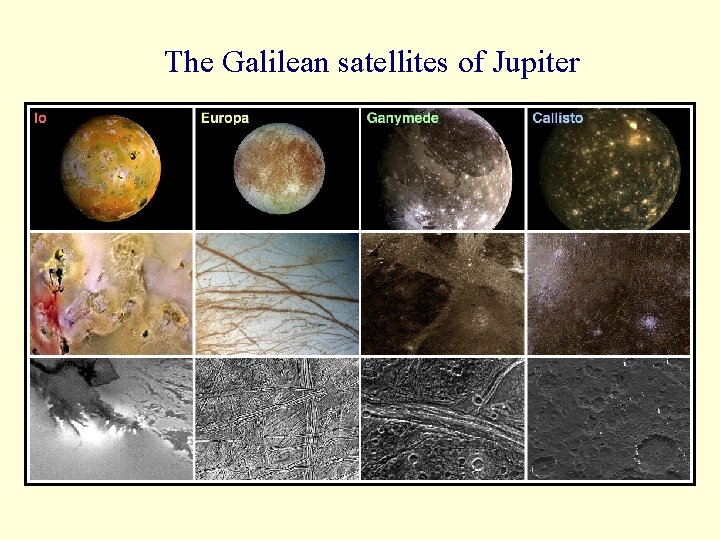
The Galilean satellites of Jupiter
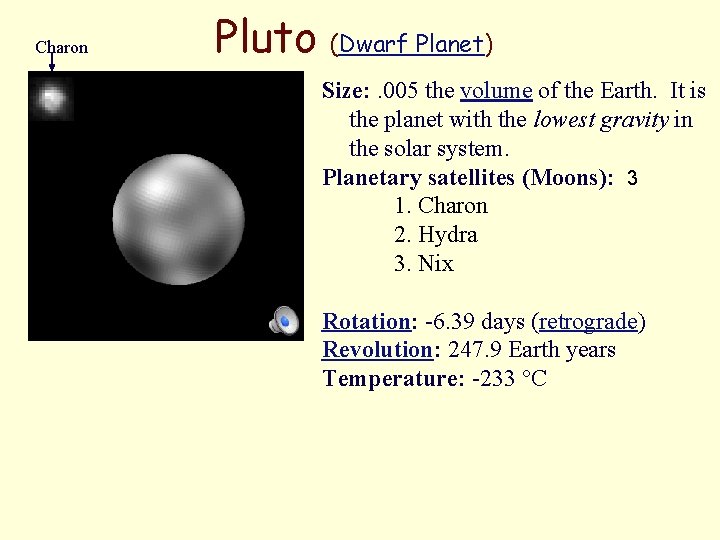
Charon Pluto (Dwarf Planet) Size: . 005 the volume of the Earth. It is the planet with the lowest gravity in the solar system. Planetary satellites (Moons): 3 1. Charon 2. Hydra 3. Nix Rotation: -6. 39 days (retrograde) Revolution: 247. 9 Earth years Temperature: -233 °C