The Rock Cycle Igneous Rocks Volcanoes Earth and










- Slides: 22
The Rock Cycle Igneous Rocks Volcanoes Earth and Space Science
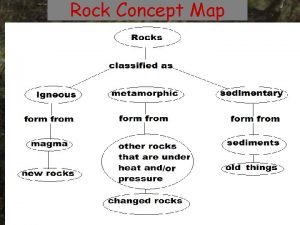
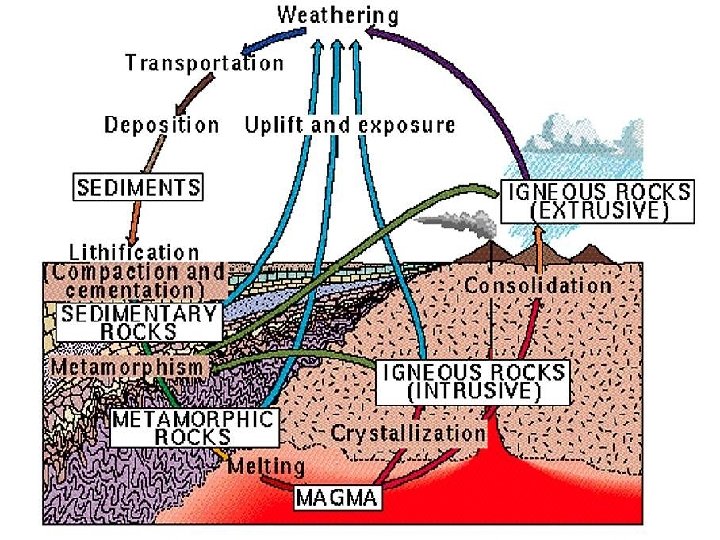
The Rock Cycle. Minerals form rocks All rocks can be transformed into other rock types Rocks are divided into 3 categories Igneous- crystalline- forms as liquid cools Metamorphic- crystalline-forms as rocks are heated and squeezed Sedimentary- non-crystalline- smaller pieces or chemicals from other rocks
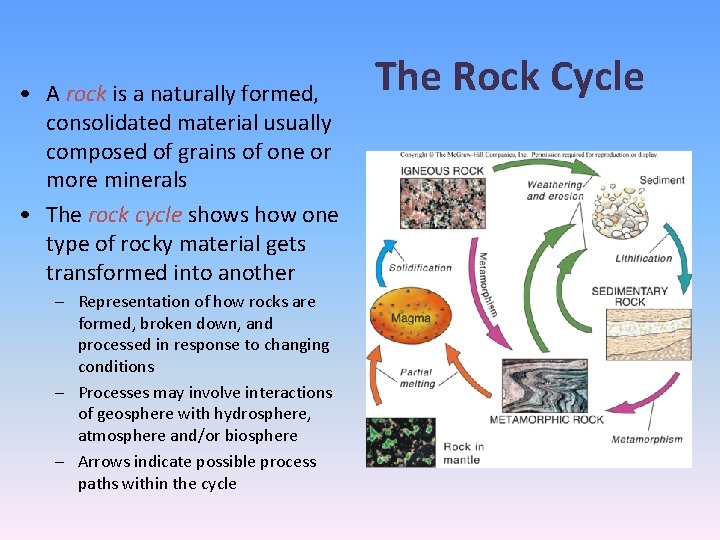
• A rock is a naturally formed, consolidated material usually composed of grains of one or more minerals • The rock cycle shows how one type of rocky material gets transformed into another – Representation of how rocks are formed, broken down, and processed in response to changing conditions – Processes may involve interactions of geosphere with hydrosphere, atmosphere and/or biosphere – Arrows indicate possible process paths within the cycle The Rock Cycle
The Rock Cycle • The continuous process that forms and changes rocks on Earth’s surface and deep below the surface • A rock is composed of grains of one or more minerals • The rock cycle shows how one type of rocky material is transformed into another
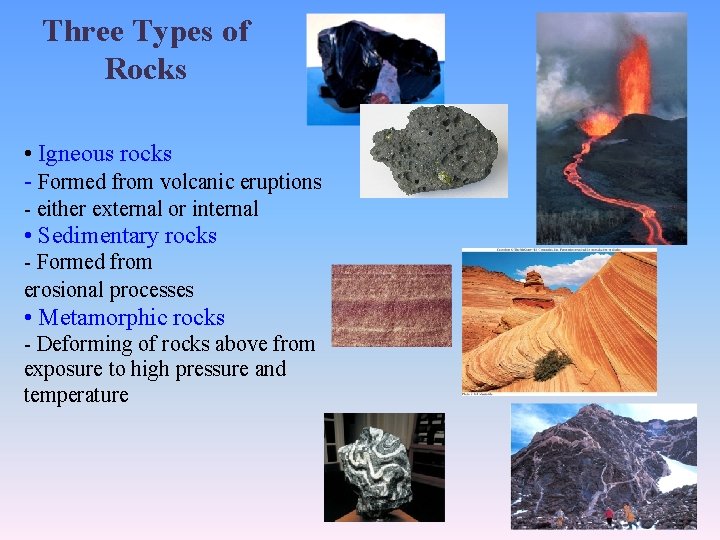
Three Types of Rocks • Igneous rocks - Formed from volcanic eruptions - either external or internal • Sedimentary rocks - Formed from erosional processes • Metamorphic rocks - Deforming of rocks above from exposure to high pressure and temperature
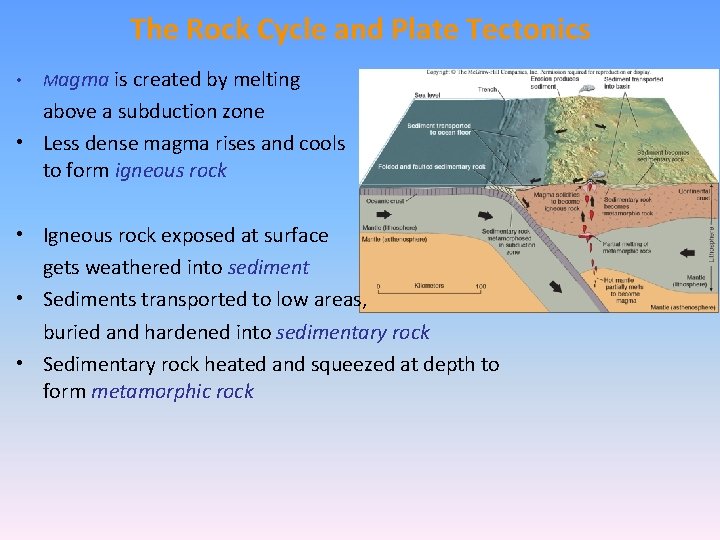
The Rock Cycle and Plate Tectonics • Magma is created by melting above a subduction zone • Less dense magma rises and cools to form igneous rock • Igneous rock exposed at surface gets weathered into sediment • Sediments transported to low areas, buried and hardened into sedimentary rock • Sedimentary rock heated and squeezed at depth to form metamorphic rock
The Rock Cycle
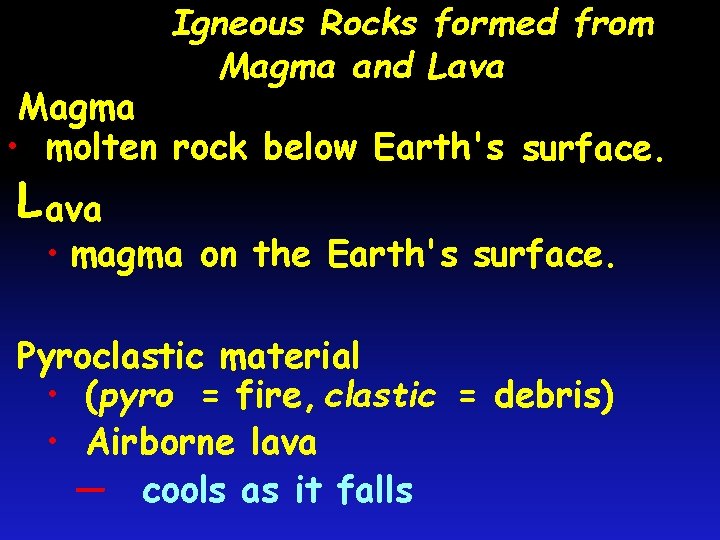
Igneous Rocks formed from Magma and Lava Magma • molten rock below Earth's surface. L ava • magma on the Earth's surface. Pyroclastic material • (pyro = fire, clastic = debris) • Airborne lava — cools as it falls
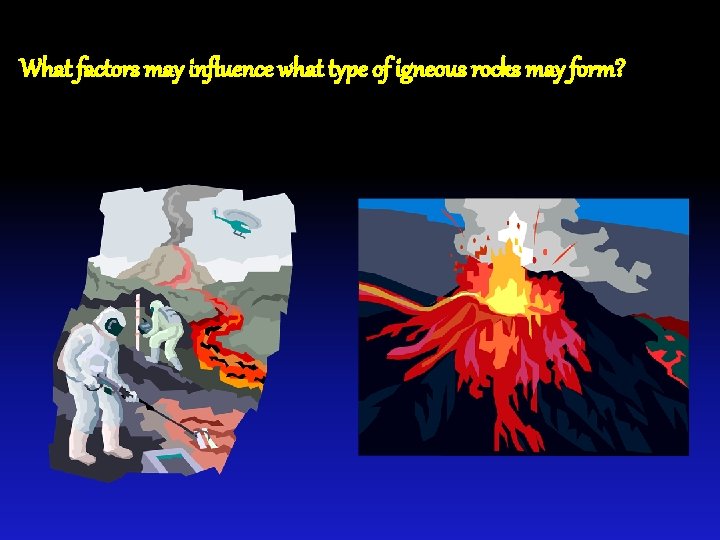
What factors may influence what type of igneous rocks may form?
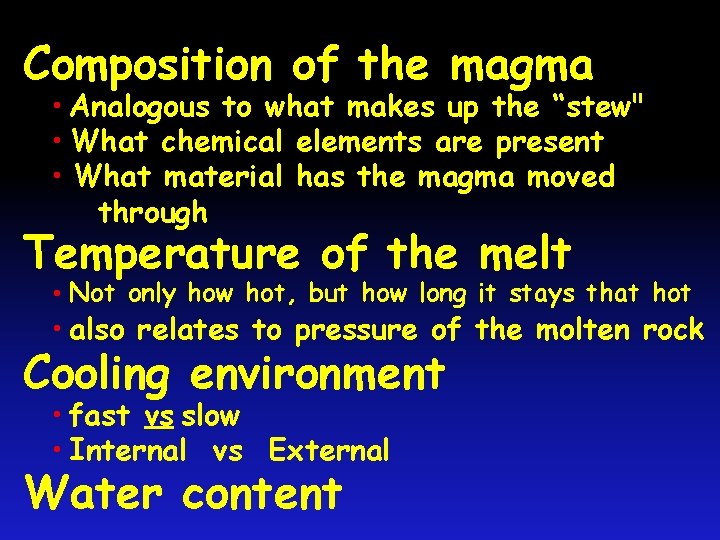
Composition of the magma • Analogous to what makes up the “stew" • What chemical elements are present • What material has the magma moved through Temperature of the melt • Not only how hot, but how long it stays that hot • also relates to pressure of the molten rock Cooling environment • fast vs slow • Internal vs External Water content
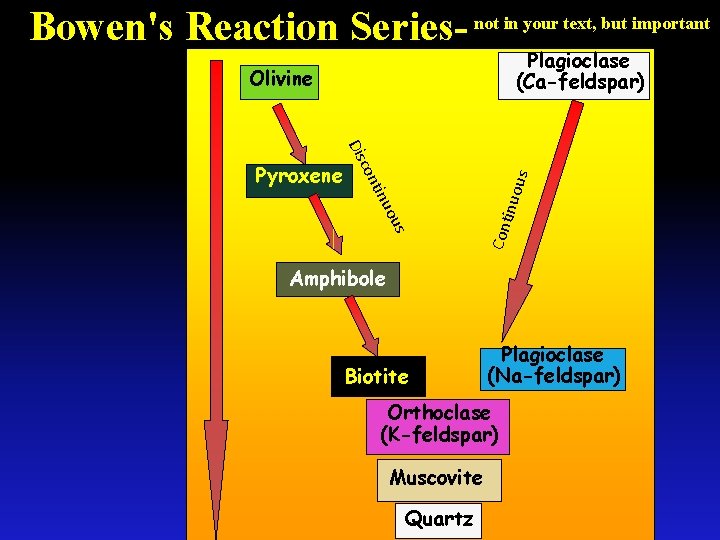
Bowen's Reaction Series- not in your text, but important Plagioclase (Ca-feldspar) Olivine tinu Con ous u tin ous con Dis Pyroxene Amphibole Biotite Plagioclase (Na-feldspar) Orthoclase (K-feldspar) Muscovite Quartz
What things might you describe when looking at an igneous rock?
Composition of Igneous rocks Felsic or Sialic magma • Si-rich (> 65%) • rich in K, and Al • little Ca, Fe, and Mg. Intermediate magma • between the two extremes in Si content and other atoms. Mafic magma • Si - poor (< 35%) • richer in Ca, Fe, and Mg.
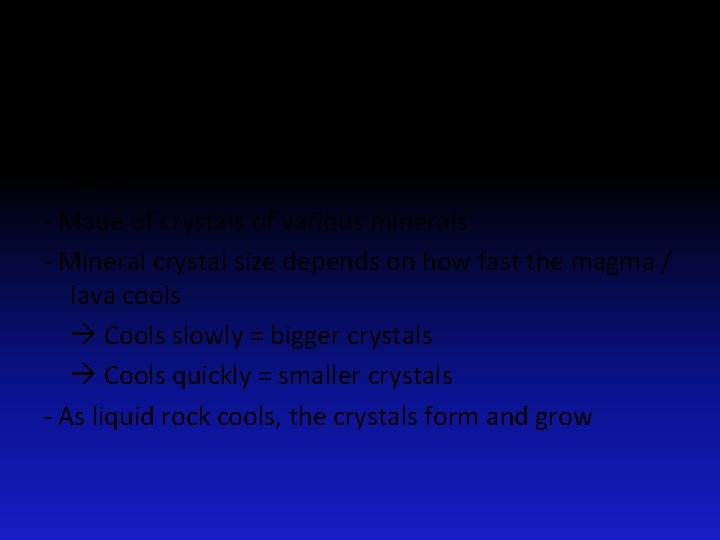
Igneous Rocks – Rocks formed from cooled and hardened magma or lava - Made of crystals of various minerals - Mineral crystal size depends on how fast the magma / lava cools Cools slowly = bigger crystals Cools quickly = smaller crystals - As liquid rock cools, the crystals form and grow
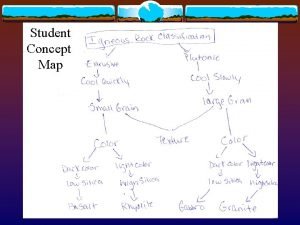
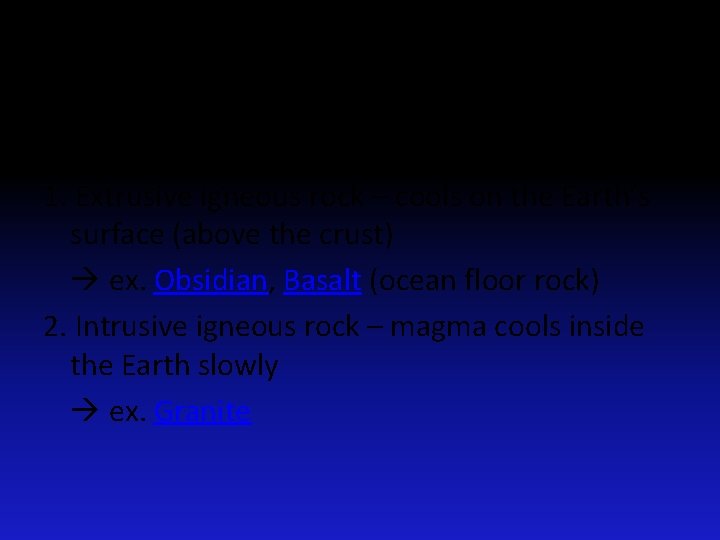
Igneous Rocks - Types of igneous rock 1. Extrusive igneous rock – cools on the Earth’s surface (above the crust) ex. Obsidian, Basalt (ocean floor rock) 2. Intrusive igneous rock – magma cools inside the Earth slowly ex. Granite