The Indus Valley civilization flourished around 2 500

- Slides: 6
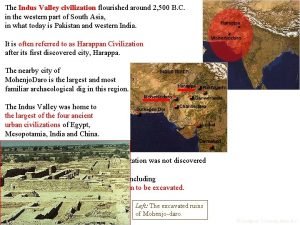
The Indus Valley civilization flourished around 2, 500 B. C. in the western part of South Asia, in what today is Pakistan and western India. It is often referred to as Harappan Civilization after its first discovered city, Harappa. The nearby city of Mohenjo. Daro is the largest and most familiar archaeological dig in this region. The Indus Valley was home to the largest of the four ancient urban civilizations of Egypt, Mesopotamia, India and China. This ancient civilization was not discovered until the 1920's. Most of its ruins, including major cities, remain to be excavated. Left: The excavated ruins of Mohenjo-daro. PP Design of T. Loessin; Akins H. S.
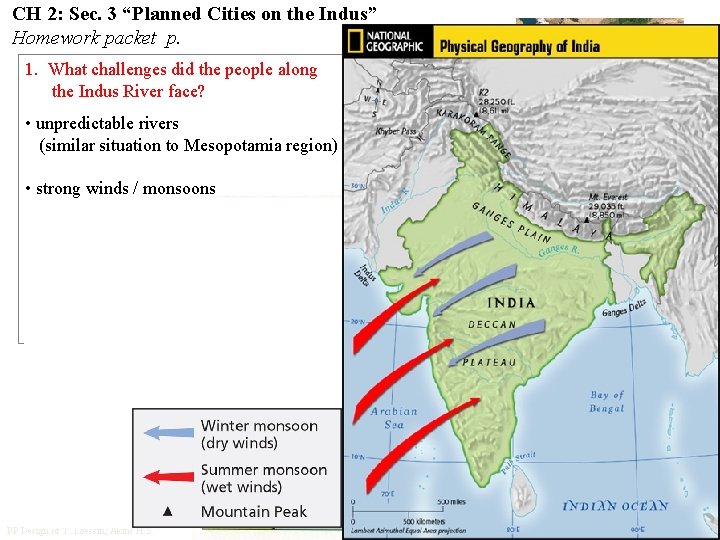
CH 2: Sec. 3 “Planned Cities on the Indus” Homework packet p. 1. What challenges did the people along the Indus River face? • unpredictable rivers (similar situation to Mesopotamia region) • strong winds / monsoons PP Design of T. Loessin; Akins H. S.
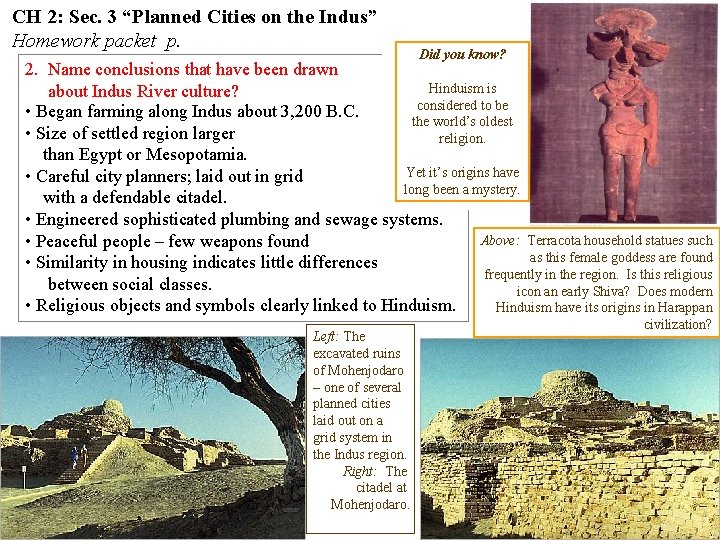
CH 2: Sec. 3 “Planned Cities on the Indus” Homework packet p. Did you know? 2. Name conclusions that have been drawn Hinduism is about Indus River culture? considered to be • Began farming along Indus about 3, 200 B. C. the world’s oldest • Size of settled region larger religion. than Egypt or Mesopotamia. Yet it’s origins have • Careful city planners; laid out in grid long been a mystery. Indus Harappan script has not been with a defendable citadel. deciphered. Typical Harappan dwellling • Engineered sophisticated plumbing and sewage systems. This means basic questions about Above: Terracota household statues such • Peaceful people – few weapons found the people created this as thiswho female goddess arehighly found • Similarity in housing indicates little differences complex culture frequently in the region. Is this religious between social classes. are. Shiva? still unanswered. icon an early Does modern • Religious objects and symbols clearly linked to Hinduism have its origins in Harappan Left: The excavated ruins of Mohenjodaro – one of several planned cities laid out on a grid system in the Indus region. Right: The citadel at Mohenjodaro. civilization?
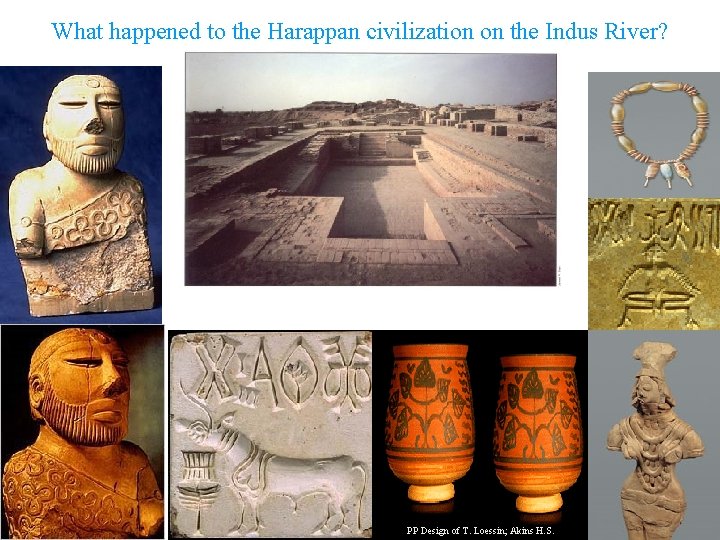
What happened to the Harappan civilization on the Indus River? Above: The Great Bath at Mohenjo-Daro. Surrounding pics: various Harappan artifacts. PP Design of T. Loessin; Akins H. S.
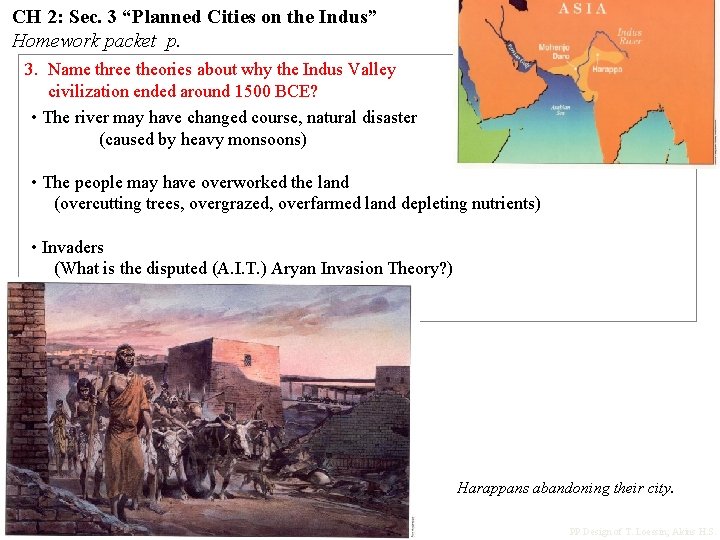
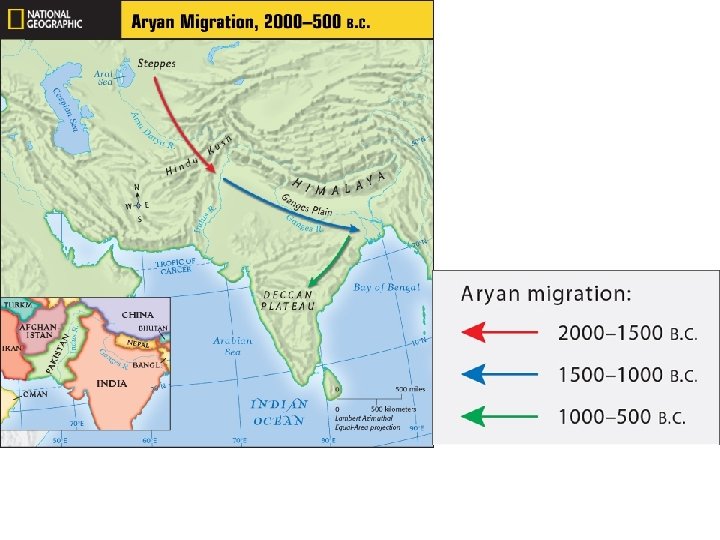
CH 2: Sec. 3 “Planned Cities on the Indus” Homework packet p. 3. Name three theories about why the Indus Valley civilization ended around 1500 BCE? • The river may have changed course, natural disaster (caused by heavy monsoons) • The people may have overworked the land (overcutting trees, overgrazed, overfarmed land depleting nutrients) • Invaders (What is the disputed (A. I. T. ) Aryan Invasion Theory? ) Harappans abandoning their city. PP Design of T. Loessin; Akins H. S.