The Implementation of an Eportfolio in a Secondary
- Slides: 1
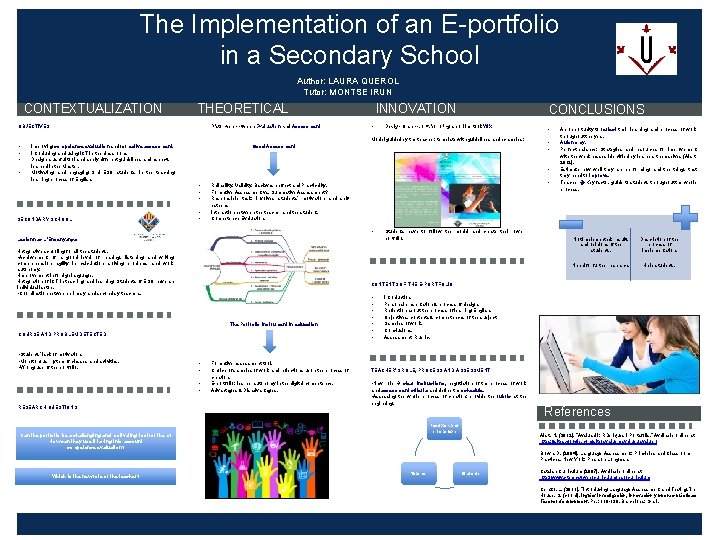
The Implementation of an E-portfolio in a Secondary School Author: LAURA QUEROL Tutor: MONTSE IRUN CONTEXTUALIZATION THEORETICAL • FRAMEWORK Distinction between Evaluation and Assessment OBJECTIVES • INNOVATION PROPOSAL CONCLUSIONS Design of an e-portfolio using an online tool: WIX Model guided by the teacher: template with guidelines and examples: • • Good Assessment Improving competence evaluation and formative assessment. Introducing and using ICT in the classroom. Design a useful tool and apply different guidelines and aspects learned in the Master. Motivating and engaging 3 rd ESO students in the teaching learning process of English. • • • Reliability, Validity, Backwash effect and Practicality. Formative Assessment vs. Summative Assessment? Responsible task: involves students’ motivation and selfesteem. Interaction between the teacher and the student. Competence Evaluation. • Lestonnac L’Ensenyança Students have to follow the model and create their own portfolio. • Integrative schooling for all the students. • Achievement of a good level of reading, listening and writing comprehension, agility in calculation, solving problems and work autonomy. • Improvement in foreign language. • Integration of ICT in teaching and learning. Students of ESO have an individual laptop. • Coordination between primary and secondary teachers. The Portfolio instrument in education • • RESEARCH QUESTIONS An opportunity to reflect their learning and process of work throughout the year. Autonomy. Perfect balance: Strategies and resources for improvement with the weaknesses identified by learners themselves (Alart, 2012). Estimate how well they are performing, and the things that they need to improve. Teacher Key factor, guide to students throughout the whole process. Not implemented: results and opinions of the students. Description of the process of implementation. Need for further research. Help students. CONTENTS OF THE E-PORTFOLIO COURSE AND PROBLEM DETECTED • Students’ lack of motivation. • Monotonous rhythm of classes and activities. • Wrong use of the portfolio. • • • SECONDARY SCHOOL • Formative assessment tool. Choice of samples of work and reflections upon the process of creation. E-portfolio: learner autonomy in the digital competence. Advantages & Disadvantages. • • Introduction. Personal presentation & process of design. Reflection about the process of learning English. Objectives, contents & competences of the subject. Samples of work. Conclusions. Assessment: Rubric. TEACHER’S ROLE, PROCESS AND ASSESSMENT • New role clear instructions, negotiation of the process of work and assessment criteria and define the schedule. • Assessing the whole process of creation: provide the rubric at the beginning. Feedback and interaction Can the portfolio be a challenging and motivating tool for them? How can they use it taking into account competence evaluation? References Alart, N. (2012). “Avaluació: Rúbriques I Portafolis. ” Available online at: https: //sites. google. com/site/avaluemavalueuavaluen/ Brown, D. (2004). Language Assessment: Principles and Classroom Practices. New York: Pearson Longman. Which is the new role of the teacher? Teacher Students Catalan Curriculum (2007). Available online at: http: //www. xtec. cat/web/curriculum/eso/curriculum Cerezo, L. (2011). “Introducing Language Assessment and Testing. ”In House, S. (coord). Inglés: Investigación, innovación y buenas prácticas. Teacher development. Pp. : 119 -139. Barcelona: Graó.