Tactical Strategic Information Systems for Finance Strategic Accounting

- Slides: 4
Tactical & Strategic Information Systems for Finance
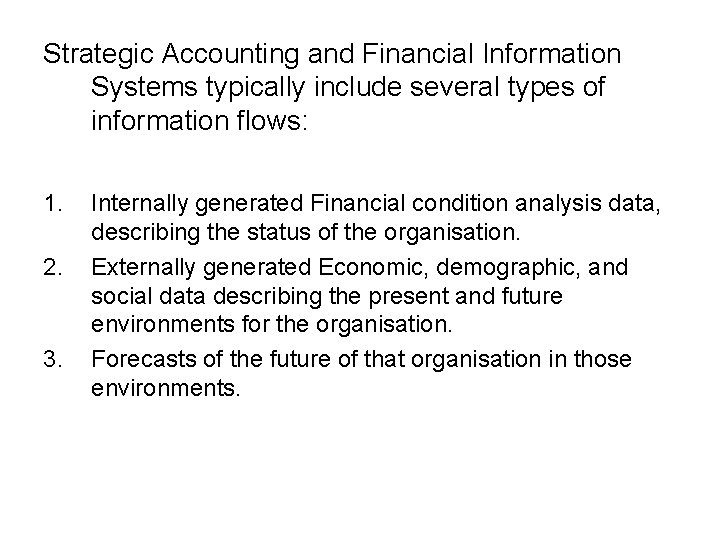
Strategic Accounting and Financial Information Systems typically include several types of information flows: 1. 2. 3. Internally generated Financial condition analysis data, describing the status of the organisation. Externally generated Economic, demographic, and social data describing the present and future environments for the organisation. Forecasts of the future of that organisation in those environments.
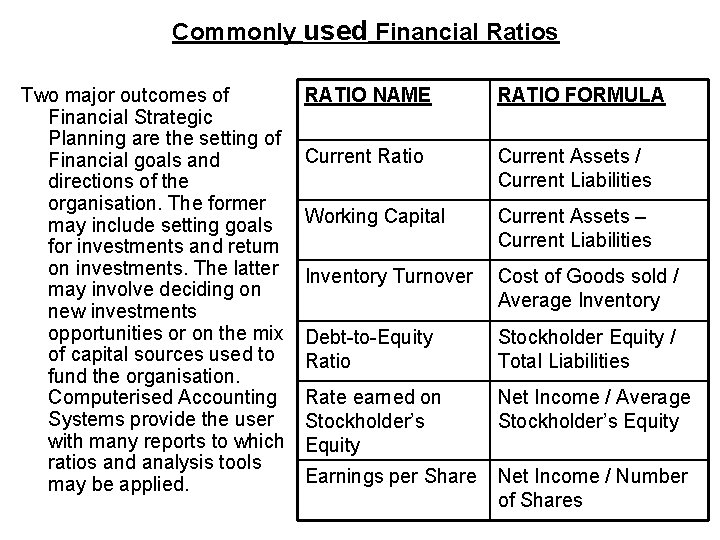
Commonly used Financial Ratios Two major outcomes of Financial Strategic Planning are the setting of Financial goals and directions of the organisation. The former may include setting goals for investments and return on investments. The latter may involve deciding on new investments opportunities or on the mix of capital sources used to fund the organisation. Computerised Accounting Systems provide the user with many reports to which ratios and analysis tools may be applied. RATIO NAME RATIO FORMULA Current Ratio Current Assets / Current Liabilities Working Capital Current Assets – Current Liabilities Inventory Turnover Cost of Goods sold / Average Inventory Debt-to-Equity Ratio Stockholder Equity / Total Liabilities Rate earned on Stockholder’s Equity Net Income / Average Stockholder’s Equity Earnings per Share Net Income / Number of Shares
Long Range Forecasting Systems Strategic Planners demand forecasts on a variety of factors that will affect organisation performance in the future. Some forecasts may involve the use of internally generated data. eg. Past sales data may be used to project Future sales. Other forecasts may use only external data or both internal and external data. eg. Forecasting economic indicators helps planners understand the likely economic environment in which the organisation must operate in future. Forecasting the Financial health of an organisation through long range budget estimates – including a variety of possible wage negotiation settlements, actions by competitors, interest rate fluctuations, fuel cost changes, and different inflation rates – provides planners with opportunities to consider actions that will help the organisation survive bad times or take advantage of a future environment.