Supply and Demand Economic definitions for DEMAND n
- Slides: 27
Supply and Demand
Economic definitions for DEMAND n Demand: the total amount consumers are willing and able to buy at all prices.
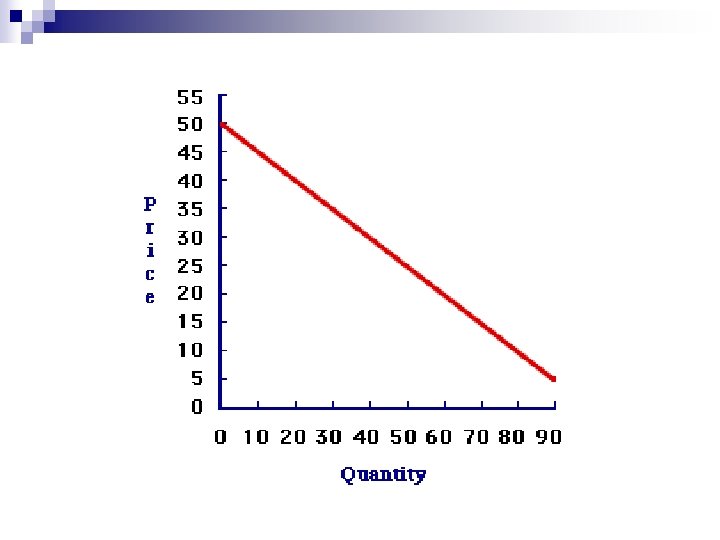
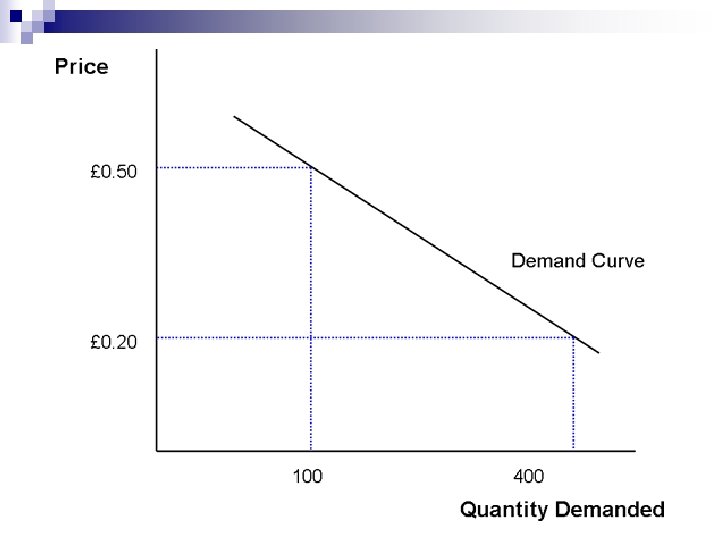
n Demand curve: the graphical representation of what consumers are willing and able to buy.
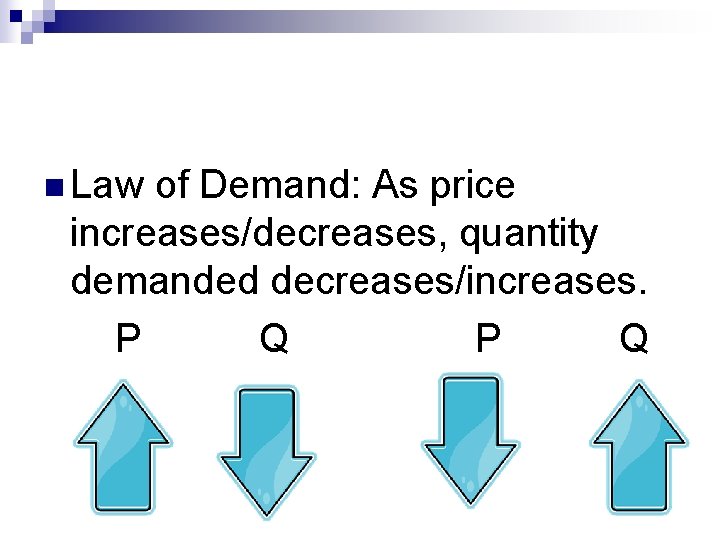
n Law of Demand: As price increases/decreases, quantity demanded decreases/increases. P Q
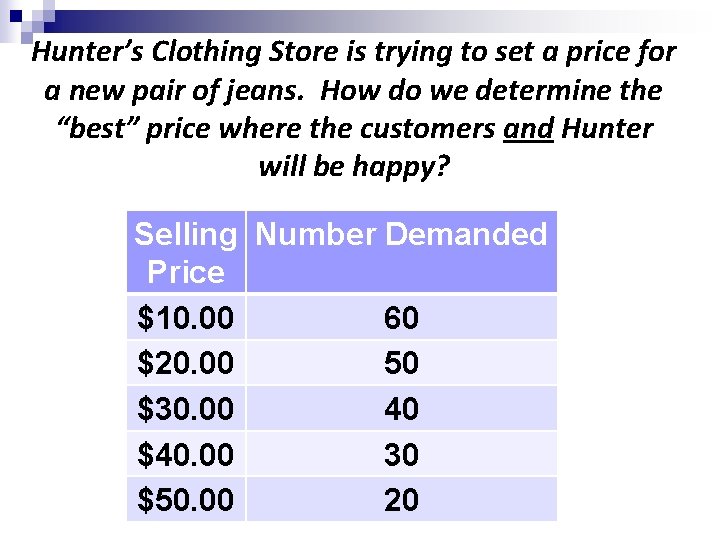
Hunter’s Clothing Store is trying to set a price for a new pair of jeans. How do we determine the “best” price where the customers and Hunter will be happy? Selling Number Demanded Price $10. 00 60 $20. 00 50 $30. 00 40 $40. 00 30 $50. 00 20
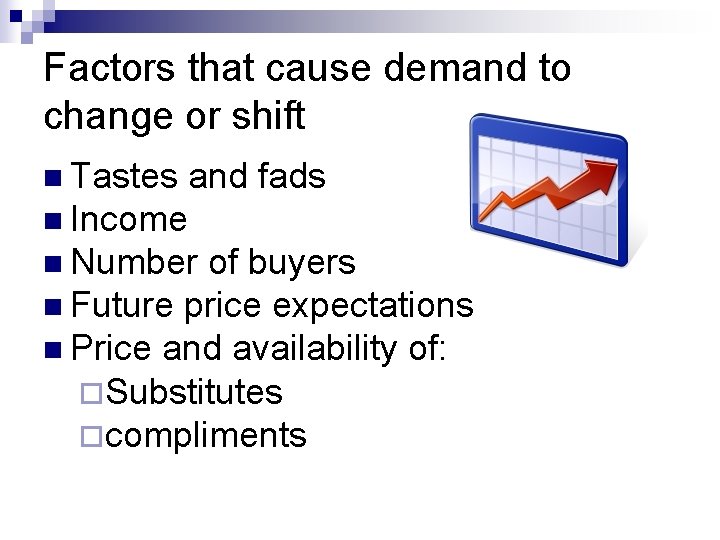
Factors that cause demand to change or shift n Tastes and fads n Income n Number of buyers n Future price expectations n Price and availability of: ¨Substitutes ¨compliments
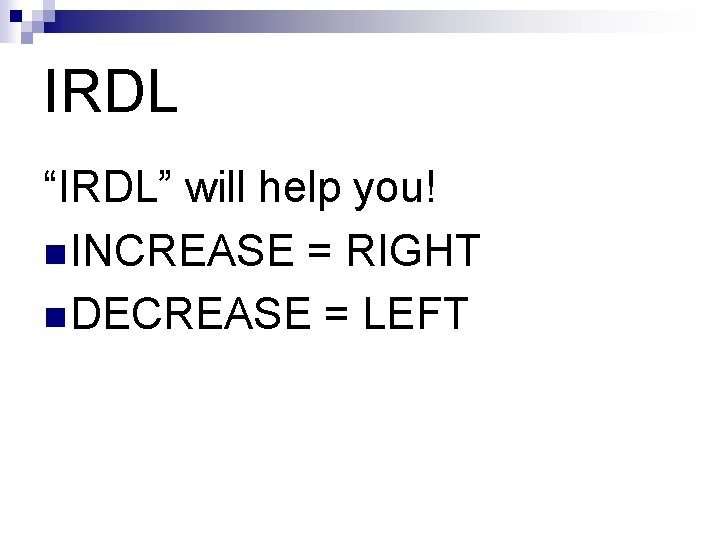
IRDL “IRDL” will help you! n INCREASE = RIGHT n DECREASE = LEFT
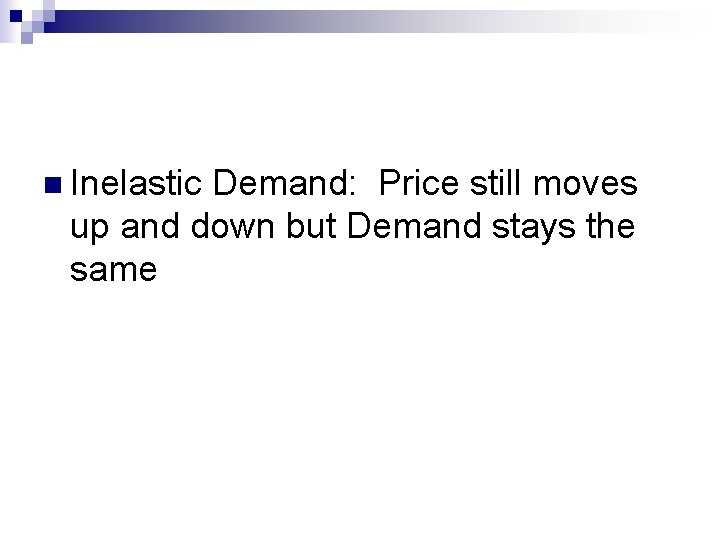
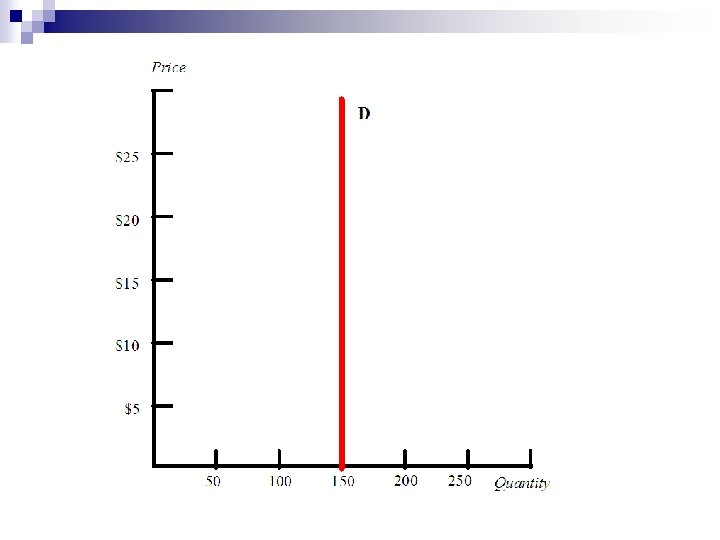
n Inelastic Demand: Price still moves up and down but Demand stays the same
Economic definition for SUPPLY n Supply: the total amount of a good or service producers are able to make at all prices.
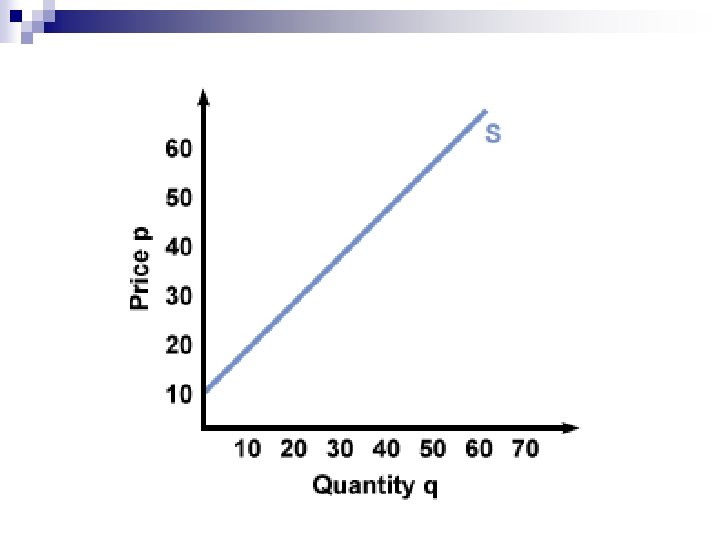
n Supply curve: the graphical representation of a good or service producers are able to make at all prices.
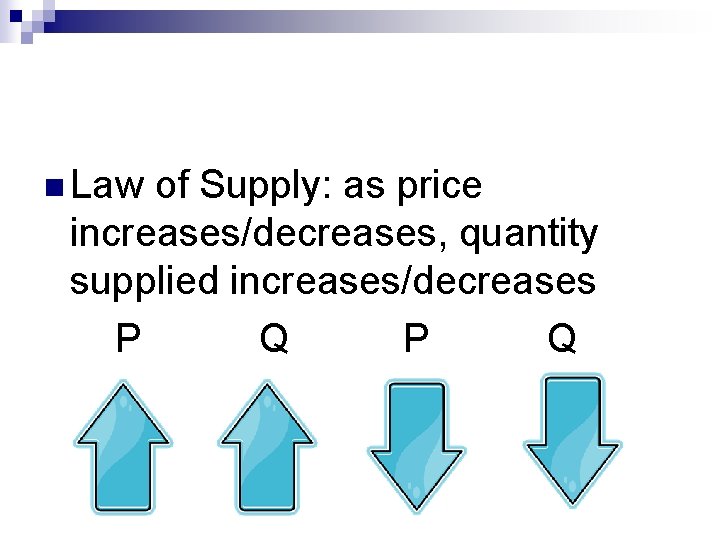
n Law of Supply: as price increases/decreases, quantity supplied increases/decreases P Q
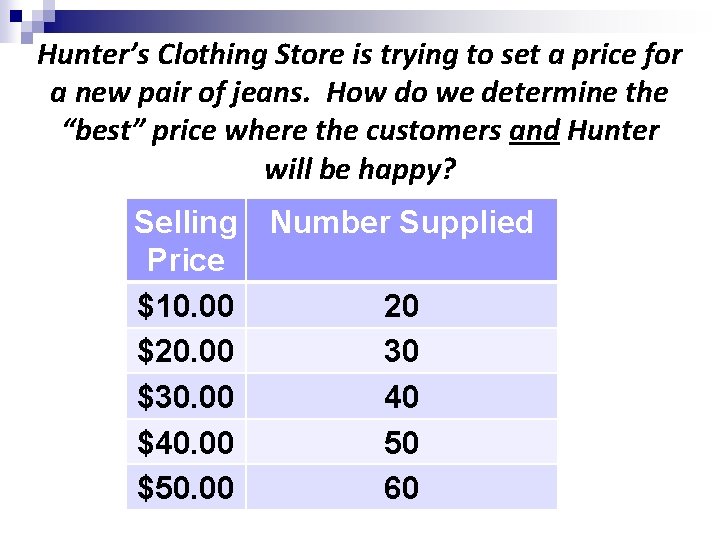
Hunter’s Clothing Store is trying to set a price for a new pair of jeans. How do we determine the “best” price where the customers and Hunter will be happy? Selling Number Supplied Price $10. 00 20 $20. 00 30 $30. 00 40 $40. 00 50 $50. 00 60
Factors that cause a change in supply: n Price and availability of land, labor or capital n Technology n Number of other sellers n Price of other goods I could produce n Tax policy
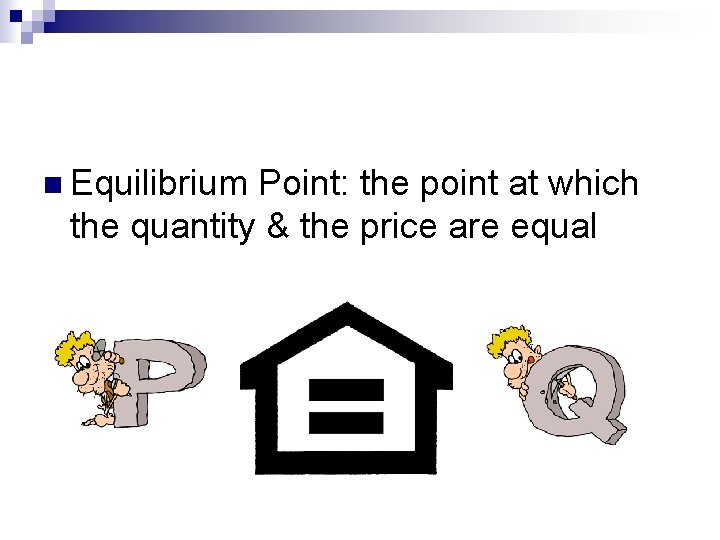
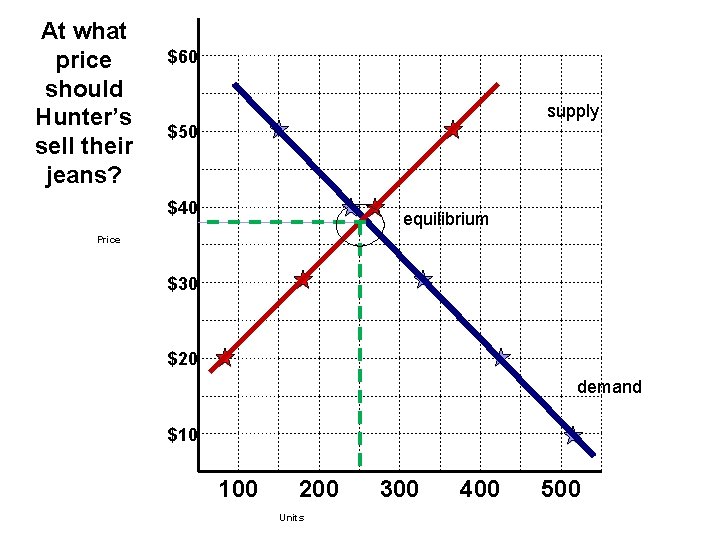
n Equilibrium Point: the point at which the quantity & the price are equal
Economic Equilibrium n Equilibrium is the market clearing price and involves the most efficient choice ¨ Producers and consumers make the most of their limited resources at the least cost ¨ Therefore, producers and consumers act in their own economic self-interest when moving towards equilibrium n At this point the number demanded equals the number supplied
At what price should Hunter’s sell their jeans? $60 supply $50 $40 Price $30 $20 $10 equilibrium 100 200 Units 300 400 demand 500
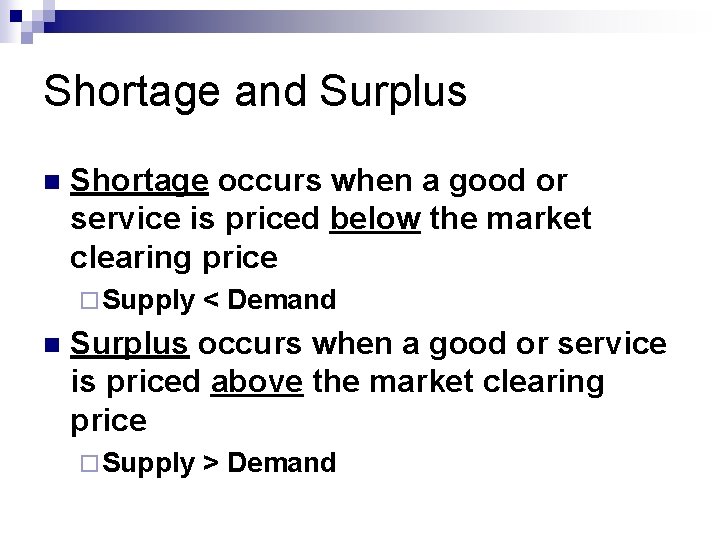
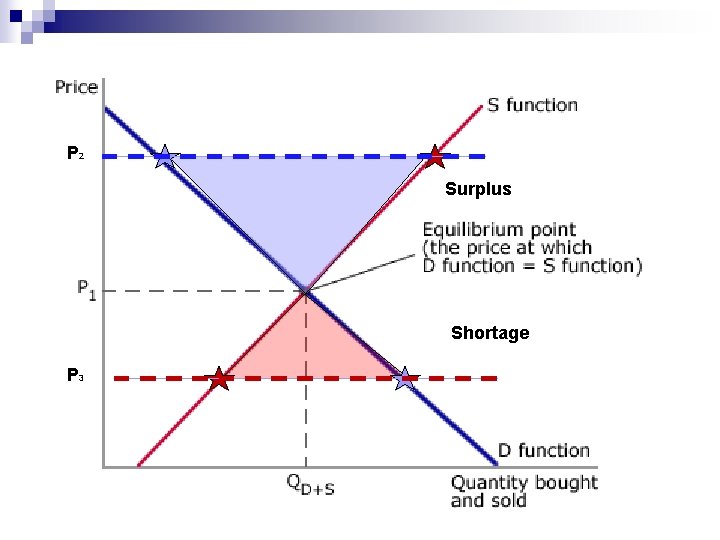
Shortage and Surplus n Shortage occurs when a good or service is priced below the market clearing price ¨ Supply n < Demand Surplus occurs when a good or service is priced above the market clearing price ¨ Supply > Demand
Shortage and Surplus n Both surplus and shortage are inefficient ¨ Both involve missed profit
P 2 Surplus Shortage P 3
n Not all markets are ones in which price is allowed to move freely. Governments may decide to set prices for various reasons. These government set prices may be different than the market clearing price.
Price Ceiling Legally established maximum price. n Gov’t fears prices might be higher than they want it to be n Example: Rent Control n Problems – creates a shortage and encourages an illegal market n
Price Floor Legally established minimum price n Gov’t fears price will be lower than they want it to be n Creates a surplus n Example: minimum wage (my hire worker for less hours) n
Elasticity of Demand Way of measuring how much quantity demanded will change in response to a change in price. n Inelastic Demand refers to a relatively small response of quantity demanded to change in price n Elastic demand – a large response n