Summary of chromosome characteristics n n n 1
- Slides: 19
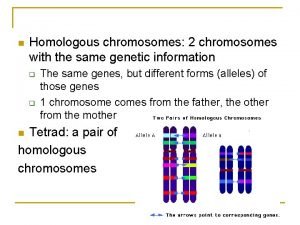
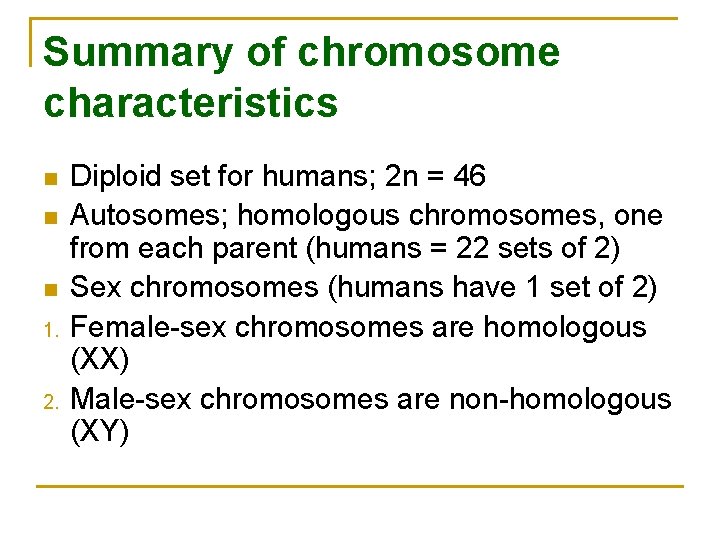
Summary of chromosome characteristics n n n 1. 2. Diploid set for humans; 2 n = 46 Autosomes; homologous chromosomes, one from each parent (humans = 22 sets of 2) Sex chromosomes (humans have 1 set of 2) Female-sex chromosomes are homologous (XX) Male-sex chromosomes are non-homologous (XY)
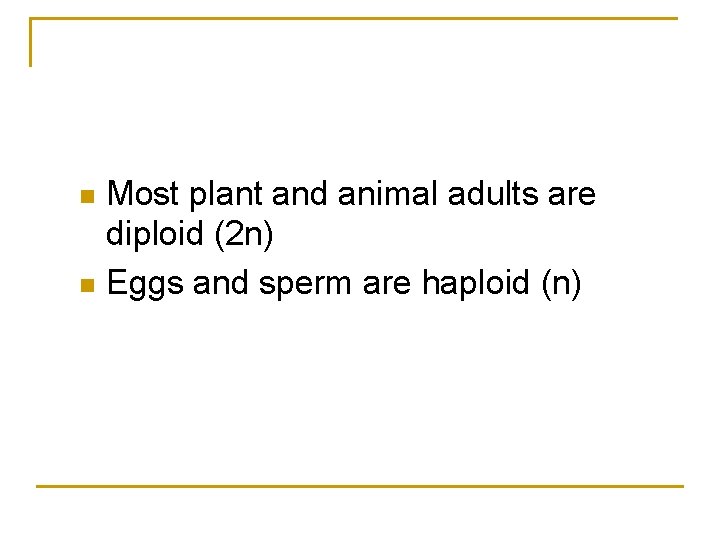
Most plant and animal adults are diploid (2 n) n Eggs and sperm are haploid (n) n
Meiosis has some similarities to mitosis n Meiosis has some very important differences too! n During meiosis and the cytokinesis that follow, one diploid mother cell (2 n) makes four unique daughter cells and they are all haploid (1 n)! n
Sexual reproduction n Combines the genetic information from two different cells that are usually from two different individuals. Each parent contributes a haploid (n) gamete (sex cell). These two gametes, a female egg and a male sperm, fuse to produce a genetically unique single cell called a zygote.
The zygote is diploid (2 n) having combined the genetic information provided by the gametes (n) of both parents. In a very real genetic sense, all offspring of sexual reproduction are "half identical" to each parent!
If it were not for meiosis, sexual reproduction would double chromosome sets every generation! That's deadly and that's why meiosis is important.
Meiosis has three purposes: 1 St: reduction of the chromosomes' number from diploid (2 n) to haploid (n). 2 nd: ensure the haploids are composed of a complete set of chromosomes. 3 rd promote genetic diversity among the products (gametes).
The "trick" to meiosis is to understand that the DNA is replicated only once, during S phase in interphase, BUT the nucleus divides TWICE! It is also important to understand that a diploid cell, containing its normal 2 n complement of chromosomes, is composed of a set (n) from each parent and they can be thought of as pairs of chromosomes.
What is meiosis I? In meiosis I, chromosomes in a diploid cell resegregate, producing four haploid daughter cells. n It is this step in meiosis that generates genetic diversity. n The phases of meiosis I & II n
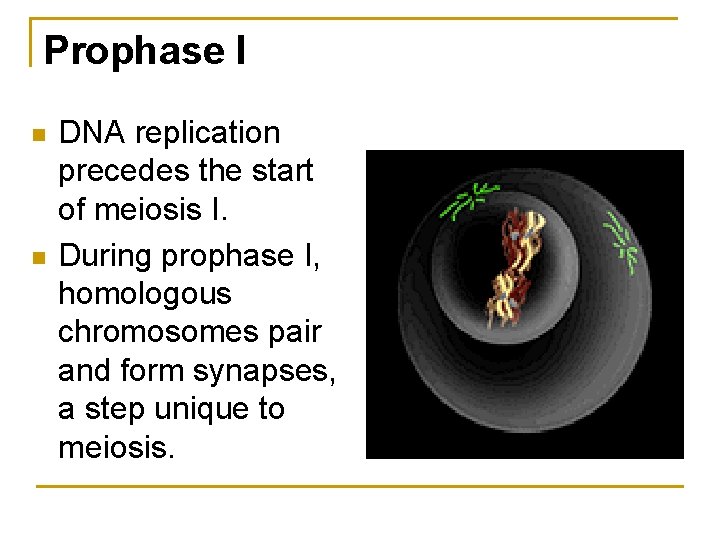
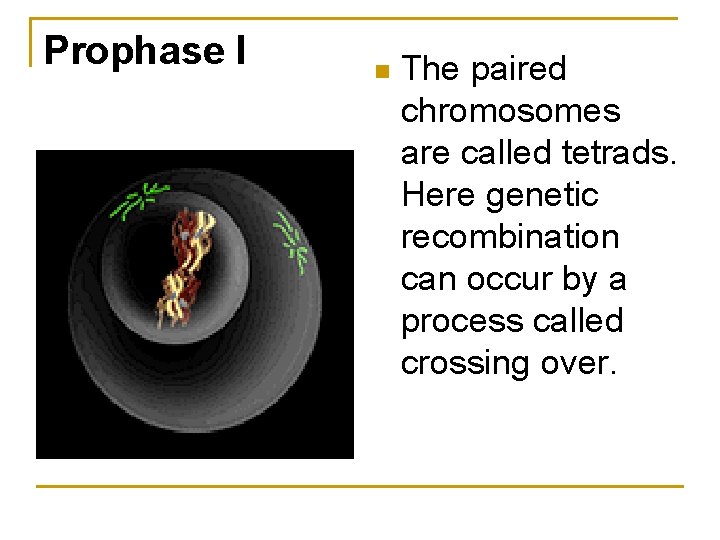
Prophase I n n DNA replication precedes the start of meiosis I. During prophase I, homologous chromosomes pair and form synapses, a step unique to meiosis.
Prophase I n The paired chromosomes are called tetrads. Here genetic recombination can occur by a process called crossing over.
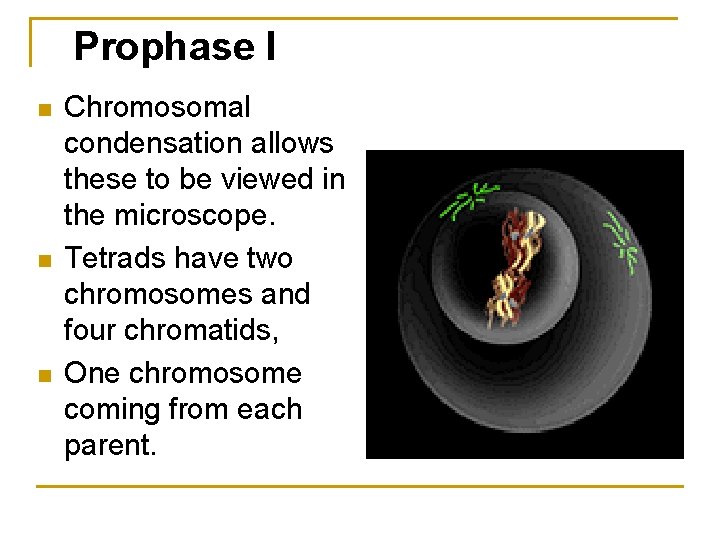
Prophase I n n n Chromosomal condensation allows these to be viewed in the microscope. Tetrads have two chromosomes and four chromatids, One chromosome coming from each parent.
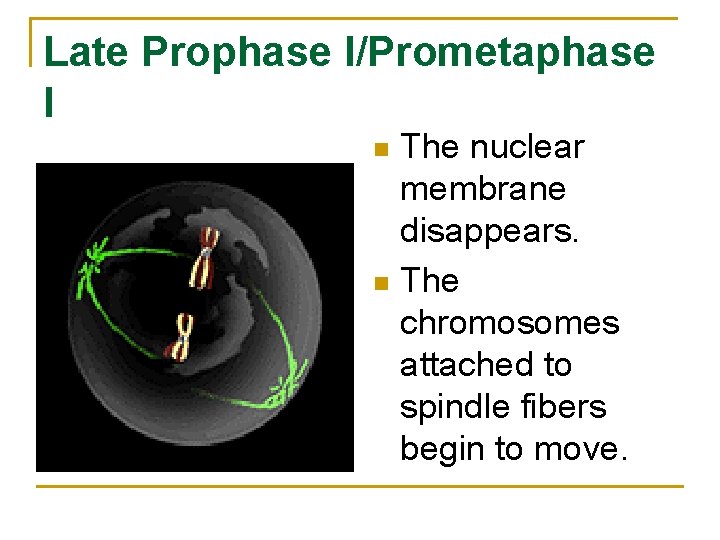
Late Prophase I/Prometaphase I The nuclear membrane disappears. n The chromosomes attached to spindle fibers begin to move. n
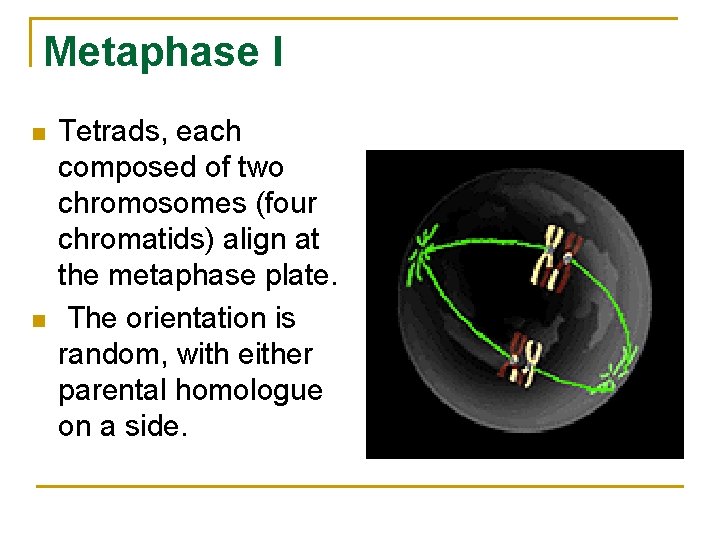
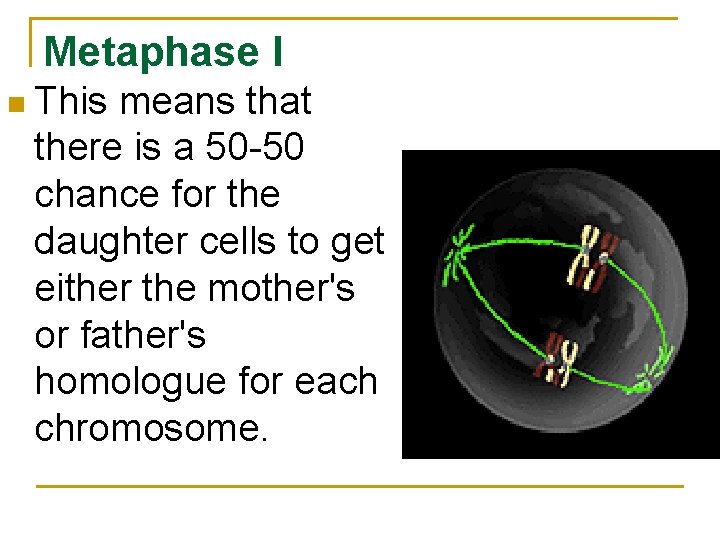
Metaphase I n n Tetrads, each composed of two chromosomes (four chromatids) align at the metaphase plate. The orientation is random, with either parental homologue on a side.
Metaphase I n This means that there is a 50 -50 chance for the daughter cells to get either the mother's or father's homologue for each chromosome.
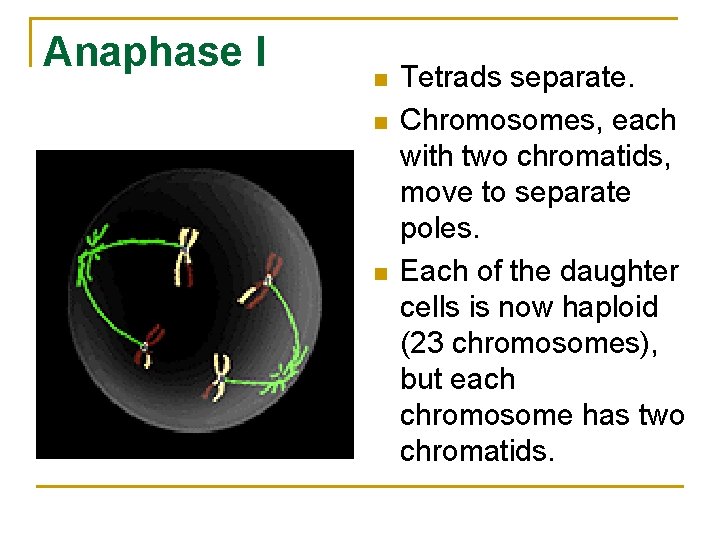
Anaphase I n n n Tetrads separate. Chromosomes, each with two chromatids, move to separate poles. Each of the daughter cells is now haploid (23 chromosomes), but each chromosome has two chromatids.
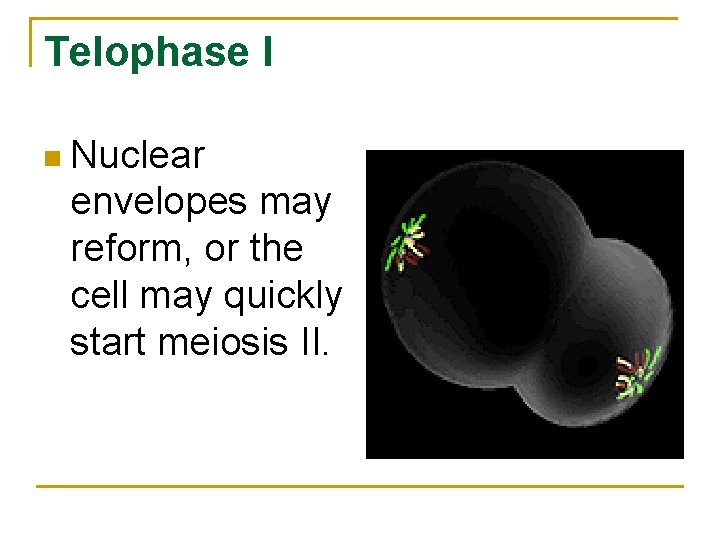
Telophase I n Nuclear envelopes may reform, or the cell may quickly start meiosis II.
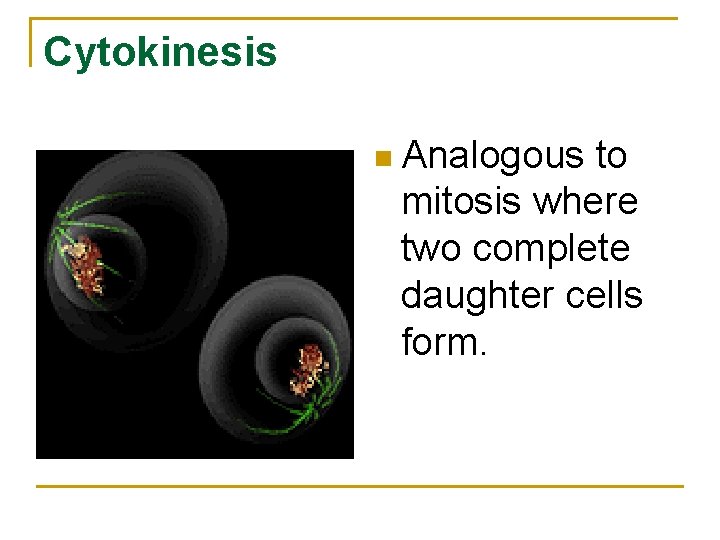
Cytokinesis n Analogous to mitosis where two complete daughter cells form.
Meiosis II is similar to mitosis. However, there is no "S" phase. n The chromatids of each chromosome are no longer identical because of recombination. n Meiosis II separates the chromatids producing two daughter cells each with 23 chromosomes (haploid), and each chromosome has only one chromatid. n