Story Literary Elements CHARACTERIZATION Great stories have a

- Slides: 20
Story Literary Elements CHARACTERIZATION
Great stories have a Conflict is a struggle between opposing forces Conflict can be Internal or External
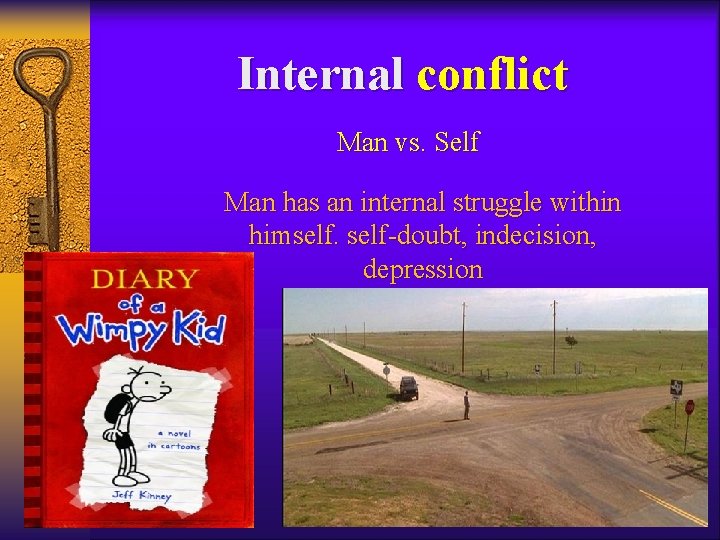
Internal conflict Man vs. Self Man has an internal struggle within himself-doubt, indecision, depression
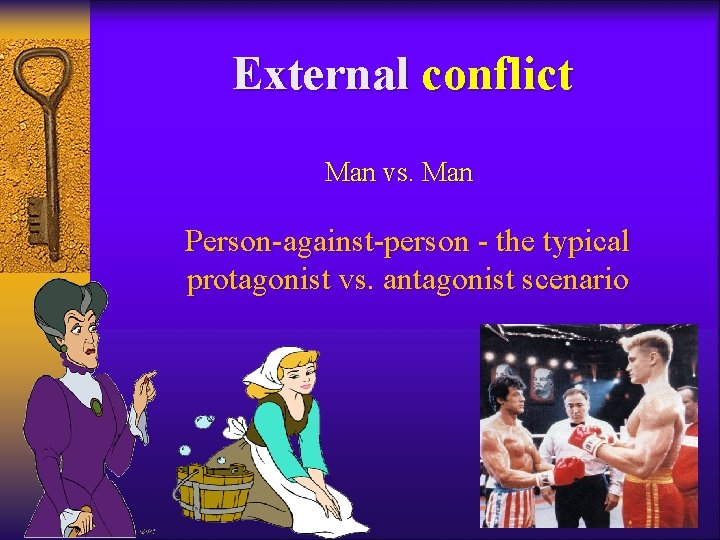
External conflict Man vs. Man Person-against-person - the typical protagonist vs. antagonist scenario
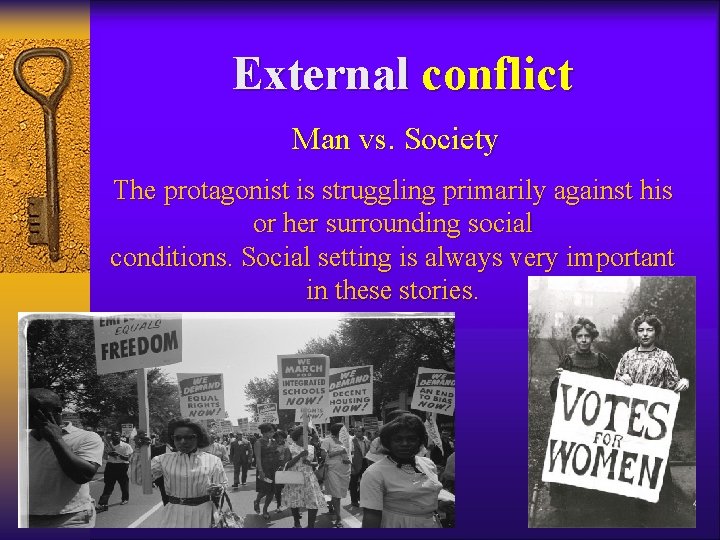
External conflict Man vs. Society The protagonist is struggling primarily against his or her surrounding social conditions. Social setting is always very important in these stories.
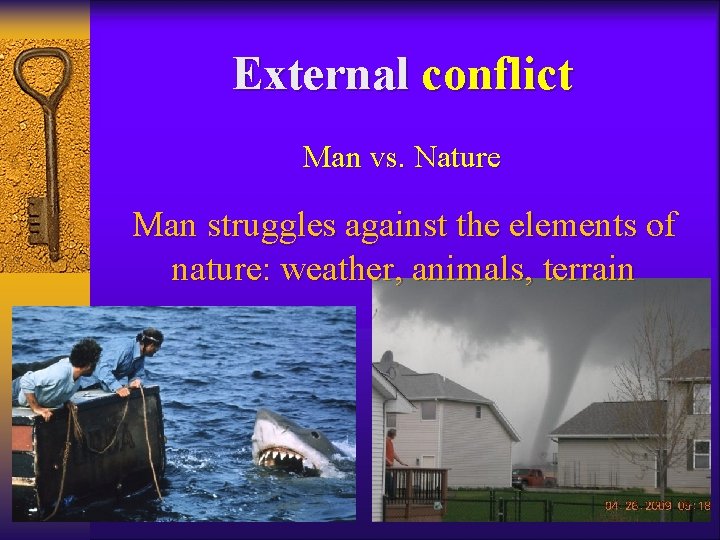
External conflict Man vs. Nature Man struggles against the elements of nature: weather, animals, terrain
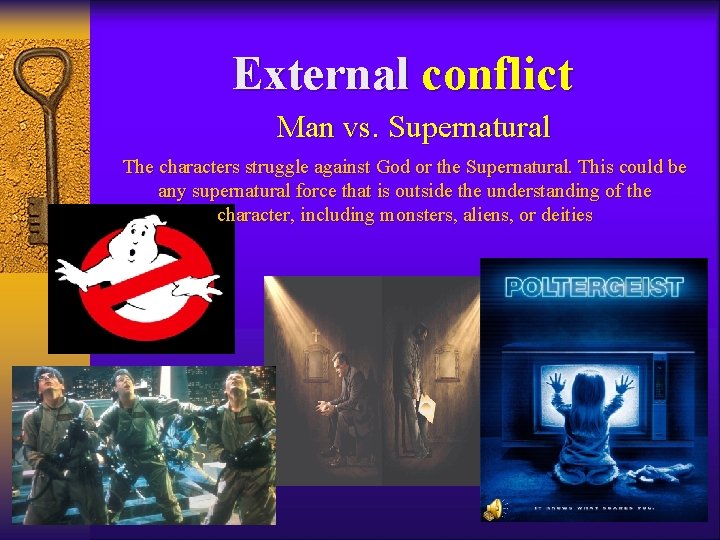
External conflict Man vs. Supernatural The characters struggle against God or the Supernatural. This could be any supernatural force that is outside the understanding of the character, including monsters, aliens, or deities
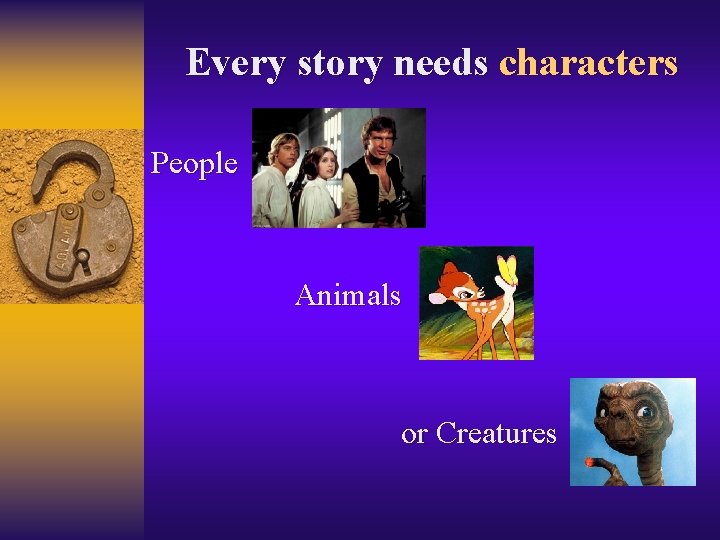
Every story needs characters People Animals or Creatures
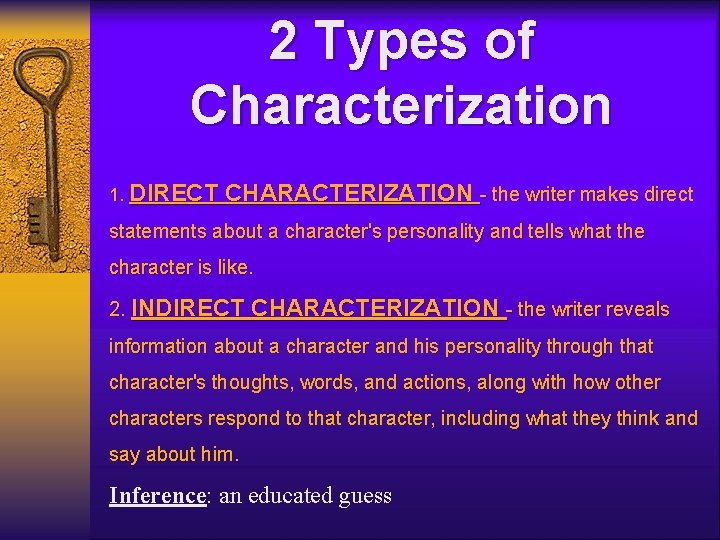
2 Types of Characterization 1. DIRECT CHARACTERIZATION - the writer makes direct statements about a character's personality and tells what the character is like. 2. INDIRECT CHARACTERIZATION - the writer reveals information about a character and his personality through that character's thoughts, words, and actions, along with how other characters respond to that character, including what they think and say about him. Inference: an educated guess
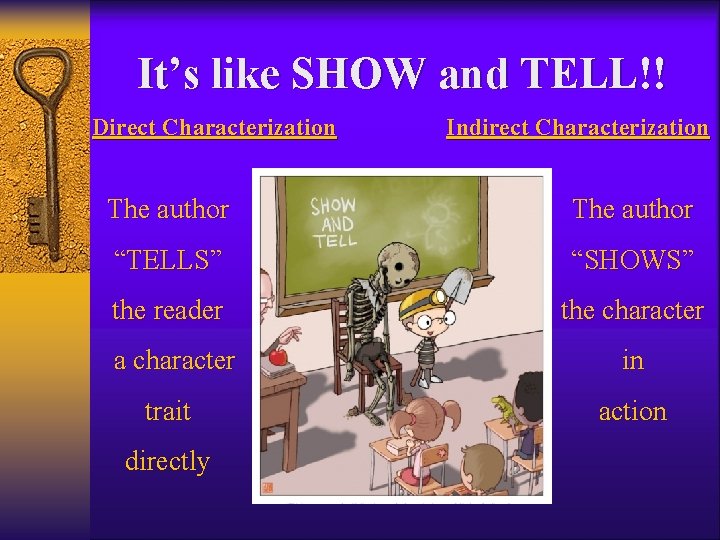
It’s like SHOW and TELL!! Direct Characterization Indirect Characterization The author “TELLS” “SHOWS” the reader the character a character in trait action directly
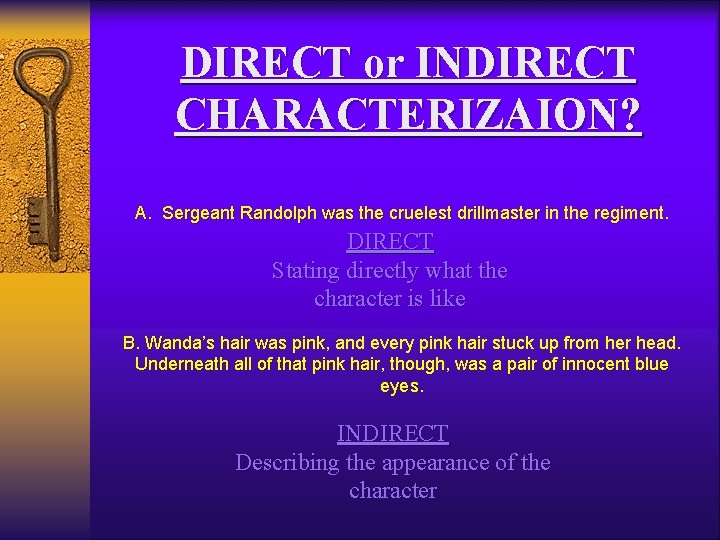
DIRECT or INDIRECT CHARACTERIZAION? A. Sergeant Randolph was the cruelest drillmaster in the regiment. DIRECT Stating directly what the character is like B. Wanda’s hair was pink, and every pink hair stuck up from her head. Underneath all of that pink hair, though, was a pair of innocent blue eyes. INDIRECT Describing the appearance of the character
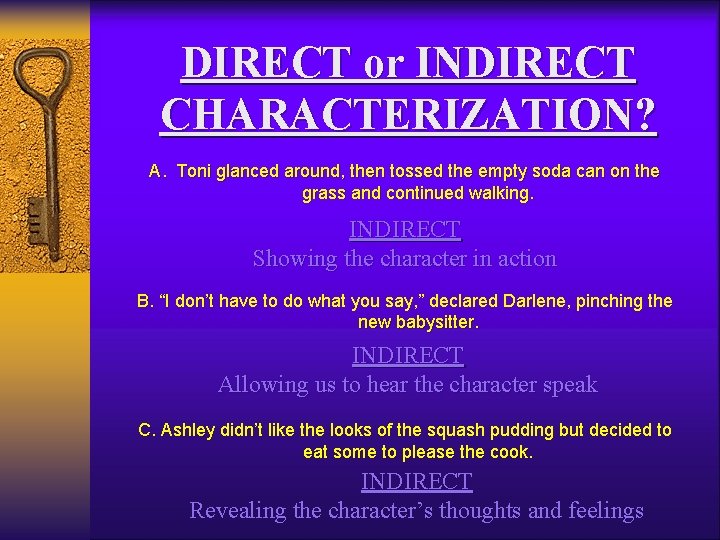
DIRECT or INDIRECT CHARACTERIZATION? A. Toni glanced around, then tossed the empty soda can on the grass and continued walking. INDIRECT Showing the character in action B. “I don’t have to do what you say, ” declared Darlene, pinching the new babysitter. INDIRECT Allowing us to hear the character speak C. Ashley didn’t like the looks of the squash pudding but decided to eat some to please the cook. INDIRECT Revealing the character’s thoughts and feelings
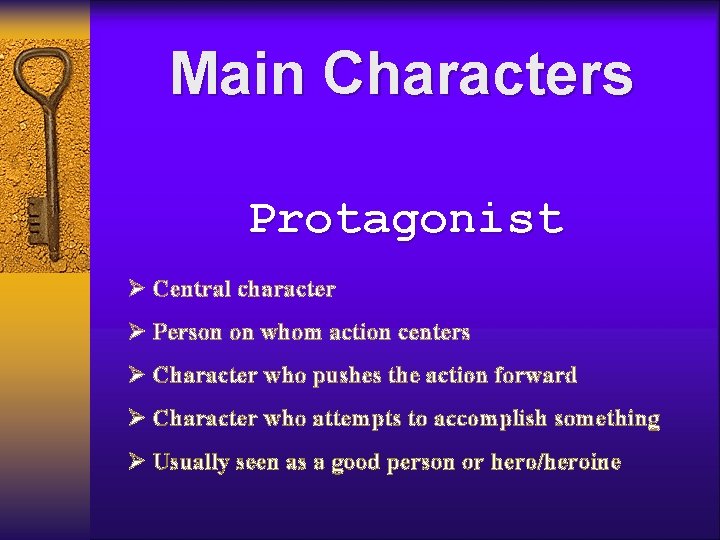
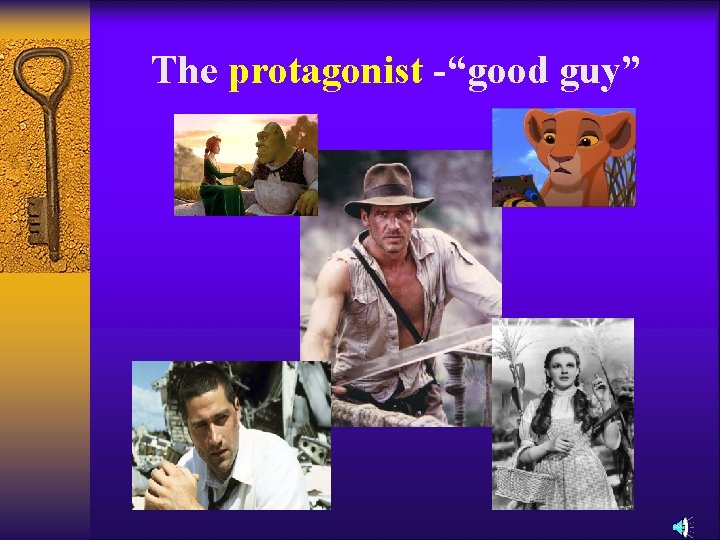
Main Characters Protagonist Ø Central character Ø Person on whom action centers Ø Character who pushes the action forward Ø Character who attempts to accomplish something Ø Usually seen as a good person or hero/heroine
The protagonist -“good guy”
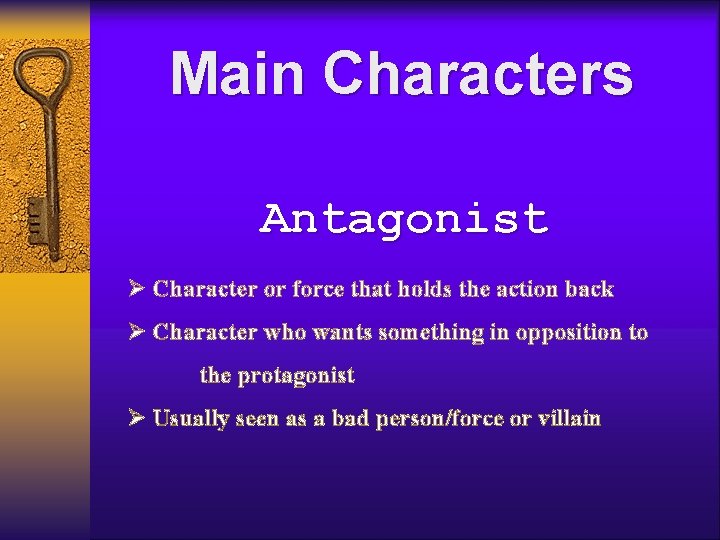
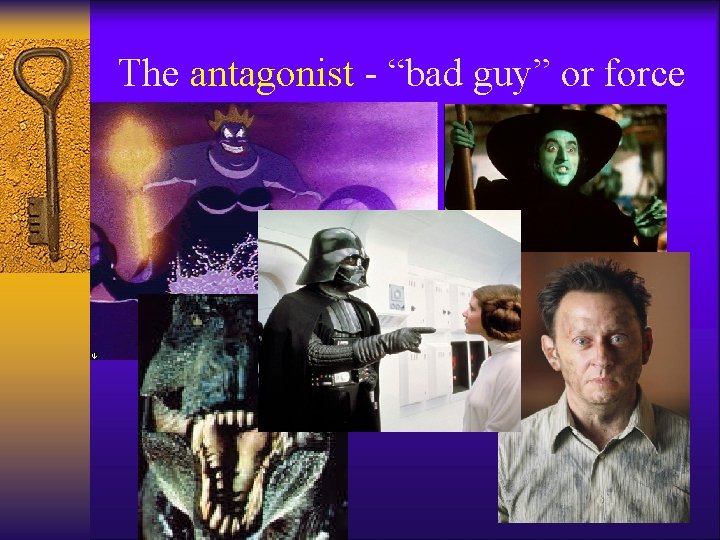
Main Characters Antagonist Ø Character or force that holds the action back Ø Character who wants something in opposition to the protagonist Ø Usually seen as a bad person/force or villain
The antagonist - “bad guy” or force
Types of Characters FLAT or ROUND and STATIC or DYNAMIC
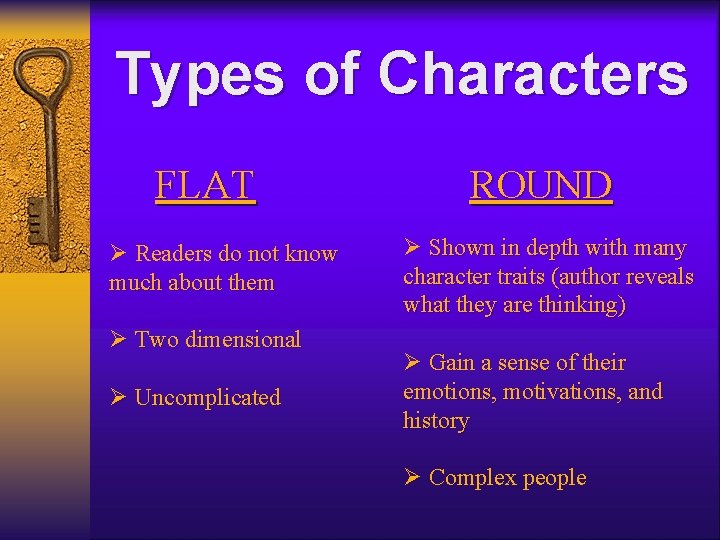
Types of Characters FLAT Ø Readers do not know much about them Ø Two dimensional Ø Uncomplicated ROUND Ø Shown in depth with many character traits (author reveals what they are thinking) Ø Gain a sense of their emotions, motivations, and history Ø Complex people
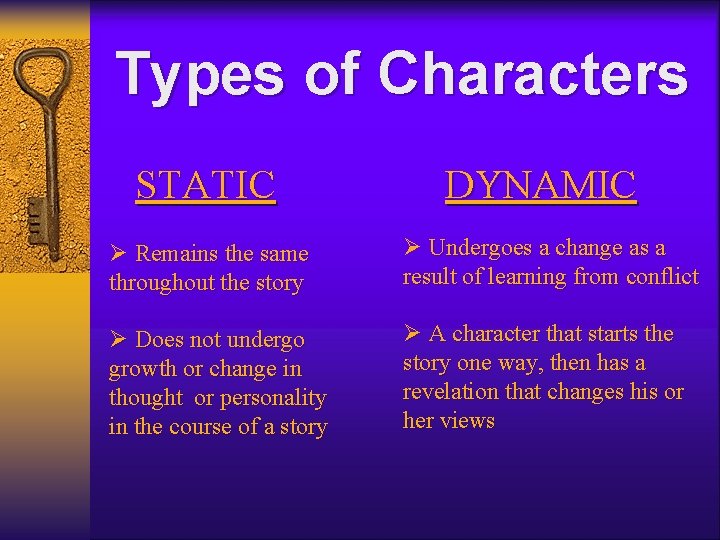
Types of Characters STATIC DYNAMIC Ø Remains the same throughout the story Ø Undergoes a change as a result of learning from conflict Ø Does not undergo growth or change in thought or personality in the course of a story Ø A character that starts the story one way, then has a revelation that changes his or her views
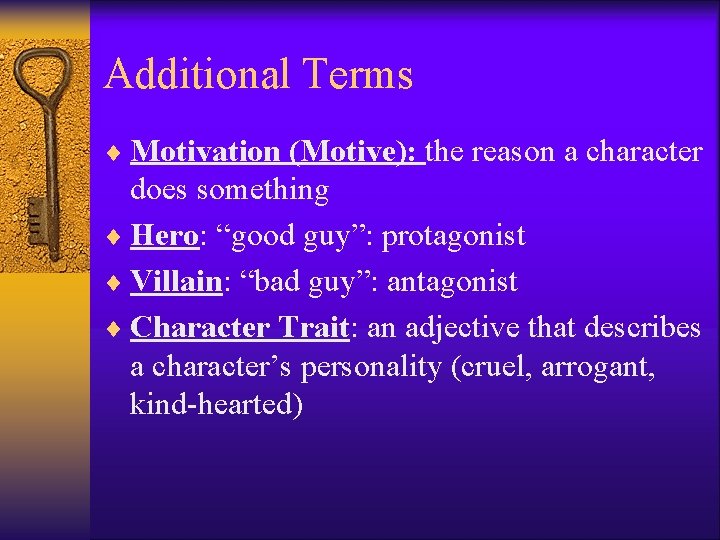
Additional Terms ¨ Motivation (Motive): the reason a character does something ¨ Hero: “good guy”: protagonist ¨ Villain: “bad guy”: antagonist ¨ Character Trait: an adjective that describes a character’s personality (cruel, arrogant, kind-hearted)