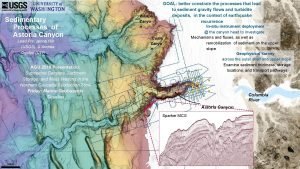
Sedimentary Processes of Astoria Canyon Lead PIs Jenna
- Slides: 3
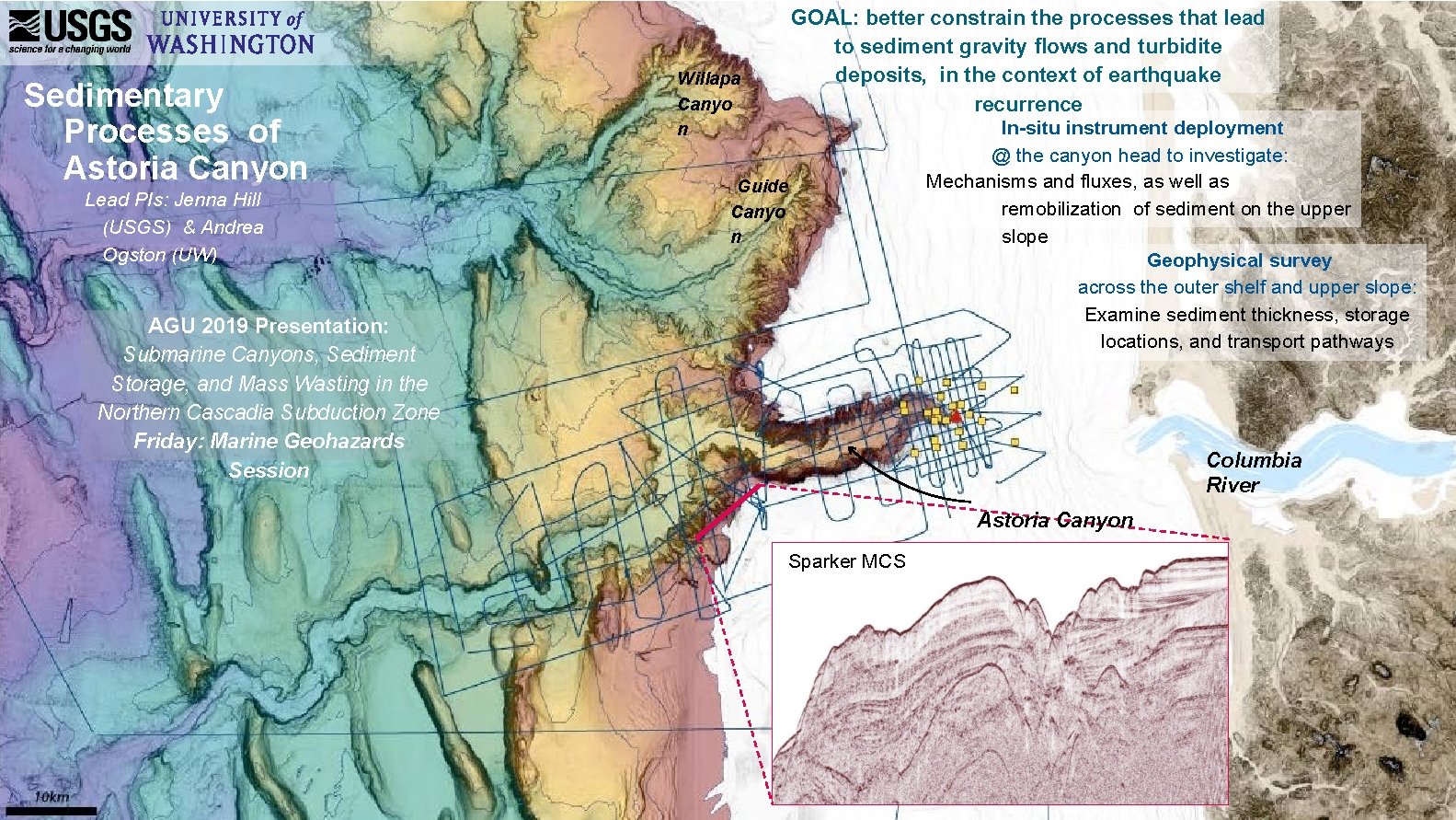
Sedimentary Processes of Astoria Canyon Lead PIs: Jenna Hill (USGS) & Andrea Ogston (UW) GOAL: better constrain the processes that lead to sediment gravity flows and turbidite deposits, in the context of earthquake recurrence Willapa Canyo n Guide Canyo n AGU 2019 Presentation: Submarine Canyons, Sediment Storage, and Mass Wasting in the Northern Cascadia Subduction Zone Friday: Marine Geohazards Session In-situ instrument deployment @ the canyon head to investigate: Mechanisms and fluxes, as well as remobilization of sediment on the upper slope Geophysical survey across the outer shelf and upper slope: Examine sediment thickness, storage locations, and transport pathways Columbia River Astoria Canyon Sparker MCS
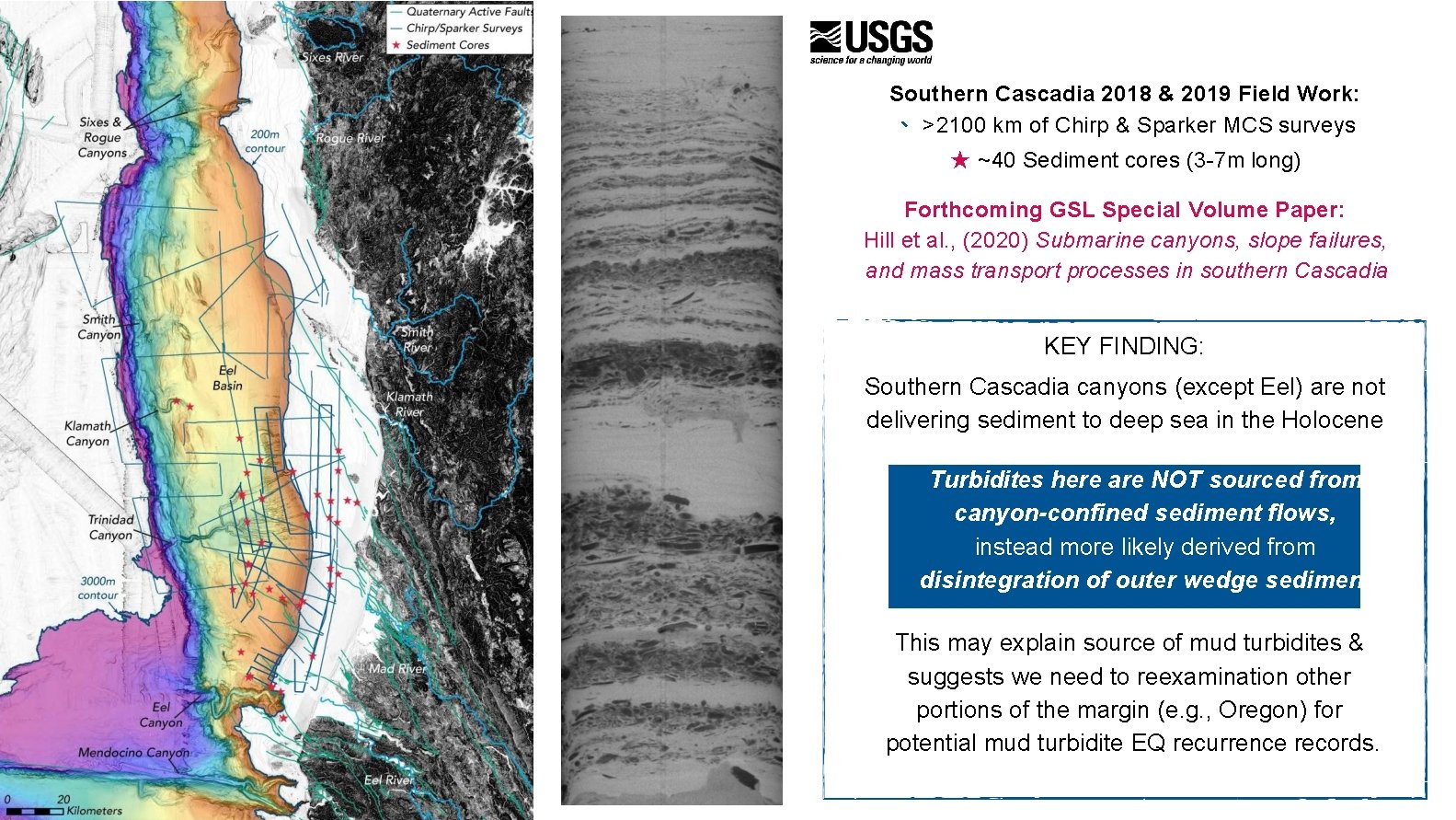
Southern Cascadia 2018 & 2019 Field Work: ﹅ >2100 km of Chirp & Sparker MCS surveys ★ ~40 Sediment cores (3 -7 m long) Forthcoming GSL Special Volume Paper: Hill et al. , (2020) Submarine canyons, slope failures, and mass transport processes in southern Cascadia KEY FINDING: Southern Cascadia canyons (except Eel) are not delivering sediment to deep sea in the Holocene Turbidites here are NOT sourced from canyon-confined sediment flows, instead more likely derived from disintegration of outer wedge sediment This may explain source of mud turbidites & suggests we need to reexamination other portions of the margin (e. g. , Oregon) for potential mud turbidite EQ recurrence records.
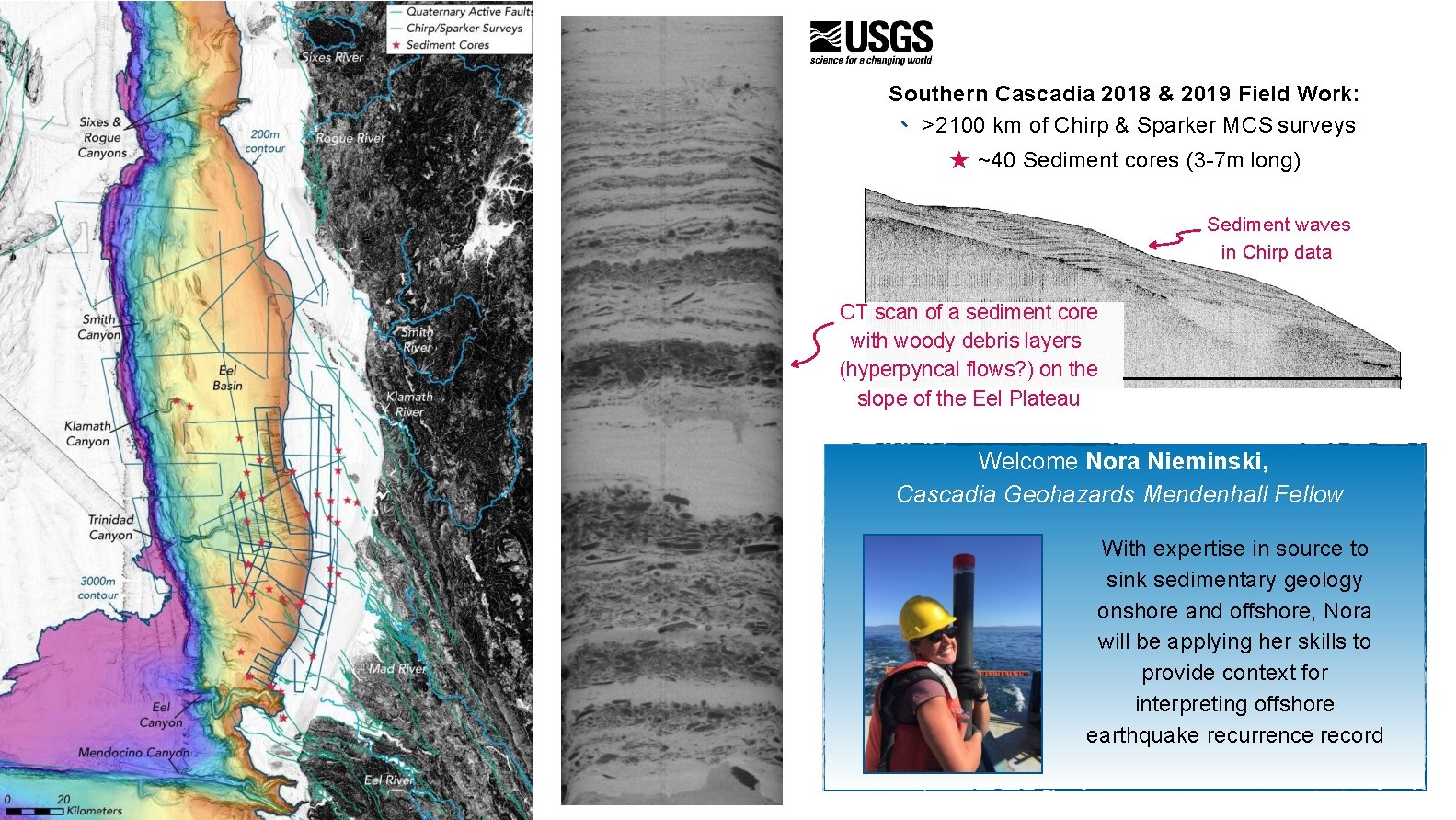
Southern Cascadia 2018 & 2019 Field Work: ﹅ >2100 km of Chirp & Sparker MCS surveys ★ ~40 Sediment cores (3 -7 m long) Sediment waves in Chirp data CT scan of a sediment core with woody debris layers (hyperpyncal flows? ) on the slope of the Eel Plateau Welcome Nora Nieminski, Cascadia Geohazards Mendenhall Fellow With expertise in source to sink sedimentary geology onshore and offshore, Nora will be applying her skills to provide context for interpreting offshore earthquake recurrence record