Russian Revolution Where is Russia n n Why
- Slides: 28
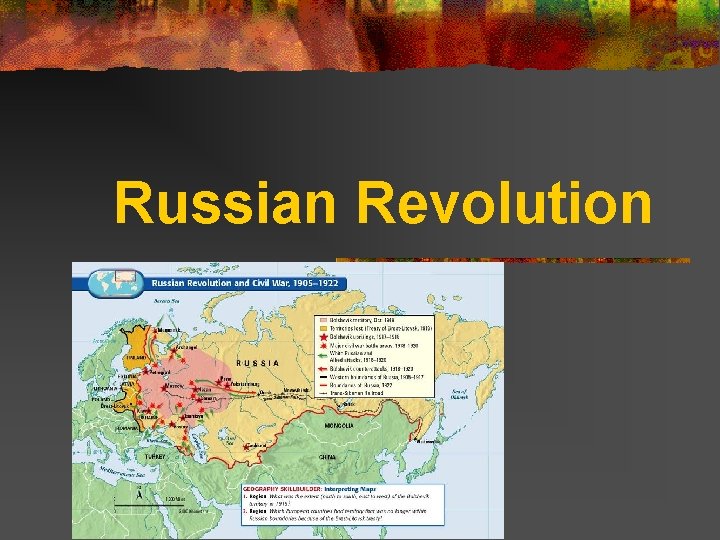
Russian Revolution
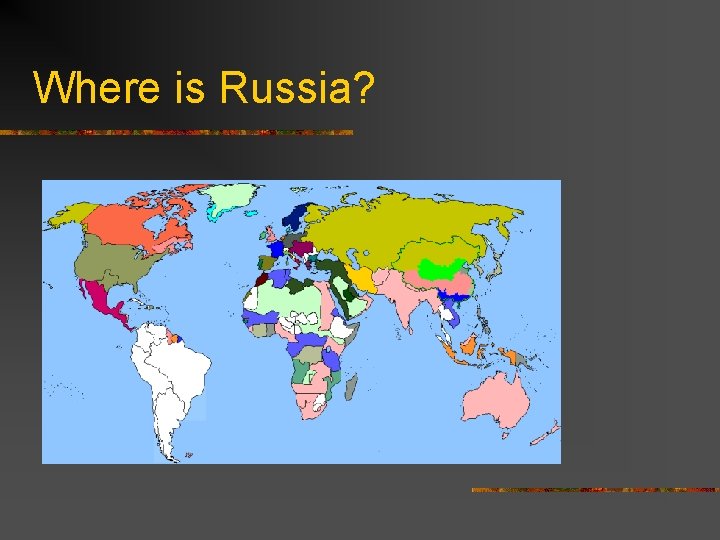
Where is Russia?
n n Why did Russia opt out of WW I? Which country benefitted from that?
Russian Government Before Revolution n n Absolute Monarchy: The Czar (Tsar) Until 1905 the Tsar's powers were unlimited. Russia had no constitution, no political party system to check the Tsar's power A strong secret police which terrorized the people.
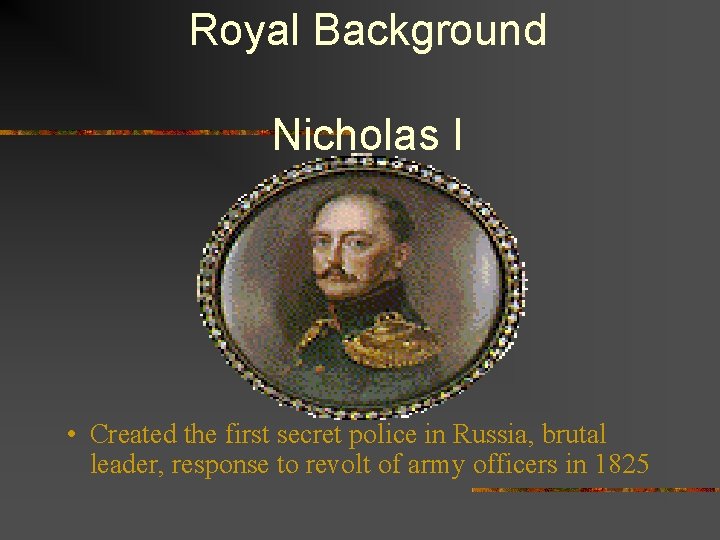
Royal Background Nicholas I • Created the first secret police in Russia, brutal leader, response to revolt of army officers in 1825
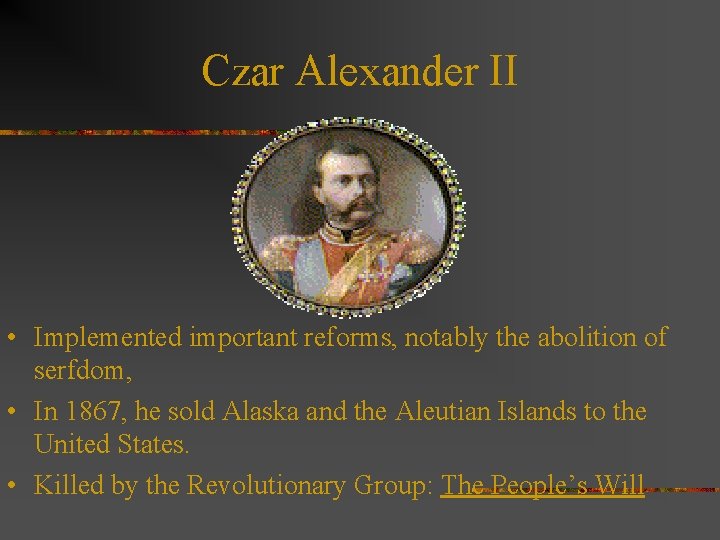
Czar Alexander II • Implemented important reforms, notably the abolition of serfdom, • In 1867, he sold Alaska and the Aleutian Islands to the United States. • Killed by the Revolutionary Group: The People’s Will
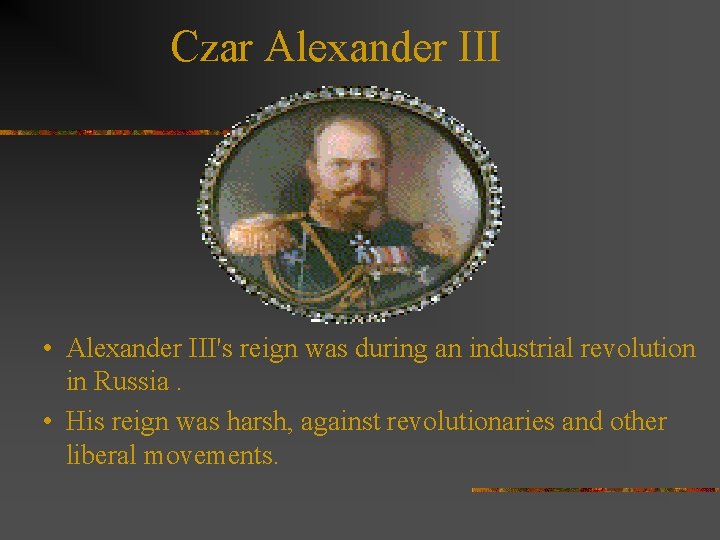
Czar Alexander III • Alexander III's reign was during an industrial revolution in Russia. • His reign was harsh, against revolutionaries and other liberal movements.
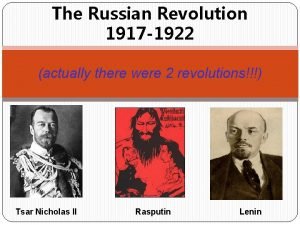
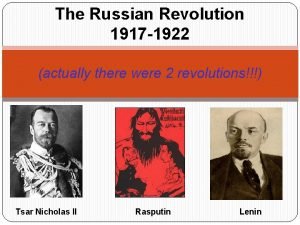
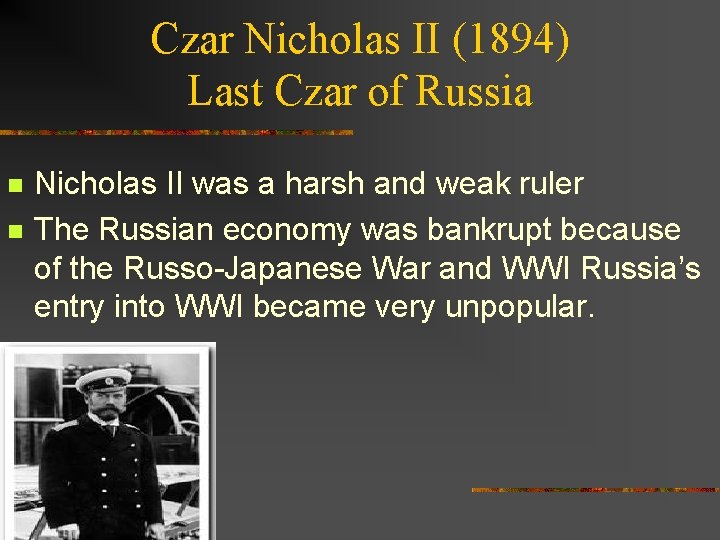
Czar Nicholas II (1894) Last Czar of Russia n n Nicholas II was a harsh and weak ruler The Russian economy was bankrupt because of the Russo-Japanese War and WWI Russia’s entry into WWI became very unpopular.
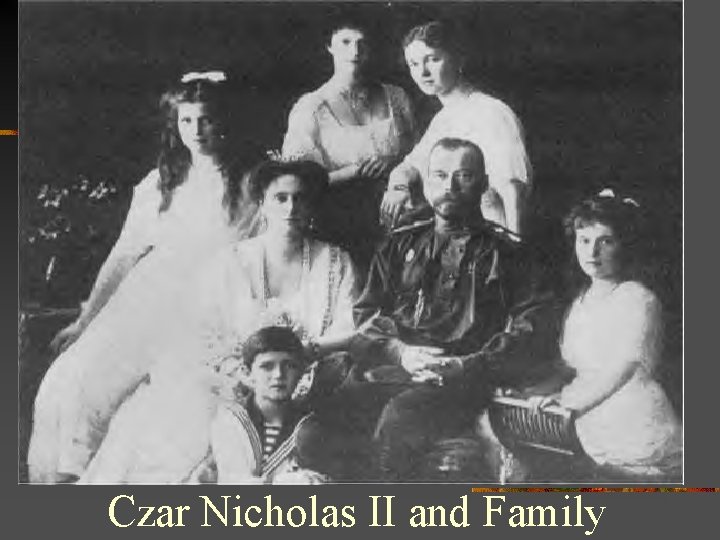
Czar Nicholas II and Family
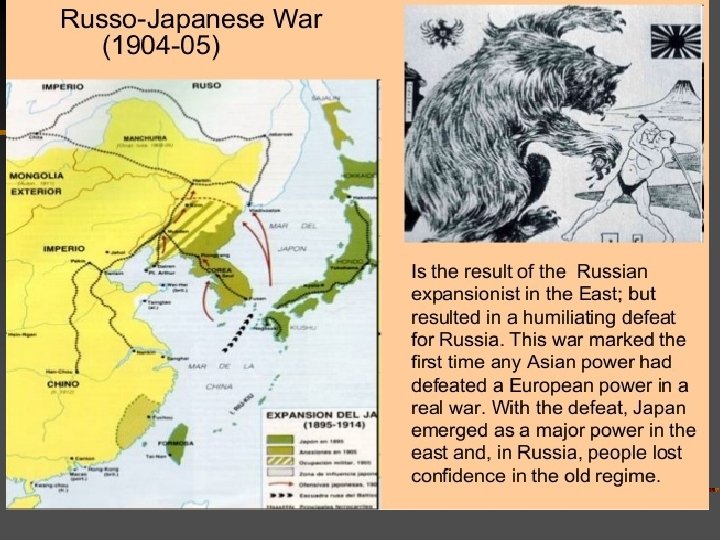
Russo-Japanese War (1904) Dispute over Manchuria with Japan. Russia lost the war. Shook national confidence in their progress and rule of Czar.
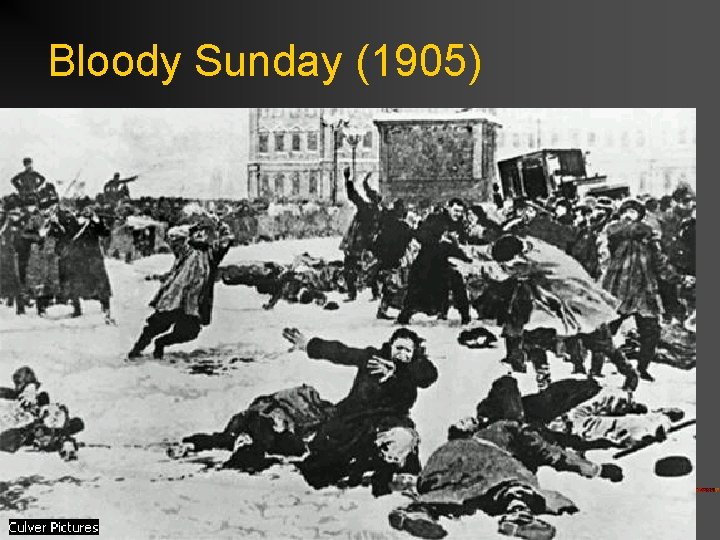
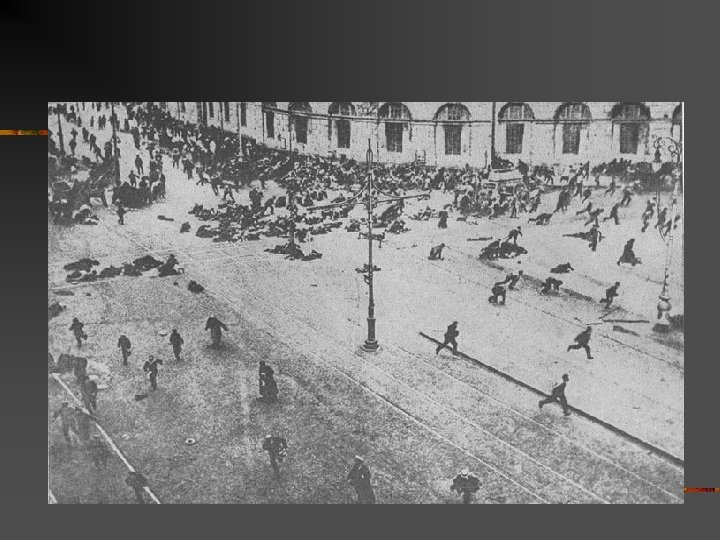
Bloody Sunday (1905)
Russia and World War I n n Russia declares war on Austria. Hungary War becomes unpopular Rationing leads to starvation in Russia Nicholas II leaves St. Petersburg to war front
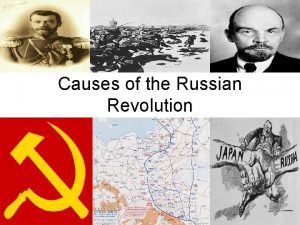
Causes of Russian Revolution n n n n Widespread suffering under autocracy—a form of government in which one person, in this case the czar, has absolute power • Weak leadership of Czar Nicholas II—clung to autocracy despite changing times Poor working conditions, low wages, and hazards of industrialization New revolutionary movements that believed a worker-run government should replace czarist rule • Russian defeat in the Russo-Japanese War (1905), which led to rising unrest • Bloody Sunday, the massacre of unarmed protestors outside the palace, in 1905 • Devastation of World War I—high casualties, economic ruin, widespread hunger • The March Revolution in 1917, in which soldiers who were brought in for crowd control ultimately joined labor activists in calling “Down with the autocracy!”
March Revolution (1917) n n 1917 - protests spread through St. Petersburg and the Royal palace is taken over. Czar abdicates Provisional government (Duma) takes control lead by Alexander Keresnky Provisional government unpopular after decision to stay in WWI
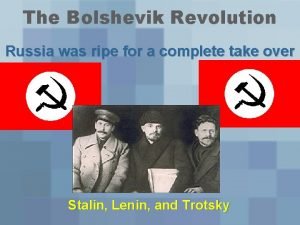
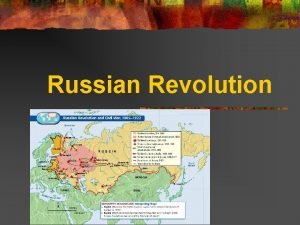
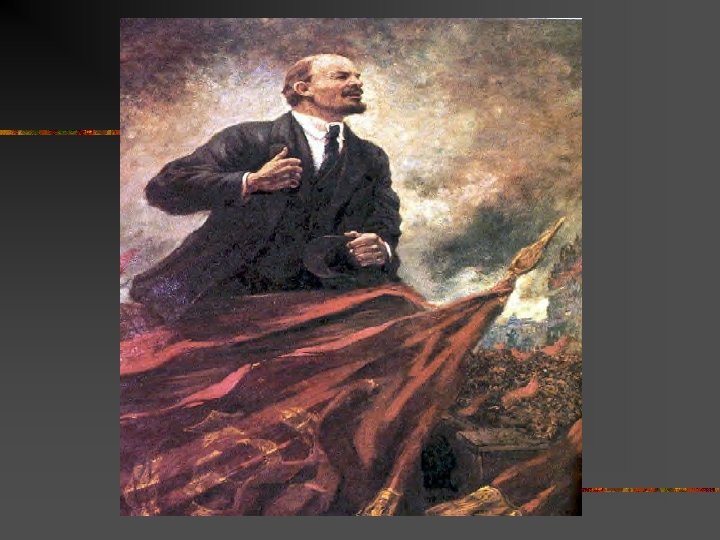
Effects of Russian Revolution n n n The government is taken over by the Bolshevik Party, led by V. I. Lenin; later, it will be known as the Communist Party. • Farmland is distributed among farmers, and factories are given to workers. • Banks are nationalized and a national council is assembled to run the economy. • Russia pulls out of World War I, signing the Treaty of Brest-Litovsk, conceding much land to Germany. • Czarist rule ends. Nicholas II, his wife and five children are executed. • Civil war, between Bolshevik (“red”) and anti-Bolshevik (“white”) forces, sweeps Russia from 1918 to 1920. Around 15 million die in conflict and the famine • The Russian economy is in shambles. Industrial production drops, trade all but ceases, and skilled workers flee the country. • Lenin asserts his control by cruel methods such as the Gulag, a vast and brutal network of prison camps for both criminals and political prisoners.
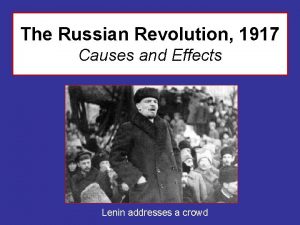
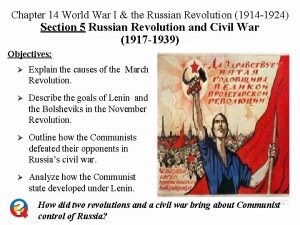
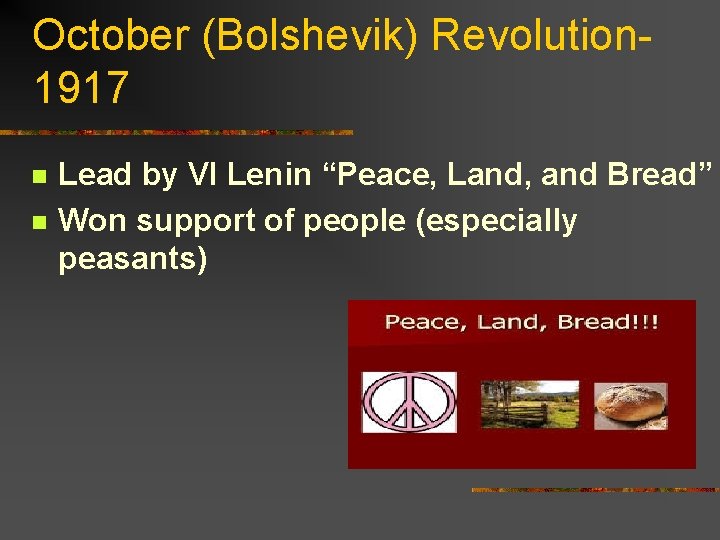
October (Bolshevik) Revolution 1917 n n Lead by VI Lenin “Peace, Land, and Bread” Won support of people (especially peasants)
1918 n 1918 March The Bolsheviks accept the peace of Brest‑Litovsk, ending WWI with Germany.
1919 -1920 1919 White Armies (Royal and Menshevik troops) attack the Reds (Bolsheviks) from all directions. n 1920 - Reds defeat Whites
Rule of Lenin 1920 -1924 n n Economic Reforms included the New Economic Plan (NEP) -moderate mix of capitalism and socialism Political Reforms -Bolshevik party became Communist Party -Russia becomes the United Soviet Socialist Republics
Communism n A Form of Socialism n n Central Planning of the Economy by the State Gov’t (Communist Party) makes decisions on individual jobs and pay
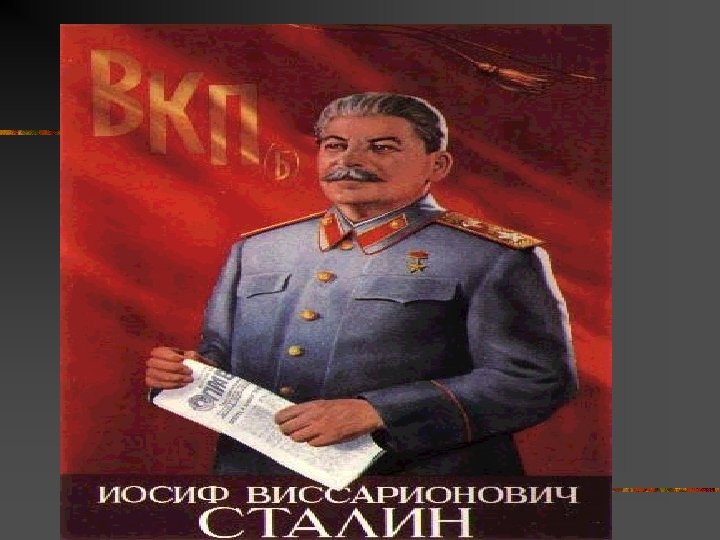
1924 n n n Lenin Dies Power Vacuum Leon Trotsky vs. Joseph Stalin takes control Now must decide how he will maintain power Decides to create a totalitarian state
Characteristics of a Totalitarian State n n n Dictatorship- Absolute Authority Dynamic Leader- Vision for the nation State Control Over All Sectors of Society n n State Control Over the Individual n n n Business, Family Life, Labor, youth groups, housing, religion, education, the arts Obedience Denies basic liberties Organized Violence n Uses force to crush opposition
Stalin’s Totalitarian State Control of the Economy n n Police Terror n n Control of the individual Propaganda (socialist realism) n n Great Purge, crush opposition Religious Persecution n n 5 year plan, collective farms Molding peoples minds Education n Controlled by the government
Structured Discussion n n Debate: Class splits into 4 groups. Each group choses a leader. Group discusses the negative &positive aspects of a Totalitarianism. Students debate the issue.