Research ethics and how health research is reviewed
- Slides: 7
Research ethics and how health research is reviewed This presentation has been developed to form part of the lesson ‘Research ethics and how health research gets reviewed’ - www. nuffieldbioethics. org/education
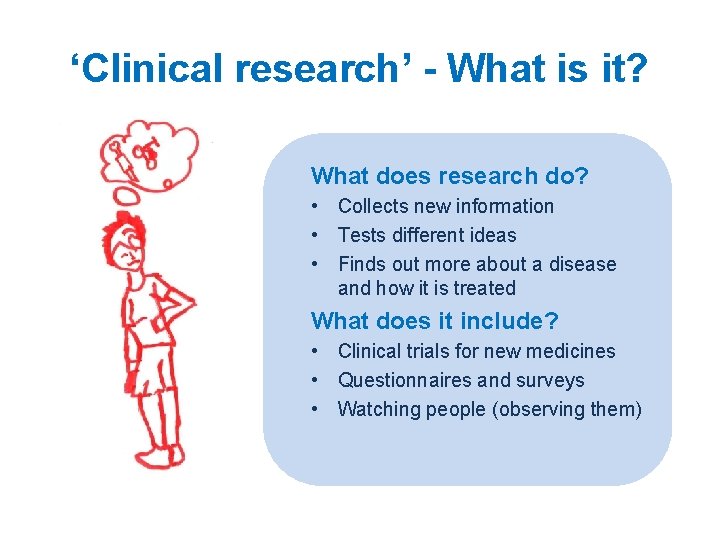
‘Clinical research’ - What is it? What does research do? • Collects new information • Tests different ideas • Finds out more about a disease and how it is treated What does it include? • Clinical trials for new medicines • Questionnaires and surveys • Watching people (observing them)
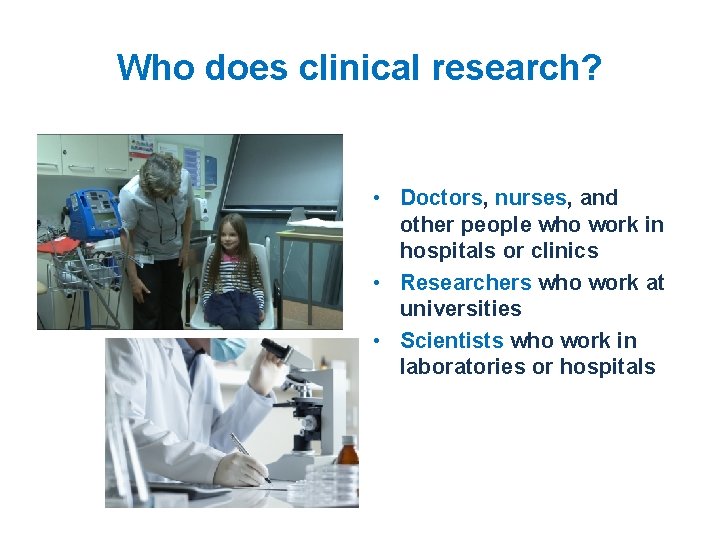
Who does clinical research? • Doctors, nurses, and other people who work in hospitals or clinics • Researchers who work at universities • Scientists who work in laboratories or hospitals
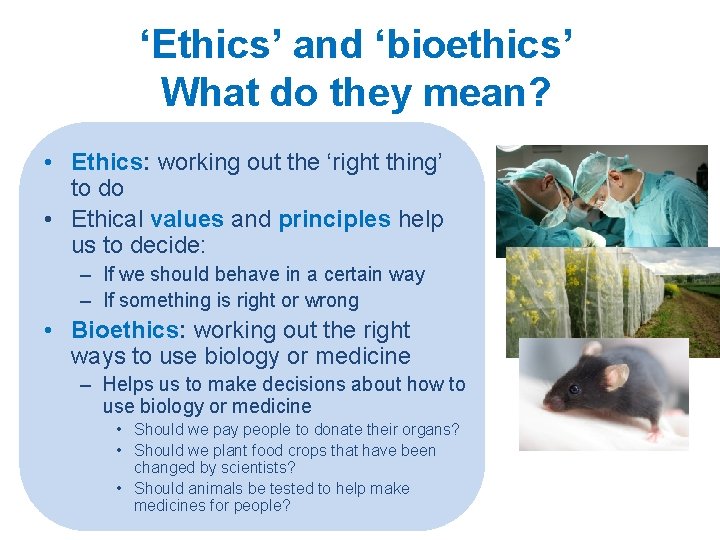
‘Ethics’ and ‘bioethics’ What do they mean? • Ethics: working out the ‘right thing’ to do • Ethical values and principles help us to decide: – If we should behave in a certain way – If something is right or wrong • Bioethics: working out the right ways to use biology or medicine – Helps us to make decisions about how to use biology or medicine • Should we pay people to donate their organs? • Should we plant food crops that have been changed by scientists? • Should animals be tested to help make medicines for people?
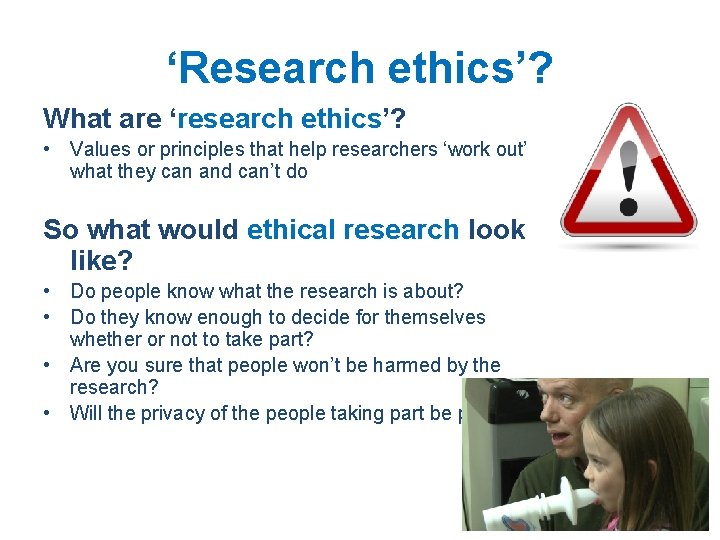
‘Research ethics’? What are ‘research ethics’? • Values or principles that help researchers ‘work out’ what they can and can’t do So what would ethical research look like? • Do people know what the research is about? • Do they know enough to decide for themselves whether or not to take part? • Are you sure that people won’t be harmed by the research? • Will the privacy of the people taking part be protected?
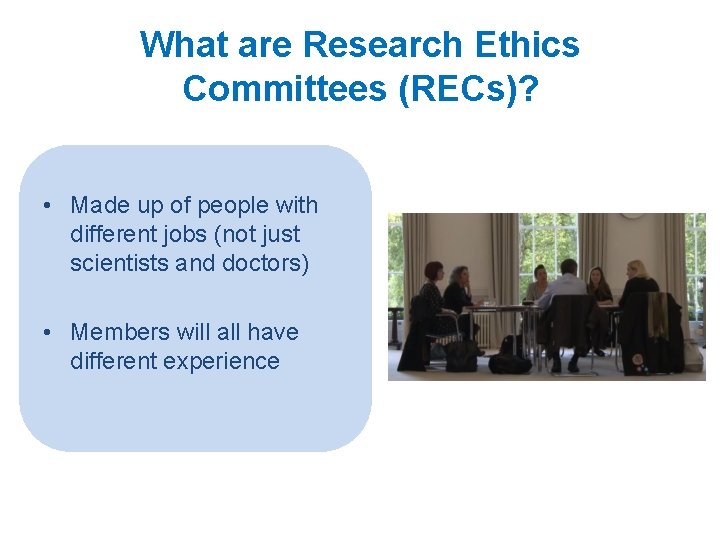
What are Research Ethics Committees (RECs)? • Made up of people with different jobs (not just scientists and doctors) • Members will all have different experience
What do RECs do? • Meet to talk about a new study before it goes ahead. They think about: – What is good or not so good about the study – Whether taking part in the study could cause problems for those who take part • Decide whether the research is ethical – for example, is it safe? Will it treat the people who take part with respect? – If it is, then the researchers can go ahead with their study – If it is not, then researchers may be asked to make changes to their research plans