Quantifying information size and diversity in metaanalysis Jrn













- Slides: 27
Quantifying information size and diversity in meta-analysis Jørn Wetterslev MD Ph. D Copenhagen Trial Unit Centre for clinical intervention research Rigshospitalet Copenhagen University Hospital
How much information do we need to make a decision ? How do we protect the error risk levels in meta-analysis ?
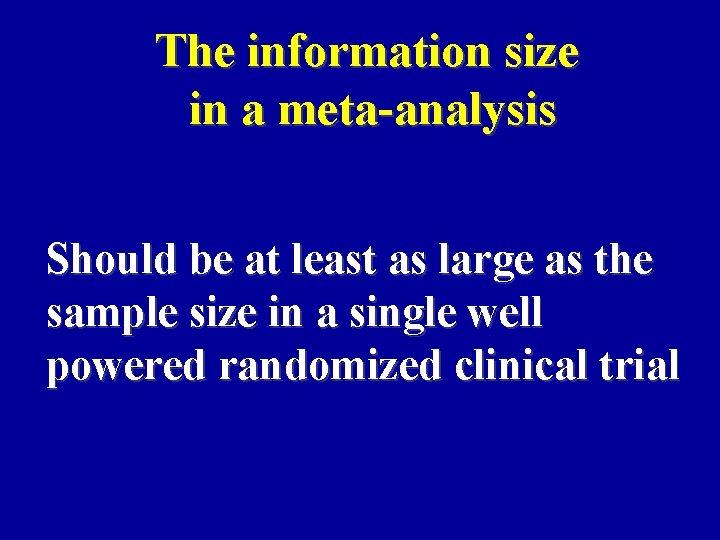
The information size in a meta-analysis Should be at least as large as the sample size in a single well powered randomized clinical trial
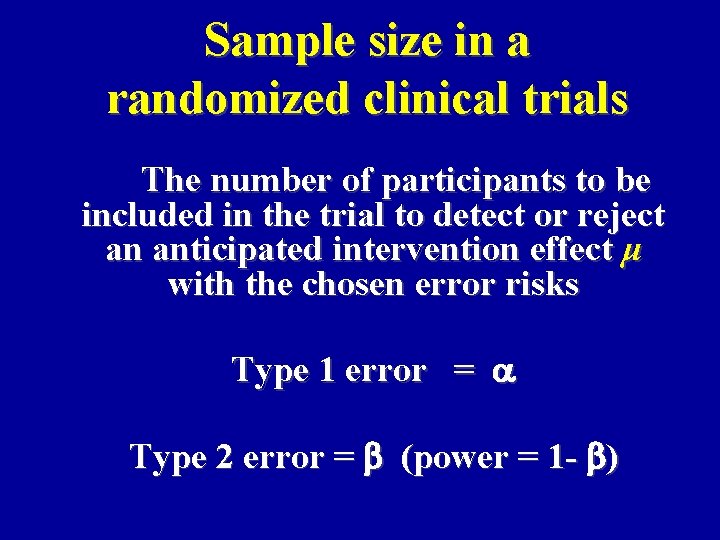
Sample size in a randomized clinical trials The number of participants to be included in the trial to detect or reject an anticipated intervention effect μ with the chosen error risks Type 1 error = Type 2 error = (power = 1 - )
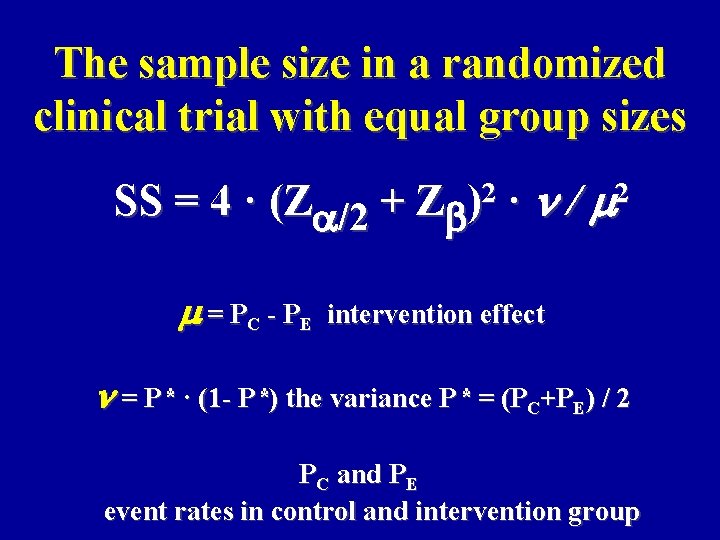
The sample size in a randomized clinical trial with equal group sizes SS = 4 · (Z /2 + Z )2 · / 2 = P C - PE intervention effect = P* · (1 - P*) the variance P* = (PC+PE) / 2 PC and PE event rates in control and intervention group
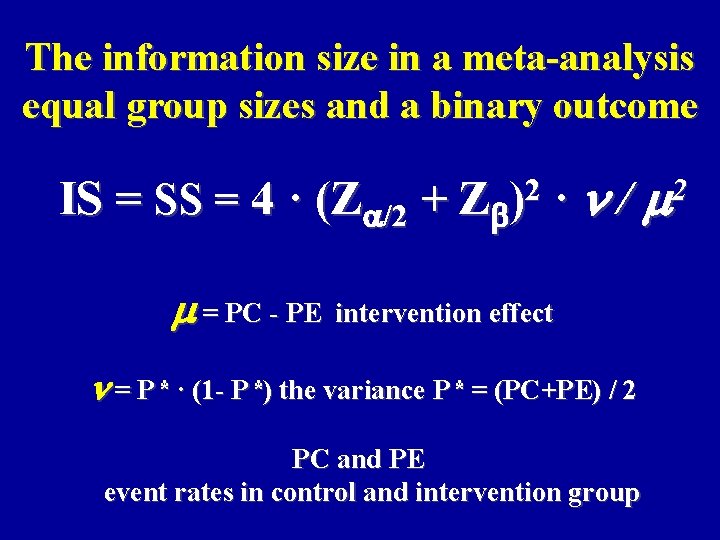
The information size in a meta-analysis equal group sizes and a binary outcome IS = SS = 4 · (Z /2 + = PC - PE 2 Z ) · / intervention effect = P* · (1 - P*) the variance P* = (PC+PE) / 2 PC and PE event rates in control and intervention group 2
The information size in a random-effects meta-analysis Should be increased with the variability between estimates of intervention effects of the trials included
The model dependent information size in a meta-analysis
The information size model dependency
The ratio of participants in the two models so if then
The required number of participants in a random-effects model is variance based
The 2 I definition of heterogeneity I 2 is the between trial variance rather than a moment based sampling error
The information size changing from a fixed- to a random-effects model ?
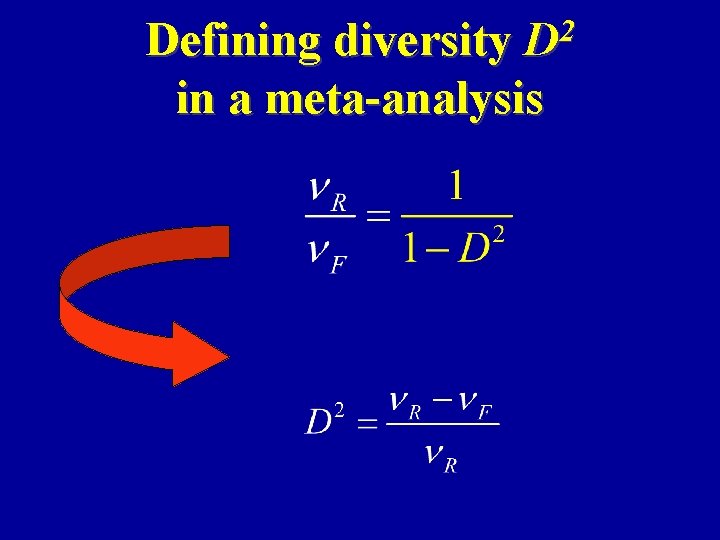
Defining diversity D 2 in a meta-analysis
Diversity 2 D in a meta-analysis is the variance between trials rather than an unbiased sampling error Unbiased !!
An unbiased sampling error
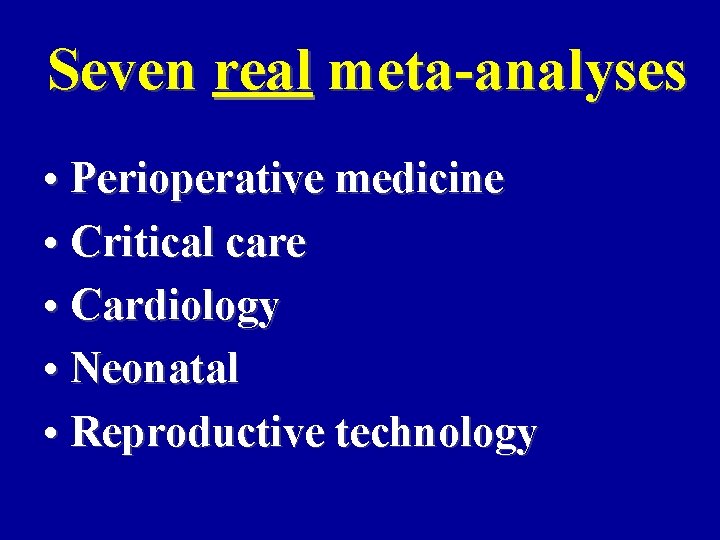
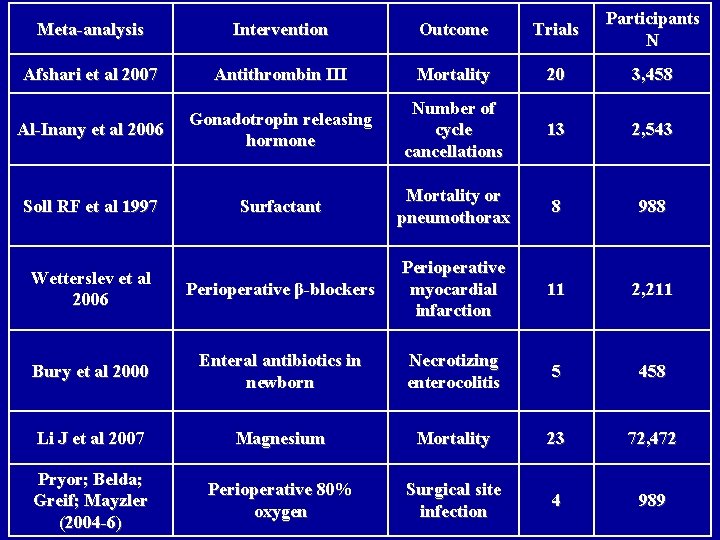
Seven real meta-analyses • Perioperative medicine • Critical care • Cardiology • Neonatal • Reproductive technology
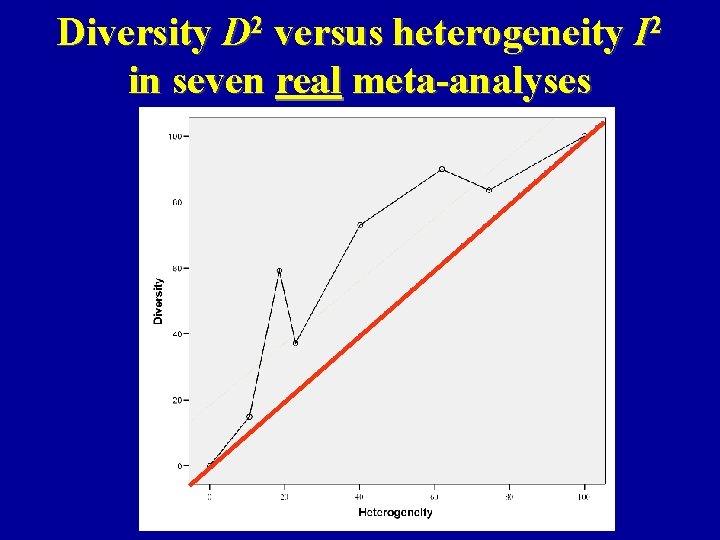
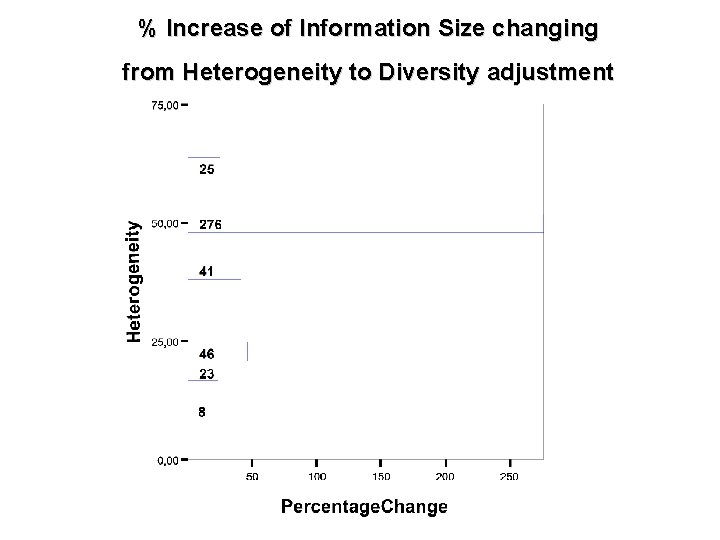
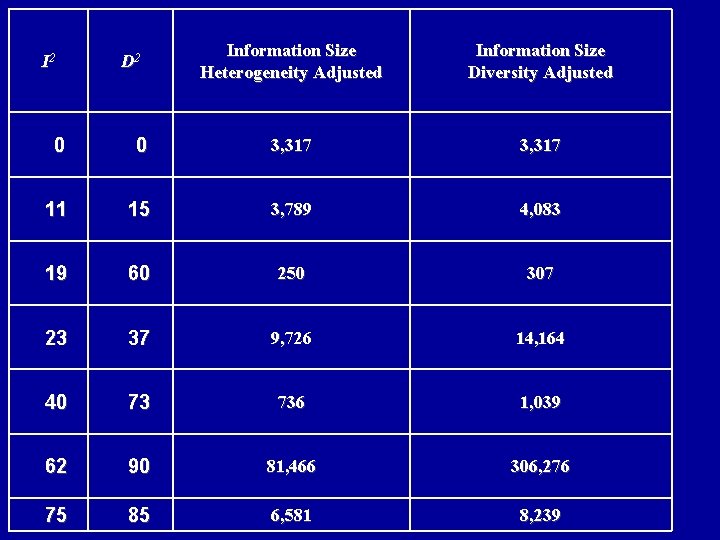
Diversity D 2 versus heterogeneity I 2 in seven real meta-analyses
% Increase of Information Size changing from Heterogeneity to Diversity adjustment
Diversity 2 D Heterogeneity I 2 According to Cauchy-Schwartz and Chebyschevs inequalities
Diversity D 2 Heterogeneity I 2 because
10 000 Meta-analyses simulated RRR = 20 % PC = 30% Number of trials = 6
10 000 Meta-analyses simulated RRR = 20 % PC = 30% Number of trials = 20
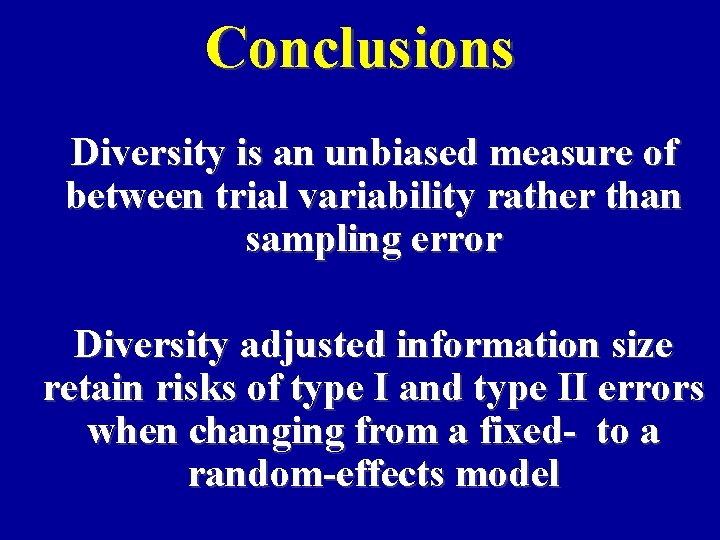
Conclusions Diversity is an unbiased measure of between trial variability rather than sampling error Diversity adjusted information size retain risks of type I and type II errors when changing from a fixed- to a random-effects model
Thank you !
Meta-analysis Intervention Outcome Trials Participants N Afshari et al 2007 Antithrombin III Mortality 20 3, 458 Al-Inany et al 2006 Gonadotropin releasing hormone Number of cycle cancellations 13 2, 543 Soll RF et al 1997 Surfactant Mortality or pneumothorax 8 988 Wetterslev et al 2006 Perioperative β-blockers Perioperative myocardial infarction 11 2, 211 Bury et al 2000 Enteral antibiotics in newborn Necrotizing enterocolitis 5 458 Li J et al 2007 Magnesium Mortality 23 72, 472 Pryor; Belda; Greif; Mayzler (2004 -6) Perioperative 80% oxygen Surgical site infection 4 989
I 2 D 2 Information Size Heterogeneity Adjusted Information Size Diversity Adjusted 0 0 3, 317 11 15 3, 789 4, 083 19 60 250 307 23 37 9, 726 14, 164 40 73 736 1, 039 62 90 81, 466 306, 276 75 85 6, 581 8, 239