Please Find a new seat if you would



- Slides: 31
• Please Find a new seat, if you would like to change.
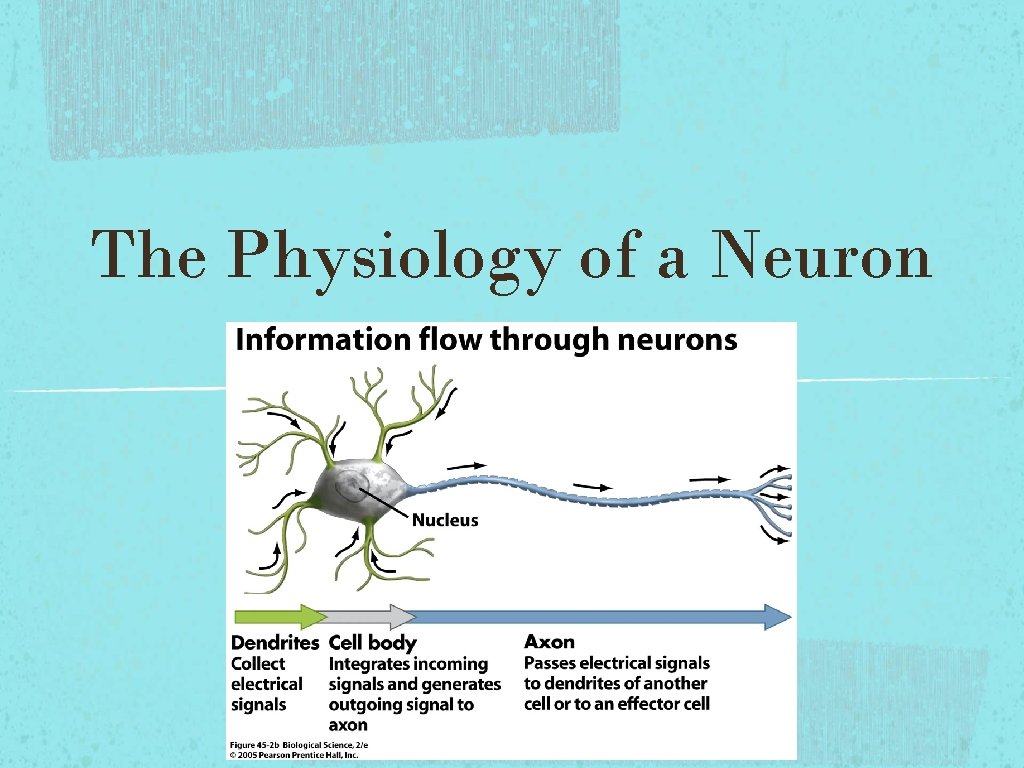
The Physiology of a Neuron
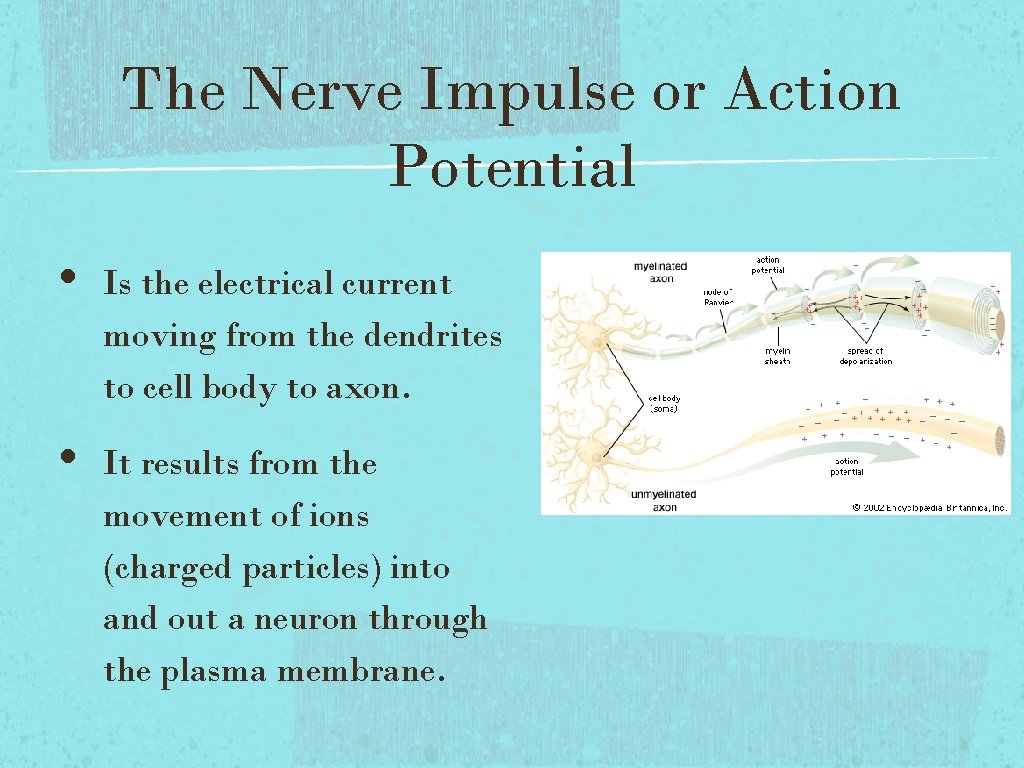
The Nerve Impulse or Action Potential • • Is the electrical current moving from the dendrites to cell body to axon. It results from the movement of ions (charged particles) into and out a neuron through the plasma membrane.
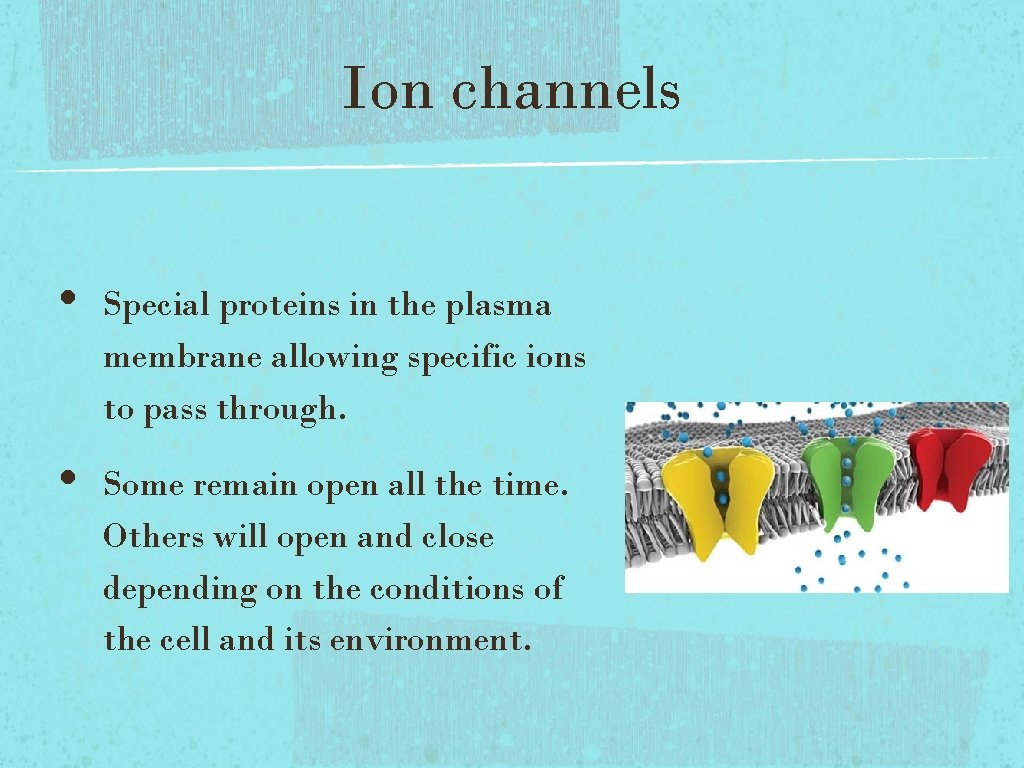
Ion channels • • Special proteins in the plasma membrane allowing specific ions to pass through. Some remain open all the time. Others will open and close depending on the conditions of the cell and its environment.
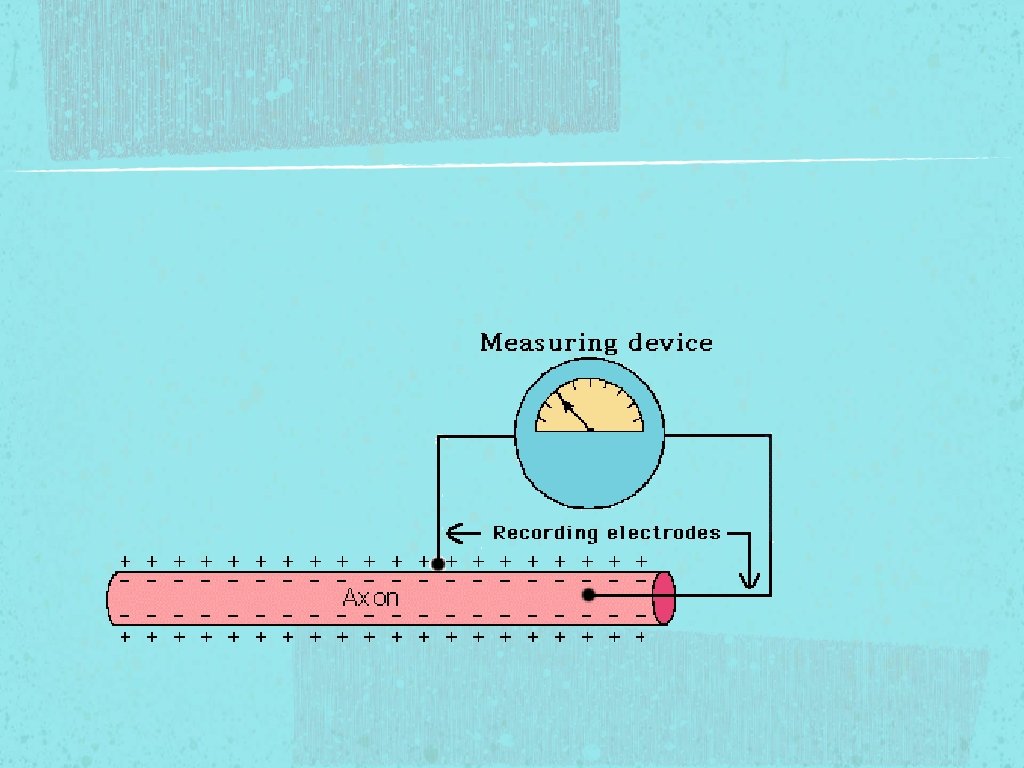
Resting Membrane Potential • • Is the difference in electrical charge on the outside and inside of the plasma membrane in a resting neuron (not conducting a nerve impulse). The outside has a positive charge and the inside has a negative charge. We refer to this as a polarized membrane. A resting neuron is at about -70 m. V
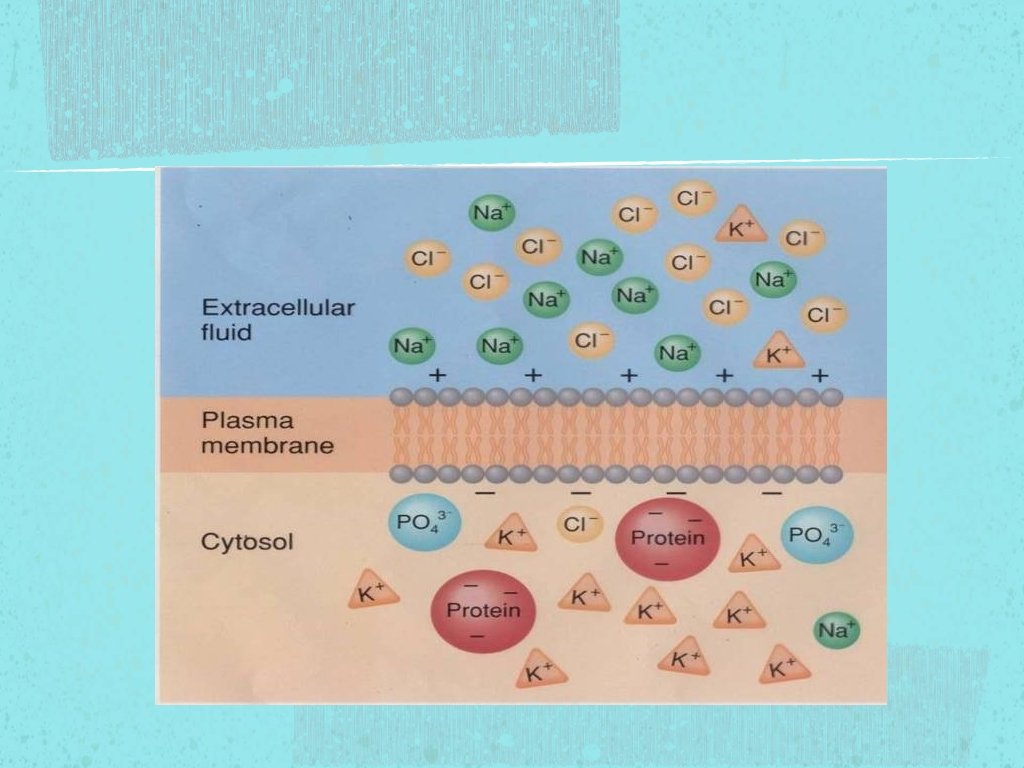
Why is there a difference? 1. There is 30 times more K+ inside the cell than outside and about 15 times more Na+ outside than inside. 2. There also large negatively charged proteins trapped inside the cell. (This is why it is negative inside. )
Would you expect to see so much K+ inside and so much Na+ outside?
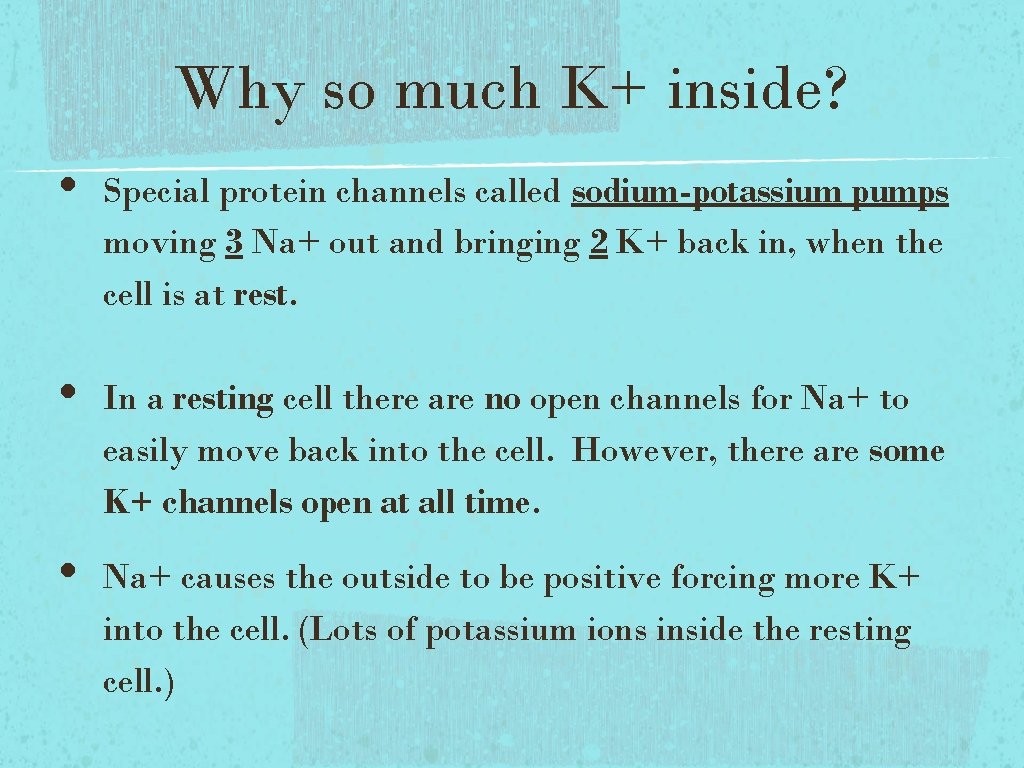
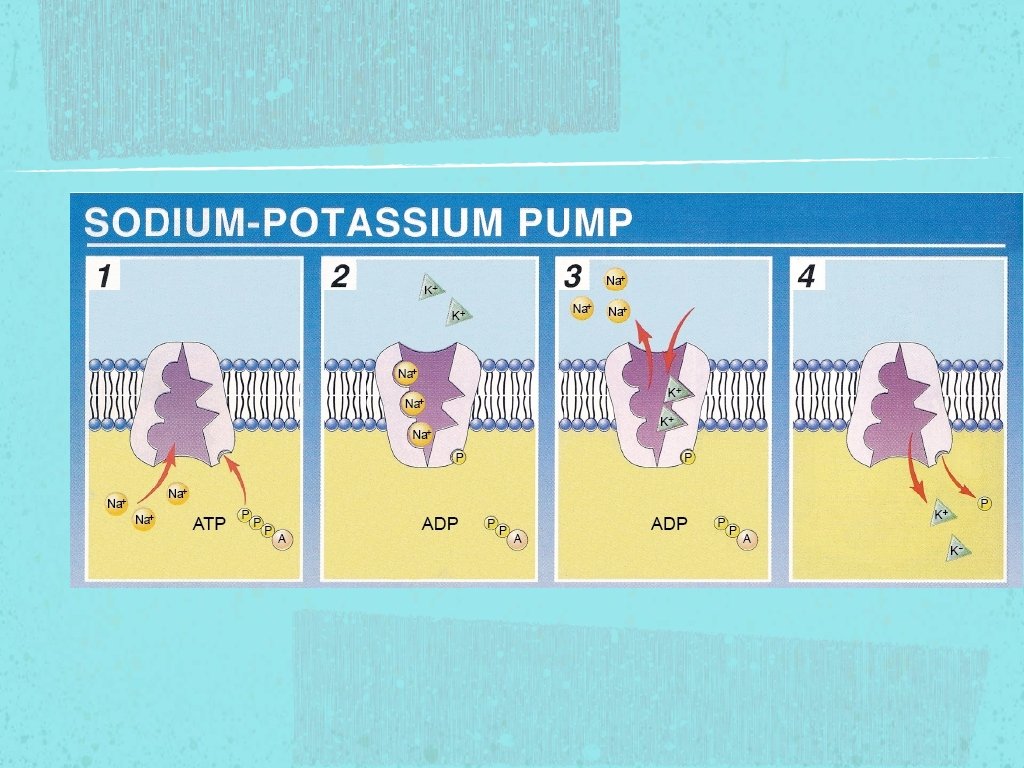
Why so much K+ inside? • • • Special protein channels called sodium-potassium pumps moving 3 Na+ out and bringing 2 K+ back in, when the cell is at rest. In a resting cell there are no open channels for Na+ to easily move back into the cell. However, there are some K+ channels open at all time. Na+ causes the outside to be positive forcing more K+ into the cell. (Lots of potassium ions inside the resting cell. )
Review • • • In a resting neuron the inside of the cell has a _____ charge. In a resting neuron potassium ions are in high concentration _____ of the cell. The resting membrane potential of a neuron is about _____m. V.
BAV • • nerve impulse ion channel resting membrane potential sodium-potassium pump
How is a nerve impulse generated?
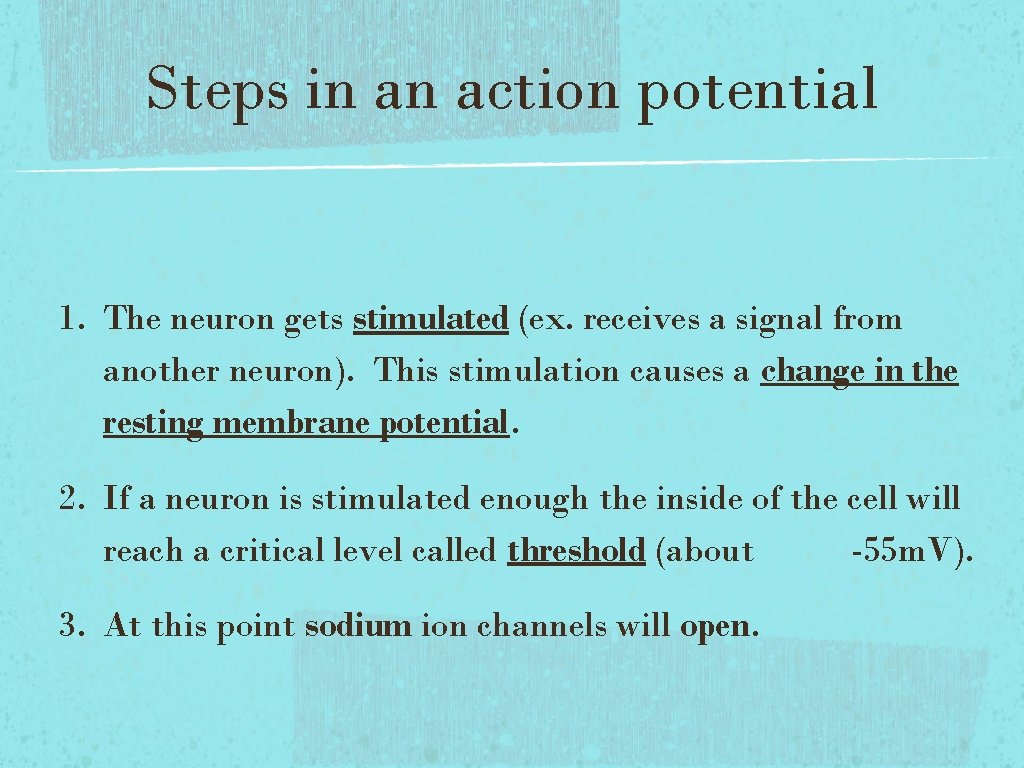
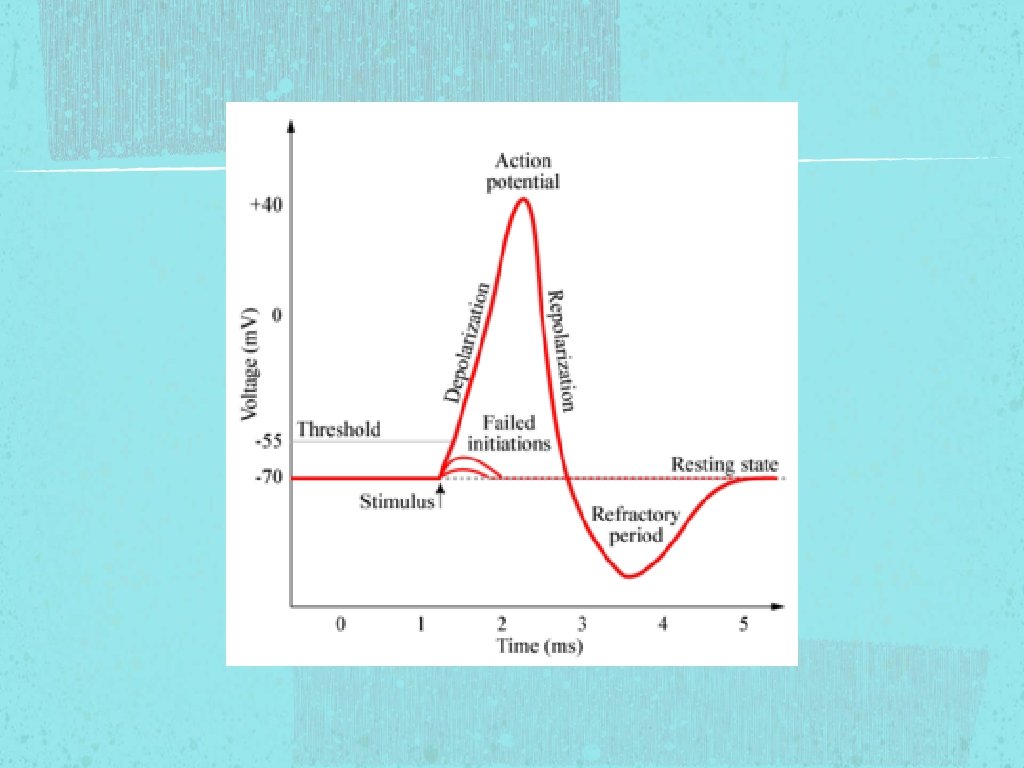
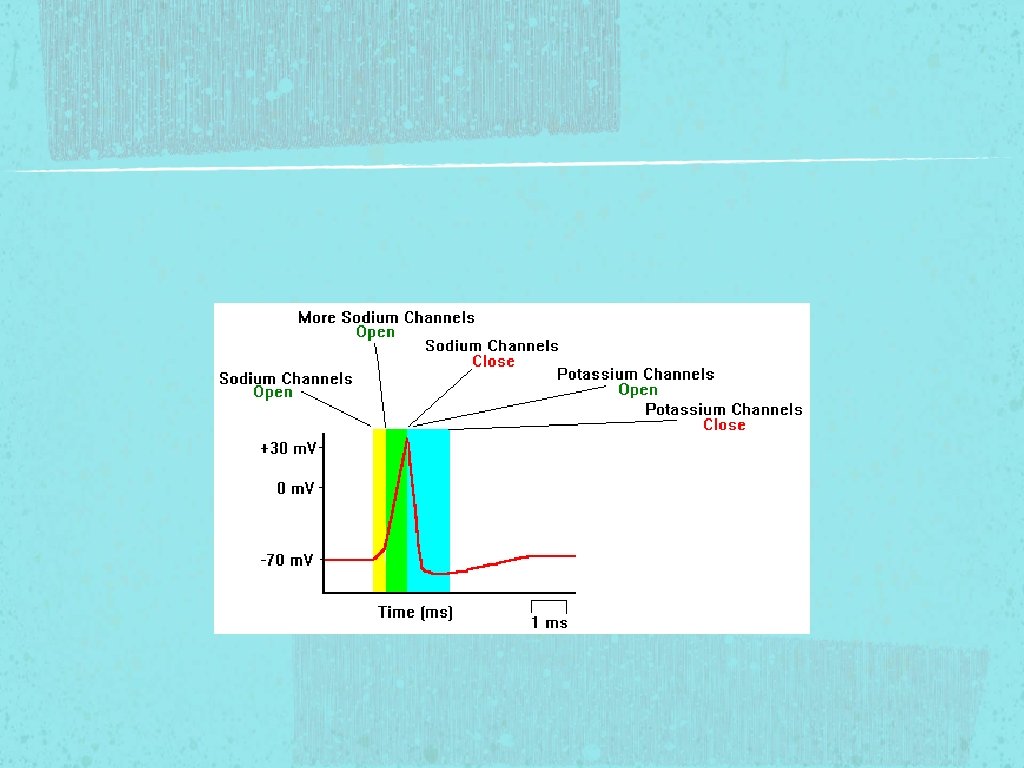
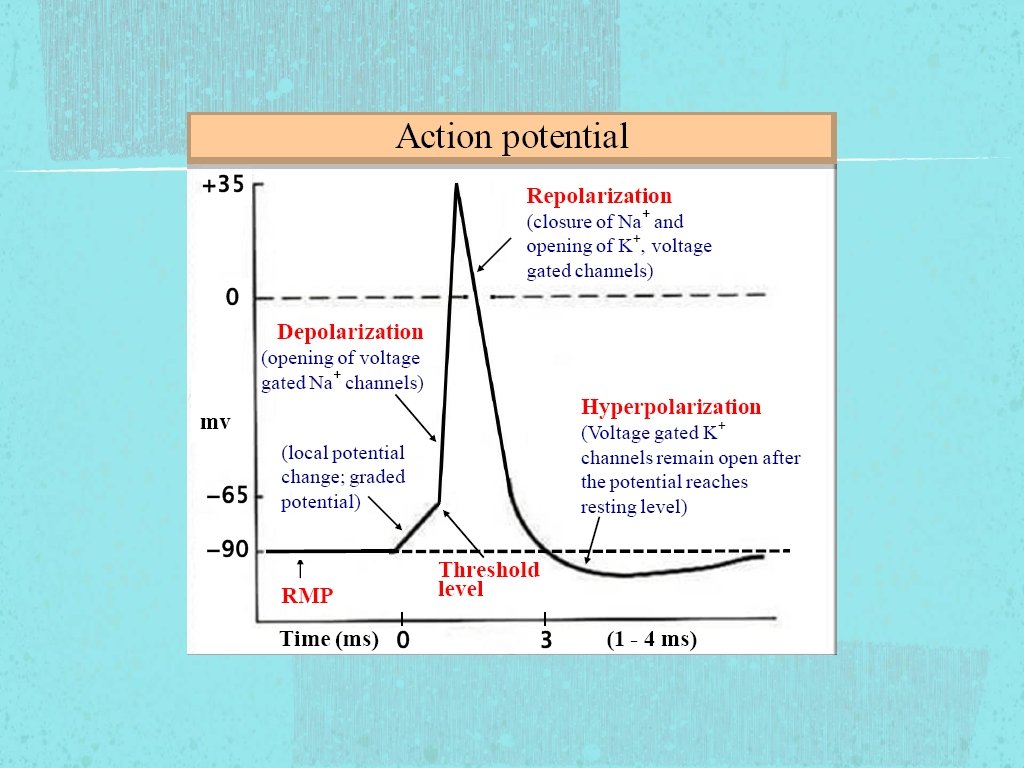
Steps in an action potential 1. The neuron gets stimulated (ex. receives a signal from another neuron). This stimulation causes a change in the resting membrane potential. 2. If a neuron is stimulated enough the inside of the cell will reach a critical level called threshold (about -55 m. V). 3. At this point sodium ion channels will open.
What do you think will happen now?
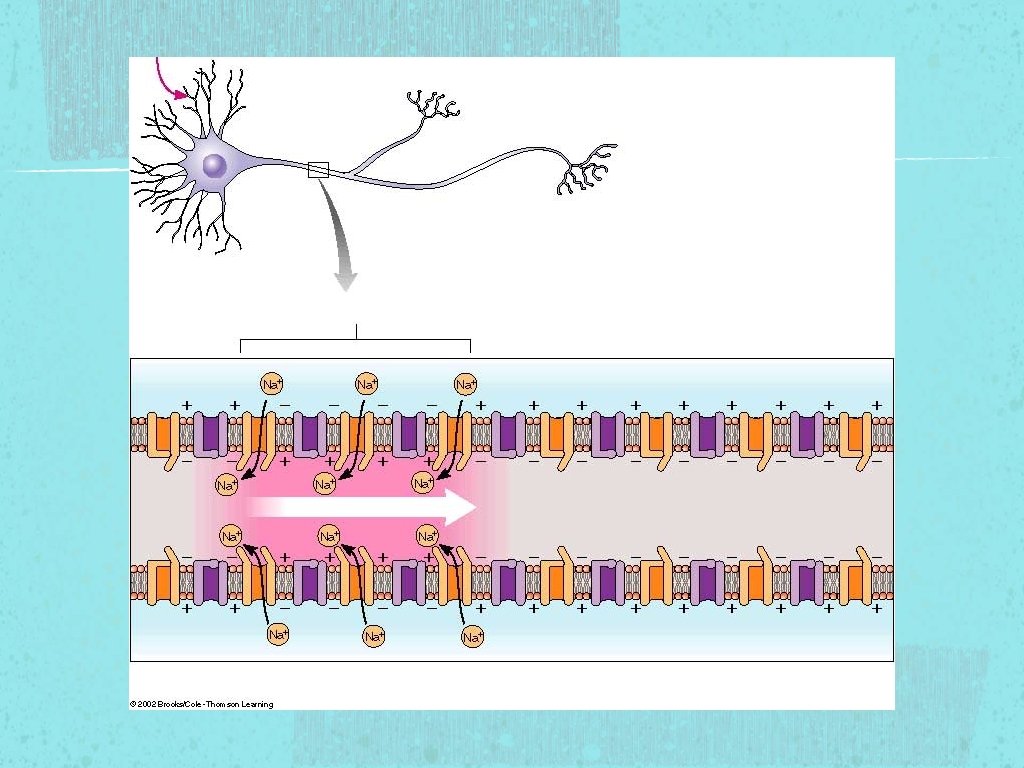
Depolarization 4. Sodium ions rush into the neuron because of diffusion forces (high to low) and charge attraction (+ and -). 5. The charge inside the cell eventually reaches about +30 m. V. (Relative to the outside of the cell the inside is now positive and the outside is negative. ) At this point the sodium ion channels close. • This change in polarization (- inside to +) is called depolarization (step 4 and 5)
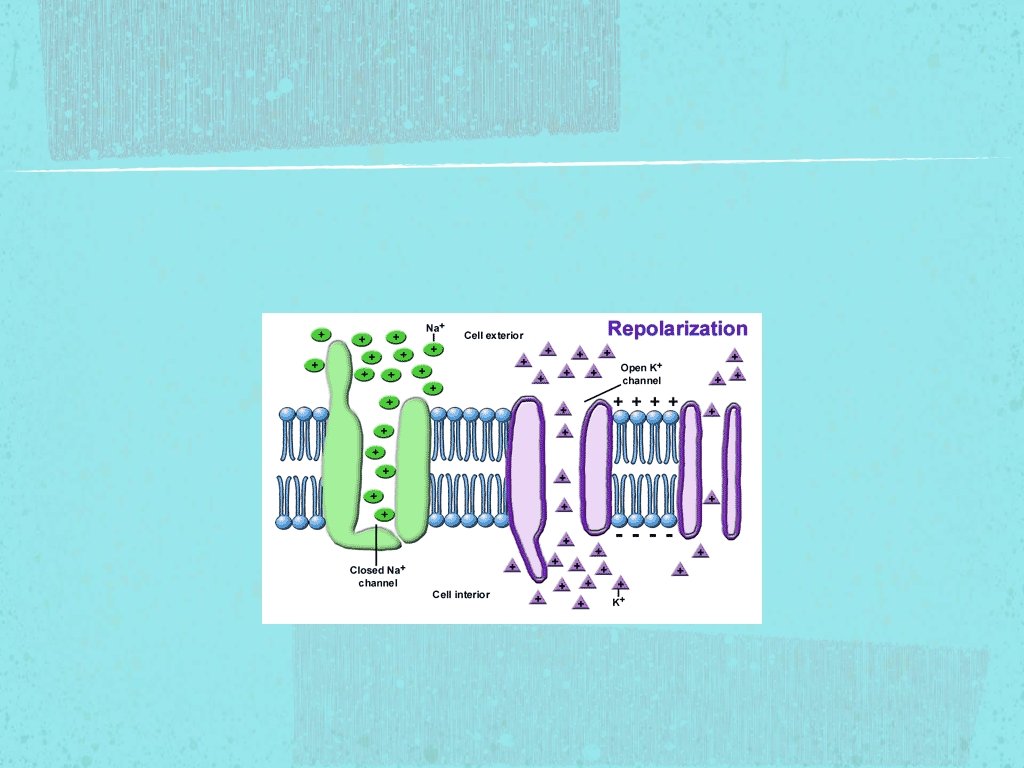
Repolarization 6. Next, potassium ion channels open up. This causes K+ to rush out of the cell. 7. As the K+ leaves it causes the inside of the cell to become negative again (-70 m. V). This is referred to as repolarization (step 6 and 7).
Review • • What happens during the depolarization phase of an action potential? What happens during the repolarization phase of an action potential?
• Action potential animation
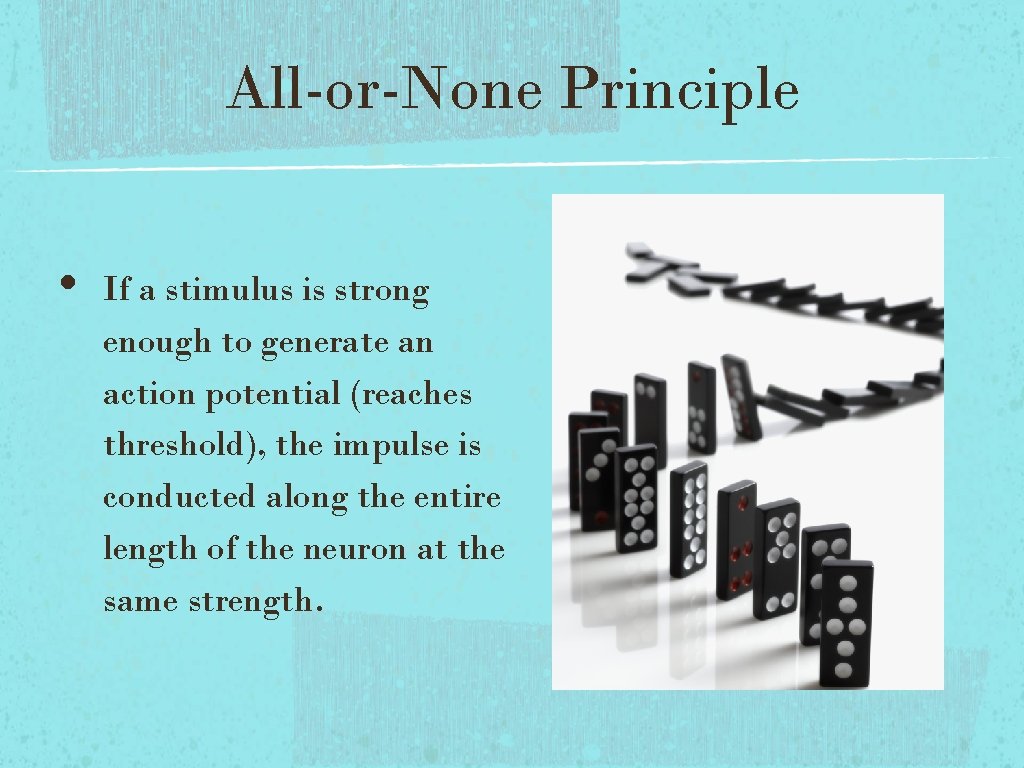
All-or-None Principle • If a stimulus is strong enough to generate an action potential (reaches threshold), the impulse is conducted along the entire length of the neuron at the same strength.
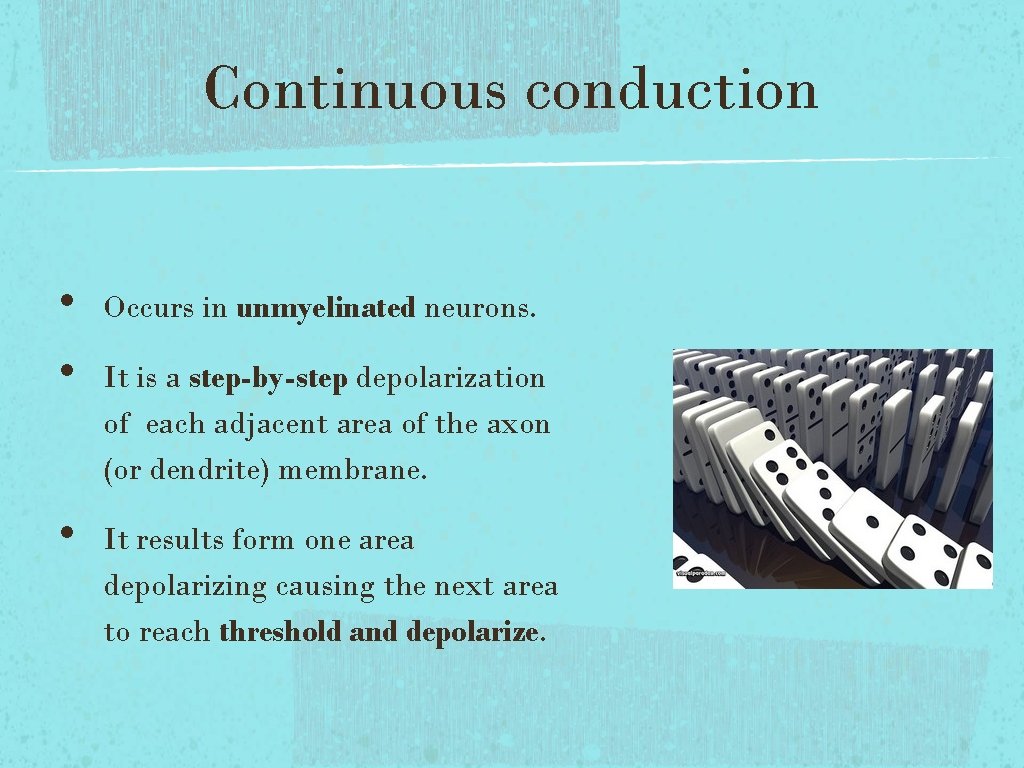
Continuous conduction • • • Occurs in unmyelinated neurons. It is a step-by-step depolarization of each adjacent area of the axon (or dendrite) membrane. It results form one area depolarizing causing the next area to reach threshold and depolarize.
Saltatory conduction • • Occurs in myelinated neurons. Depolarization only occurs at the nodes of Ranvier. The action potential jumps from one node to the next. Saltatory conduction will conduct the signal much faster than continuous conduction.
Summary • • On a ½ sheet of paper describe how continuous conduction is different than saltatory conduction. Before writing your answer share your thought with your neighbor.
• Saltatory vs. continuous conduction
BAV • • Depolarization Repolarization All-or-none principle Saltatory conduction