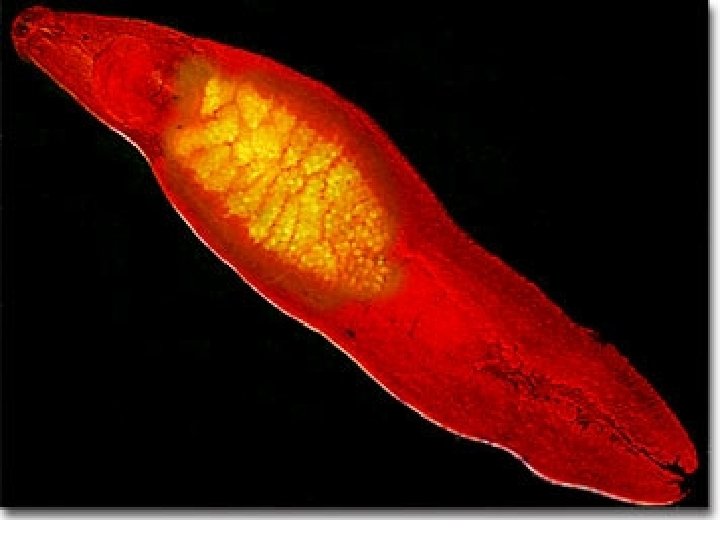
Platyhelminthes Platy flat Helminth worm Taxonomy Kingdom Animalia




- Slides: 25
Platyhelminthes Platy = flat Helminth = worm
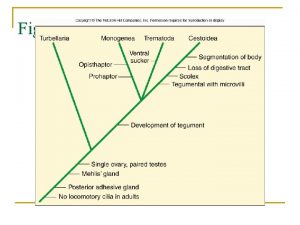
Taxonomy Kingdom Animalia Phylum Platyhelminthes Class Turbellaria Class Trematoda Class Cestoda (planarians) (flukes) (tapeworm)
• Platy = flat • Helminth = worm • Flatworms • flatworm biology
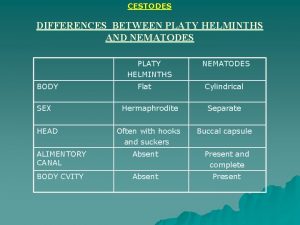
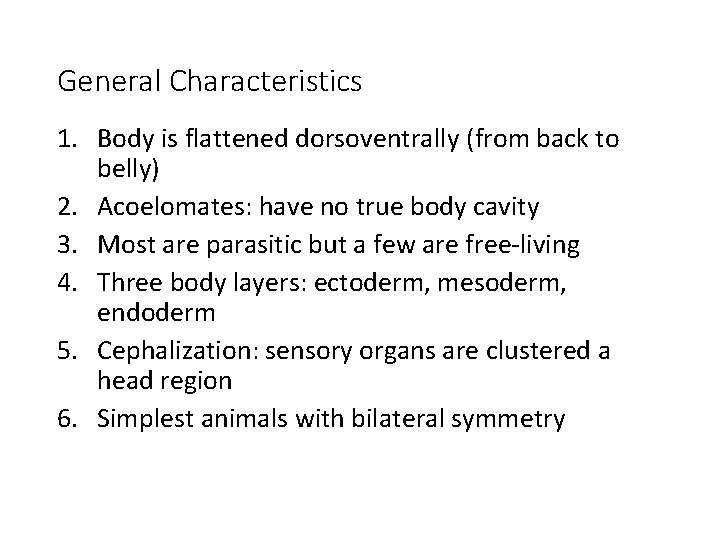
General Characteristics 1. Body is flattened dorsoventrally (from back to belly) 2. Acoelomates: have no true body cavity 3. Most are parasitic but a few are free-living 4. Three body layers: ectoderm, mesoderm, endoderm 5. Cephalization: sensory organs are clustered a head region 6. Simplest animals with bilateral symmetry
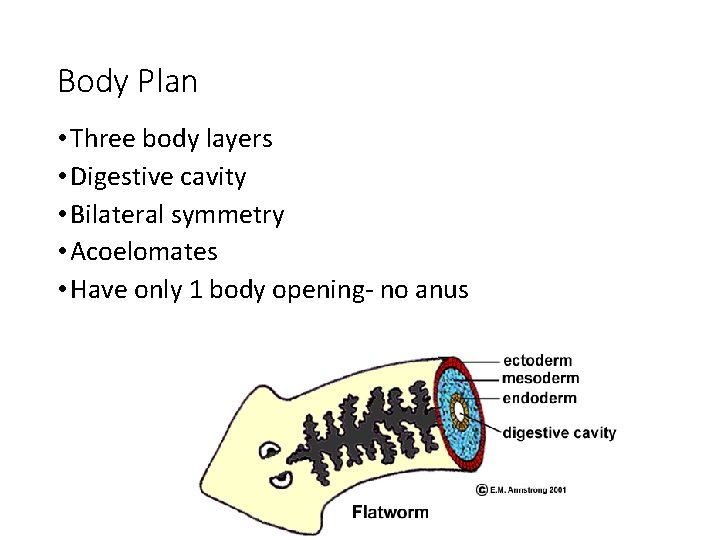
Body Plan • Three body layers • Digestive cavity • Bilateral symmetry • Acoelomates • Have only 1 body opening- no anus
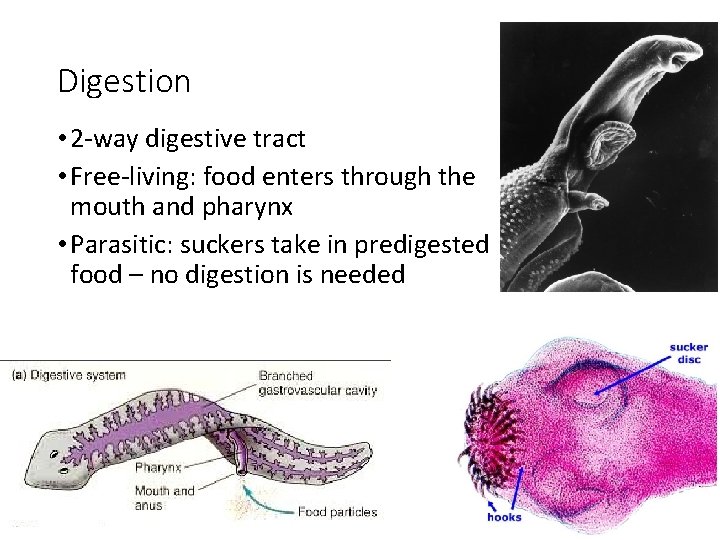
Digestion • 2 -way digestive tract • Free-living: food enters through the mouth and pharynx • Parasitic: suckers take in predigested food – no digestion is needed
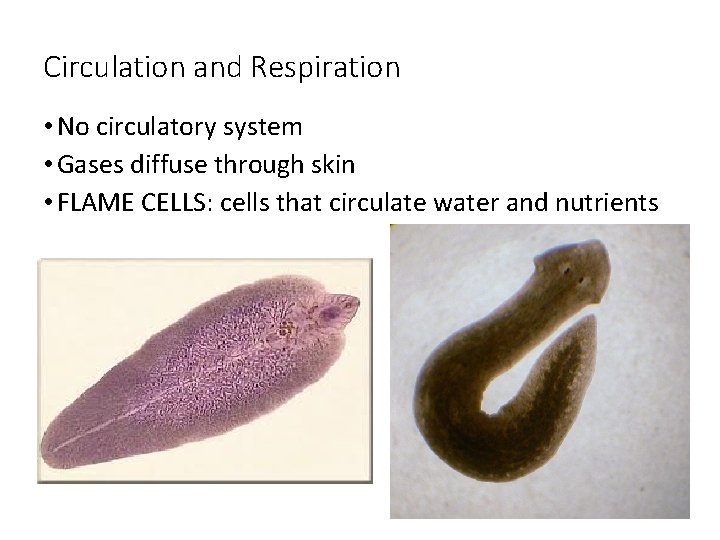
Circulation and Respiration • No circulatory system • Gases diffuse through skin • FLAME CELLS: cells that circulate water and nutrients
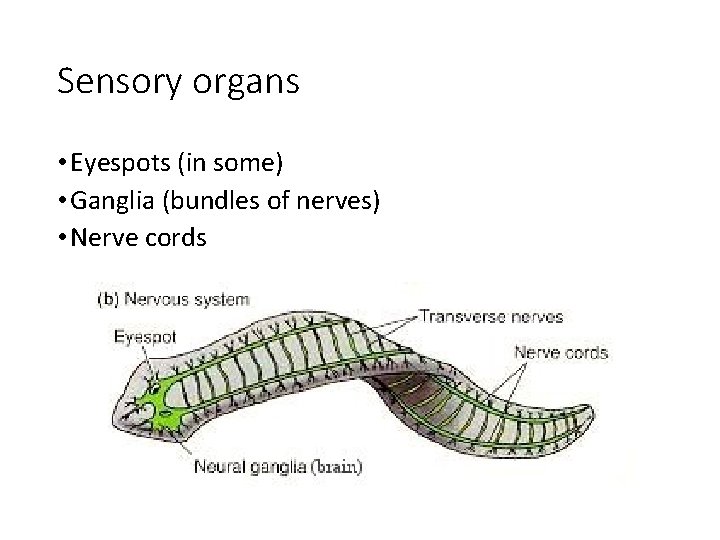
Sensory organs • Eyespots (in some) • Ganglia (bundles of nerves) • Nerve cords
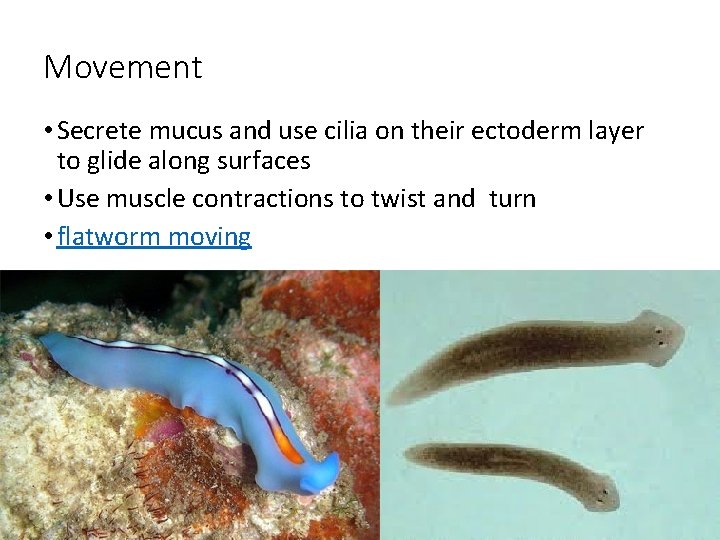
Movement • Secrete mucus and use cilia on their ectoderm layer to glide along surfaces • Use muscle contractions to twist and turn • flatworm moving
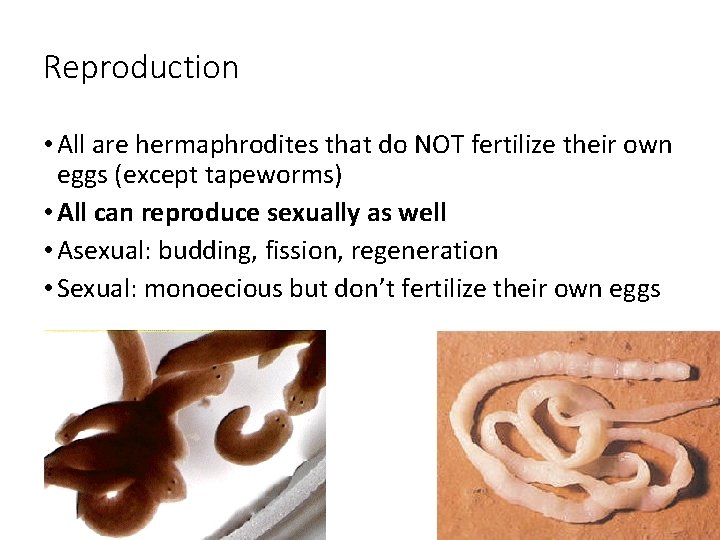
Reproduction • All are hermaphrodites that do NOT fertilize their own eggs (except tapeworms) • All can reproduce sexually as well • Asexual: budding, fission, regeneration • Sexual: monoecious but don’t fertilize their own eggs
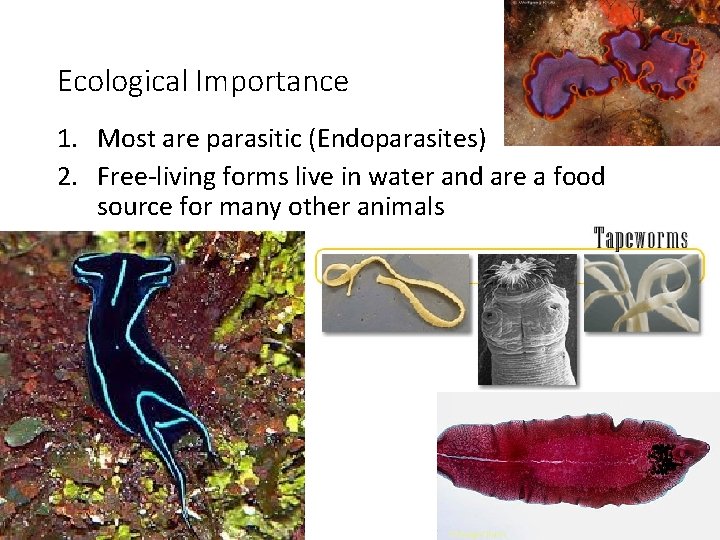
Ecological Importance 1. Most are parasitic (Endoparasites) 2. Free-living forms live in water and are a food source for many other animals
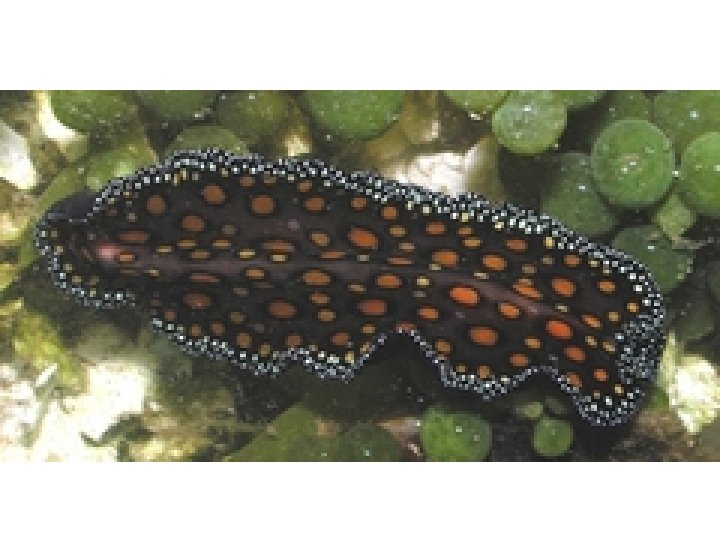
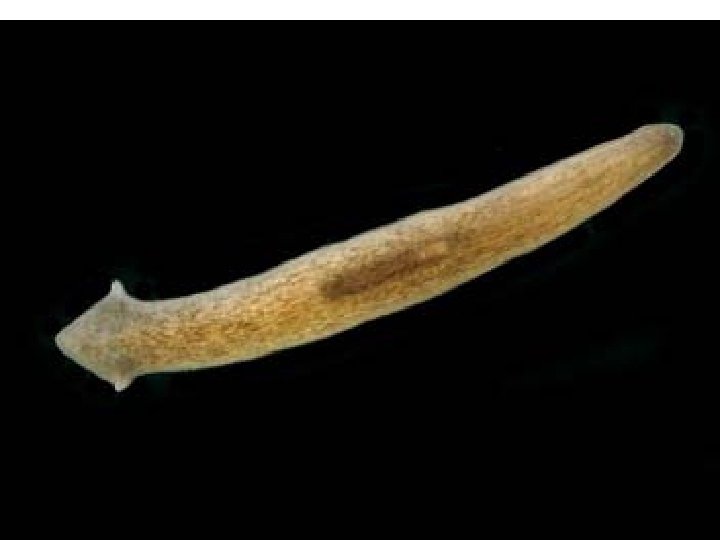
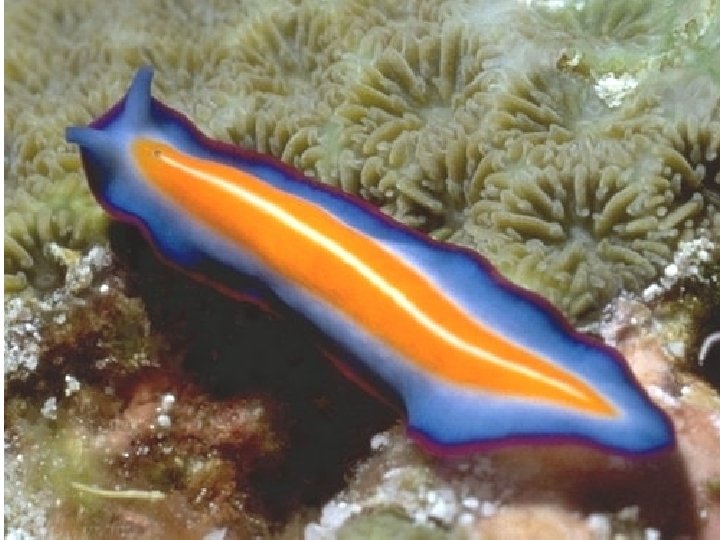
Class Turbellaria • Planarians and marine flatworms • All are free-living • Live in all water environments (lakes, ponds, oceans etc. ) • Planarians worlds weirdest
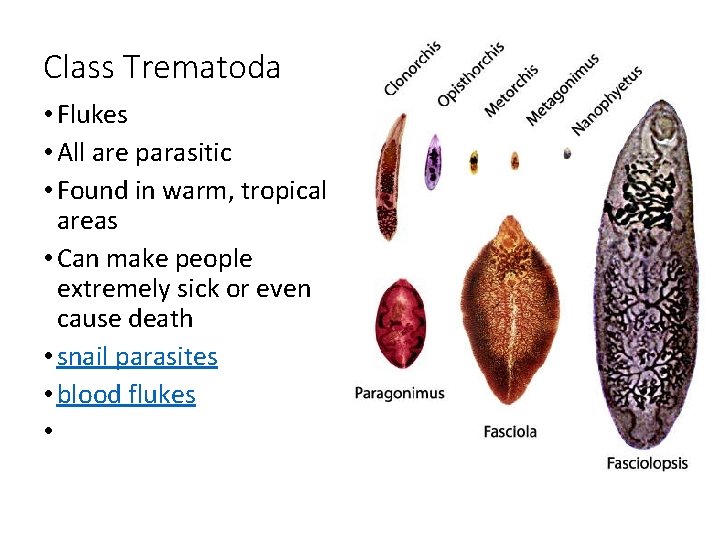
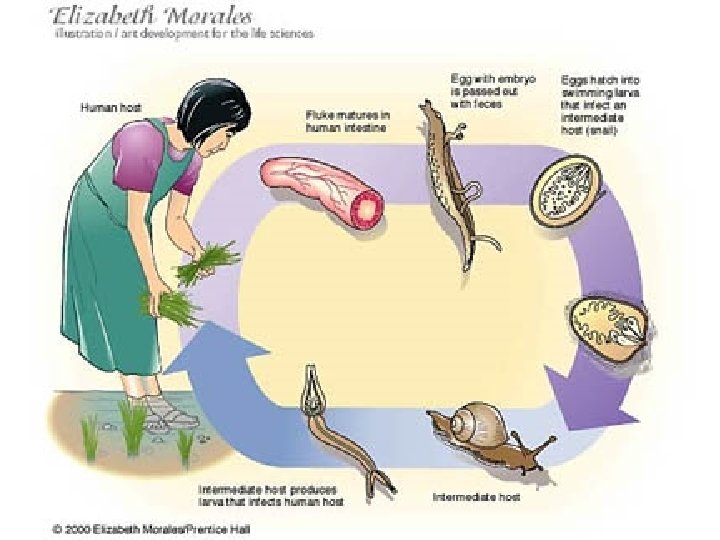
Class Trematoda • Flukes • All are parasitic • Found in warm, tropical areas • Can make people extremely sick or even cause death • snail parasites • blood flukes •
Intestinal fluke
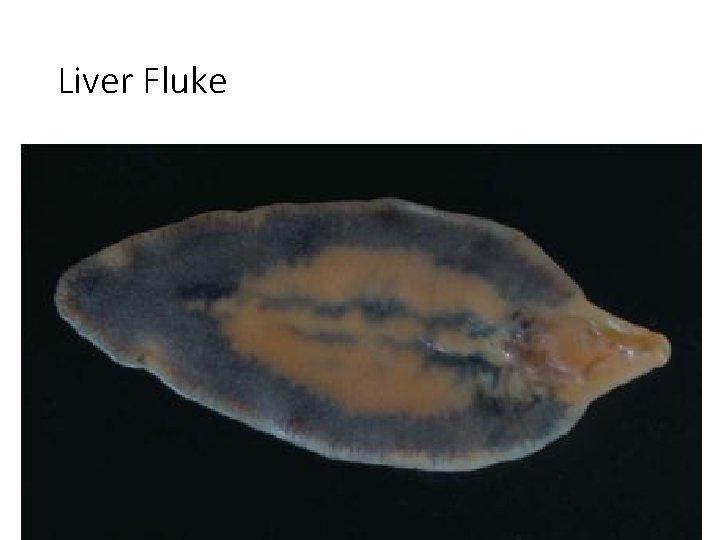
Liver Fluke
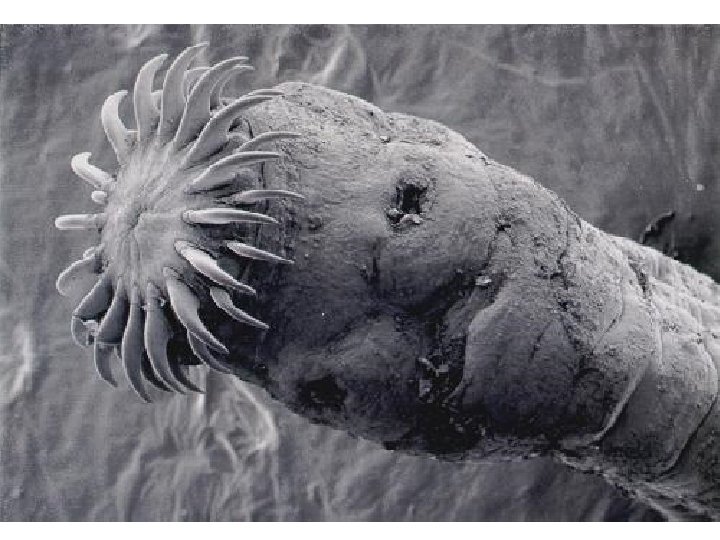
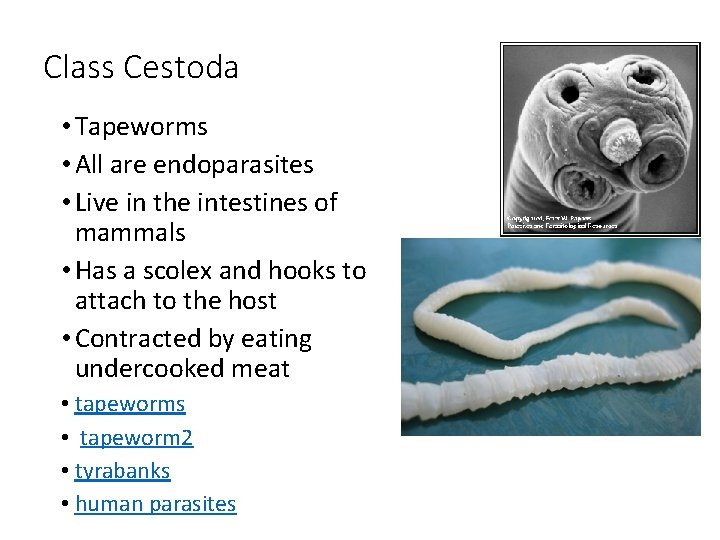
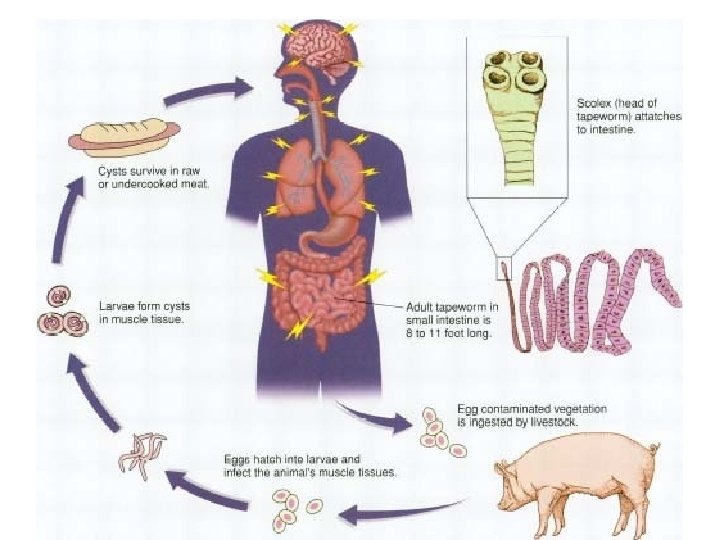
Class Cestoda • Tapeworms • All are endoparasites • Live in the intestines of mammals • Has a scolex and hooks to attach to the host • Contracted by eating undercooked meat • tapeworms • tapeworm 2 • tyrabanks • human parasites
Videos • parasites in fish • parasite in eye • Platyhelminthes • mind controlling parasites