Notes on PlayWriting For your final Creative Writing
- Slides: 12
Notes on Play-Writing For your final Creative Writing project
Your final project: a one-act play! Today we’ll discuss… • What makes a play different than a book or story • How a play uses stage directions and props to establish setting • How to use a plot diagram • How a play is divided into Acts and Scenes • How a play uses indirect characterization
What makes a play different than a book or story? o _________! We learn about characters by what they say and how they interact with other characters. o Includes _________to tell us what the characters are doing, and how they should say their lines o Told in __________, instead of past tense o We only know characters’ _____________if they talk about them.
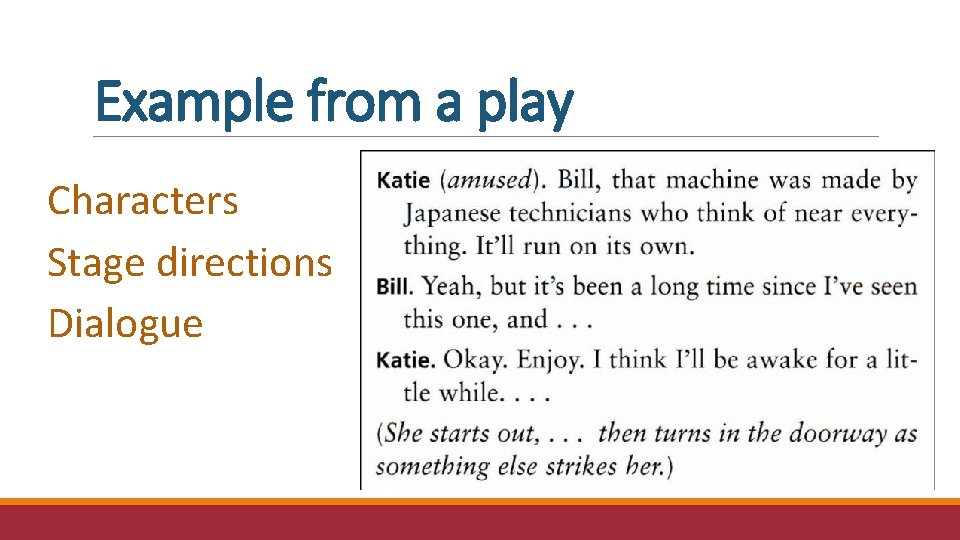
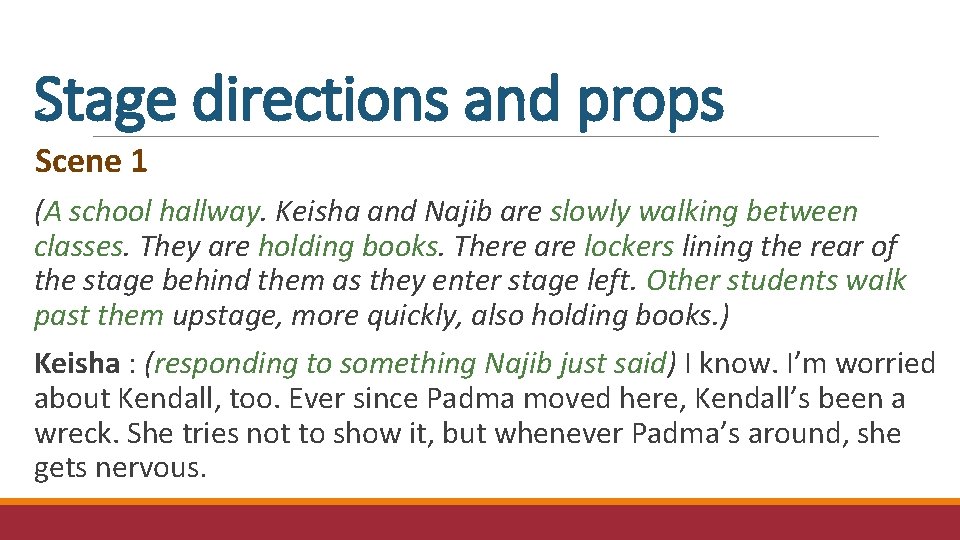
Example from a play Characters Stage directions Dialogue
Stage directions and props Scene 1 (A school hallway. Keisha and Najib are slowly walking between classes. They are holding books. There are lockers lining the rear of the stage behind them as they enter stage left. Other students walk past them upstage, more quickly, also holding books. ) Keisha : (responding to something Najib just said) I know. I’m worried about Kendall, too. Ever since Padma moved here, Kendall’s been a wreck. She tries not to show it, but whenever Padma’s around, she gets nervous.
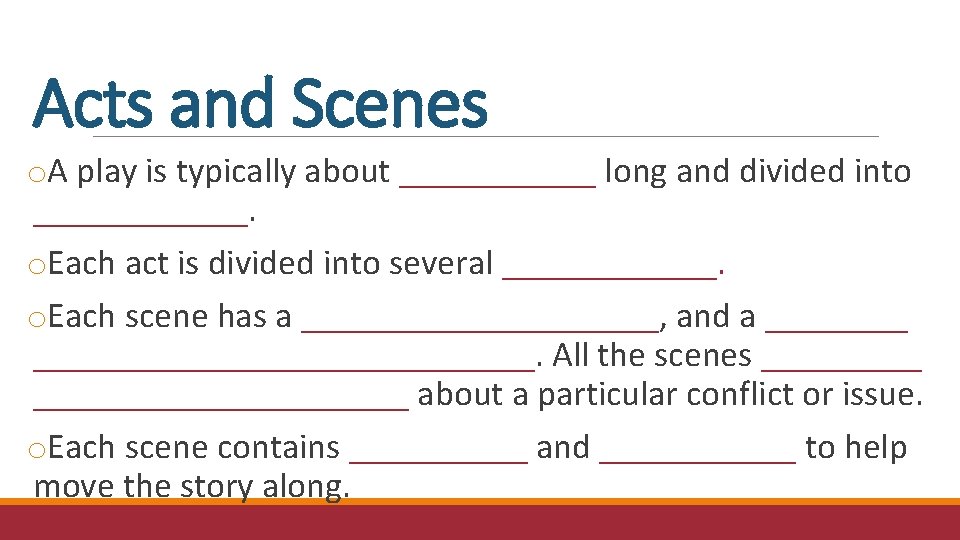
Acts and Scenes o. A play is typically about ______ long and divided into ______. o. Each act is divided into several ______. o. Each scene has a __________, and a __________________. All the scenes _______________ about a particular conflict or issue. o. Each scene contains _____ and ______ to help move the story along.
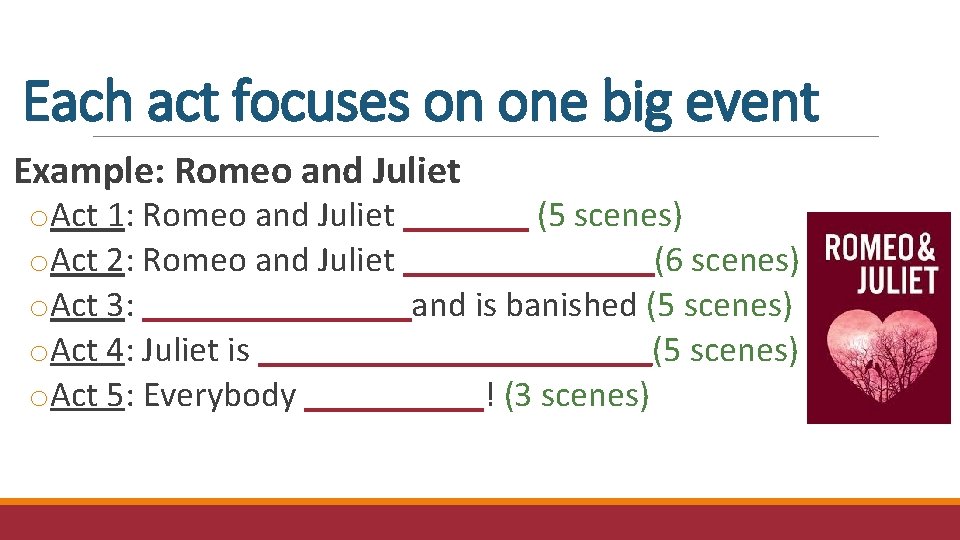
Each act focuses on one big event Example: Romeo and Juliet o. Act 1: Romeo and Juliet _______ (5 scenes) o. Act 2: Romeo and Juliet _______(6 scenes) o. Act 3: ________and is banished (5 scenes) o. Act 4: Juliet is ___________(5 scenes) o. Act 5: Everybody _____! (3 scenes)
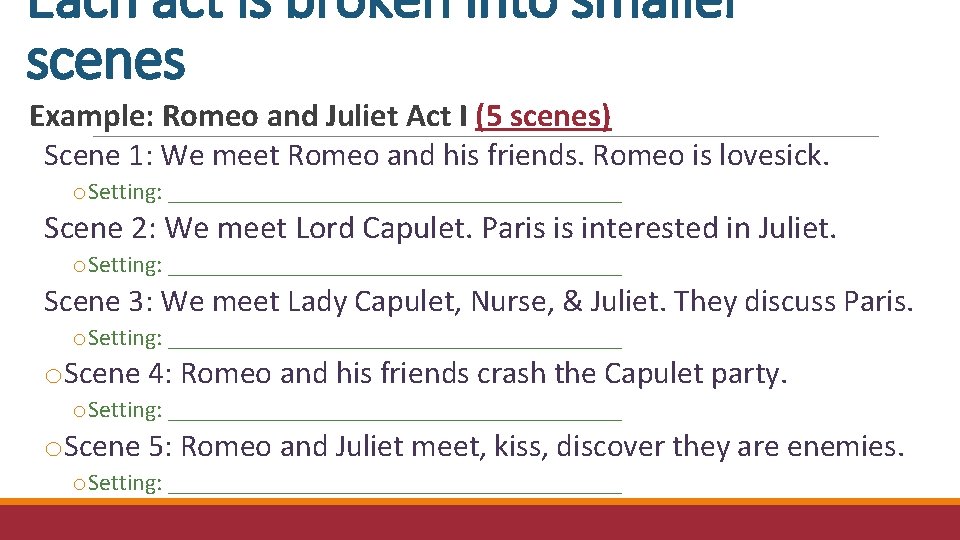
Each act is broken into smaller scenes Example: Romeo and Juliet Act I (5 scenes) Scene 1: We meet Romeo and his friends. Romeo is lovesick. o. Setting: ___________________ Scene 2: We meet Lord Capulet. Paris is interested in Juliet. o. Setting: ___________________ Scene 3: We meet Lady Capulet, Nurse, & Juliet. They discuss Paris. o. Setting: ___________________ o. Scene 4: Romeo and his friends crash the Capulet party. o. Setting: ___________________ o. Scene 5: Romeo and Juliet meet, kiss, discover they are enemies. o. Setting: ___________________
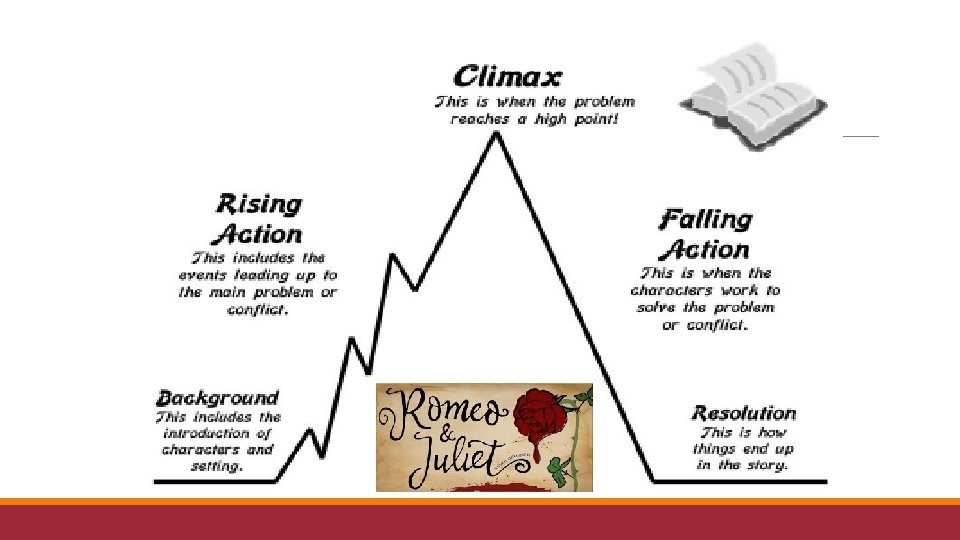
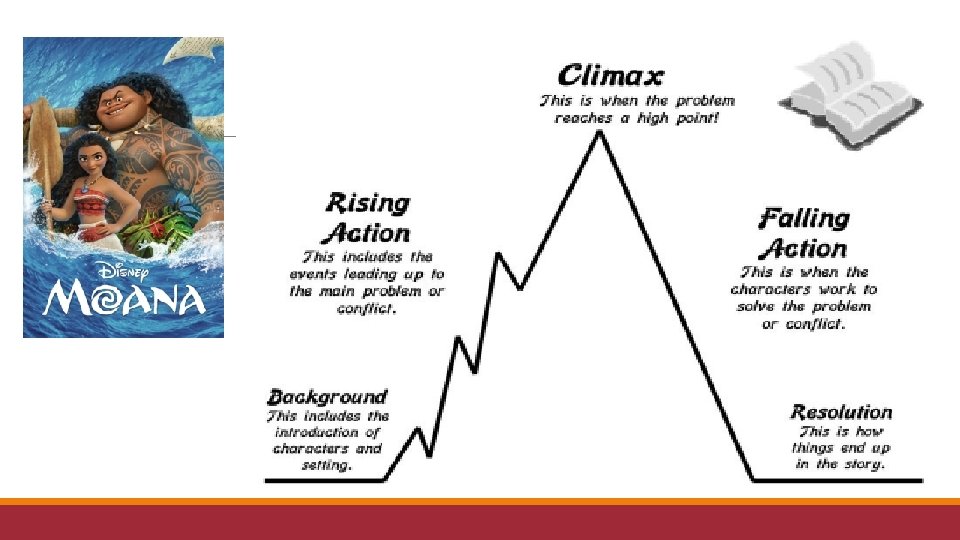
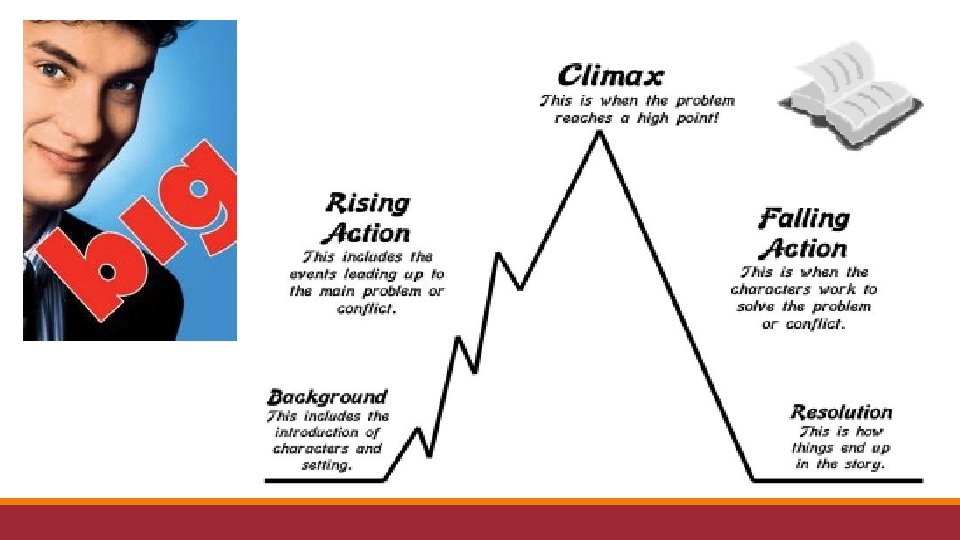
To review… 1. Your final project is to write a one-act play! It should focus on one specific event, but can have several scenes to help tell the story. 2. Your play must rely on dialogue and stage directions (no narrator) to tell an interesting story 3. Your play must follow a plot mountain with background, rising action, a climax, falling action, and resolution.