Notes for Anglo Saxon Poetry The Wanderer ELEGY
- Slides: 7
Notes for Anglo Saxon Poetry “The Wanderer”
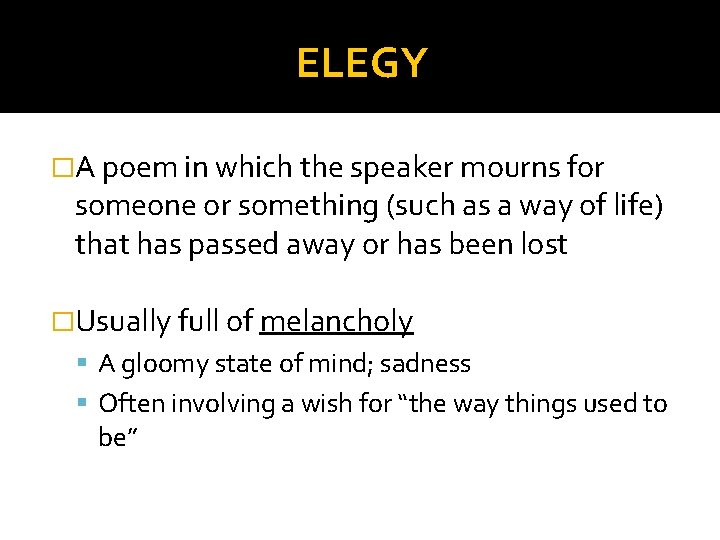
ELEGY �A poem in which the speaker mourns for someone or something (such as a way of life) that has passed away or has been lost �Usually full of melancholy A gloomy state of mind; sadness Often involving a wish for “the way things used to be”
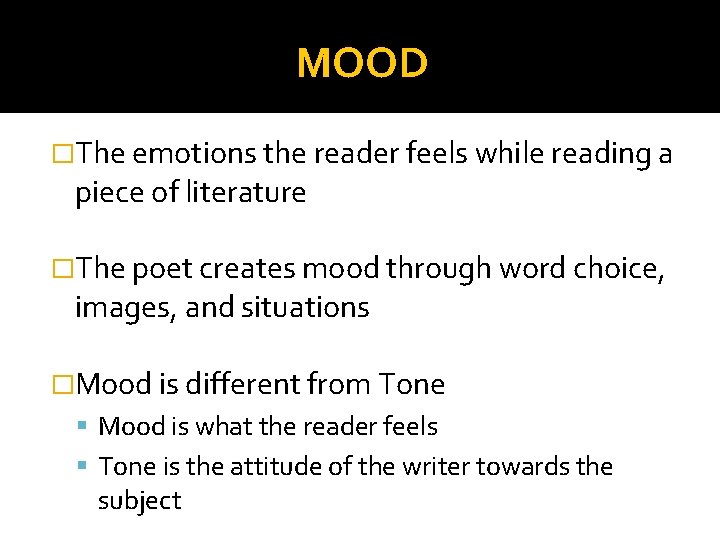
MOOD �The emotions the reader feels while reading a piece of literature �The poet creates mood through word choice, images, and situations �Mood is different from Tone Mood is what the reader feels Tone is the attitude of the writer towards the subject
IMAGERY �The mental pictures created by a piece of writing �Created by appealing to the reader’s senses �Can include, but not limited to metaphors, similes, personification
PAGANISM v. CHRISTIANITY �Anglo Saxon pagans believed in wyrd – Old English term for Fate Life was harsh and difficult – death was the only sure thing Honored the warriors whose fate it was to die in battle � 300 -600 a. d. – Christianity spread through Britain Gave people hope for something after life Suffering on Earth followed by eternal happiness in Heaven �Shift between ideas seen in poetry – co-exist
COMITATUS �a society or brotherhood of men who owed allegiance to a chieftain and expected his benevolence in return Allegiance – dedication Benevolence – kindness and favor
COMITATUS �Tribes were led by Chieftains �Thanes/Warriors served the Chieftain, and were rewarded and made a part of the society �A warrior without a society and a chieftain was VERY ALONE – he craves someone to serve