NOMS Provisions for Extremist Offenders and those of

- Slides: 8
NOMS Provisions for Extremist Offenders and those of Concern Carys Keane Carys. Keane@noms. gsi. gov. uk National Specialist Lead for Extremist Offending (NOMS Interventions Services)
Presentation Overview • • What we know about Extremism Assessment Interventions Radicalisation
What does the evidence say in relation to Extremism? • No single explanation • Cross-government agencies - engagement, identification, intent and capability dimensions • Engagement is a process • Identity is central to the processes of engagement, identification and disengagement • Psychological processes involved in engagement and identification are similar across various forms of extremism • Individuals disengage through a process not dissimilar to that of engaging – by means of a gradual series of steps and commitments • Reflection, creating and exploring doubt, reviewing commitments, promoting positive aspects of identity all encourage desistance/disengagement • ‘What works’ literature has applicability e. g. Good Lives Model/Desistance Literature • Changing ideology alone is unlikely to work
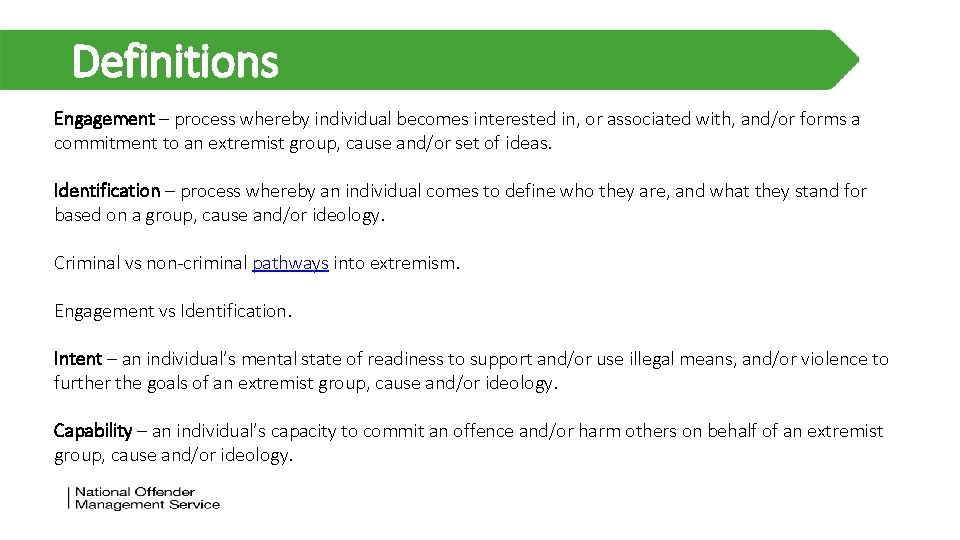
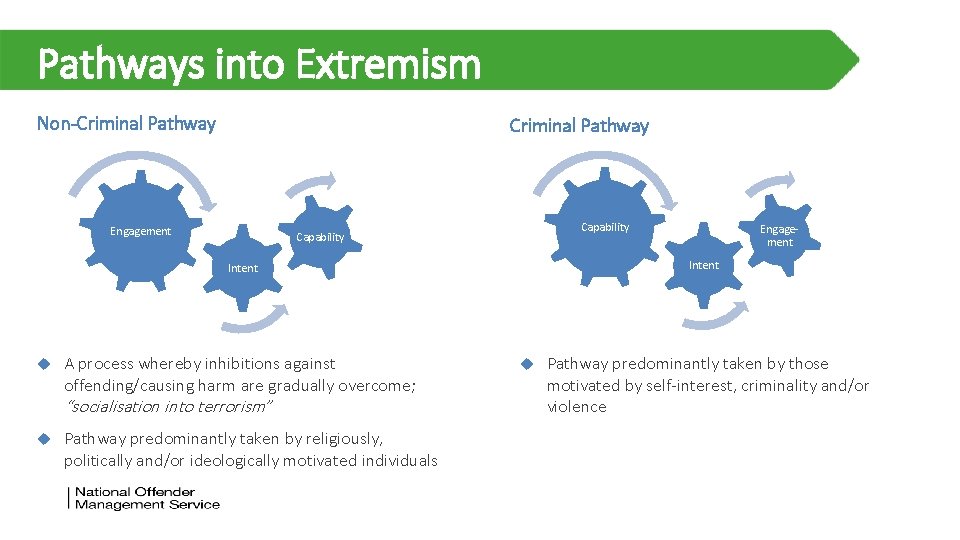
Definitions Engagement – process whereby individual becomes interested in, or associated with, and/or forms a commitment to an extremist group, cause and/or set of ideas. Identification – process whereby an individual comes to define who they are, and what they stand for based on a group, cause and/or ideology. Criminal vs non-criminal pathways into extremism. Engagement vs Identification. Intent – an individual’s mental state of readiness to support and/or use illegal means, and/or violence to further the goals of an extremist group, cause and/or ideology. Capability – an individual’s capacity to commit an offence and/or harm others on behalf of an extremist group, cause and/or ideology.
Pathways into Extremism Non-Criminal Pathway Engagement Capability Intent A process whereby inhibitions against offending/causing harm are gradually overcome; “socialisation into terrorism” Pathway predominantly taken by religiously, politically and/or ideologically motivated individuals Engagement Pathway predominantly taken by those motivated by self-interest, criminality and/or violence
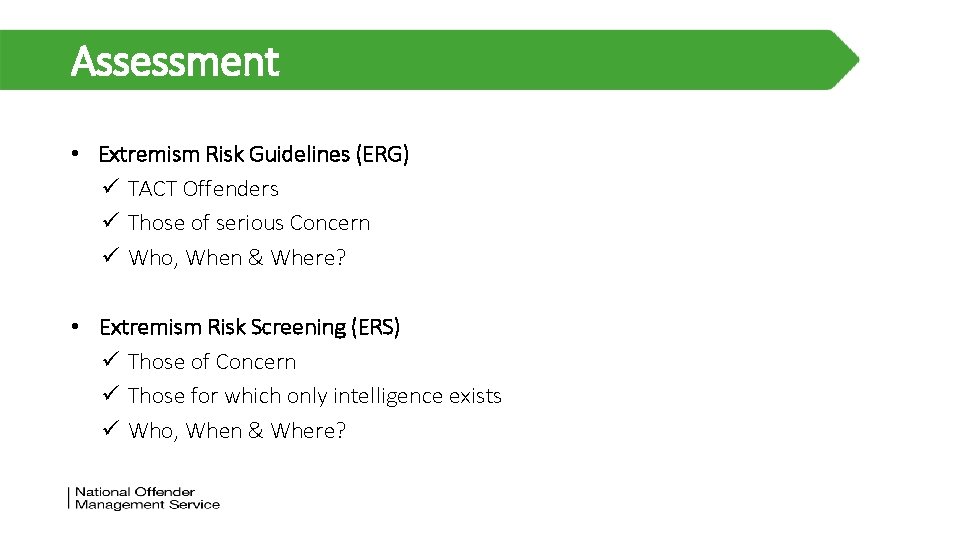
Assessment • Extremism Risk Guidelines (ERG) ü TACT Offenders ü Those of serious Concern ü Who, When & Where? • Extremism Risk Screening (ERS) ü Those of Concern ü Those for which only intelligence exists ü Who, When & Where?
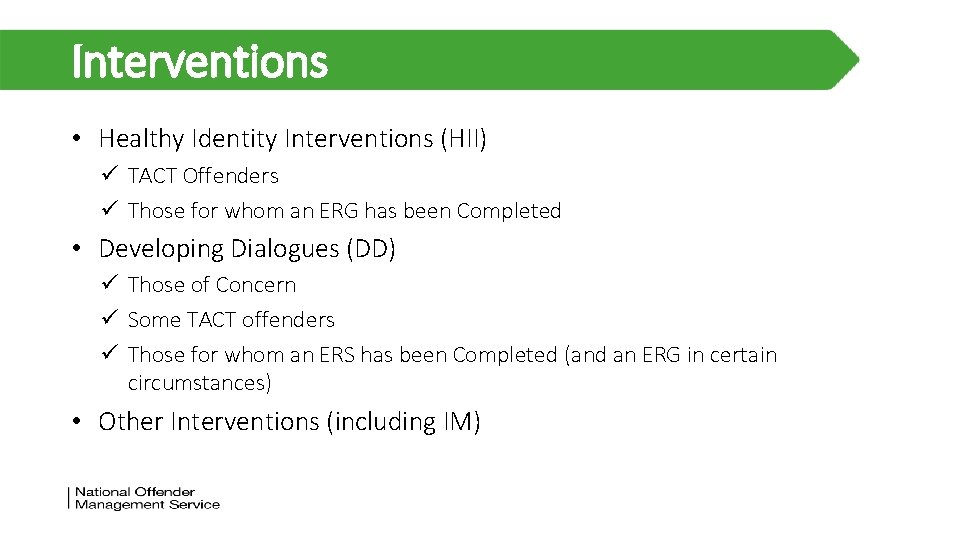
Interventions • Healthy Identity Interventions (HII) ü TACT Offenders ü Those for whom an ERG has been Completed • Developing Dialogues (DD) ü Those of Concern ü Some TACT offenders ü Those for whom an ERS has been Completed (and an ERG in certain circumstances) • Other Interventions (including IM)
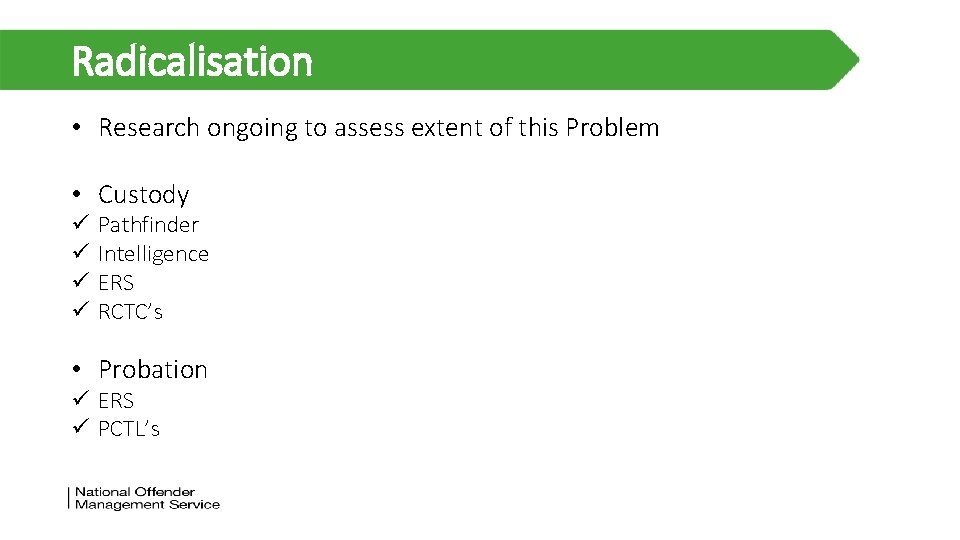
Radicalisation • Research ongoing to assess extent of this Problem • Custody ü ü Pathfinder Intelligence ERS RCTC’s • Probation ü ERS ü PCTL’s