NOMA 1 Single Carrier NOMA 1 PowerDomain NOMA



- Slides: 17
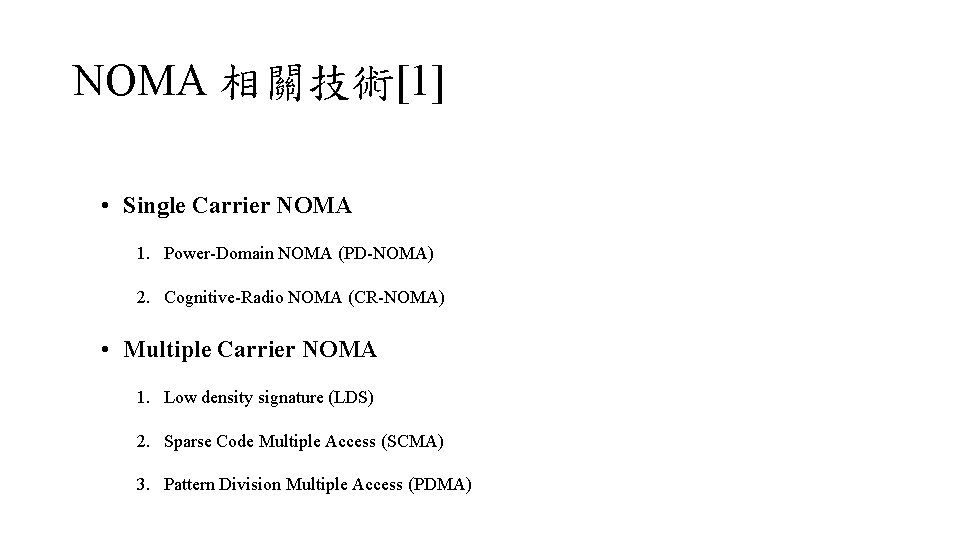
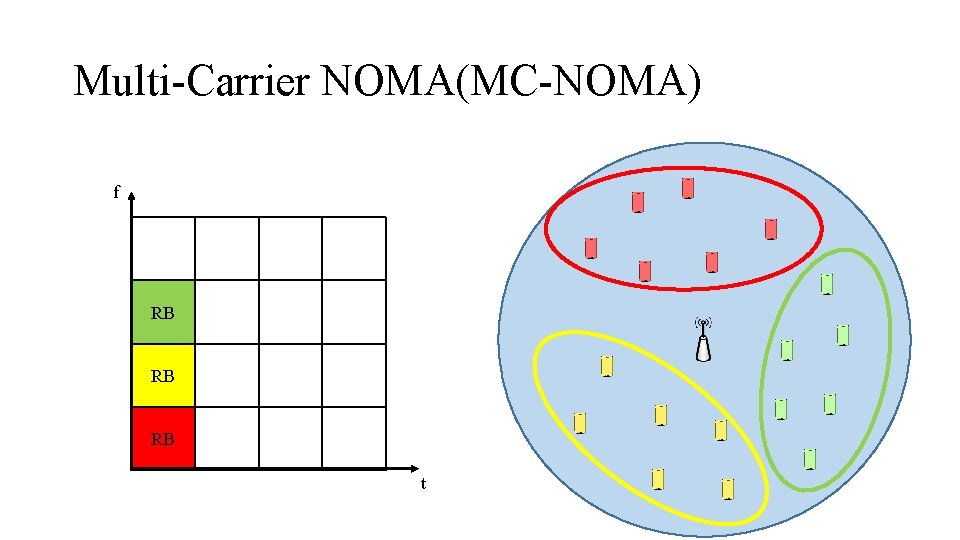
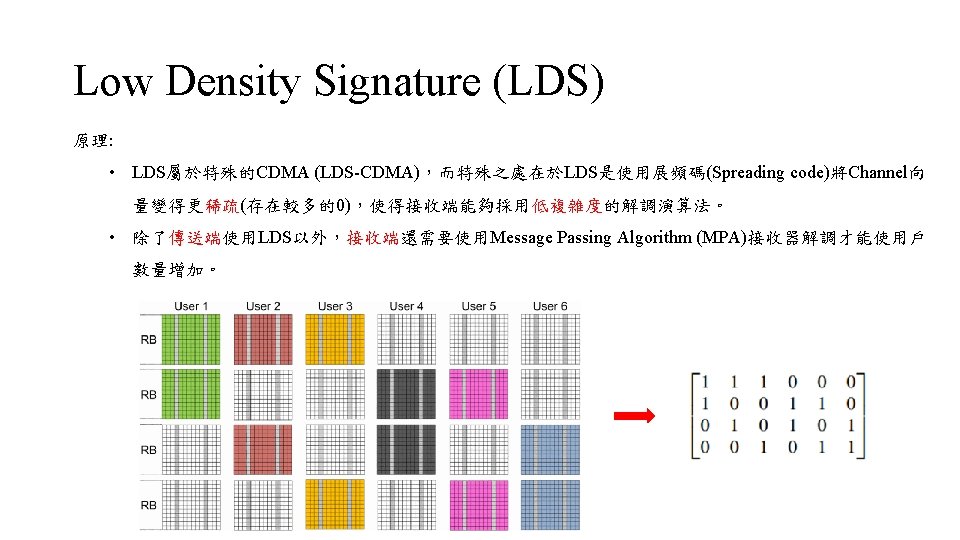
NOMA 相關技術[1] • Single Carrier NOMA 1. Power-Domain NOMA (PD-NOMA) 2. Cognitive-Radio NOMA (CR-NOMA) • Multiple Carrier NOMA 1. Low density signature (LDS) 2. Sparse Code Multiple Access (SCMA) 3. Pattern Division Multiple Access (PDMA)
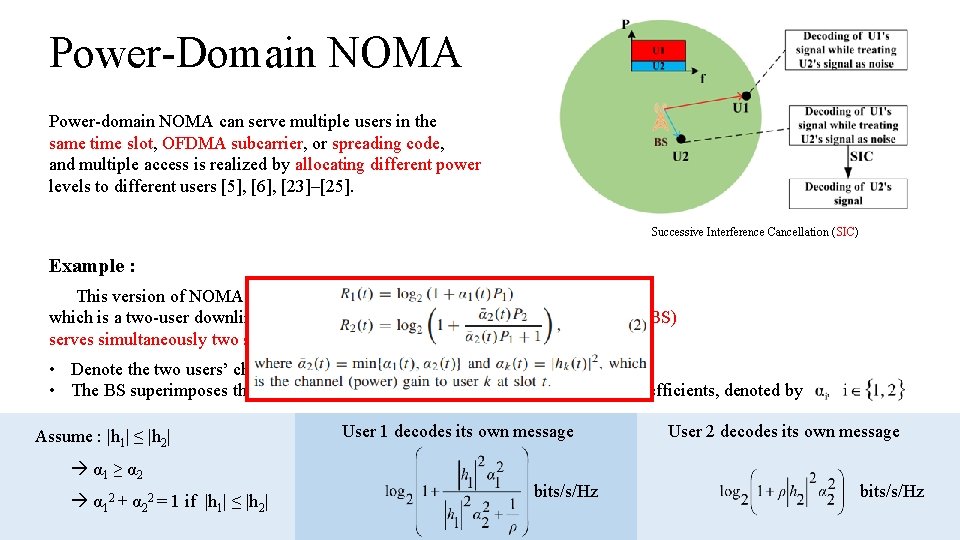
Power-Domain NOMA Power-domain NOMA can serve multiple users in the same time slot, OFDMA subcarrier, or spreading code, and multiple access is realized by allocating different power levels to different users [5], [6], [23]–[25]. Successive Interference Cancellation (SIC) Example : This version of NOMA is MUST(Multi-User Superposition transmission), which is a two-user downlink power-domain NOMA scheme, where a base station(BS) serves simultaneously two single-antenna users at the same OFDMA subcarrier. • Denote the two users’ channels by • The BS superimposes the users’ messages by assigning corresponding power coefficients, denoted by Assume : |h 1| ≤ |h 2| α 1 ≥ α 2 α 12 + α 22 = 1 if |h 1| ≤ |h 2| User 1 decodes its own message bits/s/Hz User 2 decodes its own message bits/s/Hz
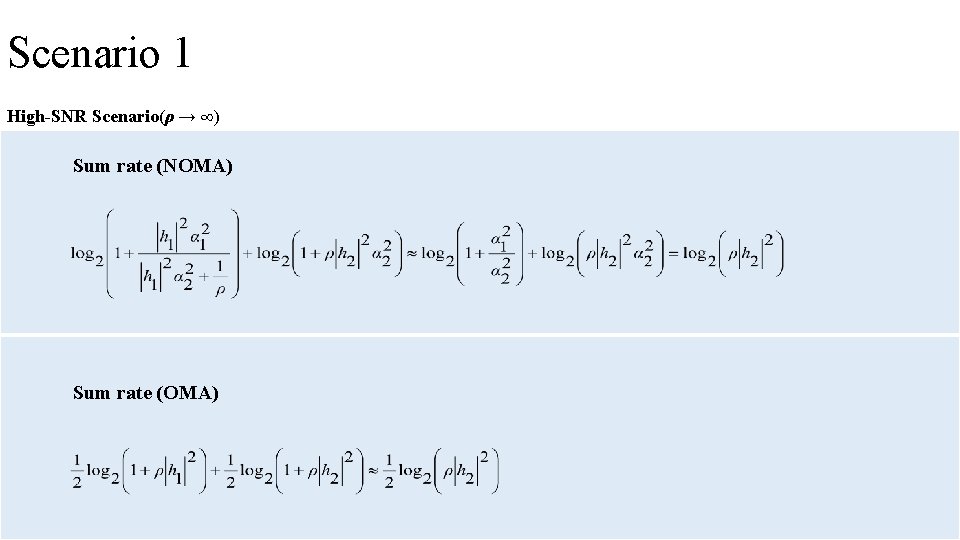
Scenario 1 High-SNR Scenario(ρ → ∞) Sum rate (NOMA) Sum rate (OMA)
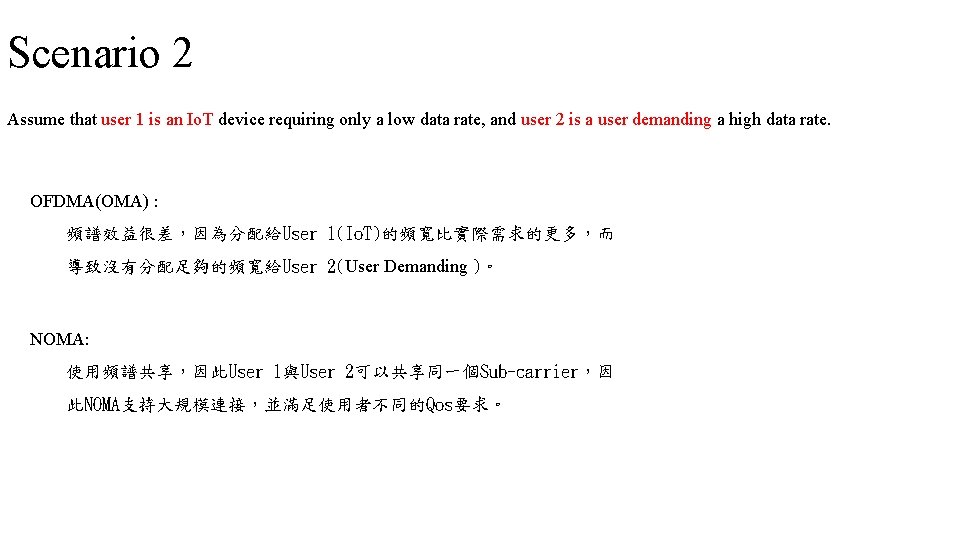
Scenario 2 Assume that user 1 is an Io. T device requiring only a low data rate, and user 2 is a user demanding a high data rate. OFDMA(OMA) : 頻譜效益很差,因為分配給User 1(Io. T)的頻寬比實際需求的更多,而 導致沒有分配足夠的頻寬給User 2(User Demanding )。 NOMA: 使用頻譜共享,因此User 1與User 2可以共享同一個Sub-carrier,因 此NOMA支持大規模連接,並滿足使用者不同的Qos要求。
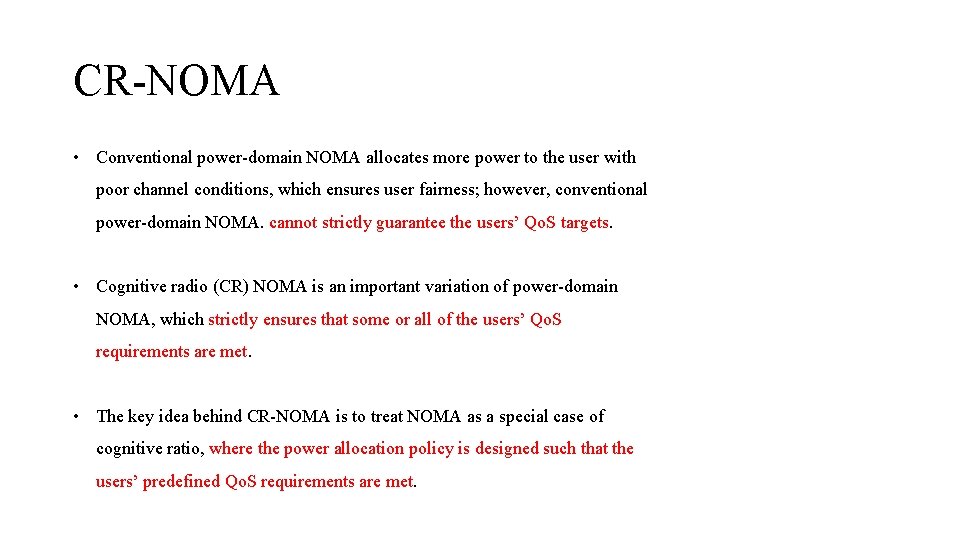
CR-NOMA • Conventional power-domain NOMA allocates more power to the user with poor channel conditions, which ensures user fairness; however, conventional power-domain NOMA. cannot strictly guarantee the users’ Qo. S targets. • Cognitive radio (CR) NOMA is an important variation of power-domain NOMA, which strictly ensures that some or all of the users’ Qo. S requirements are met. • The key idea behind CR-NOMA is to treat NOMA as a special case of cognitive ratio, where the power allocation policy is designed such that the users’ predefined Qo. S requirements are met.
Multi-Carrier NOMA(MC-NOMA) f RB RB RB t
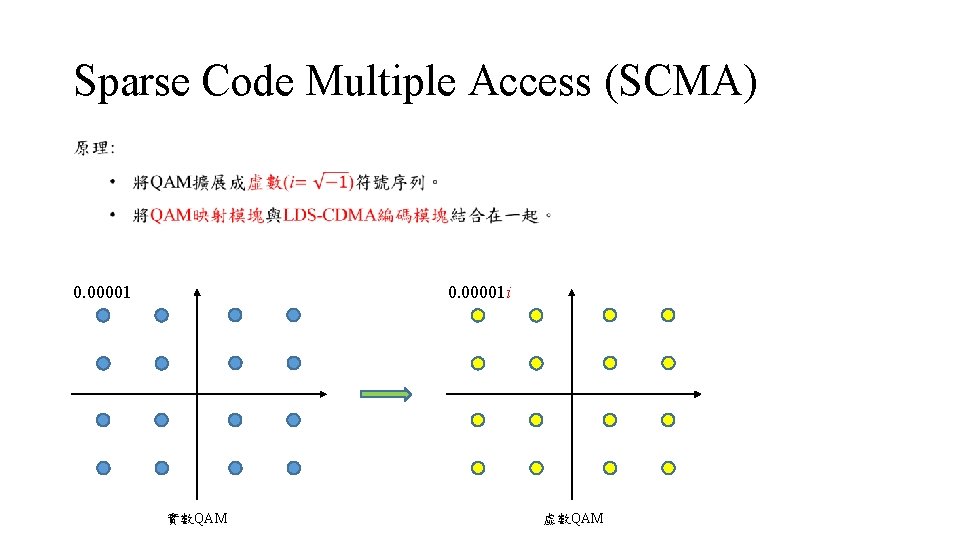
Sparse Code Multiple Access (SCMA) 0. 00001 i 實數QAM 虛數QAM
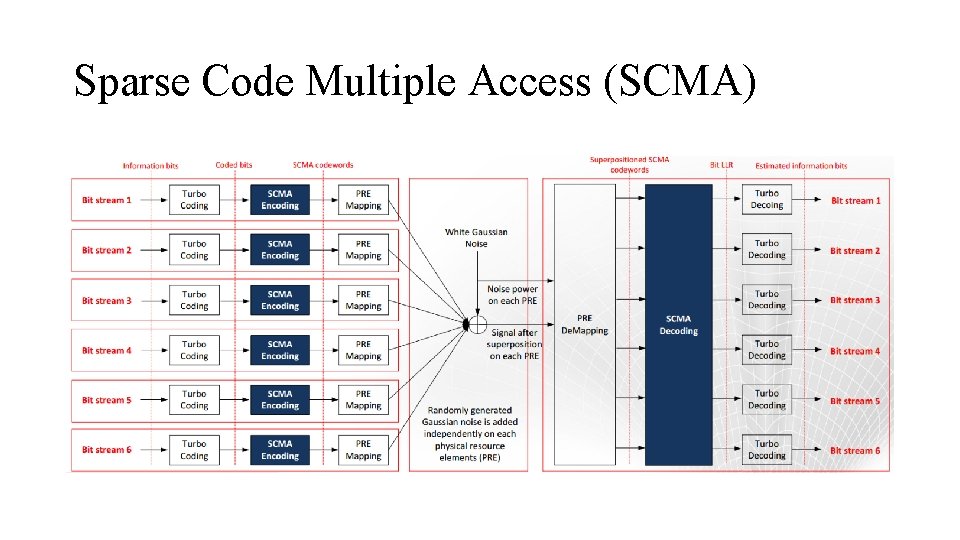
Sparse Code Multiple Access (SCMA)
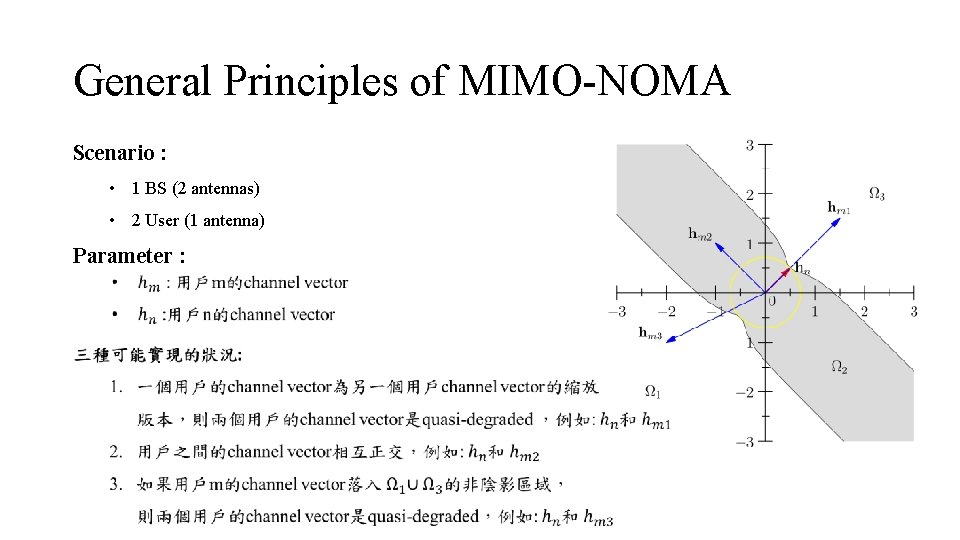
General Principles of MIMO-NOMA Scenario : • 1 BS (2 antennas) • 2 User (1 antenna) Parameter :
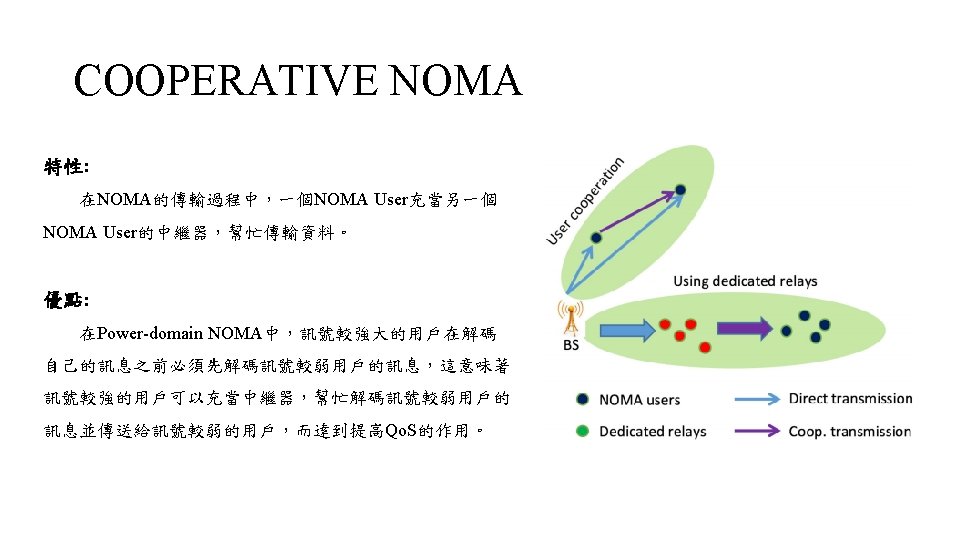
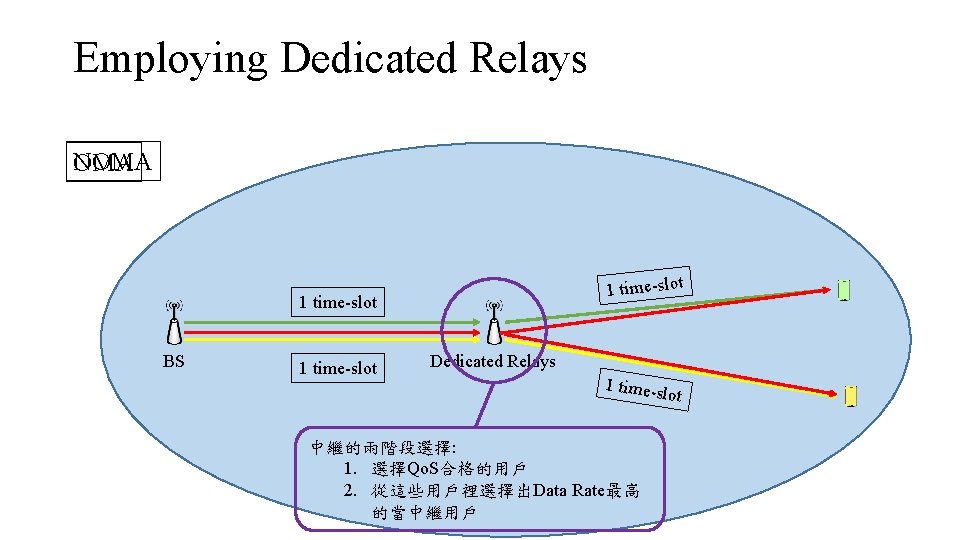
Employing Dedicated Relays NOMA 1 time-slot BS 1 time-slot Dedicated Relays 1 time-s lot 中繼的兩階段選擇: 1. 選擇Qo. S合格的用戶 2. 從這些用戶裡選擇出Data Rate最高 的當中繼用戶
參考文獻 [1] Z. Ding, X. Lei, G. Karagiannidis, R. Schober, J. Yuan and V. Bhargava, “A Survey on Non-Orthogonal Multiple Access for 5 G Networks: Research Challenges and Future Trends, ” IEEE Journal on Selected Areas in Communications, Vol. 35, no. 10, pp. 2181 -2195, Oct. 2017.