n n n 1 2 3 What isof
- Slides: 15
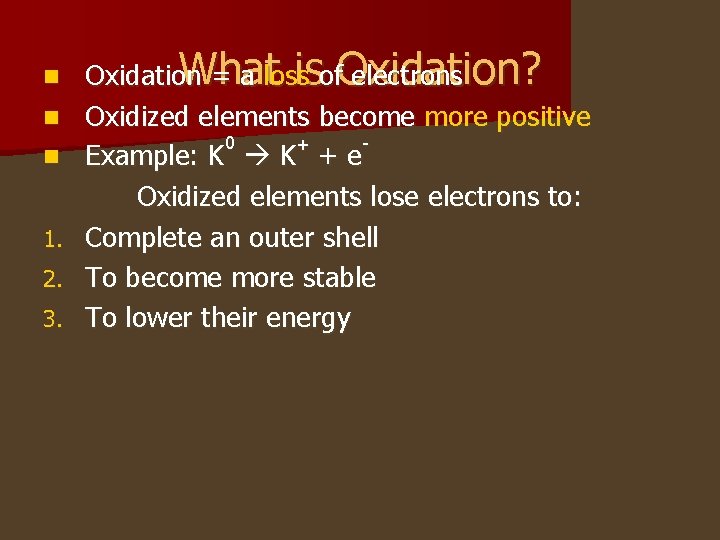
n n n 1. 2. 3. What isof. Oxidation? Oxidation = a loss electrons Oxidized elements become more positive 0 + Example: K K + e Oxidized elements lose electrons to: Complete an outer shell To become more stable To lower their energy
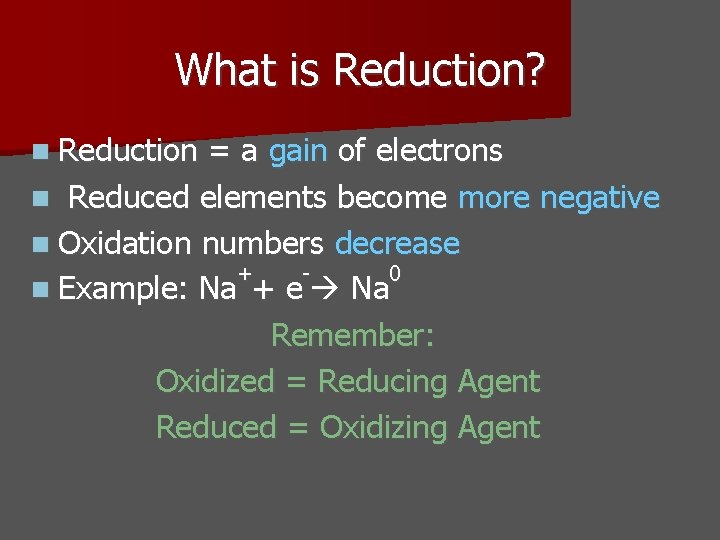
What is Reduction? n Reduction = a gain of electrons n Reduced elements become more negative n Oxidation numbers decrease + 0 n Example: Na + e Na Remember: Oxidized = Reducing Agent Reduced = Oxidizing Agent
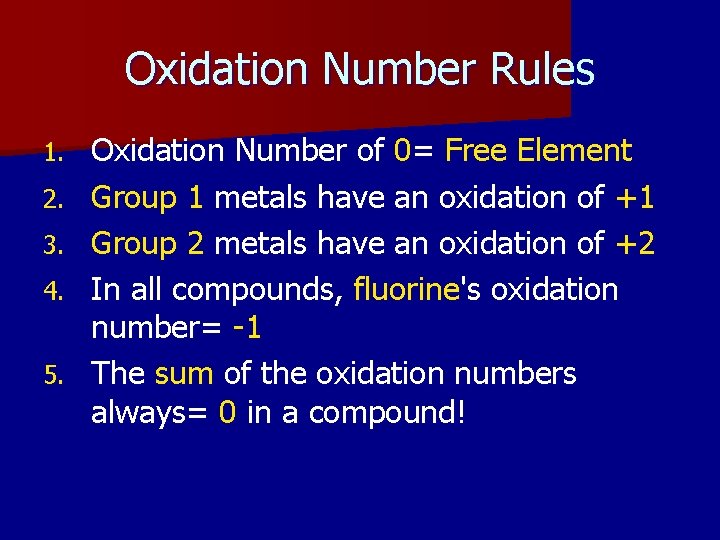
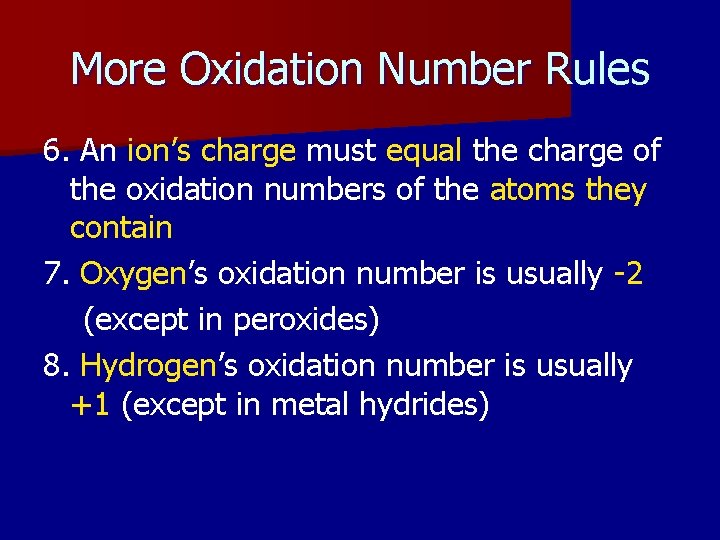
Oxidation Number Rules 1. 2. 3. 4. 5. Oxidation Number of 0= Free Element Group 1 metals have an oxidation of +1 Group 2 metals have an oxidation of +2 In all compounds, fluorine's oxidation number= -1 The sum of the oxidation numbers always= 0 in a compound!
More Oxidation Number Rules 6. An ion’s charge must equal the charge of the oxidation numbers of the atoms they contain 7. Oxygen’s oxidation number is usually -2 (except in peroxides) 8. Hydrogen’s oxidation number is usually +1 (except in metal hydrides)
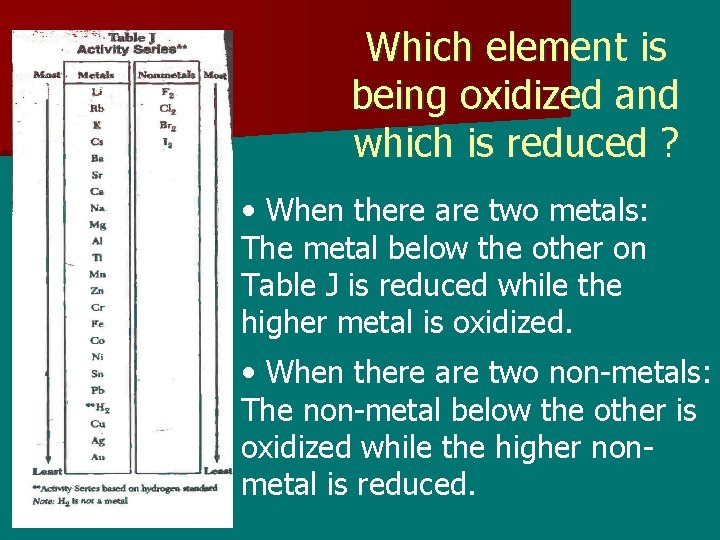
Which element is being oxidized and which is reduced ? • When there are two metals: The metal below the other on Table J is reduced while the higher metal is oxidized. • When there are two non-metals: The non-metal below the other is oxidized while the higher nonmetal is reduced.
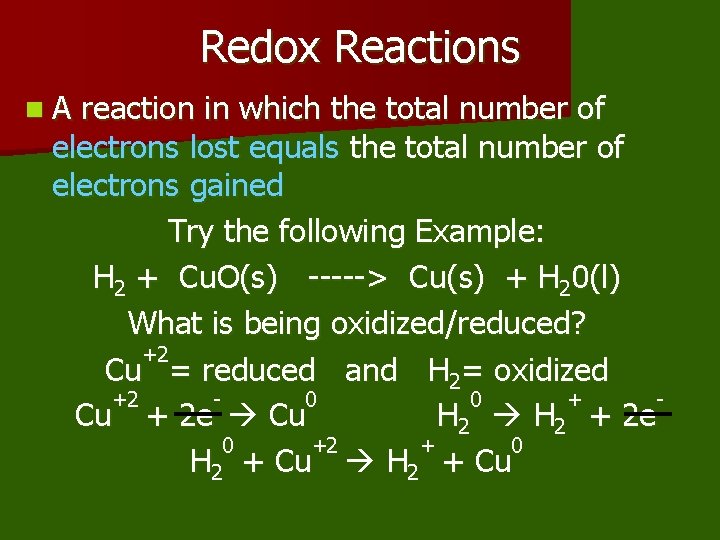
Redox Reactions n. A reaction in which the total number of electrons lost equals the total number of electrons gained Try the following Example: H 2 + Cu. O(s) -----> Cu(s) + H 20(l) What is being oxidized/reduced? +2 Cu = reduced and H 2= oxidized +2 0 0 + Cu + 2 e Cu H 2 + 2 e 0 +2 + 0 H 2 + Cu
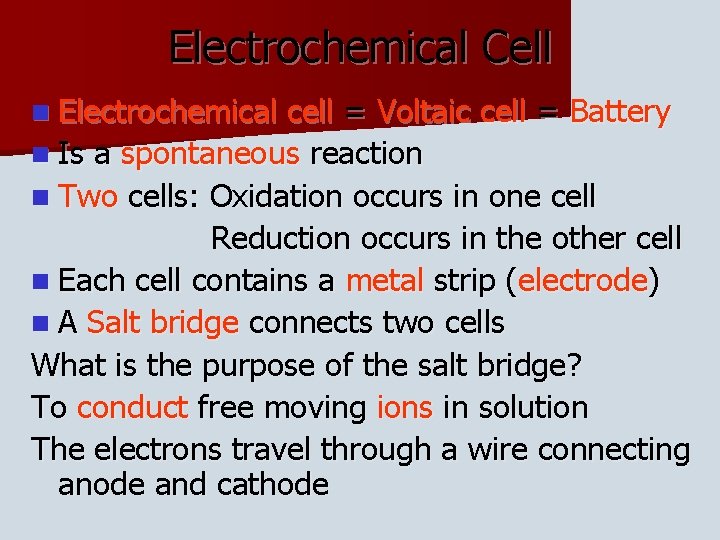
Electrochemical Cell n Electrochemical cell = Voltaic cell = Battery n Is a spontaneous reaction n Two cells: Oxidation occurs in one cell Reduction occurs in the other cell n Each cell contains a metal strip (electrode) n A Salt bridge connects two cells What is the purpose of the salt bridge? To conduct free moving ions in solution The electrons travel through a wire connecting anode and cathode
Electrochemical Cell (continued) Anode: n The cell in which oxidation takes place n Electrons generated by oxidation half reaction n Electrons flow from anode n is negative
Electrochemical Cell (continued) Cathode: n The cell in which reduction takes place n Electrons accumulated and used to make reduction happen n Electrons flow to cathode n Is positive
Electrolytic Cell n Requires a battery to drive a nonspontaneous chemical reaction n One Cell: one metal strip on each side n Each side connected to one side of battery by a wire n Ions in solution flow to opposite charge
Electrolytic Cell (continued) Anode: n The cell in which oxidation takes place n Is positive n Negative ions attracted to anode n Electrons are produced here
Electrolytic Cell (continued) Cathode: n The cell in which reduction takes place n Is negative n Positive ions attracted to cathode n electrons supplied by battery to cathode
Electrochemical vs. Electrolytic Remember: 1. 2. 3. 4. Electrolytic requires battery, electrochemical is a battery Electrochemical requires salt bridge Electrolytic is one cell, electrochemical is two Electrolytic- anode=positive and cathode = negative Electrochemical- anode= negative and cathode= positive
Electroplating n Example of an electrolytic cell n Used to silver-coat a metal (usually silverware) n Silverware replaces cathode (negative) and receives electrons n Electrons combine with ions from solution to produce gold, silver, etc. on the spoon
Balancing Redox Equations n Step 1 - write the oxidation and reduction equations (make sure total charge = 0) n Step 2 - loss of electrons must equal gain of electrons (make number of electrons equivalent in both reactions; balance if necessary) n Step 3 - Cancel electrons and then add oxidation and reduction reactions