MNCs and TNs DIFFERENCE Definition MNCs TNCs A




- Slides: 7
MNCs and TNs DIFFERENCE
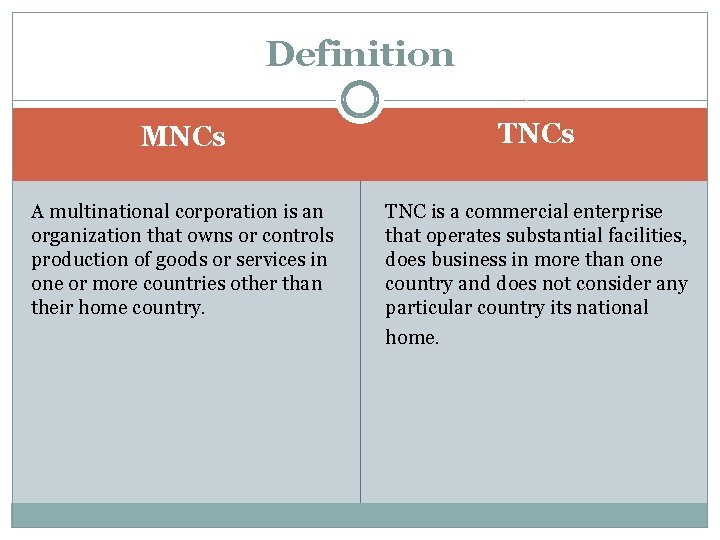
Definition MNCs TNCs A multinational corporation is an organization that owns or controls production of goods or services in one or more countries other than their home country. TNC is a commercial enterprise that operates substantial facilities, does business in more than one country and does not consider any particular country its national home.
Home Country MNCs � MNC has an international identity as belonging to a particular home country where they are headquartered. TNCs � A transnational company is borderless, as it does not consider any particular country as its base, home or headquarters. � Not all MNC’s are transnational companies. � Transnational corporations are a type of multinational corporations.
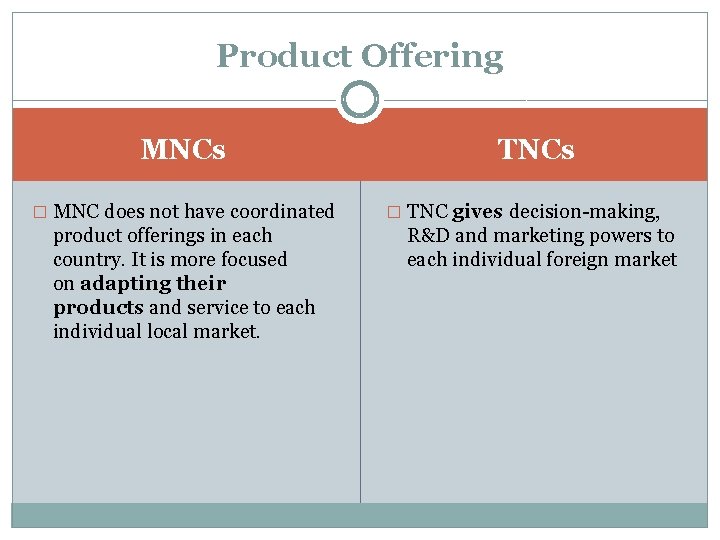
Product Offering MNCs � MNC does not have coordinated product offerings in each country. It is more focused on adapting their products and service to each individual local market. TNCs � TNC gives decision-making, R&D and marketing powers to each individual foreign market
Examples MNCs � Proctor & Gamble, Microsoft, Apple Inc, Hewlett Packard (HP), Nestle, Pepsi. Co, Sony Corporation, IBM etc. TNCs � General Electric, Royal Dutch, Ford Motor, Allianz, AXA, Exxon Mobil, etc.
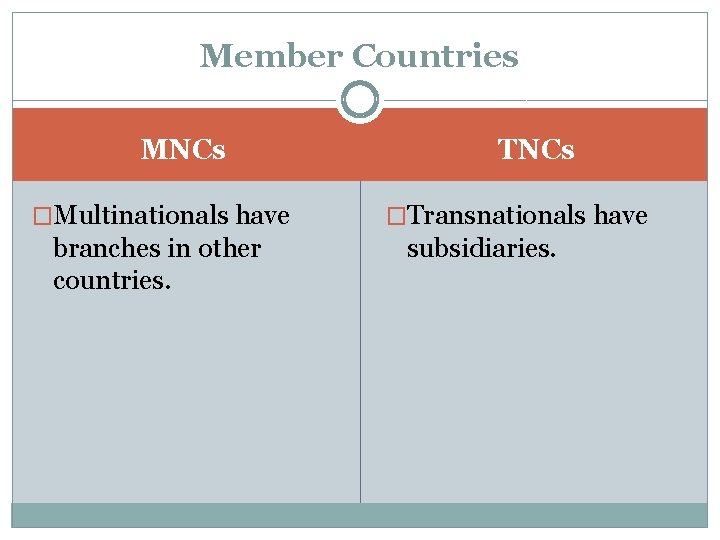
Member Countries MNCs �Multinationals have branches in other countries. TNCs �Transnationals have subsidiaries.
Advantages MNCs TNCs � MNC’s result in a significant � Apart from establishing itself increase of foreign exchange reserves. � They assist in building good relations with other countries and in promotion of parent country’s culture and traditions in other countries. � Also, they have an ability to use globally, one of the significant advantages of a transnational company is that they are able to maintain a greater degree of responsiveness to the local markets where they maintain facilities. foreign subsidiaries to minimize tax-liability.