Managerial Economics Session 12 CROSSPRICE ELASTICITY OF DEMAND
- Slides: 9
Managerial Economics Session - 12 CROSS-PRICE ELASTICITY OF DEMAND (CED) & ADVERTISEMENT ELASTICITY OF DEMAND (AED) 6 -1
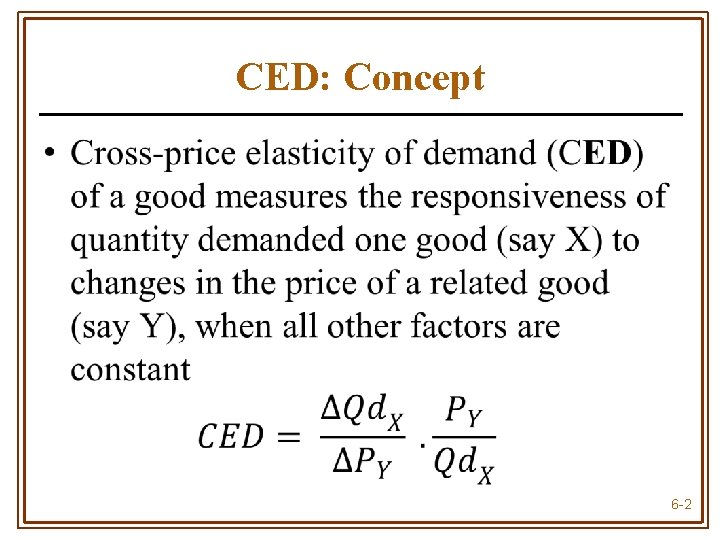
CED: Concept • 6 -2
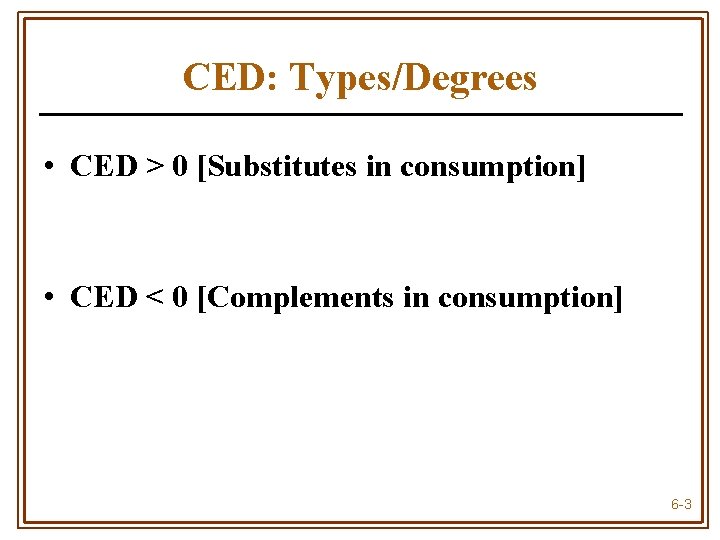
CED: Types/Degrees • CED > 0 [Substitutes in consumption] • CED < 0 [Complements in consumption] 6 -3
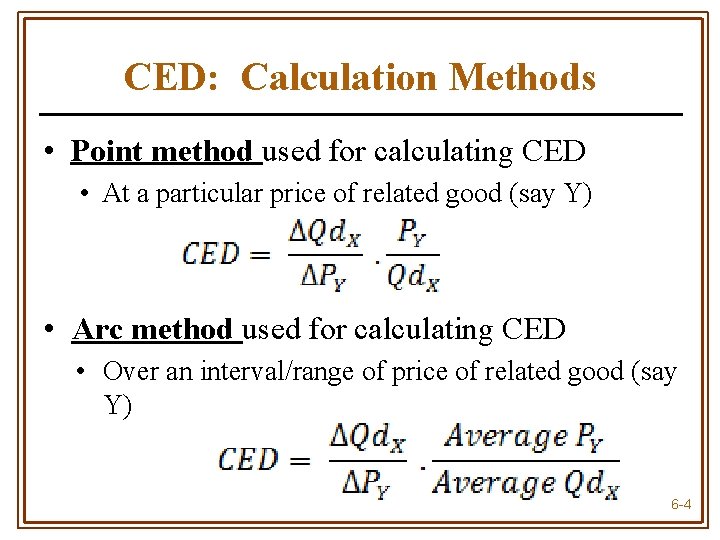
CED: Calculation Methods • Point method used for calculating CED • At a particular price of related good (say Y) • Arc method used for calculating CED • Over an interval/range of price of related good (say Y) 6 -4
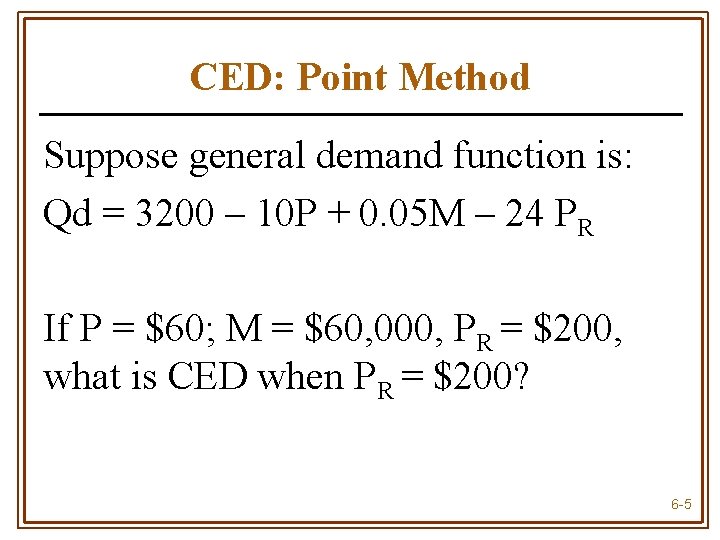
CED: Point Method Suppose general demand function is: Qd = 3200 – 10 P + 0. 05 M – 24 PR If P = $60; M = $60, 000, PR = $200, what is CED when PR = $200? 6 -5
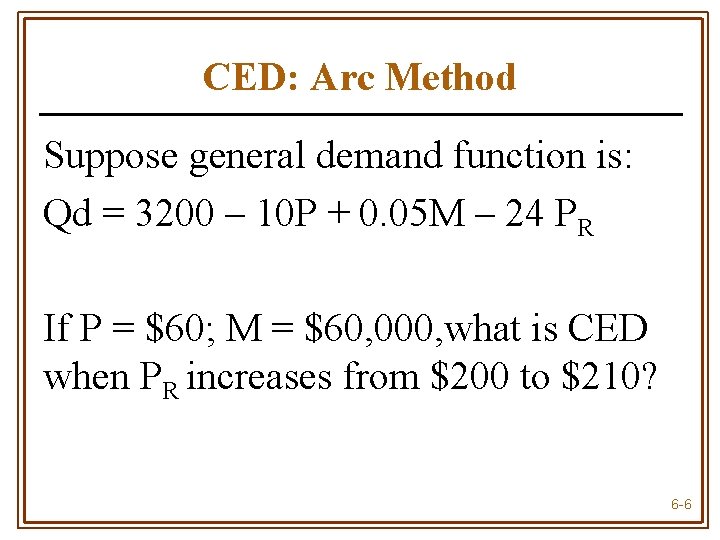
CED: Arc Method Suppose general demand function is: Qd = 3200 – 10 P + 0. 05 M – 24 PR If P = $60; M = $60, 000, what is CED when PR increases from $200 to $210? 6 -6
CED: Business Implications • CED between products of competitors is positive • If the competitor of a firm reduces the price of product, the firm has to reduce price to avoid losing sales • If the competitor of a firm raises the price of product, the firm can raise or maintain the same price 6 -7
CED: Business Implications • CED between complementary products is negative • Increase in price of a product will reduce the demand for its complementary products (e. g. , increase in car price will reduce the demand for tyre, car insurance, etc) 6 -8
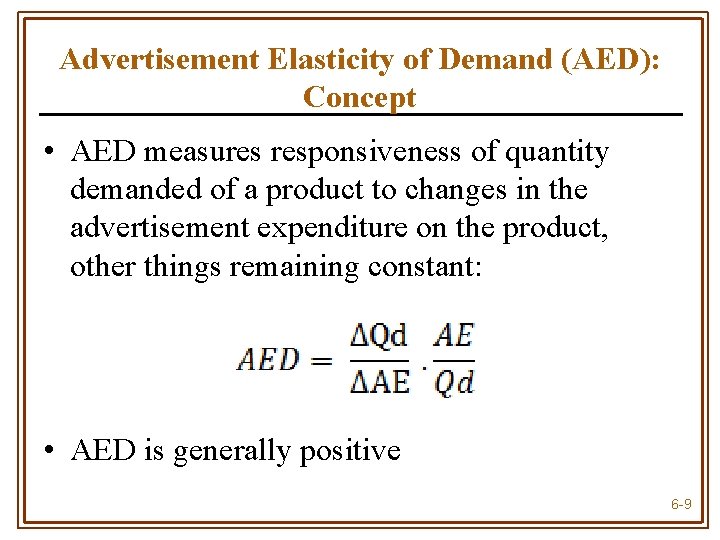
Advertisement Elasticity of Demand (AED): Concept • AED measures responsiveness of quantity demanded of a product to changes in the advertisement expenditure on the product, other things remaining constant: • AED is generally positive 6 -9