Leadership What is a leader Who is a
- Slides: 12
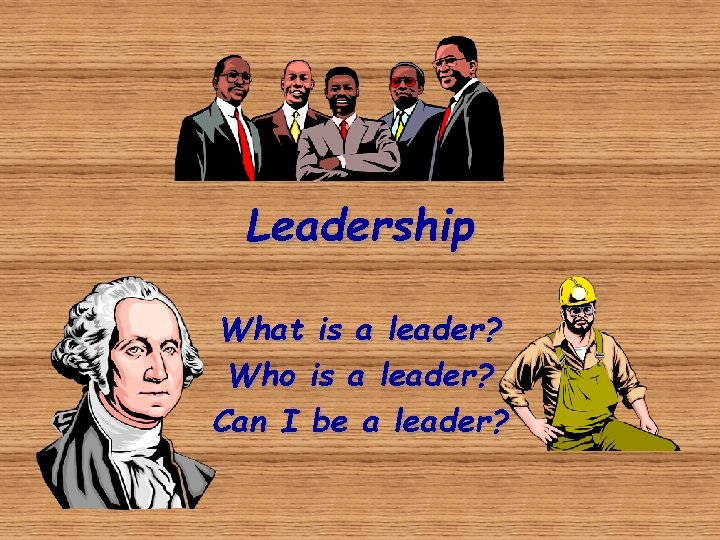
Leadership What is a leader? Who is a leader? Can I be a leader?
The student will be able to: • Discuss leadership orally, leaving no gaps or overlays • List traits of effective leaders orally, with near accuracy • Explain leadership style and contrast three styles with no errors • Name three misunderstandings about leadership with no errors • Contrast leadership with power and management according to the power point projection
Leadership is a relationship where influence is given to meet individual or group goals.
A leader is a person who helps an individual or a group of individuals in achieving their goals. A leader does not always have to be the president, or the elected leader. It may be an active leader of the group, or someone who reaches out to help another person. A follower is an individual who follows the ideas, goals, or tasks of a leader. Followers are developed by working together to identify goals and strategies for achieving the goals.
REMEMBER… • If there are no followers, there are no leaders. If roles are not understood, the group will not operate effectively!!
Traits of Effective Leaders • Know strengths and weaknesses • Hard working • Self confidant • Speak effectively in front of people • Follow directions • Think logically • • • Make decisions Solve problems Trustworthy Listen effectively Understand the needs of others • Respect people of other backgrounds
Leadership Styles • Autocratic Style Bob is cool • Laissez-faire Style • Democratic Style
Autocratic Style • An autocratic leader is directive and makes decisions for an individual or group. Being autocratic does not mean the leader is coercive or a dictator. The leaders usually provide direction and make decisions.
Laissez-faire Style • A Laissez-faire leader gives others a major role in making decisions. They recognize that involving group in the decision-making process is important. They often realize that group members are in a better position to make a decision.
Democratic Style • A democratic leader selects a style between autocratic and laissez-faire. Democratic leaders recognize the importance of participation by members, but retain part of the decision-making responsibility.
Six Misconceptions • Leaders are born, not made • Leadership comes from positions in the group • Leaders make all decisions for the group • All leaders are popular and charismatic • Leadership is power • Leadership is management
Summary • Tomorrow we will begin talking about ethics and how they are the building blocks that provide a solid foundation for our lives! • Have a Nice Day!