Lameness exams Lameness Examination Reasons for lameness Pain


- Slides: 19
Lameness exams
Lameness Examination • Reasons for lameness – Pain– Mechanical interference without pain – Neurological lameness
Components of Examination – History – Observation • Evaluation at rest- toe touching, or able to bear weight • Evaluation in motion – Palpation- feel for heat, or feel for tenderness in the foot – Local anesthesia – Further diagnostic evaluation
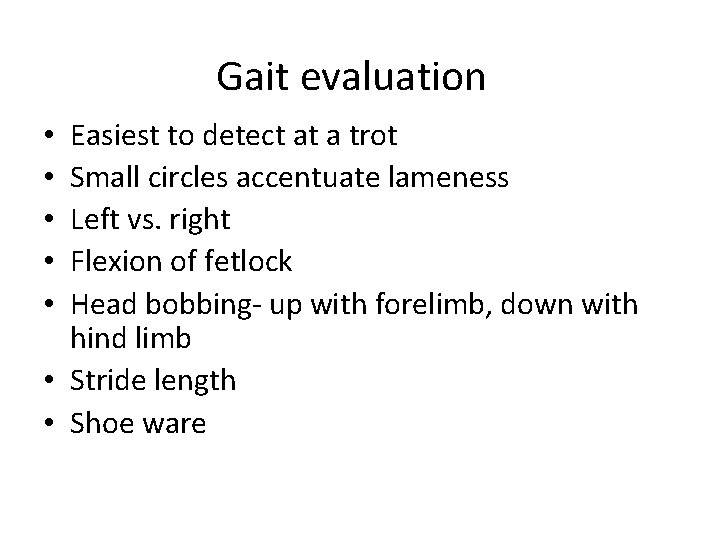
Gait evaluation Easiest to detect at a trot Small circles accentuate lameness Left vs. right Flexion of fetlock Head bobbing- up with forelimb, down with hind limb • Stride length • Shoe ware • • •
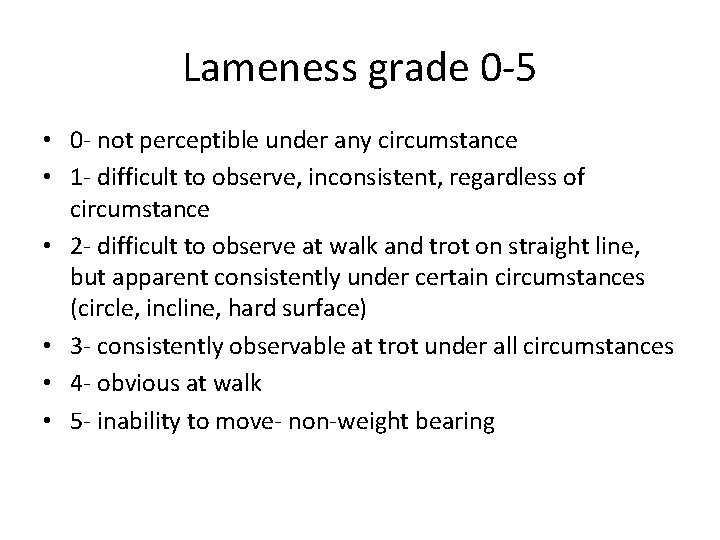
Lameness grade 0 -5 • 0 - not perceptible under any circumstance • 1 - difficult to observe, inconsistent, regardless of circumstance • 2 - difficult to observe at walk and trot on straight line, but apparent consistently under certain circumstances (circle, incline, hard surface) • 3 - consistently observable at trot under all circumstances • 4 - obvious at walk • 5 - inability to move- non-weight bearing
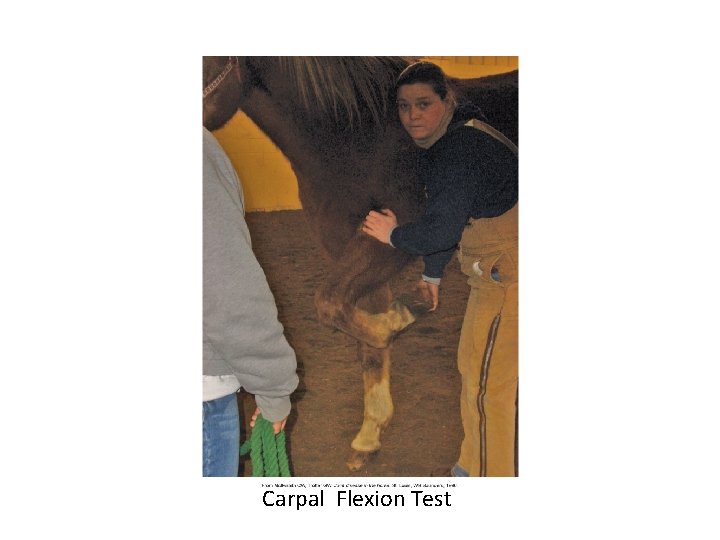
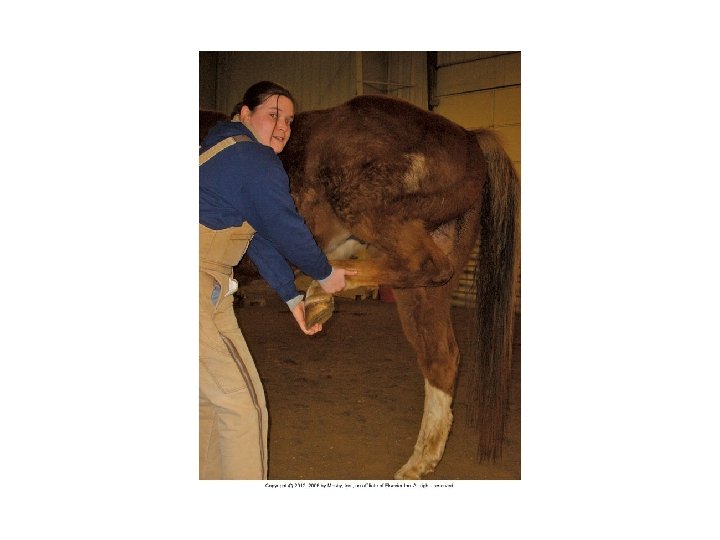
Carpal Flexion Test
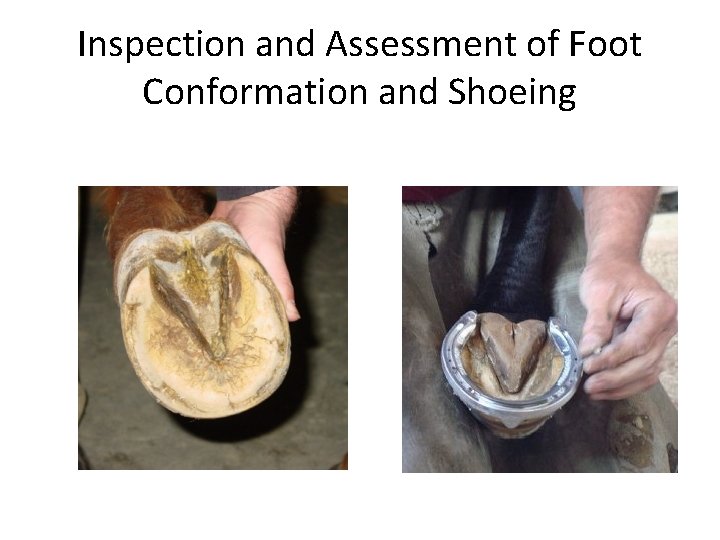
Inspection and Assessment of Foot Conformation and Shoeing
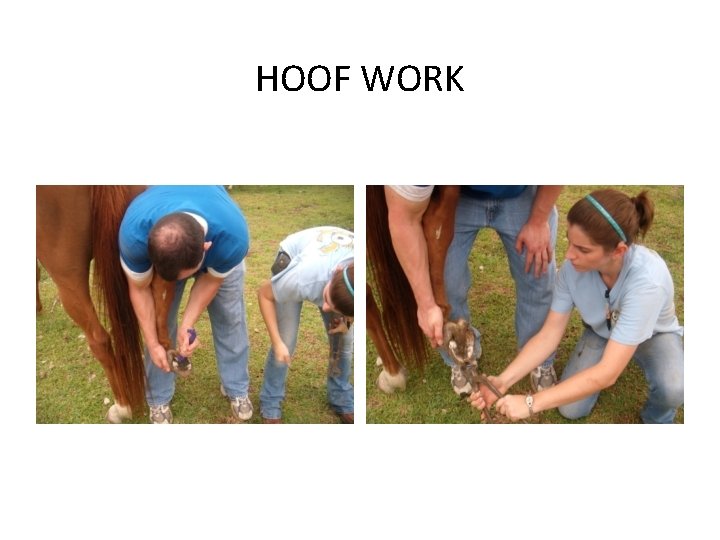
HOOF WORK
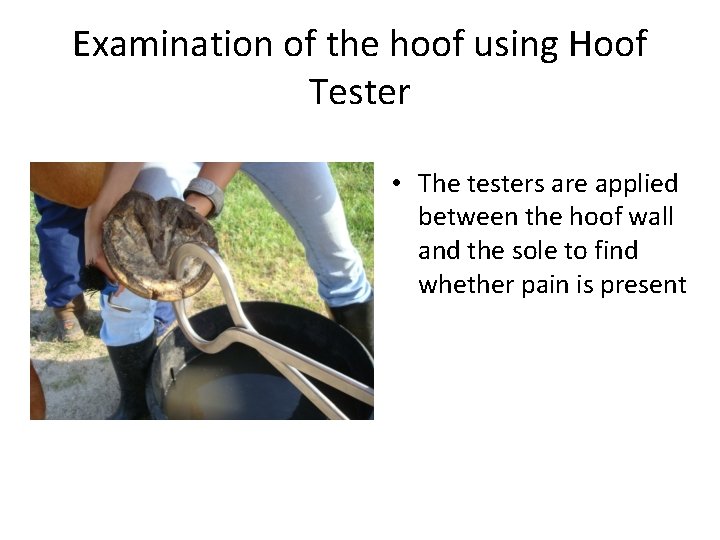
Examination of the hoof using Hoof Tester • The testers are applied between the hoof wall and the sole to find whether pain is present
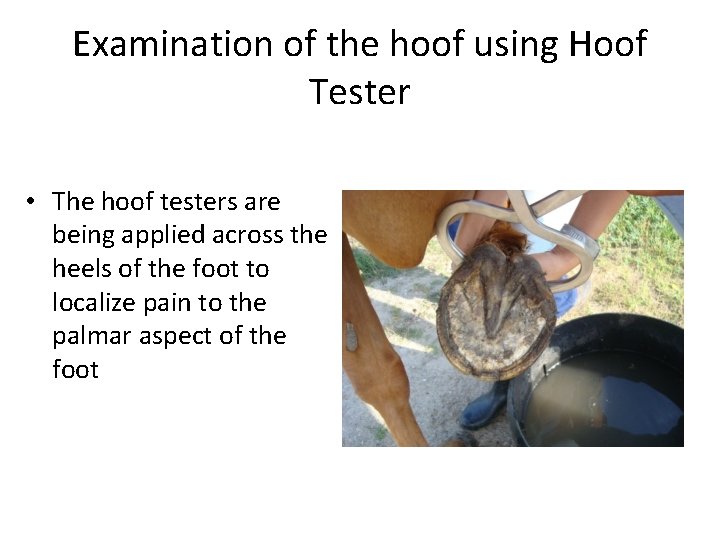
Examination of the hoof using Hoof Tester • The hoof testers are being applied across the heels of the foot to localize pain to the palmar aspect of the foot
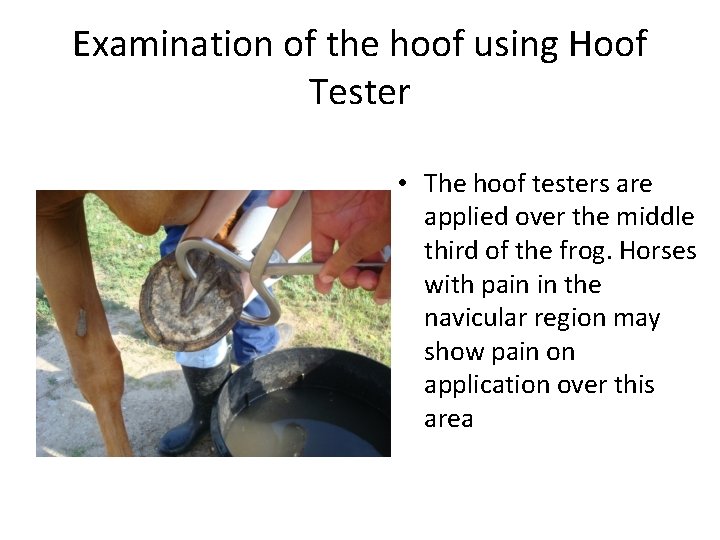
Examination of the hoof using Hoof Tester • The hoof testers are applied over the middle third of the frog. Horses with pain in the navicular region may show pain on application over this area
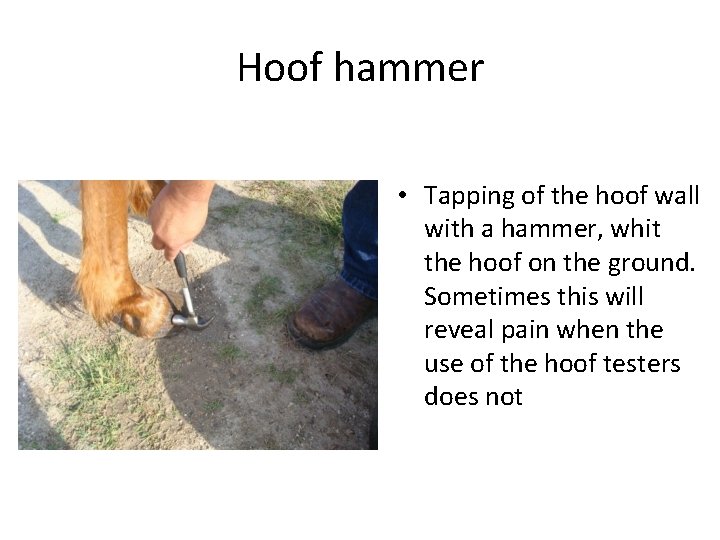
Hoof hammer • Tapping of the hoof wall with a hammer, whit the hoof on the ground. Sometimes this will reveal pain when the use of the hoof testers does not
• http: //www. youtube. com/watch? v=ICOt. TMEu Cx. Y
Other diagnostics • • • Nerve block Thermography Radiography Ultrasound Bone scan Magnetic resonance imaging Nuclear scintigraphy Tomography Arthrocentesis
3 classifications for lameness – – Supporting limb lameness swinging limb lameness mixed lameness complementary/compensatory lameness 1 -PREDISPOSING FACTORSshoeing, disease, faulty conformation, poor condition, poor hoof care 2 -TRAUMA-trailer, accidents, kicks by another horse, incoordination (cross-fire) 3 -GENETICS