Is there a need for in Deaf education
- Slides: 16
Is there a need for in Deaf education? Dani Sive BATOD conference, Nottingham 23 rd March 2019
Introduction and overview • Background and personal experience • Current climate • Use of language to re-frame deaf children • Research studies on bilingual education in Deaf children • Language deprivation • Common fallacies • Plenary
Personal experience
Current climate of deaf education • https: //www. bbc. co. uk/news/education-47212462 (13 th Feb 2019) • Only 30. 6% achieve a GCSE strong pass - Grade 5 or above - in both English and Maths, compared with 48. 3% of children with no special educational needs. • And 57% fail to reach expected levels in reading, writing and maths in SATs tests at the end of primary, compared with 26% of children with no SEN. • Cuts –affecting deaf children – not getting enough support. • Department for Education response: • "Our ambition for children with special educational needs and disabilities, including those who are deaf, is exactly the same for every other child - to achieve well in education, and go on to live happy and fulfilled lives. ” • "We recognise that local authorities are facing cost pressures on high needs and that there is more to do which is why in December 2018 we announced an additional £ 250 m in funding for high needs over this and next year. "
Possible reasons for the current climate 1. Educational placement 2. Training and preparation 3. Funding 4. Socio-economic factors 5. Learning environment 6. Family involvement
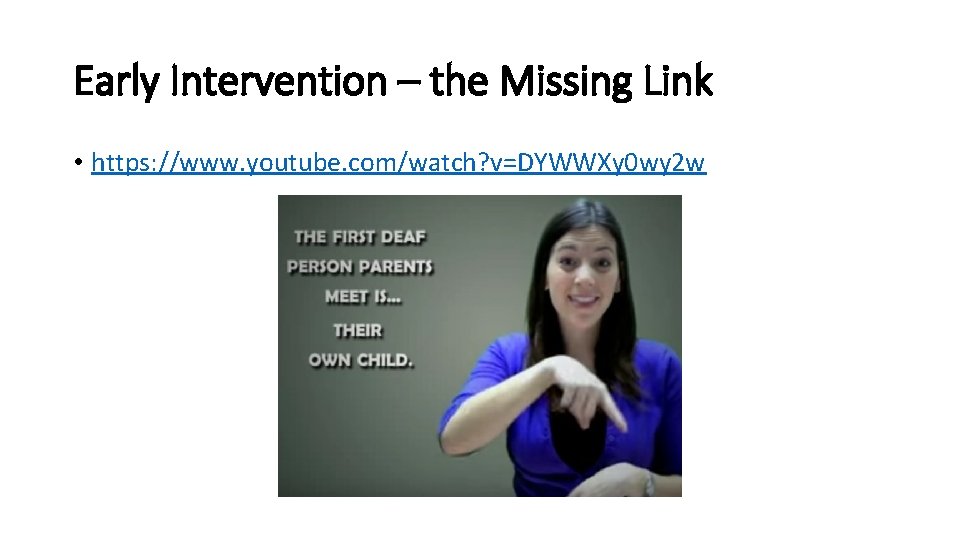
Early Intervention – the Missing Link • https: //www. youtube. com/watch? v=DYWWXy 0 wy 2 w
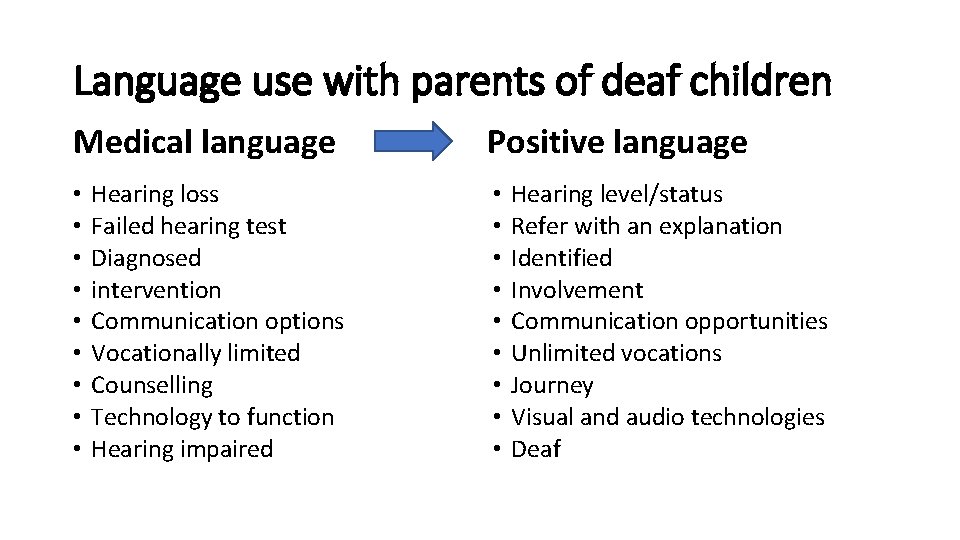
Language use with parents of deaf children Medical language • • • Hearing loss Failed hearing test Diagnosed intervention Communication options Vocationally limited Counselling Technology to function Hearing impaired Positive language • • • Hearing level/status Refer with an explanation Identified Involvement Communication opportunities Unlimited vocations Journey Visual and audio technologies Deaf
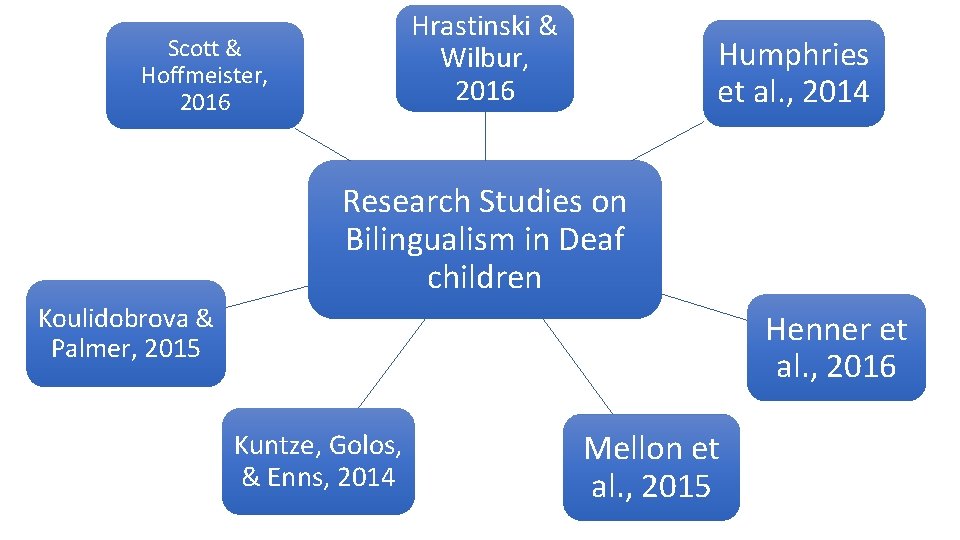
Hrastinski & Wilbur, 2016 Scott & Hoffmeister, 2016 Humphries et al. , 2014 Research Studies on Bilingualism in Deaf children Koulidobrova & Palmer, 2015 Henner et al. , 2016 Kuntze, Golos, & Enns, 2014 Mellon et al. , 2015
Deaf education starts at home • ‘Informed choice’ – who is sharing information, what information and how? • Choice vs given – bimodal and bilingual. • Language attitudes and bias of professionals or parents • “Is the ‘parents’ choice’ paradigm just a way for professionals to both maintain control of the system and avoid accountability in the end? ” -Dr. Wyatte Hall
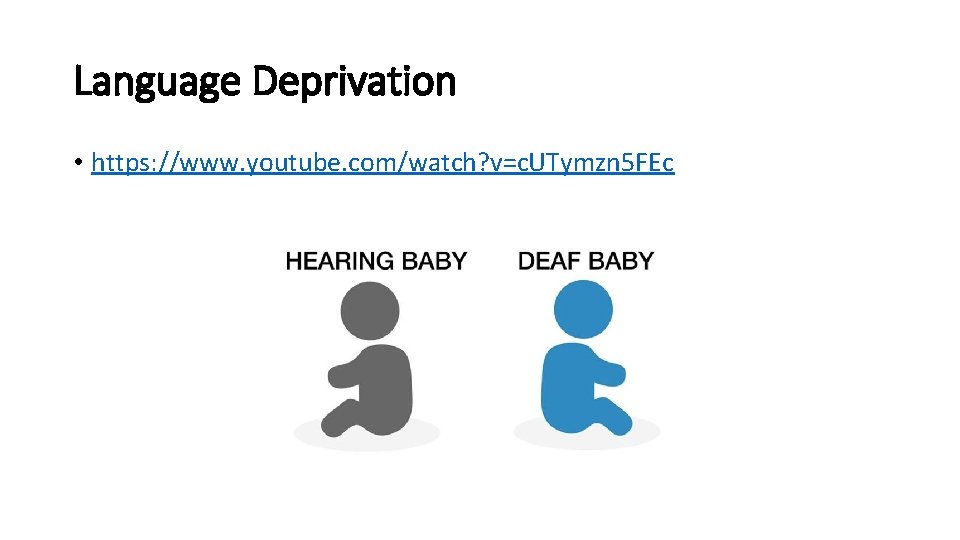
Language Deprivation • https: //www. youtube. com/watch? v=c. UTymzn 5 FEc
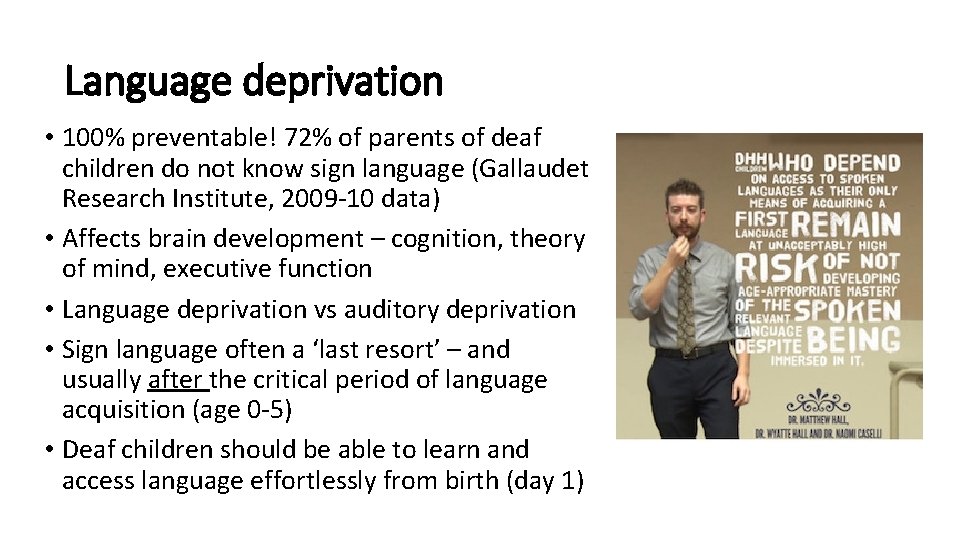
Language deprivation • 100% preventable! 72% of parents of deaf children do not know sign language (Gallaudet Research Institute, 2009 -10 data) • Affects brain development – cognition, theory of mind, executive function • Language deprivation vs auditory deprivation • Sign language often a ‘last resort’ – and usually after the critical period of language acquisition (age 0 -5) • Deaf children should be able to learn and access language effortlessly from birth (day 1)
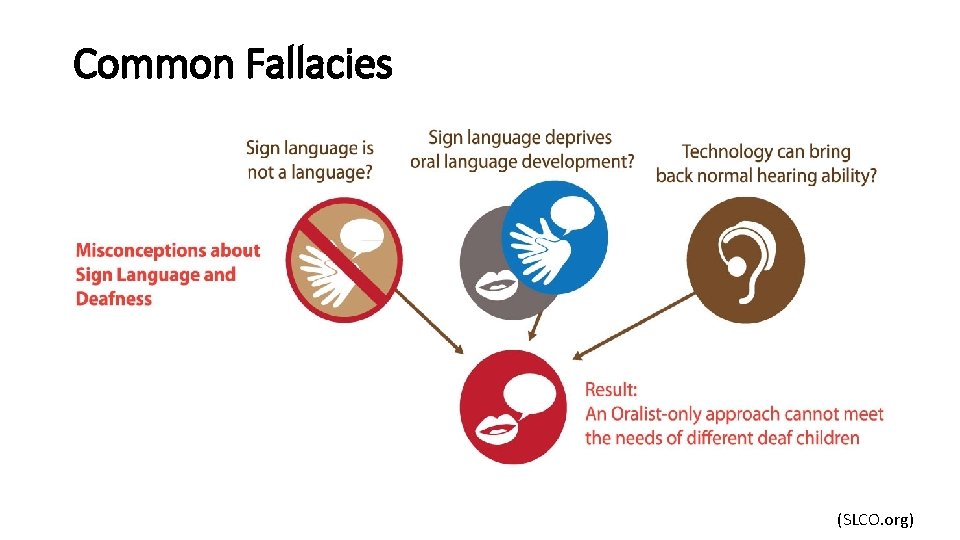
Common Fallacies (SLCO. org)
Bilingual education • Essential for deaf children to learn both sign and spoken languages • Learning sign language does not hinder development of spoken language • Promotes cognitive development and executive function • Fully accessible first language foundation vital • Positive mental health • Identity /sense of belonging • All deaf children as bilingual learners
Is there a need for BSL in Deaf education?
UNCRPD • States are to ensure equal access to primary and secondary education, vocational training, adult education and lifelong learning. Education is to employ the appropriate materials, techniques and forms of communication. Pupils with support needs are to receive support measures, and pupils who are blind, deaf and deaf-blind are to receive their education in the most appropriate modes of communication from teachers who are fluent in sign language and Braille. Education of persons with disabilities must foster their participation in society, their sense of dignity and self worth and the development of their personality, abilities and creativity (Article 24).
Thank you!