Introduction to Motivational Interviewing Ed Arnoll Facilitator Headway
- Slides: 14
Introduction to Motivational Interviewing Ed Arnoll Facilitator Headway Training Manager
Learning Outcomes Understanding of theoretical framework Identify the different stages Utilise techniques to improve engagement Identify resources to further learning
Warm up Could you be motivated to. . . Find someone you don’t know and ask them if they could be motivated to carry out one of the tasks on the list If they can be motivated find out how/why If they can’t or they are unsure try and motivate them
Motivational Interviewing is a person centred counselling style for addressing the common problem of ambivalence about change (Miller and Rollnick 2013)
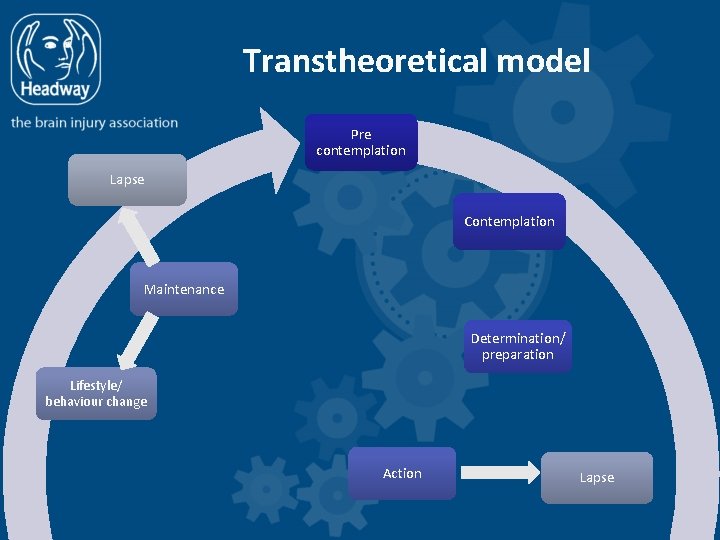
Transtheoretical model Pre contemplation Lapse Contemplation Maintenance Determination/ preparation Lifestyle/ behaviour change Action Lapse
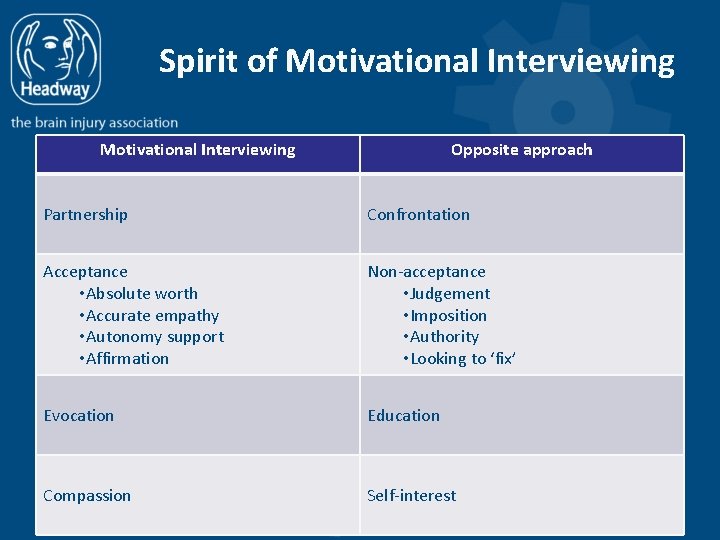
Spirit of Motivational Interviewing Opposite approach Partnership Confrontation Acceptance • Absolute worth • Accurate empathy • Autonomy support • Affirmation Non-acceptance • Judgement • Imposition • Authority • Looking to ‘fix’ Evocation Education Compassion Self-interest
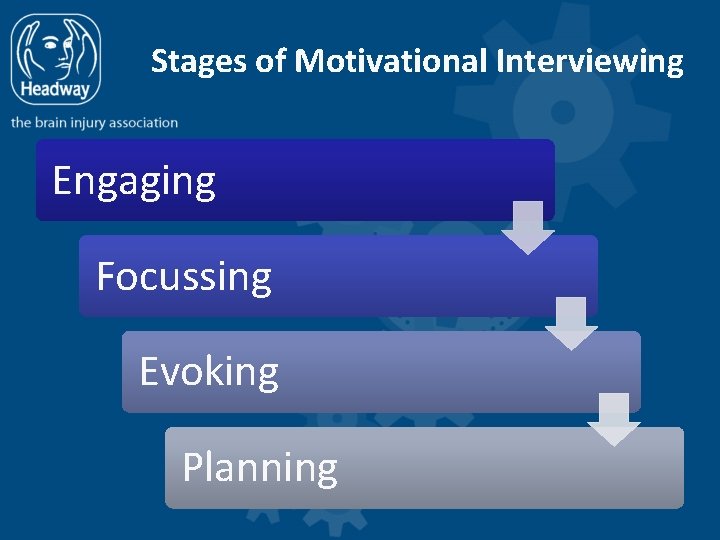
Stages of Motivational Interviewing Engaging Focussing Evoking Planning
Engagement The quality of therapeutic alliance has been shown to predict TBI rehabilitation outcome, client self awareness and treatment compliance. (Klonof et al 1998, Fingfeld-Connett 2009, Schoneberger et al 2006, Sherer et al 2007)
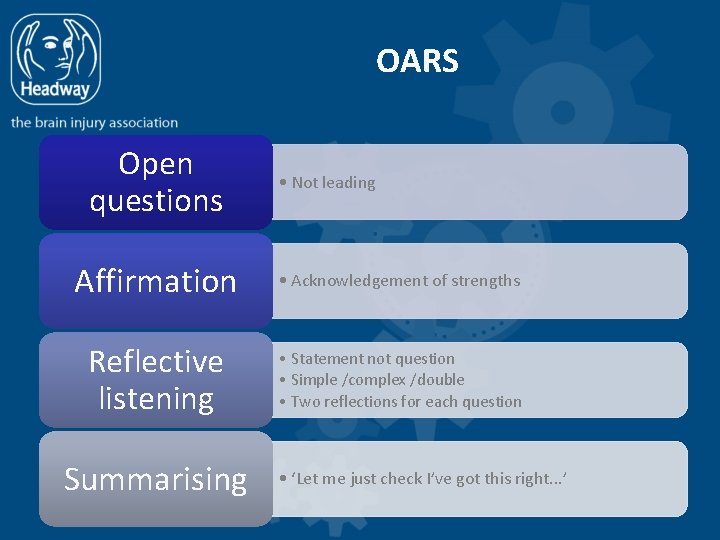
OARS Open questions • Not leading Affirmation • Acknowledgement of strengths Reflective listening • Statement not question • Simple /complex /double • Two reflections for each question Summarising • ‘Let me just check I’ve got this right. . . ’
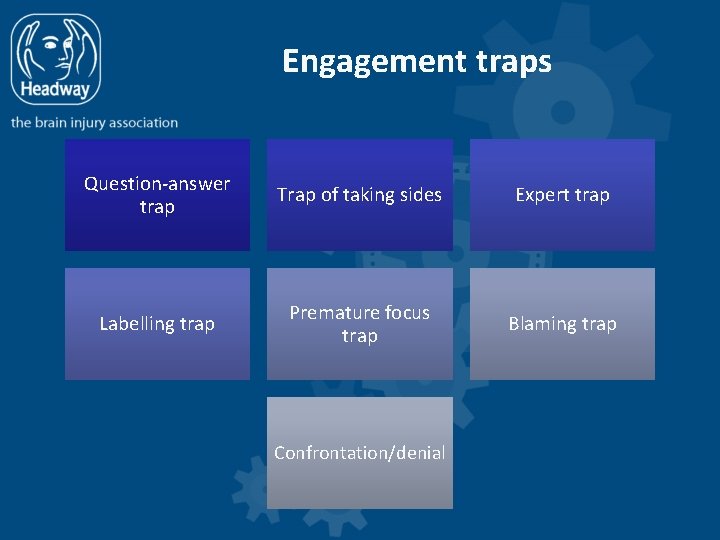
Engagement traps Question-answer trap Trap of taking sides Expert trap Labelling trap Premature focus trap Blaming trap Confrontation/denial
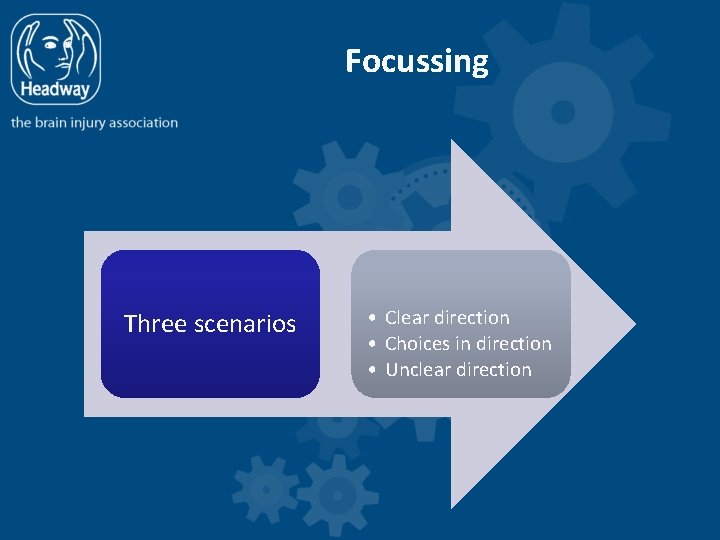
Focussing Three scenarios • Clear direction • Choices in direction • Unclear direction
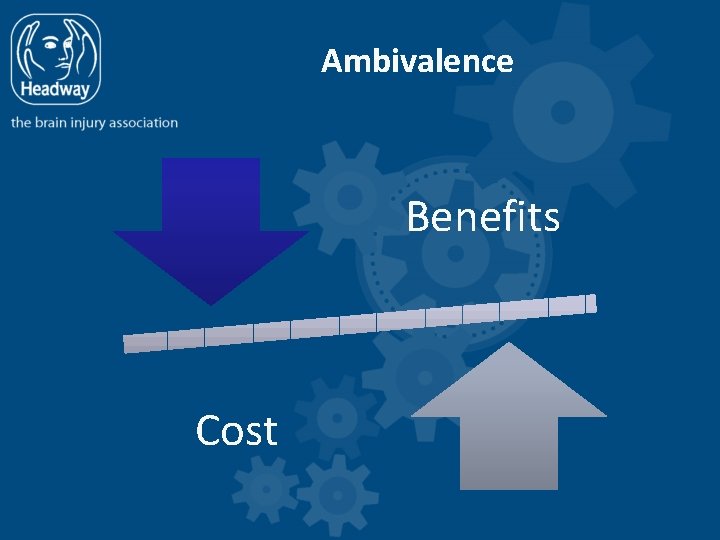
Ambivalence Benefits Cost
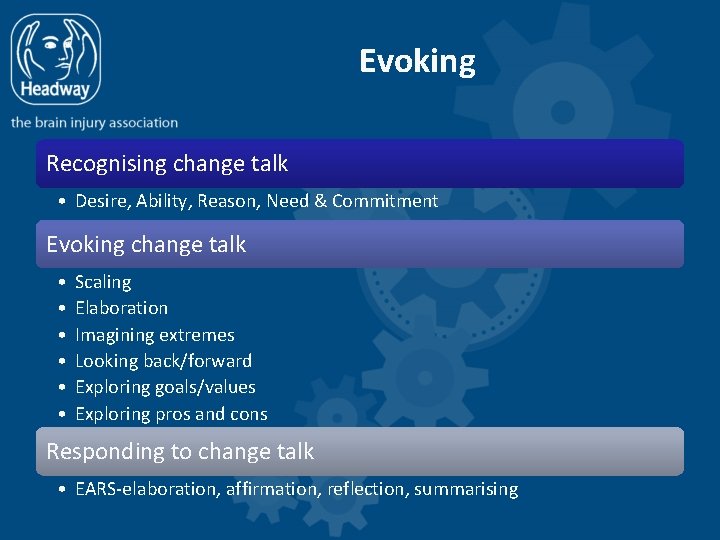
Evoking Recognising change talk • Desire, Ability, Reason, Need & Commitment Evoking change talk • • • Scaling Elaboration Imagining extremes Looking back/forward Exploring goals/values Exploring pros and cons Responding to change talk • EARS-elaboration, affirmation, reflection, summarising
Questions?