International Federation of Pharmaceutical Manufacturers Associations The IFPMA






- Slides: 13
International Federation of Pharmaceutical Manufacturers & Associations The IFPMA Code and how to set up a national self-regulation system Presentation to China/EU Pharmaceutical Industry Forum 17 May 2017, Shanghai, China Dr. Brendan Shaw Assistant Director General IFPMA Email: b. shaw@ifpma. org Twitter: @shaw_brendan
International Federation of Pharmaceutical Manufacturers & Associations IFPMA represents research-based biopharmaceutical companies and regional and national associations across the world
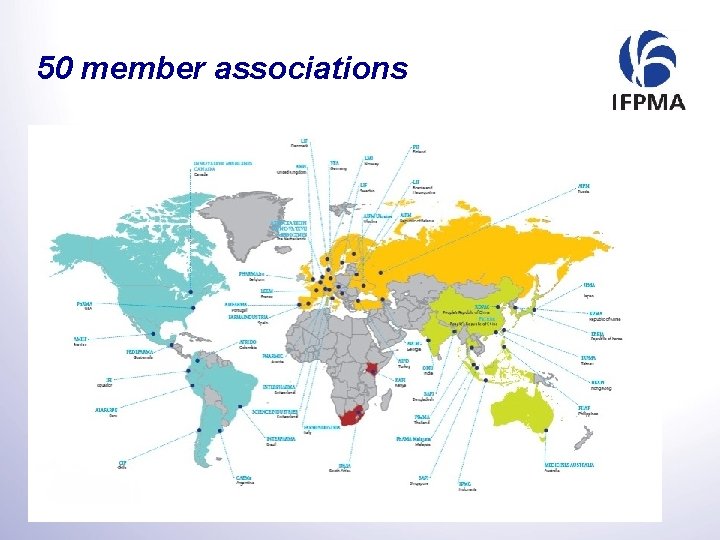
50 member associations 3
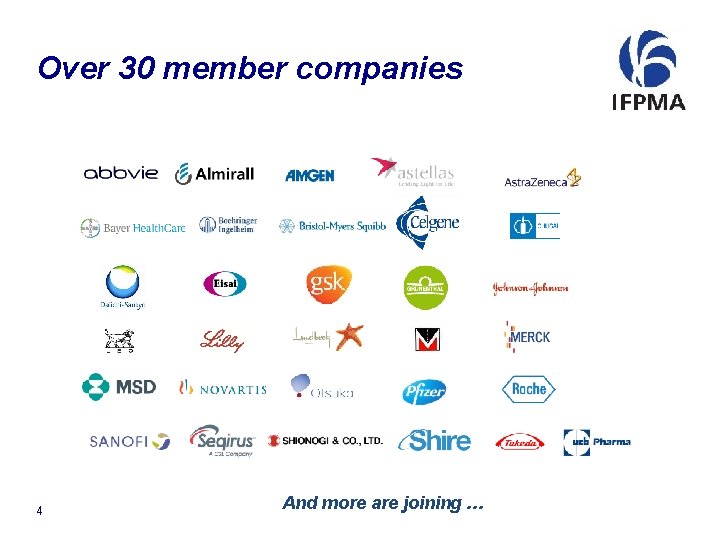
Over 30 member companies 4 And more are joining …
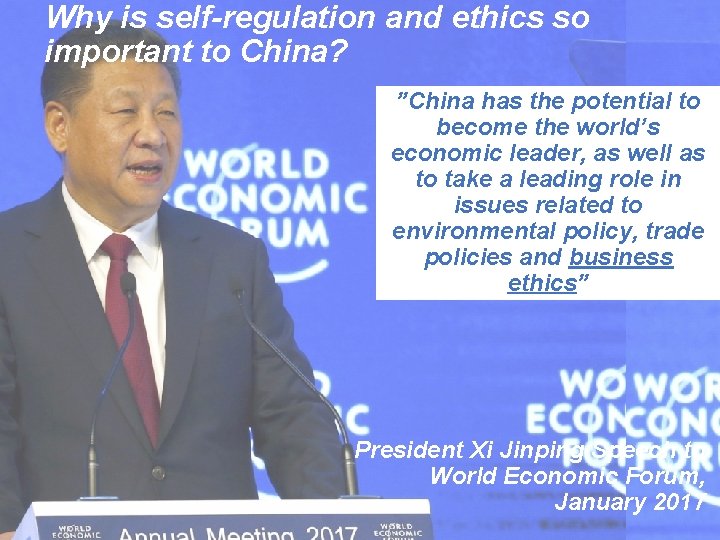
Why is self-regulation and ethics so important to China? ”China has the potential to become the world’s economic leader, as well as to take a leading role in issues related to environmental policy, trade policies and business ethics” President Xi Jinping Speech to World Economic Forum, January 2017
The IFPMA Code is: • First established in 1981, last updated in 2012 • Global standard for the R&D biopharmaceutical industry • A model of self-regulation for industry’s activities in medicines promotion, communication and interaction with key stakeholders such as healthcare professionals, medical institutions and patient organizations. • Although self-regulatory, the IFPMA Code is not voluntary, it is a condition of membership to the IFPMA for both member companies and national associations. 6
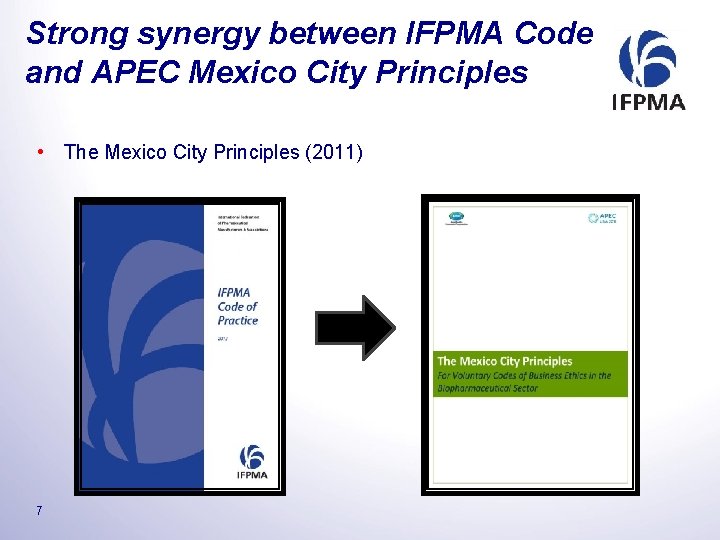
Strong synergy between IFPMA Code and APEC Mexico City Principles • The Mexico City Principles (2011) 7
APEC members with(out) Codes • Over 5 last years steady growing number of Associations and Member Companies with a Code 8
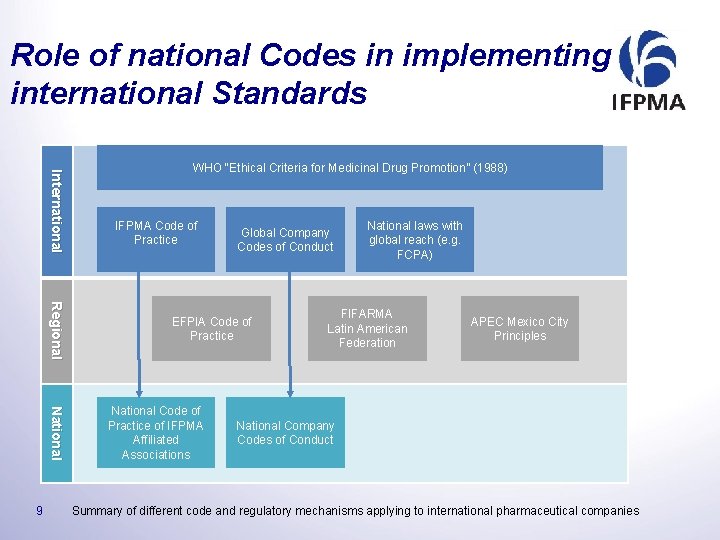
Role of national Codes in implementing international Standards International Regional National 9 WHO “Ethical Criteria for Medicinal Drug Promotion” (1988) IFPMA Code of Practice Global Company Codes of Conduct EFPIA Code of Practice National Code of Practice of IFPMA Affiliated Associations National laws with global reach (e. g. FCPA) FIFARMA Latin American Federation APEC Mexico City Principles National Company Codes of Conduct Summary of different code and regulatory mechanisms applying to international pharmaceutical companies
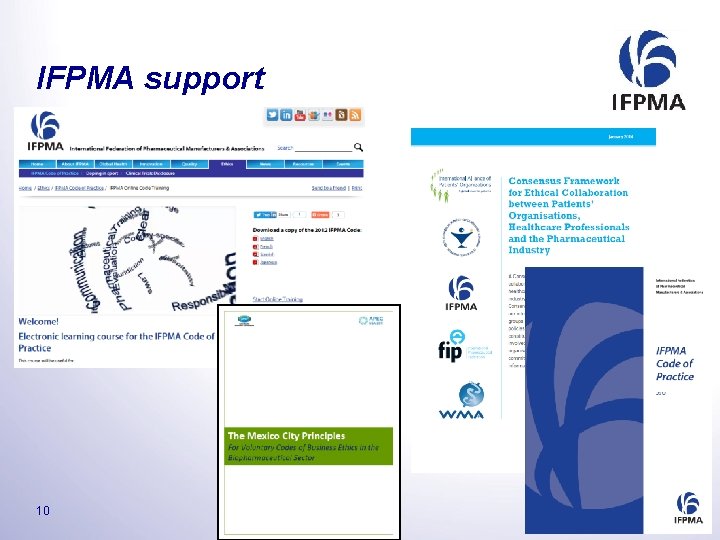
IFPMA support 10
Kenya: Recent example of Code launch • Launched April 2016 • Extensive work with local association (KAPI) and member companies • Revamped and updated local code • Communication with industry and stakeholders in Kenya 11
Different models for establishing a national industry Code 12 Model 1 Model 2 Model 3 National Association based Outsourced to specialized Association Mix of industry and national regulatory system
Suggested next steps 1. Reference existing standards (IFPMA Code, Mexico City Principles, Chinese national Code, …) 2. Look for models that will best work in your country and evaluate 3. Draft Code in consultation with local industry, government, other key stakeholders (incl. doctors groups, patient organizations). Consider scope of areas to be covered, e. g. Marketing, interaction with patients, clinical trials, … 4. Launch and communicate 13