Incinerators in Disguise Incinerators are so unpopular with




- Slides: 50
Incinerators in Disguise Incinerators are so unpopular with the public they use different names resource recovery facilities, waste-toenergy etc n The latest phase is to call them gasifiers, pyrolyzers or plasma arc facilities n
Comments on Gasification plants
n Gasification plants claim NOT to be incinerators, but all involve two stages: n 1) the conversion of solid waste into a gas, n 2) the burning of the gas, producing many of the same problems as a regular incinerator n So the more appropriate name would be: n Gasifying incinerator
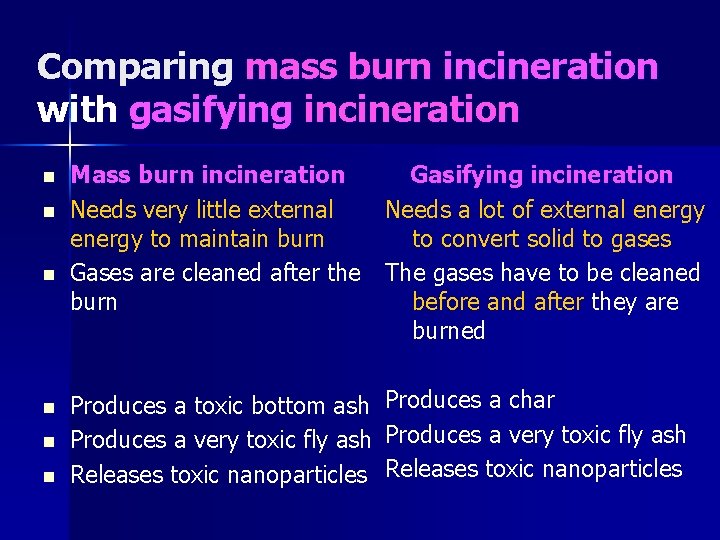
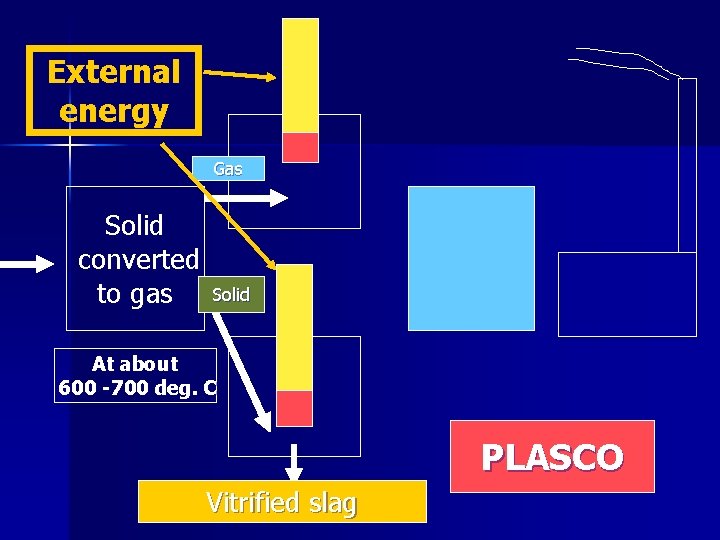
Comparing mass burn incineration with gasifying incineration n n n Mass burn incineration Gasifying incineration Needs very little external Needs a lot of external energy to maintain burn to convert solid to gases Gases are cleaned after the The gases have to be cleaned burn before and after they are burned Produces a toxic bottom ash Produces a char Produces a very toxic fly ash Releases toxic nanoparticles
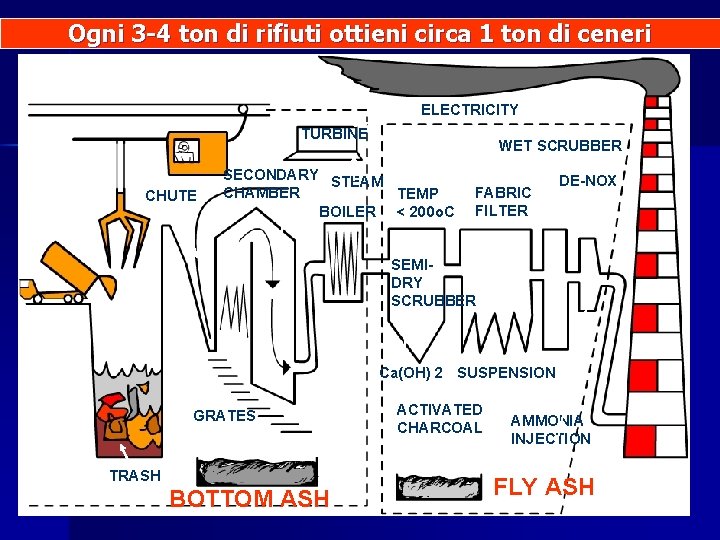
Ogni 3 -4 ton di rifiuti ottieni circa 1 ton di ceneri ELECTRICITY TURBINE CHUTE WET SCRUBBER SECONDARY STEAM CHAMBER TEMP BOILER < 200 o. C FABRIC FILTER DE-NOX SEMIDRY SCRUBBER Ca(OH) 2 SUSPENSION GRATES TRASH BOTTOM ASH ACTIVATED CHARCOAL AMMONIA INJECTION FLY ASH
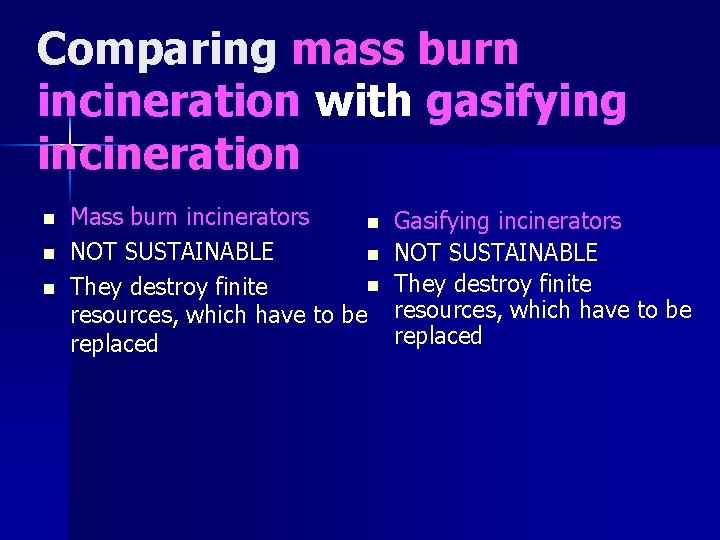
Comparing mass burn incineration with gasifying incineration n Mass burn incinerators n NOT SUSTAINABLE n n They destroy finite resources, which have to be replaced Gasifying incinerators NOT SUSTAINABLE They destroy finite resources, which have to be replaced
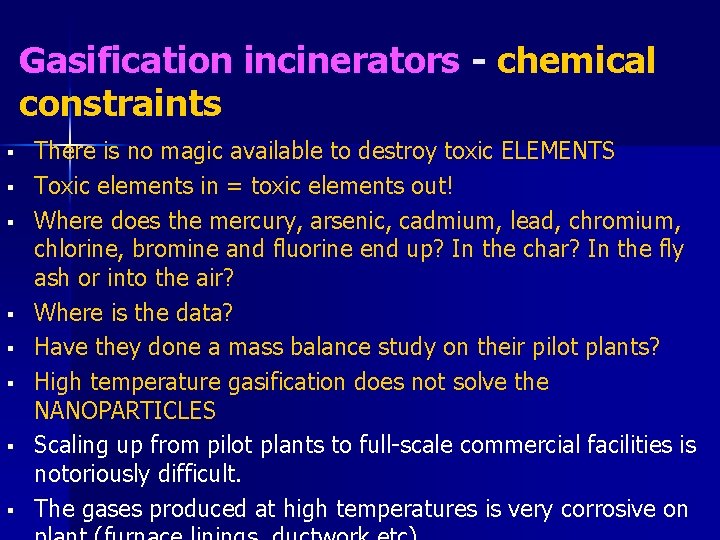
Gasification incinerators - chemical constraints § § § § There is no magic available to destroy toxic ELEMENTS Toxic elements in = toxic elements out! Where does the mercury, arsenic, cadmium, lead, chromium, chlorine, bromine and fluorine end up? In the char? In the fly ash or into the air? Where is the data? Have they done a mass balance study on their pilot plants? High temperature gasification does not solve the NANOPARTICLES Scaling up from pilot plants to full-scale commercial facilities is notoriously difficult. The gases produced at high temperatures is very corrosive on
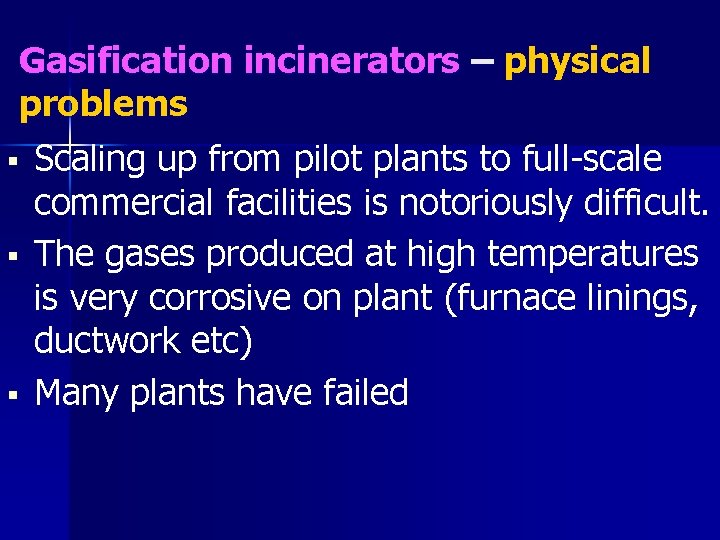
Gasification incinerators – physical problems § Scaling up from pilot plants to full-scale commercial facilities is notoriously difficult. § The gases produced at high temperatures is very corrosive on plant (furnace linings, ductwork etc) § Many plants have failed
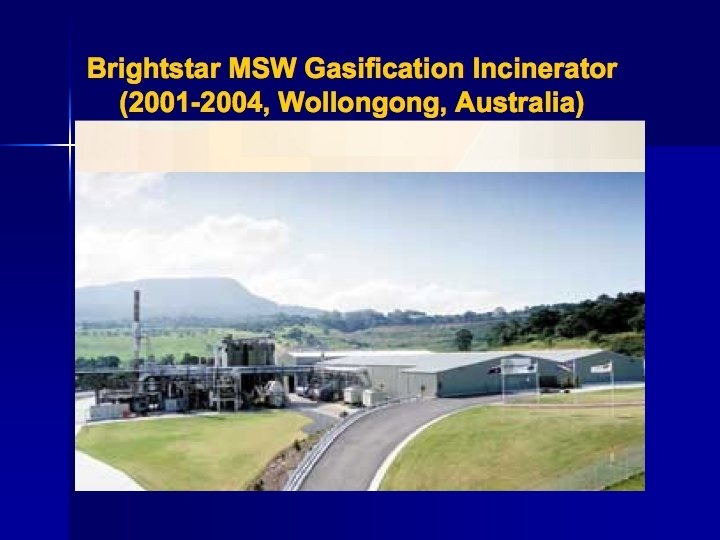
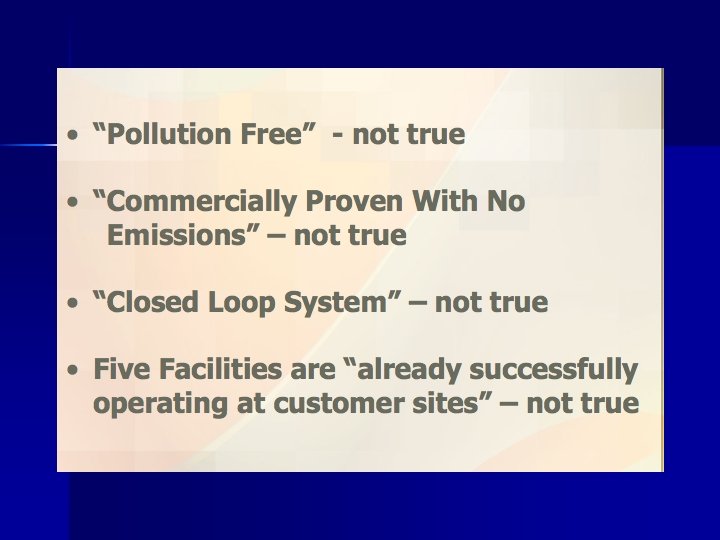
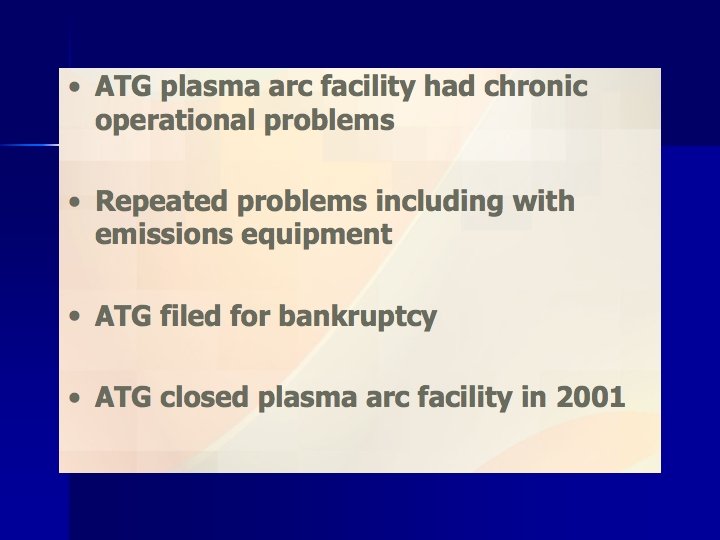
The difference between PR hype and Reality The following slides are taken from www. greenaction. org n They document the dismal track record of various gasification, pyrolysis and plasma arc/torch facilities n
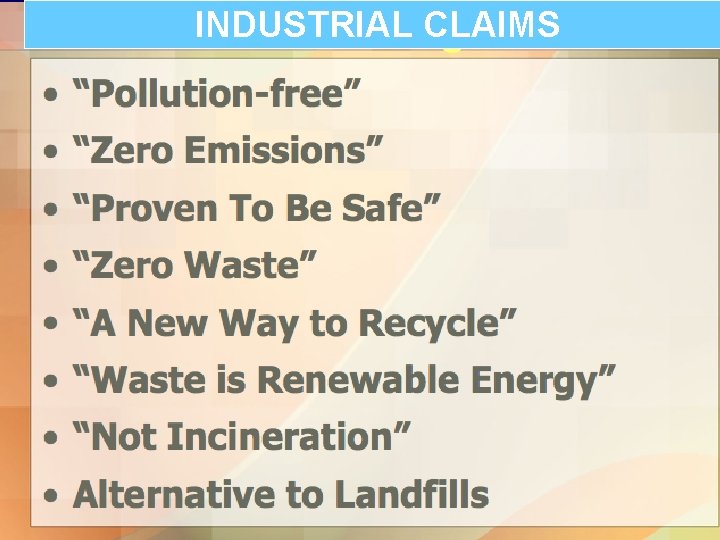
INDUSTRIAL CLAIMS
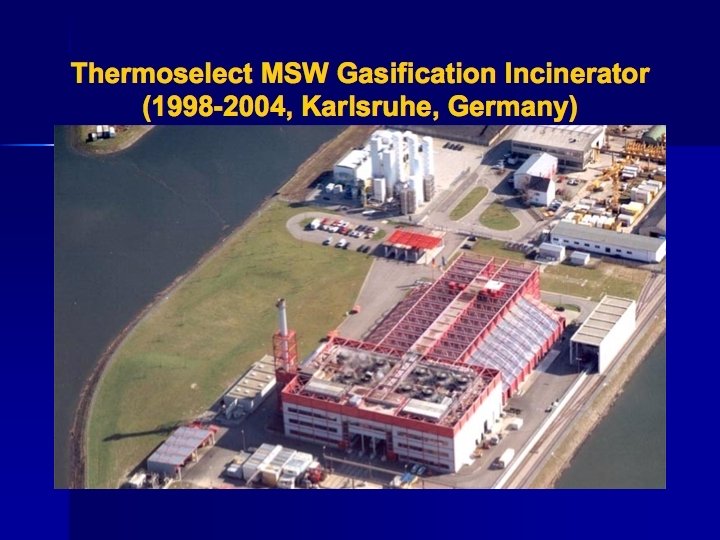
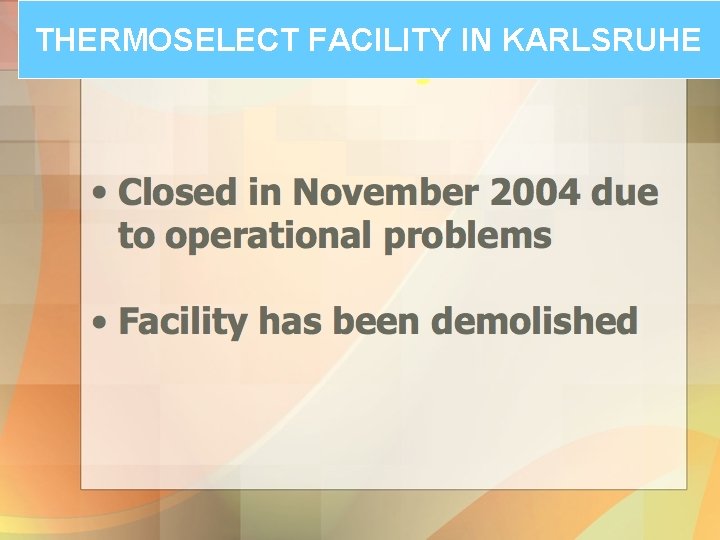
THERMOSELECT FACILITY IN KARLSRUHE
BRIGHTSTAR’S WOOLONGONG FACILITY
GASIFICATION, PYROLYSIS etc n n n Engineering consultants’ view: “Many of the perceived benefits of gasification and pyrolysis over combustion technology proved to be unfounded. These perceptions have arisen mainly from inconsistent comparisons in the absence of quality information. ” Fichtner Consulting Engineers Ltd, Stockport, Cheshire, March, 2004
Lurgi letter n n “…a decision has been taken within Lurgi to discontinue marketing gasification and pyrolysis technologies for waste conversion applications. This decision has come after rigorous analysis of market requirements, technical feasibility and economic sensitivities of gasification and pyrolysis of waste, as applied by Lurgi and our competitors. We recognize there is a positive bias towards gasification/pyrolysis amongst politicians and environmentalists. However, we are in no doubt that in the short to medium term neither technology will be developed and commercially proven to the point where it can compete. ” Letter (08 -09 -2003) to Fichter Consulting Engineers Ltd, Cheshire, UK
The modern incinerator is attempting to perfect a bad idea Our task in the 21 st Century is not to find better ways to destroy discarded materials n But to stop making packaging and products that have to be destroyed! n
Comments on plasma arc/torch plants
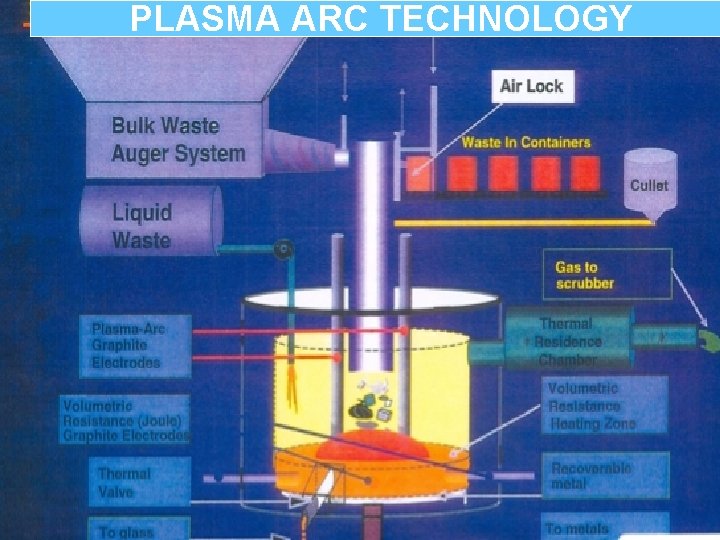
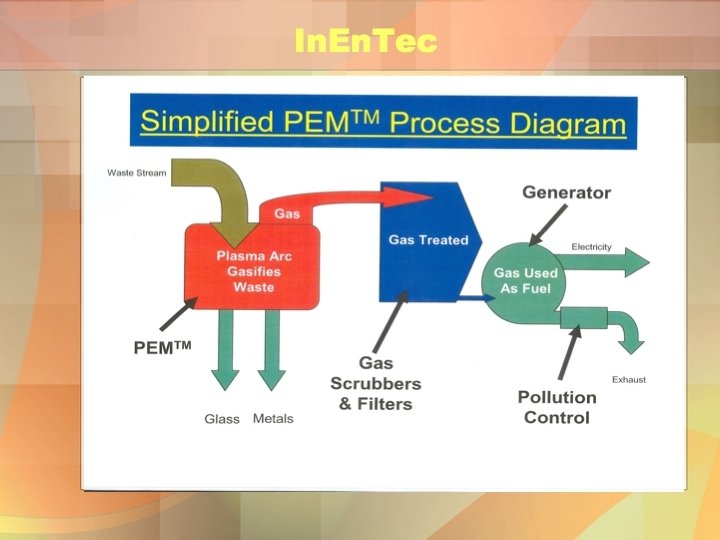
PLASMA ARC TECHNOLOGY
PLASCO Has built a 100 ton per day pilot plant in Ottawa, Canada n Is aggressively marketing technology all over Canada, US and some other countries n
PLASCO
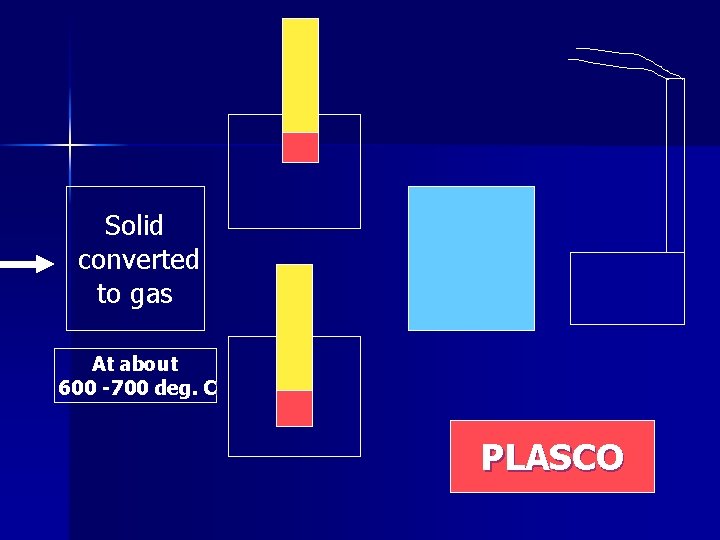
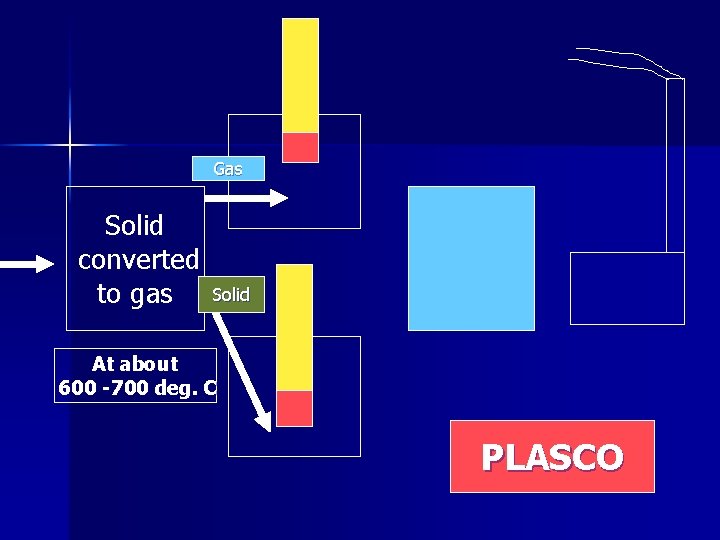
Solid converted to gas At about 600 -700 deg. C PLASCO
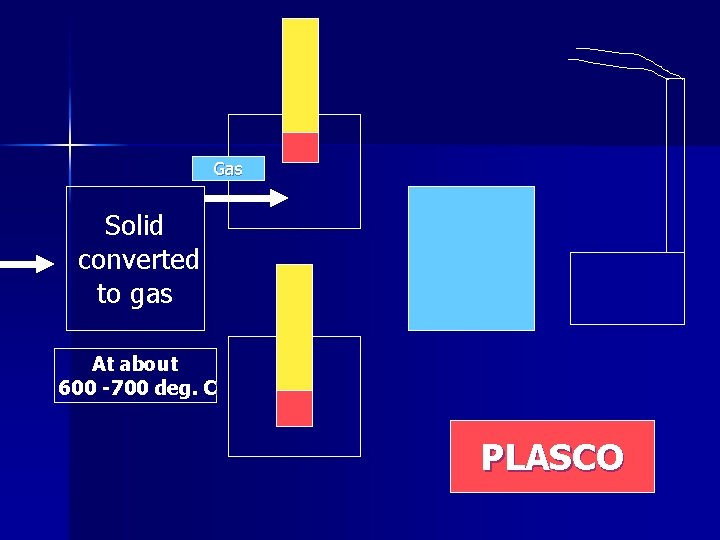
Gas Solid converted to gas At about 600 -700 deg. C PLASCO
Gas Solid converted to gas Solid At about 600 -700 deg. C PLASCO
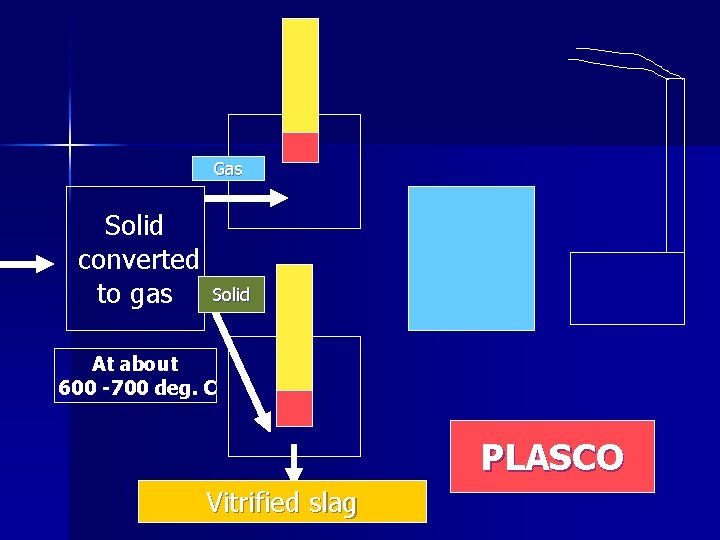
Gas Solid converted to gas Solid At about 600 -700 deg. C PLASCO Vitrified slag
External energy Gas Solid converted to gas Solid At about 600 -700 deg. C PLASCO Vitrified slag
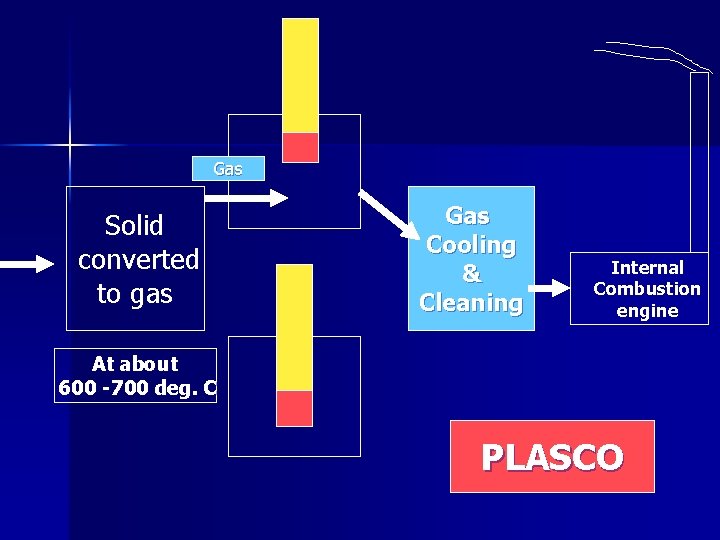
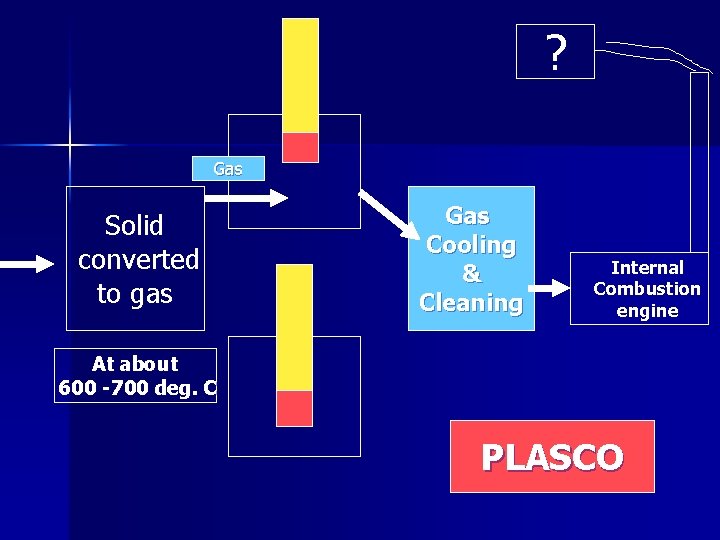
Gas Solid converted to gas Gas Cooling & Cleaning Internal Combustion engine At about 600 -700 deg. C PLASCO
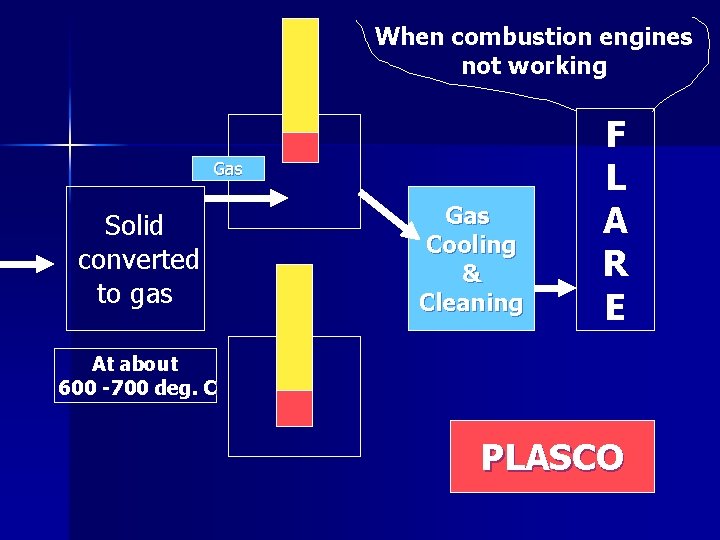
When combustion engines not working Gas Solid converted to gas Gas Cooling & Cleaning F L A R E At about 600 -700 deg. C PLASCO
? Gas Solid converted to gas Gas Cooling & Cleaning Internal Combustion engine At about 600 -700 deg. C PLASCO
GAS Cooling & Cleaning
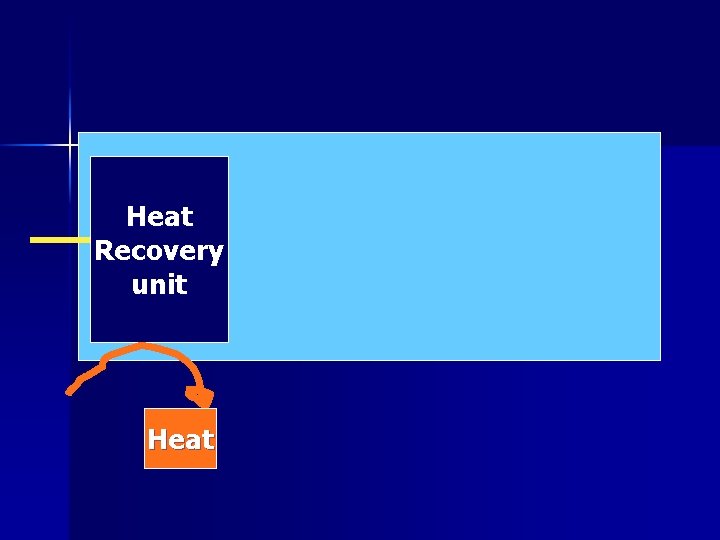
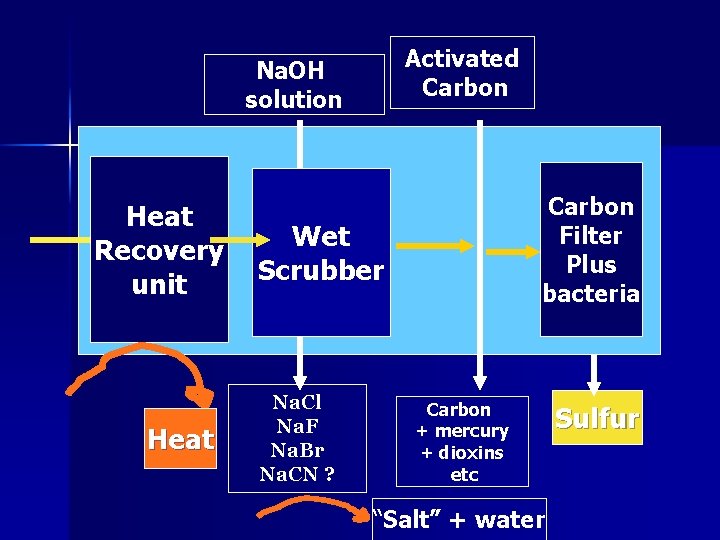
Heat Recovery unit Heat
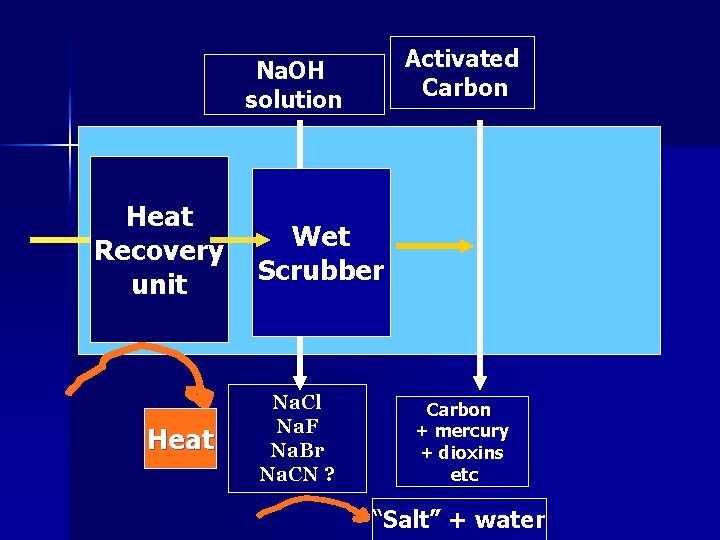
Na. OH solution Heat Recovery unit Heat Wet Scrubber Na. Cl Na. F Na. Br Na. CN ? “Salt” + water
Activated Carbon Na. OH solution Heat Recovery unit Heat Wet Scrubber Na. Cl Na. F Na. Br Na. CN ? Carbon + mercury + dioxins etc “Salt” + water
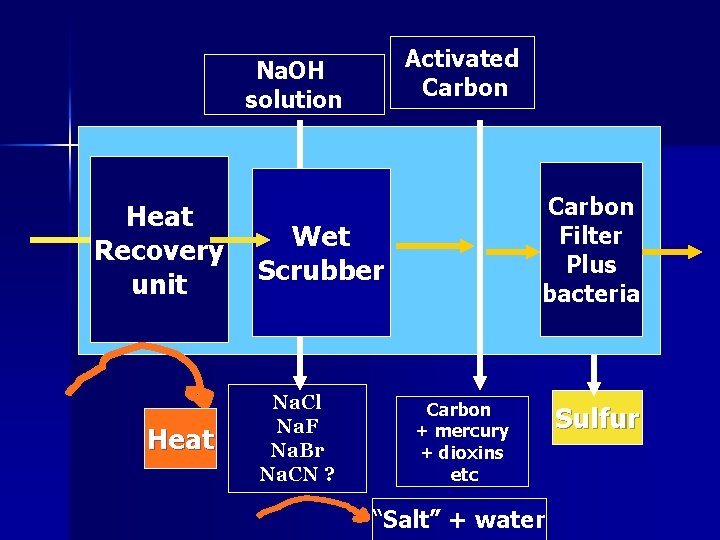
Activated Carbon Na. OH solution Heat Recovery unit Heat Carbon Filter Plus bacteria Wet Scrubber Na. Cl Na. F Na. Br Na. CN ? Carbon + mercury + dioxins etc “Salt” + water Sulfur
Activated Carbon Na. OH solution Heat Recovery unit Heat Carbon Filter Plus bacteria Wet Scrubber Na. Cl Na. F Na. Br Na. CN ? Carbon + mercury + dioxins etc “Salt” + water Sulfur
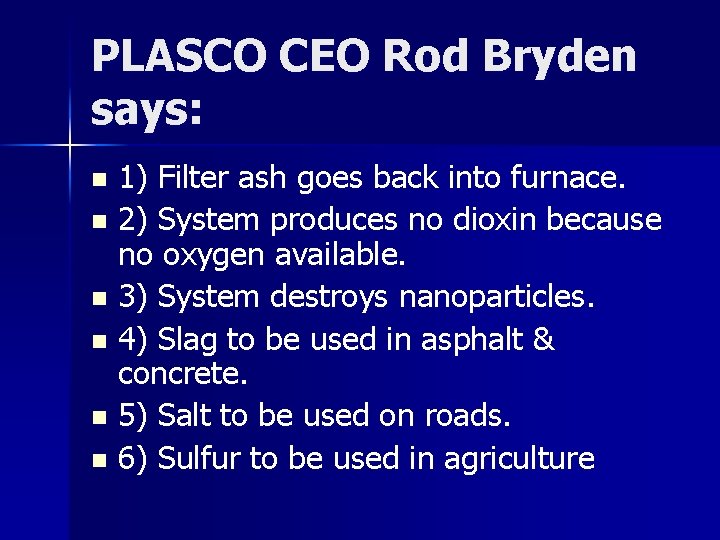
PLASCO CEO Rod Bryden says: 1) Filter ash goes back into furnace. n 2) System produces no dioxin because no oxygen available. n 3) System destroys nanoparticles. n 4) Slag to be used in asphalt & concrete. n 5) Salt to be used on roads. n 6) Sulfur to be used in agriculture n
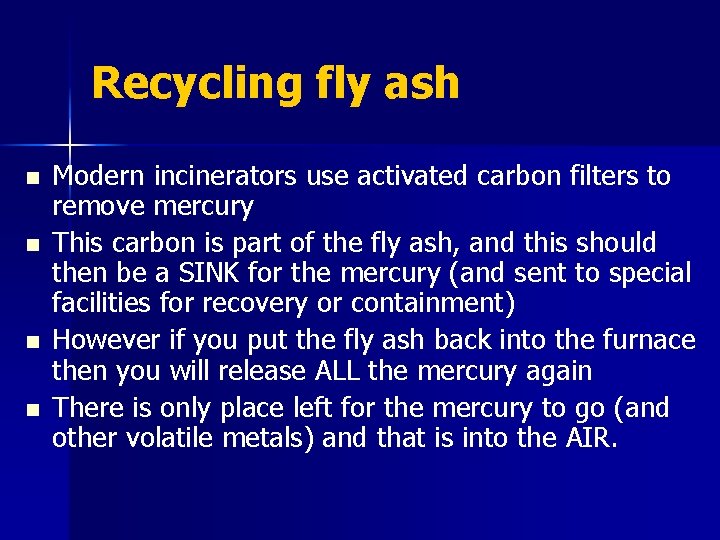
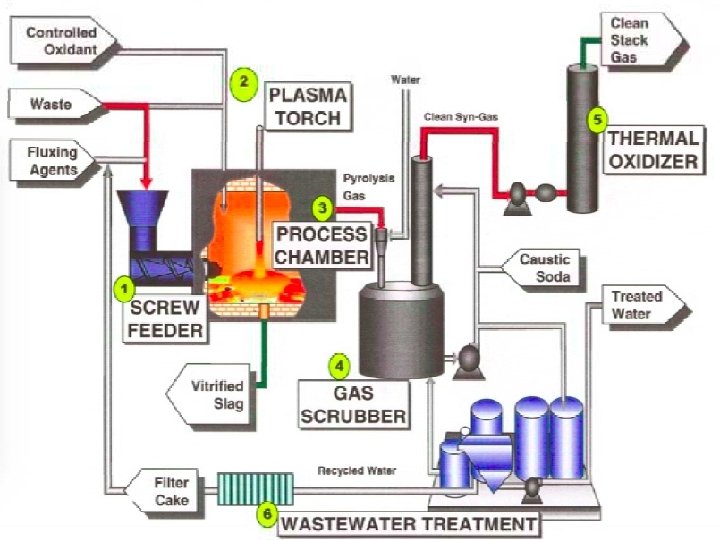
Recycling fly ash n n Modern incinerators use activated carbon filters to remove mercury This carbon is part of the fly ash, and this should then be a SINK for the mercury (and sent to special facilities for recovery or containment) However if you put the fly ash back into the furnace then you will release ALL the mercury again There is only place left for the mercury to go (and other volatile metals) and that is into the AIR.
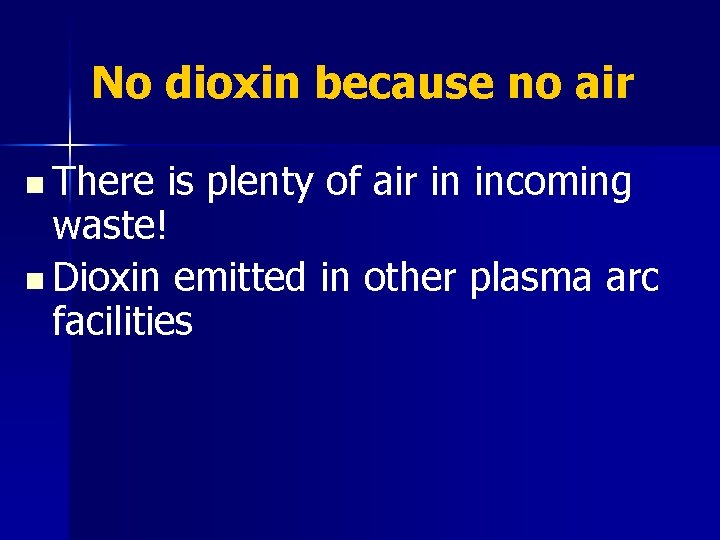
No dioxin because no air n There is plenty of air in incoming waste! n Dioxin emitted in other plasma arc facilities
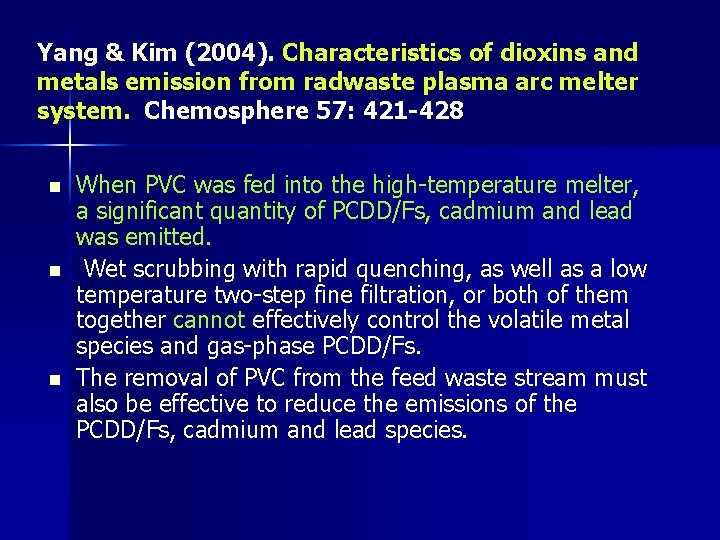
Yang & Kim (2004). Characteristics of dioxins and metals emission from radwaste plasma arc melter system. Chemosphere 57: 421 -428 n n n When PVC was fed into the high-temperature melter, a significant quantity of PCDD/Fs, cadmium and lead was emitted. Wet scrubbing with rapid quenching, as well as a low temperature two-step fine filtration, or both of them together cannot effectively control the volatile metal species and gas-phase PCDD/Fs. The removal of PVC from the feed waste stream must also be effective to reduce the emissions of the PCDD/Fs, cadmium and lead species.
Using salt on roads n “Salt” will not be pure salt (Na. Cl) could be problems with other salts which are very toxic , e. g. sodium fluoride
Using sulfur n Using sulfur in agriculture could be problem if it is contaminated with mercury etc.
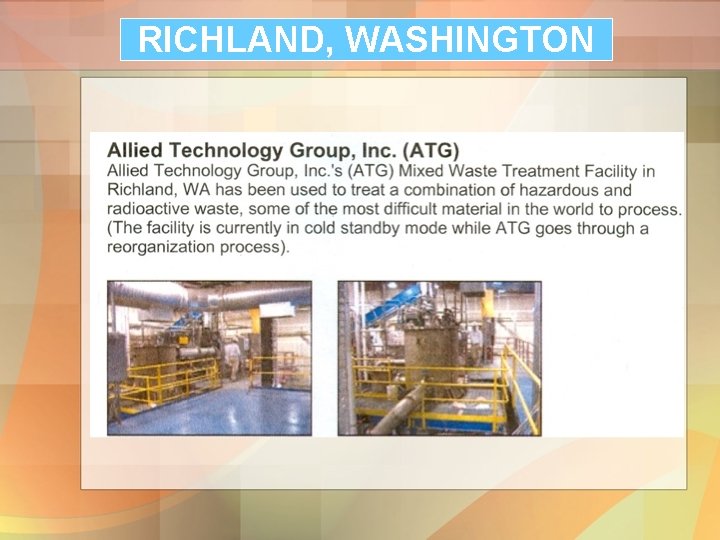
RICHLAND, WASHINGTON
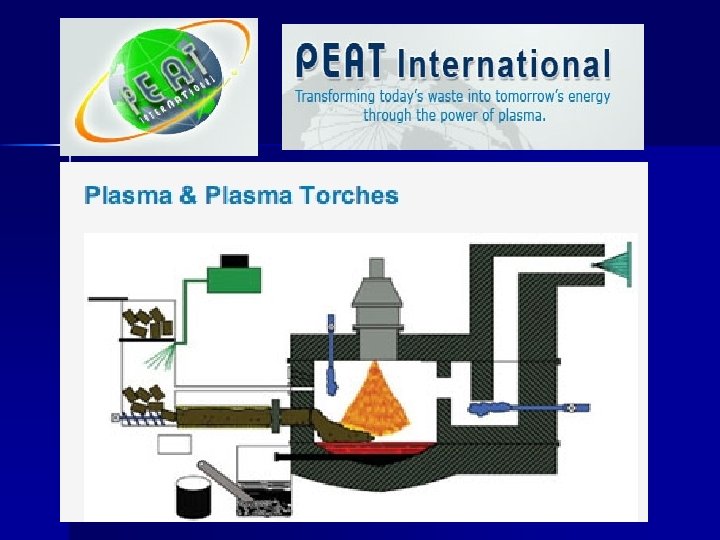
One of PEAT’s claims is very disturbing n They also claim that they will have no fly ash because they are going to recycle it back into the process.